
Warmth and ambiance for Lake County's mild winters—no chimney required.
With just a short, mild winter heating season and winter lows that average 49°F, Lake County doesn't need a furnace's worth of fireplace. What homeowners here want is real flame-look ambiance, a little supplemental warmth on the rare frost-advisory night, and zero venting hassle. I'll match you with a trusted local dealer who knows what actually fits your home, whether that's a condo near Mount Dora or a lakefront place outside Clermont.
Every Project Starts From One of These Five Situations
A short, mild season built around comfort, not survival.
Lake County sits in USDA hardiness territory that most of the country would call a mild winter and Lake County residents call a cold snap. With a winter heating load that's a fraction of what a place like Fargo, ND logs in a single January—and with a climate zone 2A rating and winter lows averaging 49°F, homes across Leesburg, Eustis, Tavares, Mount Dora, and Clermont are built for cooling, not heat retention. That's exactly the setup electric fireplaces are designed for: real flame-effect visuals and heat when you want it, with none of the chimney, venting, or combustion-air requirements a wood or gas unit demands. Some of the county's older homes near the rolling hills around Clermont's Sugarloaf Mountain still have masonry fireboxes originally built for oak, mahogany, or pine—rarely used more than a handful of nights a year, and increasingly converted to electric inserts for safety and simplicity rather than left to sit unused.
Lake County's population has grown past 360,000, with much of that growth in active-adult and retirement communities along the border with The Villages, plus condos and manufactured housing throughout the county. Those settings often come with HOA rules or structural limits that rule out a chimney or gas line outright—an electric fireplace sidesteps that entirely, plugging into a standard outlet or a dedicated 120V/240V circuit depending on the unit. Duke Energy Florida serves most of the county's population centers, with Sumter Electric Cooperative (SECO Energy) covering rural and outlying areas—either way, the grid here is built for the region's real load, which is air conditioning, not electric-resistance heating, so an electric fireplace adds a modest, predictable draw rather than straining anything.
Three steps. No salesperson until you're ready.
Tell us about your project
Your zip code, your situation, and the fuel you're leaning toward—or let the answers point you to one.
See what's actually available
The brands dealers within 100 miles genuinely carry—real options, never a catalog mirage.
Get your dealer & Project Guide
A trusted local dealer, plus the free Project Guide & Parts List that names every component of the job.
Frequently Asked Questions
How much does an electric fireplace installation cost in Lake County?
A freestanding or plug-in electric unit runs $200 to $600 installed, since it just needs a standard outlet and a spot against a wall—a popular choice for condos and manufactured homes around Leesburg and Tavares where major electrical work isn't practical. A wall-mounted linear built-in with a dedicated circuit typically lands between $1,200 and $3,000, depending on wall framing and whether an electrician needs to run new wire. Converting an existing masonry wood fireplace to an electric insert—common in older homes near Mount Dora and Eustis—usually falls in the $800 to $2,000 range, since the firebox opening is already there and the work is mostly fitting and wiring rather than construction.
Will an electric fireplace actually keep a room warm during a cold snap?
For most of the season, yes, and for the occasional hard freeze, it's a solid supplement rather than a whole-home solution. Lake County's citrus growers still remember the hard freezes of the 1980s, and every few winters a frost advisory pushes overnight lows into the 30s. A standard 1,500-watt electric insert or built-in puts out roughly 5,000 BTU, which comfortably heats a single living area or open-concept great room during one of those nights. It won't replace your heat pump on a whole-house basis, but paired with central heat, it lets you zone-heat the room you're actually sitting in rather than running the whole system harder.
Do I need a permit to install an electric fireplace in Lake County?
A plug-in freestanding unit that uses an existing outlet generally doesn't require a permit. A built-in or wall-mounted unit that needs a new dedicated circuit does require an electrical permit through the Lake County Building Services Division (or your municipality's building department if you're inside Leesburg, Clermont, Mount Dora, or another incorporated city). Most local dealers handle the permit and inspection as part of a full-service installation, which is worth asking about up front if you're planning a built-in linear unit rather than a plug-and-place model.
Are electric fireplaces a good fit for condos, manufactured homes, and 55+ communities?
Yes, and it's one of the main reasons electric is the standard choice across much of Lake County's housing stock. With so much growth in active-adult communities bordering The Villages, plus condos and manufactured homes throughout Leesburg, Tavares, and Eustis, a lot of properties simply can't accommodate a chimney or a new gas line—either the structure doesn't support it or the HOA doesn't allow it. An electric unit sidesteps both issues: no venting, no combustion byproducts, and most models are approved under standard HOA fire-appliance rules since there's no open flame or exhaust to manage.
Electric vs. gas fireplace—which makes more sense in Lake County?
Gas is a reasonable option here too, especially for homeowners who want a more traditional flame and don't mind the cost of a gas line or propane tank. But given Lake County's short, mild winter heating season, most households are heating a room for ambiance and the occasional cool evening, not running an appliance daily through a long season—and that's the scenario electric fireplaces are built for. Electric also skips the annual gas-line and venting inspection entirely, which matters in a market with a lot of rental, condo, and seasonal-resident properties. If you already have gas plumbed to the house for a water heater or range, gas is worth a look; if not, electric is usually the simpler, less expensive path.
How much maintenance does an electric fireplace need?
Very little compared to wood or gas. There's no chimney to sweep, no gas line to inspect, and no combustion byproducts to manage. Maintenance is mostly cleaning the glass front, occasionally replacing an LED module if the flame effect dims after years of daily use, and making sure the blower fan (on units with supplemental heat) stays free of dust—a quick vacuum once or twice a year handles that. It's a meaningful difference for Lake County's seasonal and part-time residents, since there's no annual service call to schedule before a heating season that barely exists here.
What size or BTU output do I need for a Lake County home?
Most Lake County living rooms and open-concept great rooms—common in newer construction around Clermont and the growing communities near the county's southern edge—do fine with a standard 1,500-watt unit rated around 400-450 square feet, since the goal is supplemental warmth and a focal point, not carrying the heating load of the house. Larger open floor plans may call for a wider linear unit run at a lower heat setting just for visual impact, with the heater function reserved for the rare night it's actually needed. A local dealer can walk your room and tell you whether a 30-inch, 50-inch, or larger linear insert makes sense for your layout.
Can I convert an old wood-burning fireplace to electric?
Yes, and it's a common project in Lake County's older homes near Mount Dora, Eustis, and the hill country around Clermont, where original masonry fireboxes were built decades ago for occasional oak, mahogany, or pine fires that rarely happen anymore. An electric insert fits into the existing opening, uses the same footprint, and eliminates the need to ever sweep a chimney or worry about a flue that's likely gone unused for years. It's typically the most affordable electric project in the county since the firebox and surround are already built—the work is fitting the insert and running power to it.
Are there rebates or efficiency incentives for electric fireplaces in Lake County?
Electric fireplaces themselves generally don't qualify for utility rebates the way a heat pump or high-efficiency HVAC system does, since they're viewed as a supplemental or decorative appliance rather than primary heating equipment. That said, Duke Energy Florida and SECO Energy both run seasonal home-efficiency programs worth checking if you're doing an electrical upgrade anyway—sometimes a rebate on panel or circuit work can offset part of the installation cost for a built-in unit. Your local dealer can tell you what's currently available and whether your specific installation qualifies.
Can I put a TV above my fireplace?
Yes—with an asterisk. Fireplaces are hot and TVs don't like heat. Either put a mantel between them to deflect rising warmth, or choose a fireplace with heat-management technology that creates a cool zone on the wall above—the wall stays around 125 degrees, barely warm, while the room still gets full heat. If you like clean lines and don't want a mantel, heat management is the answer.
Does an electric fireplace need a vent or chimney?
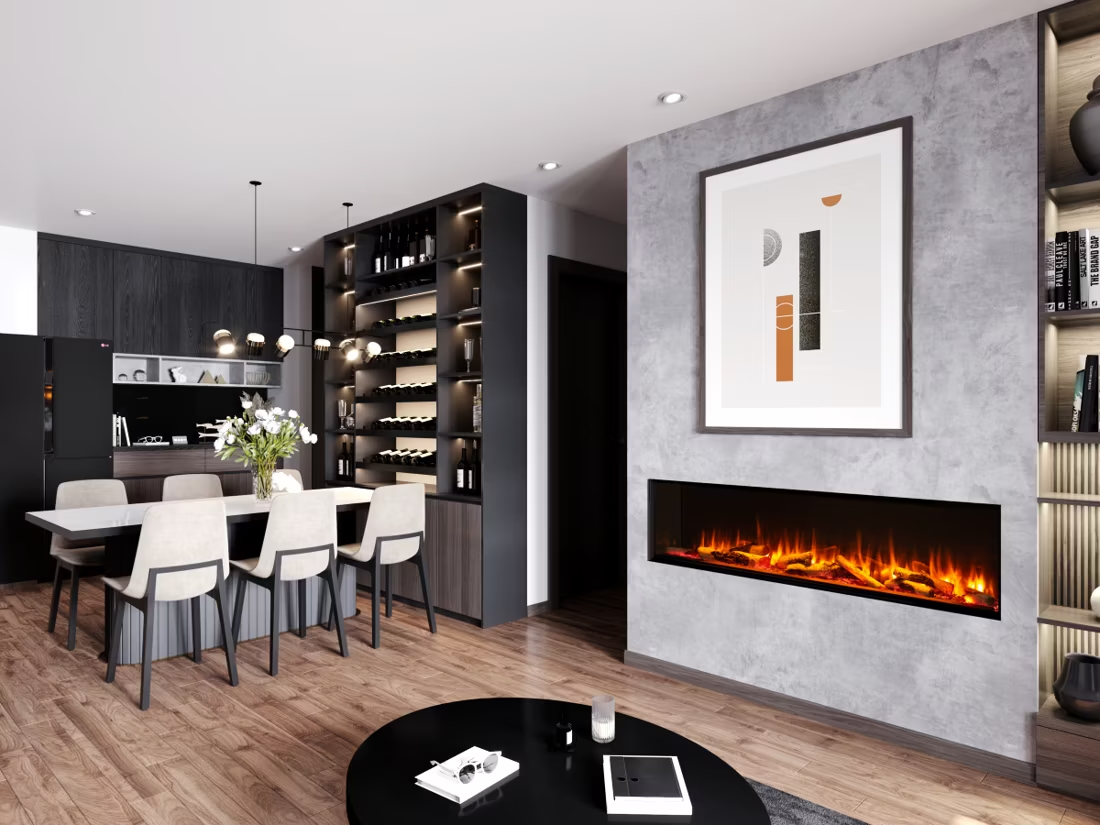
No—that's its superpower. An electric fireplace needs a wall and an outlet, period. No vent pipe, no gas line, no clearances to design around, which is why it works in bedrooms, offices, apartments, and walls where venting a gas or wood unit would be impractical or impossible. Installation is typically the simplest and least expensive of any fireplace type.
Can I install a fireplace myself?
If you're putting a fire in your house on purpose, it's best to work with an expert. Unless you're genuinely experienced in framing, gas line, vent pipe, and the national code on clearances to combustibles, have a professional do it—and ideally the same company that sells you the fireplace, so warranty, service, and liability all live under one roof.
What is an in-home preview and do I need one?
It's a visit where a hearth professional measures your space, confirms the model you picked actually works in your home, and walks the specs—framing, gas line, venting, finish work—before anything is ordered. Some details you just can't know until you see the house. Never make a down payment without one; it's the single most-skipped step that burns buyers.
Stove and Fireplace Dealers in Lake County
Get your free Project Guide & Parts List for an electric fireplace in Lake County.
Tell me a bit about your home—condo, manufactured home, or a masonry firebox you'd like converted—and I'll match you with a trusted local Lake County dealer and send over a free Project Guide & Parts List: the exact unit, mounting or insert kit, and recommended installer for your project.
Find Your Fireplace →