
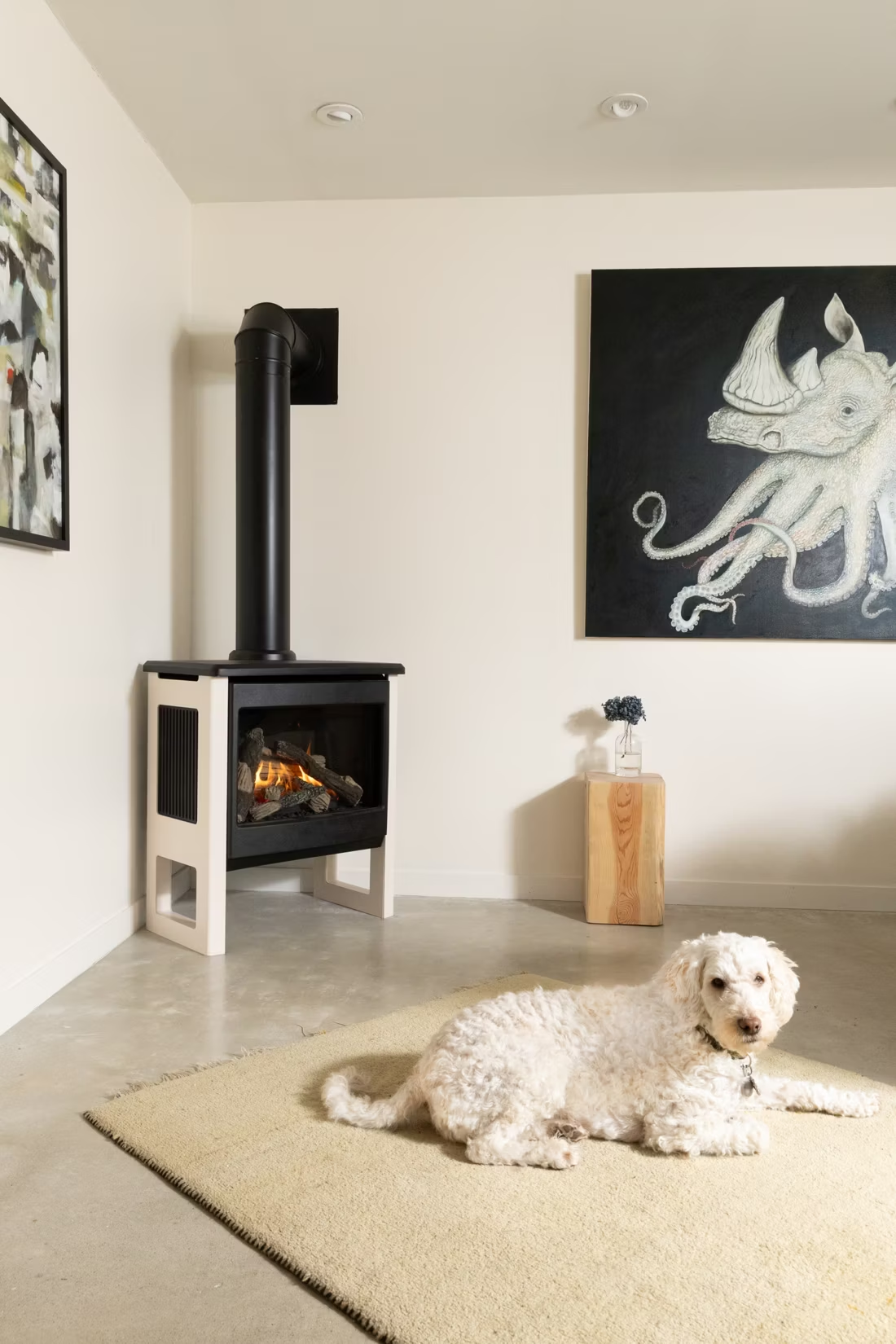
A gas flame ready for Lake County's rare cold snaps.
With just 629 heating degree days and winter lows that average 49°F, Lake County doesn't need a furnace-grade fireplace—it needs one that looks right in a Mount Dora bungalow or a new Clermont build and delivers real heat on the handful of nights a cold front actually rolls through. I'll match you with a trusted local dealer who knows which venting and fuel setup fits your home.
Every Project Starts From One of These Five Situations
Built for ambiance first, ready when a cold front rolls through.
Lake County sits in north-central Florida's Zone 2A climate, part of the Orlando metro's northern edge, with more than 1,400 named lakes spread across communities like Clermont, Leesburg, Mount Dora, Tavares, Eustis, and Groveland. Its 629 heating degree days are a fraction of what a cold-climate city like Duluth, MN racks up in a single winter—roughly a tenth the heating load. That's why wood stoves and pellet stoves are essentially absent here; they're not a realistic fit for a climate where the average winter low sits at 49°F and hard freezes are the exception, not the rule. Gas fireplaces fill a different role: ambiance most of the year, and genuine supplemental warmth during the occasional January cold snap that also puts Lake County's citrus growers on frost watch.
Because Lake County has no listed air quality restrictions or inversion concerns, direct-vent gas units install cleanly without the curtailment rules you'd see in a wood-heavy Western county—but Florida's humidity is its own factor local dealers weigh in. Natural gas mains reach the more built-up corridors around Clermont and the county's city centers, while propane is the standard fuel for many rural subdivisions and lakefront properties outside those footprints. A number of older homes in Mount Dora's and Eustis's historic districts still have original masonry fireboxes that get converted to gas log sets or inserts rather than torn out, keeping the look of the fireplace while making it something homeowners will actually use on the nights it's worth using.
Three steps. No salesperson until you're ready.
Tell us about your project
Your zip code, your situation, and the fuel you're leaning toward—or let the answers point you to one.
See what's actually available
The brands dealers within 100 miles genuinely carry—real options, never a catalog mirage.
Get your dealer & Project Guide
A trusted local dealer, plus the free Project Guide & Parts List that names every component of the job.
Frequently Asked Questions
How much does a gas fireplace installation cost in Lake County?
Most gas fireplace projects in Lake County run in the range of roughly $3,000 to $8,000. A gas log set or insert dropped into an existing masonry firebox, common in older Eustis and Mount Dora homes, tends to land on the lower end, especially if the home already has a gas line nearby. A new direct-vent fireplace for a remodel or new-construction build in a growing area like Clermont or Minneola, with fresh gas line work and venting, runs toward the middle to upper end. Homes relying on a new propane tank set instead of a natural gas main add cost for the tank and initial fill.
Do I need natural gas, or is propane the more realistic option in Lake County?
It depends on where in the county you're located. Natural gas mains generally follow the more established corridors and city centers, so homes in and around Clermont or central Leesburg are more likely to have access to it. Outside those areas—rural subdivisions near Groveland, Astatula, Umatilla, and much of the lakefront property scattered through the county—propane from a local bulk supplier is the standard fuel. Either works fine in a modern gas fireplace with the correct orifice and regulator setup; your local dealer will confirm what's already run to your home before recommending a unit.
Will a gas fireplace actually help during Lake County's cold snaps?
Yes, more than people expect. Lake County's winters are mild enough that citrus growers, not homeowners, are usually the ones watching the forecast, but when a hard freeze does move through, a properly sized direct-vent gas fireplace puts out real, immediate heat without waiting on a central system to catch up. Because the county averages only 629 heating degree days a year, you don't need a unit built for sustained output—you need one that responds fast on the handful of nights it's needed and looks good the rest of the year.
Do I need a permit to install a gas fireplace in Lake County?
Yes, and which office handles it depends on your address. Homes inside city limits—Clermont, Leesburg, Mount Dora, Tavares, Eustis, and others each run their own building department—permit through the city, while unincorporated areas go through Lake County's building division. Either way, the gas line portion has to be run or connected by a licensed gas fitter, which is one reason most homeowners go through a full-service hearth dealer rather than a general contractor: the dealer coordinates the gas work, venting, and inspection sign-off as one job.
Can I convert an old wood-burning fireplace to gas in an older Lake County home?
Often, yes, and it's a common project in Mount Dora's and Eustis's historic neighborhoods where original masonry fireplaces are still intact. A gas log set or insert goes into the existing firebox and vents through the current chimney with a liner, so the house keeps its original look while gaining a fireplace that actually gets used. Given how mild Lake County winters run, many homeowners choose vented gas logs specifically for the visual of a real flame rather than heat output, which keeps the project simpler and less expensive than a full masonry-to-direct-vent conversion.
Should I get a vented or vent-free gas fireplace?
Lake County has no listed air quality restrictions, so vent-free units are legal here, but most local dealers still lean toward direct-vent (vented) fireplaces for a practical reason: Florida's humidity. Vent-free units release combustion byproducts, including moisture, directly into the room, and in a climate where indoor humidity control already matters for mold prevention, adding more moisture from a fireplace isn't ideal. A direct-vent unit exhausts everything, including moisture, straight outside, which is generally the better call for a Lake County home.
How often should my gas fireplace be serviced in Lake County?
Plan on an annual inspection, ideally in early fall before the fireplace gets its heaviest use in December and January. Because many Lake County units sit unused through the long, hot spring and summer, it's worth having a technician check the venting for insect nesting—wasps and other insects building nests in vent terminations over the humid off-season is a real and common issue here—along with the standard burner, pilot, and gas connection checks. A typical service call runs roughly $150 to $250.
Is a wood-burning or pellet stove ever a realistic option in Lake County?
Not really, and it's worth being upfront about that. With winter lows averaging 49°F and only 629 heating degree days a year, there's essentially no heating case for a wood or pellet stove here—regional pellet brands like Lignetics, Hamer Pellet Fuel, and Greenway Renewable Energy serve Florida markets, but almost entirely for grills, smokers, and outdoor use rather than home heating. A small number of homeowners, usually in larger lakefront homes, still install a wood-burning fireplace purely for ambiance or resale appeal, but it's the exception, not the norm, and gas is the far more practical choice for anyone who wants a usable fireplace in Lake County.
What size gas fireplace do I actually need for a Lake County home?
Smaller than you might guess. Because the heating season here is short and mild, sizing decisions in Lake County are driven more by room proportions and sightlines than by BTU output. An oversized unit in a Florida home—designed for cooling loads, not heat retention—can overheat a room quickly on one of the county's rare cold nights and otherwise sit underused most of the year. A local dealer will typically recommend a mid-range direct-vent model sized to the room rather than maxed out for output, which keeps the fireplace comfortable to actually use.
Is my gas fireplace wasting gas?
If it was installed more than 15 years ago, probably. Older gas fireplaces keep a standing pilot light burning all the time, and that little flame can cost a couple hundred dollars a year. Newer models use pilot-on-demand ignition—the pilot lights only when you use the fireplace and goes out when you turn it off.
Can I put a TV above my fireplace?
Yes—with an asterisk. Fireplaces are hot and TVs don't like heat. Either put a mantel between them to deflect rising warmth, or choose a fireplace with heat-management technology that creates a cool zone on the wall above—the wall stays around 125 degrees, barely warm, while the room still gets full heat. If you like clean lines and don't want a mantel, heat management is the answer.
How much should I budget for a fireplace?
For an average home—covering the fireplace, the vent pipe, and basic installation—a budget between $3,900 and $5,500 gives you a lot of options across wood, gas, and pellet. By the time you add finish work, gas line, and electrical, the average complete installation lands between $5,000 and $12,000 all-in. In a remodel or new build, a good rule is to put about 2.5% of the total project cost toward the fireplace.
Can I install a fireplace myself?
If you're putting a fire in your house on purpose, it's best to work with an expert. Unless you're genuinely experienced in framing, gas line, vent pipe, and the national code on clearances to combustibles, have a professional do it—and ideally the same company that sells you the fireplace, so warranty, service, and liability all live under one roof.
Stove and Fireplace Dealers in Lake County
Get your free Project Guide & Parts List for a gas fireplace in Lake County.
Tell me about your home and whether you're on natural gas or propane, and I'll match you with a trusted local Lake County dealer and send over a free Project Guide & Parts List—the exact equipment, vent kit, and recommended installer for your gas fireplace project, no big-box guesswork.
Find Your Fireplace →