
Keep Your Family Warm and Safe—No Matter What
With an average winter low near 52°F and only about 260 heating degree days a year, wood heat isn't a necessity in Port Charlotte, Punta Gorda, or anywhere else in the county—but for homeowners who still want the look and feel of a real fire, we'll match you with a local dealer who can tell you what's realistic to install.
Every Project Starts From One of These Five Situations
Ambiance over necessity on the Gulf Coast.
Charlotte County sits in climate zone 2A—hot and humid nearly year-round, with a winter low average of just 52°F and roughly 260 heating degree days annually. Compare that to a genuinely cold-climate market like Duluth, MN, which racks up over 9,000 heating degree days a year, and it's clear why wood-burning fireplaces never became a heating staple here. There's simply no sustained cold to burn against. The stoves that keep a Duluth household warm through a 20-below night have essentially no functional role in a Punta Gorda living room.
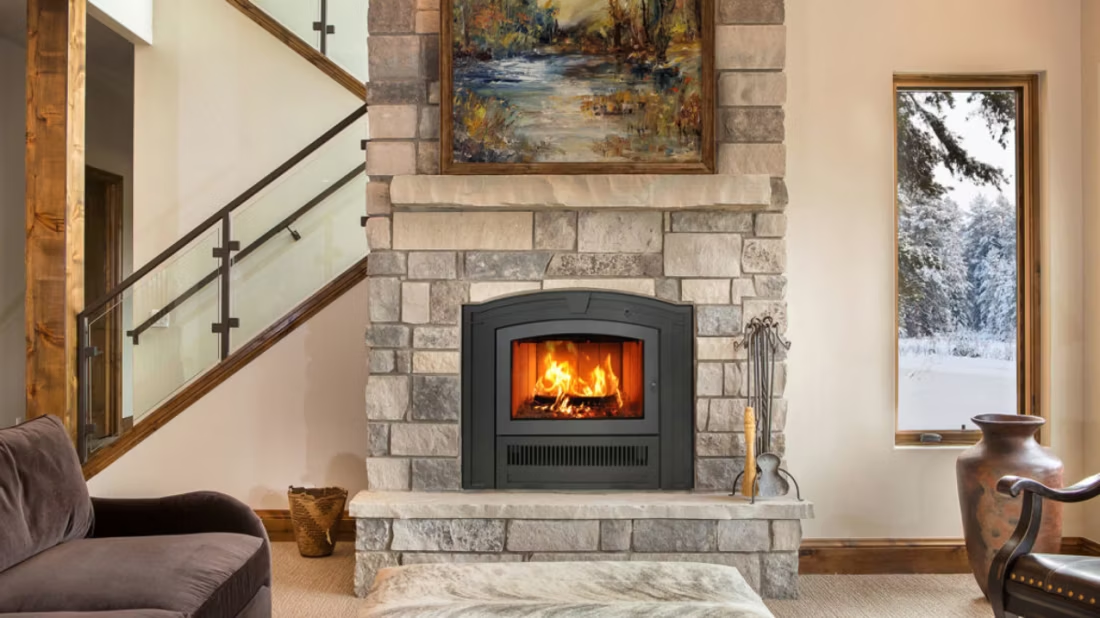
That said, a small number of Charlotte County homeowners still want a wood-burning fireplace—usually for the ambiance of a real fire on the rare cool front that drops temperatures into the 40s, for resale appeal in homes marketed to buyers relocating from colder states, or simply because they grew up with one and want the same feature in a Florida build. Local oak, pine, and even scrap mahogany from cabinetry or landscaping work can fuel an occasional fire, but this is a lifestyle choice here, not a heating strategy. If that's what you're after, a trusted local dealer can tell you honestly what's installable in your home and what it will cost.
Three steps. No salesperson until you're ready.
Tell us about your project
Your zip code, your situation, and the fuel you're leaning toward—or let the answers point you to one.
See what's actually available
The brands dealers within 100 miles genuinely carry—real options, never a catalog mirage.
Get your dealer & Project Guide
A trusted local dealer, plus the free Project Guide & Parts List that names every component of the job.
Frequently Asked Questions
Does a wood-burning fireplace actually make sense in Charlotte County's climate?
For heating purposes, not really. With an average winter low of 52°F and only about 260 heating degree days a year, Charlotte County homes need almost no supplemental heat compared to a place like Burlington, VT, which sees well over 7,000 heating degree days. Where a wood stove is genuine survival equipment in a cold-climate home, in Port Charlotte or Punta Gorda it functions more like a decorative feature you might use a handful of nights a year during a passing cold front.
Why would anyone install a wood fireplace in a place this warm?
The reasons we hear most from Charlotte County homeowners are ambiance, nostalgia, and resale appeal. Retirees and transplants who grew up with wood heat in colder states sometimes want the familiar look and crackle of a real fire, even knowing they'll only light it a few times a season. Builders and remodelers in higher-end neighborhoods also add a decorative wood-burning or wood-look fireplace because buyers relocating from the Northeast or Midwest often expect one, even in a Florida home that never truly needs the heat.
What does a wood fireplace installation cost in Charlotte County?
Because demand is low, fewer local dealers stock and install true wood-burning units, so pricing tends to track toward the higher end of national averages—expect a straightforward freestanding stove or insert to run in the same range you'd see elsewhere in the country, but budget for the possibility of special-ordering the unit or bringing in an installer who also covers Fort Myers or Sarasota. A masonry, site-built wood fireplace in new construction will cost considerably more than a factory-built zero-clearance unit.
Do I need a permit to install a wood fireplace in Charlotte County?
Yes. Any new wood-burning fireplace, insert, or chimney system requires a building permit through Charlotte County's Building Construction Services division, and the unit itself needs to meet current EPA emissions standards if it's a factory-built appliance. Because so few wood installations happen countywide, it's worth confirming your contractor has actually pulled a wood-burning permit before—not every general contractor in the area has recent experience with the chimney and clearance requirements.
What wood species are actually available locally if I do install one?
Oak, pine, and mahogany are the species most commonly available around Charlotte County, mostly as byproducts of landscaping, storm cleanup, and cabinetry or boat-building scrap rather than dedicated firewood operations. Oak burns dense and slow and is the best choice if you want a real fire that lasts an evening; pine burns faster and hotter but produces more resin buildup; mahogany shows up occasionally as offcuts and burns well but isn't sold as a dedicated firewood product. Because there's no commercial firewood industry here the way there is in colder states, expect to source wood through tree services or small local sellers rather than a dedicated woodlot.
Could a wood fireplace help during hurricane-related power outages?
Heat isn't the concern during a Charlotte County outage—the county's mild temperatures mean you won't freeze without power—but some homeowners do value having a non-electric way to produce light, ambiance, or limited cooking heat after a storm. If backup capability matters more than aesthetics, most local dealers will steer you toward propane or electric options instead, since those are far more common and better supported by local service networks here than wood-burning equipment.
What's the difference between a decorative wood fireplace and a real heating stove for a climate like this?
A decorative, factory-built wood-burning fireplace is designed to look good and burn occasionally—it's not engineered for the long, hot, sustained burns a cold-climate wood stove needs to survive a Minnesota or Vermont winter. A genuine heating-grade wood stove, like a catalytic model from Blaze King, is overbuilt for Charlotte County's needs and rarely makes sense here. Most local dealers who do carry wood-burning units will point Southwest Florida buyers toward a simpler, decorative-focused unit rather than a heavy-duty heating stove.
How does Southwest Florida's humidity affect a wood-burning fireplace?
Humidity is one of the bigger practical issues with wood heat in Charlotte County. Firewood left outside or in an uncovered rack absorbs moisture quickly in the county's humid air, which makes it harder to get a clean burn and increases creosote buildup in the flue—a real concern precisely because these fireplaces get so little regular use to burn that creosote off naturally. Stored firewood is also more vulnerable to termite activity than it would be in a drier northern climate, so covered, elevated storage away from the house matters more here than it would in Duluth or Fargo.
Wood vs. gas vs. electric—which fireplace actually makes sense in Charlotte County?
For nearly every Charlotte County home, gas or electric is the more practical choice. A direct-vent gas fireplace delivers instant, controllable warmth on the occasional cool evening without the humidity, storage, and creosote issues that come with wood, and an electric fireplace offers the visual effect of a fire with none of the venting or fuel-handling requirements at all. Wood remains an option mainly for homeowners who specifically want the authentic look, smell, and sound of a real wood fire and are willing to accept it as an occasional-use feature rather than a heating system. A local dealer can walk you through all three and tell you honestly which fits your home.
Why is my open fireplace making my house colder?
Open fireplaces suck—literally. As the fire burns, it consumes air your furnace already paid to heat and pulls it out through the chimney, so the house is actually colder after the fire goes out than before you lit it. An insert fixes this: it seals the chimney, puts fixed glass across the front, and turns that hole in your house into a real heat source.
Why is a fireplace insert so efficient?
An insert does two things: it seals the chimney completely, so you stop losing air you already paid to heat, and it radiates warmth into the room through the firebox and glass. Most add a heat-exchange fan that pulls cool room air underneath, wraps it around the hot firebox, and pushes it back out warm. Your home is more efficient before you've even lit the first fire.
What is an in-home preview and do I need one?
It's a visit where a hearth professional measures your space, confirms the model you picked actually works in your home, and walks the specs—framing, gas line, venting, finish work—before anything is ordered. Some details you just can't know until you see the house. Never make a down payment without one; it's the single most-skipped step that burns buyers.
Can I install a fireplace myself?
If you're putting a fire in your house on purpose, it's best to work with an expert. Unless you're genuinely experienced in framing, gas line, vent pipe, and the national code on clearances to combustibles, have a professional do it—and ideally the same company that sells you the fireplace, so warranty, service, and liability all live under one roof.
Find your wood fireplace option in Charlotte County.
Tell us about your home and how you plan to use a fireplace, and we'll match you with a local dealer who'll give you an honest read on wood versus gas or electric—plus a free Project Guide & Parts List with the exact parts, vent kit, and recommended installer for your Charlotte County project.
Find Your Fireplace →