
Keep Your Family Warm and Safe—No Matter What
Port Charlotte has a barely-there heating season and winter lows that average 52°F, so wood heat isn't a practical need here. For the homeowners who still want a genuine wood fire—for ambiance, for the rare January cold snap, or for a vacation property up north—we'll match you with one of the few local dealers who still handle it right.
Every Project Starts From One of These Five Situations
Port Charlotte doesn't need wood heat. A few homeowners still want the fire.
At 9 feet above sea level on Charlotte Harbor, Port Charlotte's climate zone (2A, hot-humid) has a barely-there heating season—a rounding error compared to the long, deep-cold winters a place like Duluth, Minnesota logs every year. Winter lows here average 52°F, and most years bring only a handful of nights anywhere near freezing. Homes across the city's 33948, 33952, 33954, 33980, and 33949 zip codes are almost universally slab-built with central AC as the primary comfort system, not a chimney in sight.
That's why we flag wood as a poor climate fit for Port Charlotte—it's not a fuel most homeowners here have any practical reason to install. But 'rare' isn't 'zero.' Some residents grew up with wood heat before moving down from colder states and want the look and smell of a real fire on the handful of cool December and January evenings each year. Others are building a lanai fire feature, restoring an older home that already has a masonry chimney, or maintaining a wood fireplace at a second property elsewhere. For those homeowners, we connect you with a local dealer who still handles wood-burning installs and can tell you honestly whether it makes sense for your specific house.
Three steps. No salesperson until you're ready.
Tell us about your project
Your zip code, your situation, and the fuel you're leaning toward—or let the answers point you to one.
See what's actually available
The brands dealers within 100 miles genuinely carry—real options, never a catalog mirage.
Get your dealer & Project Guide
A trusted local dealer, plus the free Project Guide & Parts List that names every component of the job.
Frequently Asked Questions
Does a wood-burning fireplace make sense for a home in Port Charlotte?
For most homes, no—not for heat. With only a barely-there heating season and winter lows averaging 52°F, Port Charlotte doesn't have the sustained cold that makes wood heat worthwhile the way it does in, say, Bozeman, Montana or Minneapolis. Where a wood fireplace does make sense here is purely for ambiance: the occasional cold front that drops temperatures into the 30s, a bonus room, or a home built with an existing masonry chimney from an earlier era. If your goal is warmth and a lower electric bill, a gas or electric fireplace is almost always the more practical choice for a Charlotte County home.
How much does it cost to install a wood fireplace in Port Charlotte?
Cost runs higher here than in cold-climate markets, mainly because most Port Charlotte homes are slab-built with no existing chimney to work with. A factory-built, zero-clearance wood fireplace with a full prefabricated chimney chase typically runs $8,000 to $16,000 once you include the roof penetration, hurricane-rated flashing, and finish work. A freestanding wood stove with insulated Class A pipe run through the roof is usually less—often $5,000 to $9,000—but still requires new venting from scratch. Compare that to a gas or electric fireplace, which can often be added for a fraction of the cost since no chimney is needed at all.
Do I need a permit to install a wood fireplace in Charlotte County?
Yes. Any new wood-burning appliance and its chimney penetration requires a building permit through the Charlotte County Building Construction Services office (or the City of Punta Gorda's building department if you're just across the line). Because Charlotte County sits in an active hurricane corridor—Hurricane Ian made landfall here directly in 2022—the chimney chase also has to meet Florida Building Code wind-load and flashing requirements, not just standard clearance-to-combustible rules. A local installer familiar with both wood-burning codes and Florida's wind provisions will handle this permitting for you.
Where would firewood even come from in Port Charlotte?
There's no national forest or public cutting permit system nearby the way there is out West, so firewood here is almost entirely a byproduct of local tree work. Oak, pine, and ornamental mahogany are the species you'll most often find, frequently coming out of storm cleanup after tropical systems—Hurricane Ian alone brought down thousands of yard trees across Charlotte County. Bundled firewood is available seasonally at hardware stores and roadside stands for around $8-$10 a bundle, and a full pickup-truck load of seasoned oak from a local tree service or firewood supplier usually runs $150-$250.
What's the difference between choosing wood, gas, and electric for a Port Charlotte fireplace?
Gas and electric are the standard choices here for good reason. A gas fireplace (typically running on propane, since natural gas infrastructure is limited in this part of Southwest Florida) gives you instant flame and real heat output without a chimney. Electric fireplaces need no venting at all, which makes them popular in condos, lanais, and homes where a chimney penetration isn't practical. Wood delivers a real, authentic fire and the smell of a genuine hearth, but it means building a chimney from scratch in most homes, more maintenance in a humid climate, and a fuel source you'll have to actively source. If ambiance is the goal and you don't already have a masonry chimney, most Port Charlotte homeowners end up happier with gas or electric.
Does Port Charlotte's climate create any special problems for a wood-burning chimney?
Yes—Gulf Coast humidity and salt air both work against a wood-burning system that only gets occasional use. Creosote can build up faster in humid conditions even with light burning, and an infrequently-used flue is an open invitation for wasps, palmetto bugs, and other pests common to this part of Florida. A stainless steel liner and a properly fitted cap help on both fronts, and it's worth budgeting for a chimney inspection before each burning season even if you only light a handful of fires a year.
What size wood stove or fireplace should I buy for a Port Charlotte home?
Small. Since almost no Port Charlotte home needs a wood-burning appliance to handle its actual heating load, sizing for BTU output the way you would in a cold-climate market doesn't apply. Most homeowners here are better served by a smaller unit sized for a single room or lanai, used occasionally for ambiance on the handful of nights each winter that dip into the 30s. A local dealer can help you pick a compact model that looks right in the space without oversizing for a heat load you'll never actually need.
Are there any burn restrictions or air quality rules I should know about in Charlotte County?
Charlotte County has no ongoing air quality non-attainment issues and no winter inversion problems the way many Western wood-burning markets do, so there's no seasonal curtailment schedule to worry about. The main things to be mindful of are neighborhood-level: many Port Charlotte subdivisions are tightly platted with HOA rules that may address smoke or outdoor burning, and the state can issue temporary burn bans during dry-season drought conditions, even though that's uncommon on the Gulf Coast. Check with your HOA and the county before planning regular use.
Wood, gas, or electric—which fireplace is actually right for my Port Charlotte home?
For the vast majority of homes here, gas or electric will be the better fit—Port Charlotte's barely-there heating season simply doesn't create a heating need that wood is built to solve, and both alternatives skip the cost of building a chimney from scratch. Wood is the right call in a narrower set of cases: a home that already has a masonry fireplace and chimney, a homeowner who specifically wants the ritual and smell of a real wood fire, or a lanai or outdoor living space built around a fire feature. If that's you, we'll still match you with a local dealer who installs wood-burning hearths correctly for this climate—venting, clearances, and hurricane-rated chimney details included.
What's the difference between an insert and a zero-clearance fireplace?
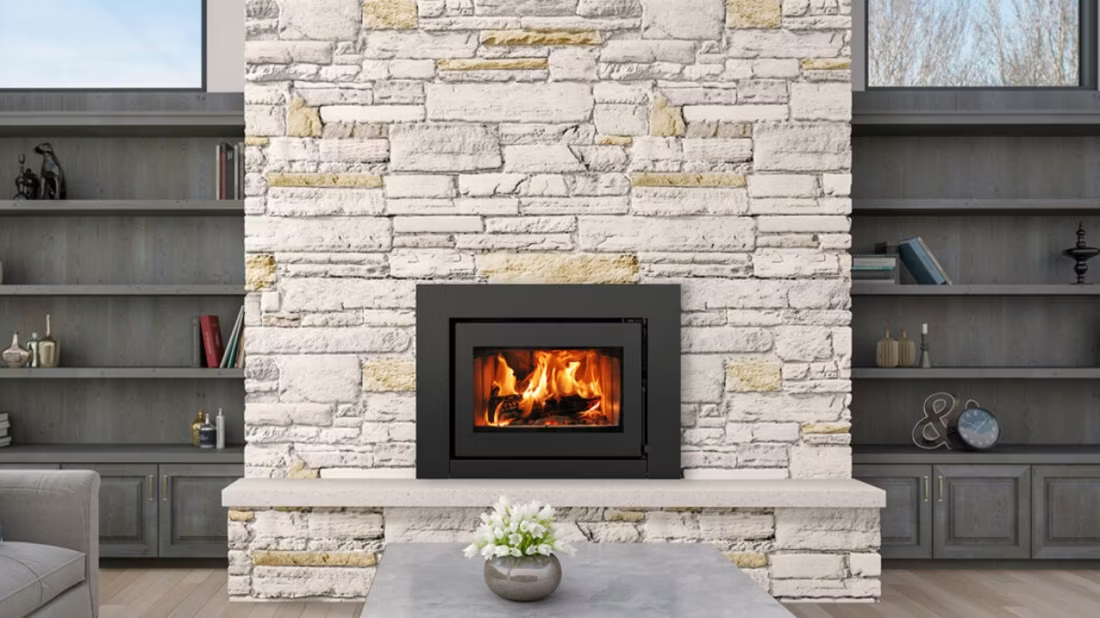
An insert is a fireplace that slides into a pre-existing wood-burning fireplace—if you don't have one, there's nothing to insert it into. A zero-clearance fireplace is built into a framed wall, which makes it the answer for remodels and new construction. Simple test: existing masonry fireplace means insert; blank or framed wall means zero-clearance.
Why is a fireplace insert so efficient?
An insert does two things: it seals the chimney completely, so you stop losing air you already paid to heat, and it radiates warmth into the room through the firebox and glass. Most add a heat-exchange fan that pulls cool room air underneath, wraps it around the hot firebox, and pushes it back out warm. Your home is more efficient before you've even lit the first fire.
How much should I budget for a fireplace?
For an average home—covering the fireplace, the vent pipe, and basic installation—a budget between $3,900 and $5,500 gives you a lot of options across wood, gas, and pellet. By the time you add finish work, gas line, and electrical, the average complete installation lands between $5,000 and $12,000 all-in. In a remodel or new build, a good rule is to put about 2.5% of the total project cost toward the fireplace.
Can I install a fireplace myself?
If you're putting a fire in your house on purpose, it's best to work with an expert. Unless you're genuinely experienced in framing, gas line, vent pipe, and the national code on clearances to combustibles, have a professional do it—and ideally the same company that sells you the fireplace, so warranty, service, and liability all live under one roof.
Find your wood fireplace in Port Charlotte.
Tell us about your home and, if wood is genuinely the right call for your project, we'll match you with a local Charlotte County dealer and send over a free Project Guide & Parts List—the exact parts, vent kit, and installer recommendation for your specific house.
Find Your Fireplace →