
Pellet Stoves in a Place That Rarely Needs Heat.
With only about 260 heating degree days a year and winter lows averaging 52°F, Charlotte County isn't pellet-stove country. A small number of homeowners still install one—for ambiance, for the rare January cold snap, or because they moved down from a colder state and brought the habit with them. We'll help you find the local dealer who can actually get one installed.
Every Project Starts From One of These Five Situations
A climate that almost never asks for a fire.
Charlotte County sits in climate zone 2A, on Florida's Gulf Coast between Punta Gorda, Port Charlotte, and Englewood. The math tells the story: about 260 heating degree days a year and an average winter low around 52°F. Compare that to a place like Duluth, Minnesota, which racks up more than 9,000 heating degree days most winters, and it's clear why pellet stoves—built to run for hours a day, every day, through a long cold season—simply don't have a job to do here most years. There's no cutting-permit season, no cordwood culture, and no real "heating season" the way northern homeowners think of it.
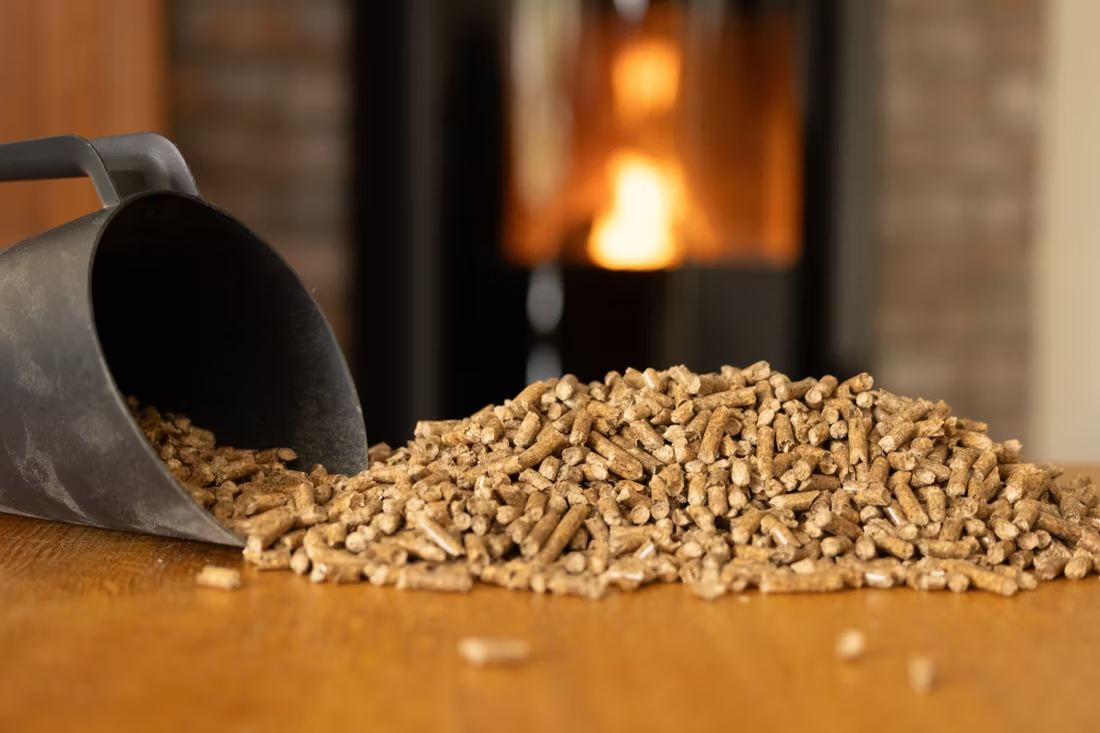
That doesn't mean pellet appliances never show up in the county. A handful of homeowners—often retirees who spent decades heating with a pellet stove up north, or owners of older manufactured homes on the fringes of Port Charlotte and Rotonda West—install a small unit for the occasional cold snap or for the look and feel of a real flame. Brands like Lignetics, Hamer Pellet Fuel, and Greenway Renewable Energy do circulate through the region, but locally they're far more likely to be stocked as smoker or grill pellets at feed and hardware stores than as bagged heating fuel on a dealer's shelf. For the vast majority of Charlotte County homes, a gas or electric fireplace delivers the ambiance people are actually after, without fighting Gulf Coast humidity or sourcing fuel that has almost no local demand.
Three steps. No salesperson until you're ready.
Tell us about your project
Your zip code, your situation, and the fuel you're leaning toward—or let the answers point you to one.
See what's actually available
The brands dealers within 100 miles genuinely carry—real options, never a catalog mirage.
Get your dealer & Project Guide
A trusted local dealer, plus the free Project Guide & Parts List that names every component of the job.
Frequently Asked Questions
Do people actually install pellet stoves in Charlotte County, FL?
Some do, but it's genuinely uncommon. With winter lows averaging 52°F and only about 260 heating degree days a year, there's rarely a sustained cold stretch that calls for a solid-fuel heating appliance. The installations we do see tend to fall into a few categories: transplants from colder states who want the stove they're used to, owners of older homes in Port Charlotte or Rotonda West who like having a backup radiant heat source for the occasional January freeze, or homeowners who simply like the look of a real flame. It's a minority use case, and any dealer you talk to in the county should be upfront about that rather than overselling the appliance's practicality here.
How much does a pellet stove installation cost in Charlotte County?
Because pellet stoves are uncommon locally, Charlotte County doesn't have the kind of established pricing benchmark you'd find in a place like Duluth or Bozeman, where dealers install dozens a season. Nationally, a typical pellet stove installation runs $3,000 to $6,000 depending on the unit and venting path, and that's a reasonable starting point here—but expect fewer dealers to quote it and more variability between them. Get a firm, in-home quote before committing, since the installer may need to source venting components that aren't kept in regular stock for a warm-climate market.
Where can I buy pellet fuel in Charlotte County?
Regional brands like Lignetics, Hamer Pellet Fuel, and Greenway Renewable Energy are available through the Southeast, but in Charlotte County you're more likely to find them stocked as smoker or grilling pellets at feed stores and hardware retailers than as heating-grade bags on a dealer showroom floor. If you do own a pellet stove, plan to special-order heating pellets seasonally rather than expecting a shelf full of options, and buy only what you'll burn within a season—Gulf Coast humidity causes bagged pellets to absorb moisture and break down faster than they would in a drier climate.
Is pellet heat efficient in a warm climate like Charlotte County's?
Pellet stoves themselves are efficient appliances—that's not the issue. The issue is that Charlotte County's climate gives them almost nothing to do. A stove rated for 40,000+ BTUs of continuous output is designed for homes losing heat steadily through a long winter; in a county averaging 260 heating degree days a year, that same stove will run only a handful of days each winter, which stretches out the payback period on the appliance indefinitely. If you want efficient, low-maintenance ambiance for the handful of cool evenings Charlotte County actually gets, a gas or electric unit will get you there with far less hassle.
What's the difference between a pellet stove and a gas fireplace for a Charlotte County home?
A pellet stove burns compressed wood pellets, needs a hopper refill and periodic ash cleanout, and requires electricity to run its auger and blower. A gas fireplace runs on natural gas or propane, ignites instantly at the flip of a switch, and needs essentially no fuel handling. In Charlotte County, where gas fuel relevance is standard and the climate rarely calls for sustained heat output, a direct-vent gas fireplace or insert is the far more practical choice for most homeowners chasing ambiance or occasional warmth—it also tolerates the region's humidity better than a mechanical pellet appliance with moving parts.
Can a pellet stove serve as backup heat during a hurricane power outage?
No—this is one of the most important things to know if you're considering one for storm preparedness. Pellet stoves rely on an electric auger to feed fuel and an electric blower to circulate heat, so they shut down the moment the power goes out, which is exactly when Charlotte County homeowners are most likely to need backup heat or light. Wood-burning appliances (which don't need electricity) are essentially not used in the county, so if outage resilience is your goal, a battery-backup-equipped gas fireplace or a generator-fed electric unit is a more realistic plan than a pellet stove.
Do I need a permit to install a pellet stove in Charlotte County?
Yes. Any new vented heating appliance—pellet stove included—typically requires a building permit through Charlotte County's building department, covering the unit's venting path and clearances to combustibles. Because pellet installations are infrequent here, it's worth confirming with your installer that they've pulled this specific type of permit before and know how the local inspection process handles a solid-fuel appliance in a county where gas and electric are the norm.
What should I consider instead of a pellet stove in Charlotte County?
For most homeowners here, a direct-vent gas fireplace or insert delivers the same instant ambiance and real flame look without fuel storage, ash cleanup, or reliance on hard-to-source heating pellets. Electric fireplaces are another strong option—no venting at all, minimal installation cost, and full functionality regardless of humidity or storm conditions. Both fuels carry a standard relevance rating for Charlotte County, meaning local dealers stock and service them routinely, unlike pellet appliances, which remain a niche request.
I already own a pellet stove from up north—can I still use it in my Charlotte County home?
You can, as long as it's properly vented and permitted through the county, but plan around two local realities: fuel sourcing and moisture. Heating-grade pellets aren't a regular stock item at most Charlotte County retailers, so you'll likely need to order ahead or drive to a supplier carrying brands like Lignetics or Greenway Renewable Energy. And because Gulf Coast humidity is high year-round, bagged pellets need to be stored somewhere genuinely dry—a garage or unconditioned shed here isn't the same as a basement in a northern climate—or they'll swell, clump, and burn poorly.
How often does a pellet stove need cleaning?
A clean pellet stove is a happy pellet stove. Plan on cleaning the burn pot about once a week when you're burning regularly—ash and clinkers gum up the air holes just like a pellet barbecue. Most pellet stove problems trace back to skipped cleaning that nobody explained up front. Some designs make it easy with a trapdoor burn pot: pull a lever and the gunk drops into the ash pan.
Why is my open fireplace making my house colder?
Open fireplaces suck—literally. As the fire burns, it consumes air your furnace already paid to heat and pulls it out through the chimney, so the house is actually colder after the fire goes out than before you lit it. An insert fixes this: it seals the chimney, puts fixed glass across the front, and turns that hole in your house into a real heat source.
How much should I budget for a fireplace?
For an average home—covering the fireplace, the vent pipe, and basic installation—a budget between $3,900 and $5,500 gives you a lot of options across wood, gas, and pellet. By the time you add finish work, gas line, and electrical, the average complete installation lands between $5,000 and $12,000 all-in. In a remodel or new build, a good rule is to put about 2.5% of the total project cost toward the fireplace.
Can a fireplace actually lower my heating bill?
Yes—by creating a comfort zone. A furnace heats every square foot of the house just to warm the one room you're in; a gas fireplace on low burns roughly a sixth of the gas a typical furnace does. Set the furnace around 55–60 degrees as a baseline, then heat the rooms your family actually uses. Families who heat this way commonly save $20–$60 a month.
Pellet Brands Stocked Around Charlotte County
Manufacturers will point you to the nearest stocking dealer.
Find your pellet stove option in Charlotte County.
Pellet heat is a niche fit here, but if it's still the right choice for your home, we'll match you with a local dealer who installs it honestly—and send you a free Project Guide & Parts List with the exact parts, including the vent kit, for your Charlotte County project.
Find Your Fireplace →