
Real fireplace ambiance, built for Southwest Florida living.
From Punta Gorda to Port Charlotte, Englewood, and Rotonda West—electric is the fireplace fuel that actually makes sense where winter lows average 52°F. Find the right unit and connect with a trusted local dealer.
Every Project Starts From One of These Five Situations
Ambiance first, heat a bonus.
Charlotte County sits in climate zone 2A on Florida's Gulf Coast, and the numbers tell the real story: a very light winter heating need, versus a heavy, months-long heating season in a place like Duluth, Minnesota. Winter lows here average 52°F. Nobody in Port Charlotte, Punta Gorda, or Englewood is heating a home through a five-month winter—the coldest stretch might see a handful of nights that dip into the 30s or 40s. Which is exactly why electric fireplaces have found a real niche here: nobody needs a wood stove or pellet hopper to survive January, but plenty of homeowners want the glow, the mantel, and the focal point of a fireplace in the living room or lanai.
Electric also fits how this county actually builds. Most homes are concrete block construction, and a large share of Port Charlotte and Deep Creek in particular are manufactured or modular homes—both are far easier to add a fireplace to with a zero-clearance electric unit than with anything requiring a masonry chase or Class A chimney. Post-Hurricane Ian rebuilds throughout Punta Gorda and Port Charlotte have also created a wave of homeowners refinishing living rooms and adding fireplace features as part of reconstruction, and electric inserts drop into a new or existing mantel surround without touching the roofline or exterior wall—a real advantage in a county where roof penetrations and wind-rated envelopes matter to insurance carriers.
Three steps. No salesperson until you're ready.
Tell us about your project
Your zip code, your situation, and the fuel you're leaning toward—or let the answers point you to one.
See what's actually available
The brands dealers within 100 miles genuinely carry—real options, never a catalog mirage.
Get your dealer & Project Guide
A trusted local dealer, plus the free Project Guide & Parts List that names every component of the job.
Frequently Asked Questions
How much does an electric fireplace installation cost in Charlotte County?
Costs run from a few hundred dollars for a plug-in electric insert that slides into an existing mantel opening up to roughly $1,500–$2,500 for a built-in wall unit that requires a dedicated electrical circuit and finish carpentry around the surround. Because there's no venting, gas line, or chimney work involved, electric is consistently the least expensive fireplace fuel to install in Charlotte County—a real contrast to gas units, which often need propane line runs in areas without natural gas service. A local dealer can tell you within minutes whether your planned location needs a new 120V or 240V circuit or can run off an existing outlet.
What size or type of electric fireplace works best in a Charlotte County home?
Since almost no Charlotte County home relies on a fireplace for actual heat, sizing is driven by the room's focal wall and your existing mantel or built-in, not BTU output. Compact wall-mount units and 36–50 inch linear inserts are popular in Port Charlotte and Punta Gorda living rooms with vaulted or standard 8-foot ceilings, while larger 60-plus inch linear models work well in the more open, great-room layouts common in newer Rotonda West and Deep Creek construction. Most units include a small supplemental heater rated for a single room, which is plenty for the rare 40-degree evening in January.
Do I need a permit to install an electric fireplace in Charlotte County?
In most cases, no separate permit is needed for a plug-in electric fireplace insert that uses an existing outlet. If your installation requires a new dedicated circuit—common with larger built-in wall units—that electrical work typically requires a permit and a licensed electrician, which most local hearth dealers coordinate directly. Because there's no gas line, flue, or chimney involved, electric is by far the simplest fireplace fuel to permit in the county, and there are no air quality restrictions to consider since electric units produce no emissions.
What's the difference between an electric insert and a built-in wall unit?
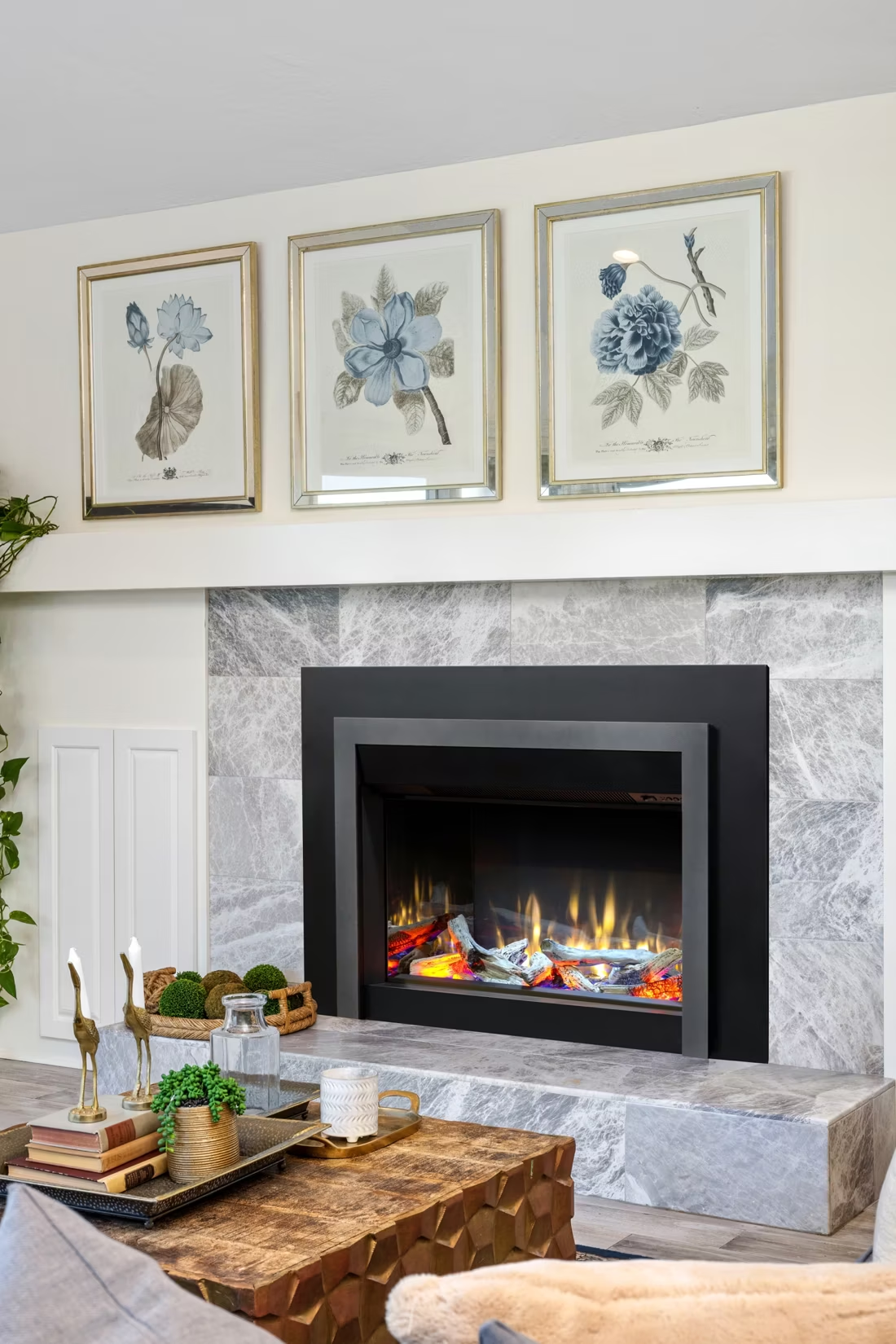
An electric insert is designed to slide into an existing fireplace opening or mantel surround—a common choice for older Punta Gorda and Englewood homes with a decorative masonry or wood-look fireplace shell that was never used for real wood burning. A built-in wall unit is designed to be framed into new construction or a remodel, often flush-mounted with a linear format that spans several feet. For post-Ian rebuilds and new construction in Rotonda West or west Port Charlotte, a built-in unit is usually the cleaner option since the wall is being opened up anyway.
Will my electric fireplace work during a hurricane power outage?
No—and this is worth being direct about. Electric fireplaces run entirely off grid power, so during an FPL outage, which can stretch for days after a major storm the way it did across Charlotte County after Hurricane Ian in 2022, an electric unit won't provide heat or flame effect. Given that winter heating need here is minimal to begin with, this rarely matters in practice—electric fireplaces in this county are almost always installed for ambiance rather than emergency heat. If backup heat during outages is a real priority, that's a conversation to have with a local dealer about a small propane unit instead.
Do I need a special electric fireplace for Charlotte County's humidity?
Standard indoor electric fireplace units are built to handle typical Gulf Coast humidity without issue, but if you're installing on a screened lanai, pool cage, or outdoor-adjacent wall, look specifically for a unit rated for damp or outdoor locations—standard indoor units aren't designed for the salt air and moisture exposure common in coastal Charlotte County. A local dealer can point you to the right UL-rated model for lanai and outdoor living spaces versus a standard interior installation.
Electric vs. gas—which is right for my Charlotte County home?
Gas fireplaces deliver real, adjustable heat output and a more traditional flame, and they're a fine option for the handful of genuinely cool nights each winter—but they require either a propane tank and line work or, where available, a natural gas hookup, plus venting and a building permit. Electric skips all of that: no fuel line, no venting, no combustion byproducts, and installation that can be done in an afternoon. For most Charlotte County homeowners who want fireplace ambiance without meaningful heating demand, electric is the simpler and less expensive path. Homeowners who specifically want a live flame look and don't mind the added installation complexity often go with gas instead.
Why doesn't Find My Fireplace recommend wood stoves for Charlotte County?
Wood heat is essentially not a fit here. With only a very light winter heating need and winter lows averaging 52°F, there's no real cold-climate heating demand the way there is in a place like Burlington, Vermont. A small number of older Punta Gorda or Englewood homes have decorative wood-burning fireplaces built decades ago, and some rural county properties still use them occasionally for ambiance, but new wood stove installations are rare and not something local hearth dealers typically stock or recommend for this climate. Electric fills that same ambiance role without the chimney, the local oak or pine firewood sourcing, or the maintenance a wood system requires in a humid coastal environment.
How long does an electric fireplace installation take?
A plug-in insert into an existing mantel or fireplace opening can often be done in under an hour. A built-in wall unit that requires framing, a new electrical circuit, and finish trim work typically takes a full day, sometimes two if it's part of a larger remodel following storm repairs. Because there's no venting or gas line to run, electric installations in Charlotte County are consistently the fastest of any fireplace fuel—a local dealer can usually schedule and complete the work within a week or two of your consultation.
Can I put a TV above my fireplace?
Yes—with an asterisk. Fireplaces are hot and TVs don't like heat. Either put a mantel between them to deflect rising warmth, or choose a fireplace with heat-management technology that creates a cool zone on the wall above—the wall stays around 125 degrees, barely warm, while the room still gets full heat. If you like clean lines and don't want a mantel, heat management is the answer.
Do electric fireplaces actually produce heat?
Yes—most put out around 4,800–5,000 BTUs from a standard outlet, which comfortably warms a bedroom, office, or den as a comfort-zone heater. What they won't do is carry a whole house the way wood, gas, or pellet can. Think of electric as ambiance-first with honest supplemental heat: flames on with no heat in July, flames plus warmth in January.
Can I install a fireplace myself?
If you're putting a fire in your house on purpose, it's best to work with an expert. Unless you're genuinely experienced in framing, gas line, vent pipe, and the national code on clearances to combustibles, have a professional do it—and ideally the same company that sells you the fireplace, so warranty, service, and liability all live under one roof.
What is an in-home preview and do I need one?
It's a visit where a hearth professional measures your space, confirms the model you picked actually works in your home, and walks the specs—framing, gas line, venting, finish work—before anything is ordered. Some details you just can't know until you see the house. Never make a down payment without one; it's the single most-skipped step that burns buyers.
Find your electric fireplace in Charlotte County.
Tell us a bit about your home and we'll match you with a trusted local dealer and send over a free Project Guide & Parts List—the exact unit, mounting or insert details, and electrical requirements for your Charlotte County installation.
Find Your Fireplace →