
Ambiance heating, done right, in Charlotte County.
Fireplace resources for Punta Gorda, Port Charlotte, Englewood, and every community along the Peace River and Gulf coast. Find the right unit and connect with a trusted local hearth retailer.
Every Project Starts From One of These Five Situations
Gulf-coast comfort, not cold-climate survival, in Charlotte County, Florida.
Charlotte County sits on Florida's southwest Gulf coast in climate zone 2A, with an average winter low around 52°F and just 260 heating degree days a year—for comparison, a place like Duluth, Minnesota racks up more than 9,000 HDD in a typical winter. There's essentially no wood-heating culture here, and no meaningful wood smoke or air quality concerns to manage. What homeowners in Punta Gorda and Port Charlotte actually want out of a fireplace is different: ambiance on the rare 40-degree night, a design centerpiece in a great room, or a gas or electric unit that adds resale value without asking anything of the homeowner in upkeep.
What you'll find on this hub: hearth retailers, service technicians, and fuel suppliers serving every community in the county—from Punta Gorda and Port Charlotte to Englewood, Rotonda West, and the barrier-island communities near Boca Grande. Pick your fuel below to drill into specifics—local dealers, installation costs, recommended units, and the resources that match your project. Gas and electric are the two fuels that actually make sense here, and this hub is built around that reality rather than pretending otherwise.
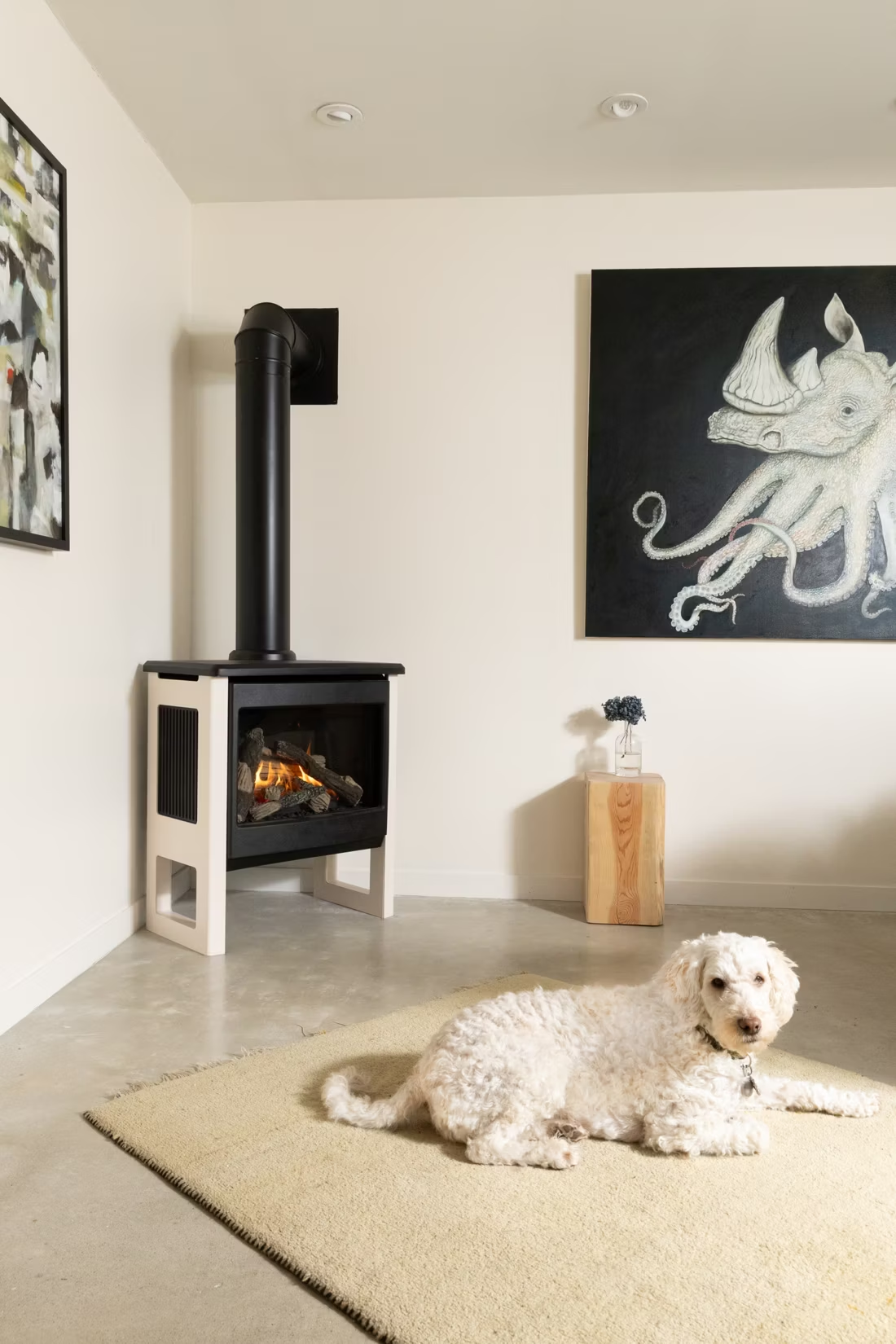
Four fuels. One honest answer for Charlotte County.
Three steps. No salesperson until you're ready.
Tell us about your project
Your zip code, your situation, and the fuel you're leaning toward—or let the answers point you to one.
See what's actually available
The brands dealers within 100 miles genuinely carry—real options, never a catalog mirage.
Get your dealer & Project Guide
A trusted local dealer, plus the free Project Guide & Parts List that names every component of the job.
Frequently Asked Questions
Do people actually install fireplaces in Charlotte County, Florida?
Yes, though the reasons differ from what you'd hear in a cold-climate market. With only about 260 heating degree days a year and winter lows averaging 52°F, nobody in Punta Gorda or Port Charlotte is heating a house with a fireplace the way someone in Bismarck or Burlington would. Instead, gas fireplaces and gas log inserts get installed for ambiance, for the occasional cold front that drops overnight temps into the 30s, and as a design feature in new construction and remodels. Electric fireplaces are popular for the same reasons plus flexibility—no venting, no gas line, and they work in condos and lanai-adjacent rooms where a vented unit isn't practical.
Are wood stoves or wood fireplaces a realistic option here?
Not really, and it's worth being direct about that. Charlotte County's climate—zone 2A, mild winters, no sustained cold season—means wood heat has essentially no practical role, and pellet stoves see the same lack of demand despite regional pellet brands like Lignetics and Hamer Pellet Fuel being available at some big-box and farm-supply stores for grills and smokers rather than home heating. A small number of homeowners with existing wood-burning fireplaces (common in older Punta Gorda homes built before gas became standard) still use them a handful of nights a year with local oak or pine, mostly for atmosphere. If you're building new or renovating, gas or electric will almost always serve you better than adding wood-burning capability.
Do I need a permit for a gas or electric fireplace in Charlotte County?
Generally yes for gas, and it depends for electric. Gas fireplace and gas insert installations require a building permit through Charlotte County Building Construction Services (or the City of Punta Gorda for homes within city limits), plus a separate permit for any new gas line work, which must be done by a licensed gas contractor. Propane tank placement also has its own setback rules tied to the county fire code. Electric fireplaces that simply plug into an existing outlet typically don't need a permit; built-in electric units that require new wiring or a dedicated circuit do. Most local hearth retailers handle the permitting on your behalf as part of the installation quote.
What does a gas or electric fireplace installation cost in Charlotte County?
Gas fireplace, insert, or gas log set installations typically run $3,500–$9,000 depending on whether you're tying into an existing natural gas or propane line versus running new gas piping—homes further from Punta Gorda's natural gas infrastructure often rely on propane, which can add tank and line costs. Electric fireplaces are considerably less: $200–$2,500 for the unit itself, plus $300–$1,000 in labor for anything beyond a simple plug-in, such as a wall-mounted or built-in unit with a new circuit. Because there's no chimney or masonry work involved in most Charlotte County installs, both fuels tend to land on the lower end of national installation cost ranges.
Which utility or supplier should I expect to work with for a gas fireplace?
It depends on where in the county you're located. Homes within Punta Gorda's natural gas service area typically connect through the city's gas utility, while much of unincorporated Charlotte County—including parts of Port Charlotte, Englewood, and Rotonda West—relies on propane delivered and serviced by regional propane suppliers. Your hearth retailer can usually tell you which applies to your address and coordinate with the right utility or propane company as part of the installation, since gas line sizing and hookup depend on which service is available.
Can one local retailer handle both gas and electric fireplace installs?
Yes—most Charlotte County hearth retailers that install fireplaces carry both gas and electric lines, since those are the two fuels that see real local demand. This makes cross-shopping straightforward: you can typically see working gas and electric displays side by side and get a direct comparison on install cost, maintenance, and how each looks in a great room or lanai-adjacent space. Retailers that also handle wood-burning fireplace maintenance (for older homes with existing masonry fireplaces) are less common and worth confirming directly if that's part of your project.
Wood, gas, pellet, or electric—how do I choose?
Match the fuel to your life, not the other way around. Wood: lowest fuel cost and total power-outage independence, but you're hauling and stacking. Gas: press a button, set a thermostat, no maintenance to speak of. Pellet: wood economics with automatic feeding, in exchange for weekly cleaning and a need for electricity. Electric: plugs in anywhere with honest supplemental heat. Nobody regrets the fuel that fits how they actually live.
Can I install a fireplace myself?
If you're putting a fire in your house on purpose, it's best to work with an expert. Unless you're genuinely experienced in framing, gas line, vent pipe, and the national code on clearances to combustibles, have a professional do it—and ideally the same company that sells you the fireplace, so warranty, service, and liability all live under one roof.
What is an in-home preview and do I need one?
It's a visit where a hearth professional measures your space, confirms the model you picked actually works in your home, and walks the specs—framing, gas line, venting, finish work—before anything is ordered. Some details you just can't know until you see the house. Never make a down payment without one; it's the single most-skipped step that burns buyers.
How much should I budget for a fireplace?
For an average home—covering the fireplace, the vent pipe, and basic installation—a budget between $3,900 and $5,500 gives you a lot of options across wood, gas, and pellet. By the time you add finish work, gas line, and electrical, the average complete installation lands between $5,000 and $12,000 all-in. In a remodel or new build, a good rule is to put about 2.5% of the total project cost toward the fireplace.
Stove and Fireplace Dealers in Charlotte County
Listings include WhyFire partner dealers, dealers we have verified as authorized for the brands we recommend, and established local businesses that carry hearth products. Every listing shows which one it is. The ones marked Preferred run on WhyFire's software, so they can show you real pricing and book your appointment right here. No manufacturer pays for placement. How we verify dealers →
Calkins Lp Gas Co
Indigo Pool Patio Bbq
American Grill And Hearth
Aquatech Pools Gc
Accent Fireplace & Accessories
Find your fireplace in Charlotte County.
Get matched with a trusted local dealer and receive a free Project Guide & Parts List—a plan for your fireplace project in Charlotte County with the exact parts, including the vent kit, and our recommended local dealer.
Find Your Fireplace →