
Warmth on your terms, even after the power goes out.
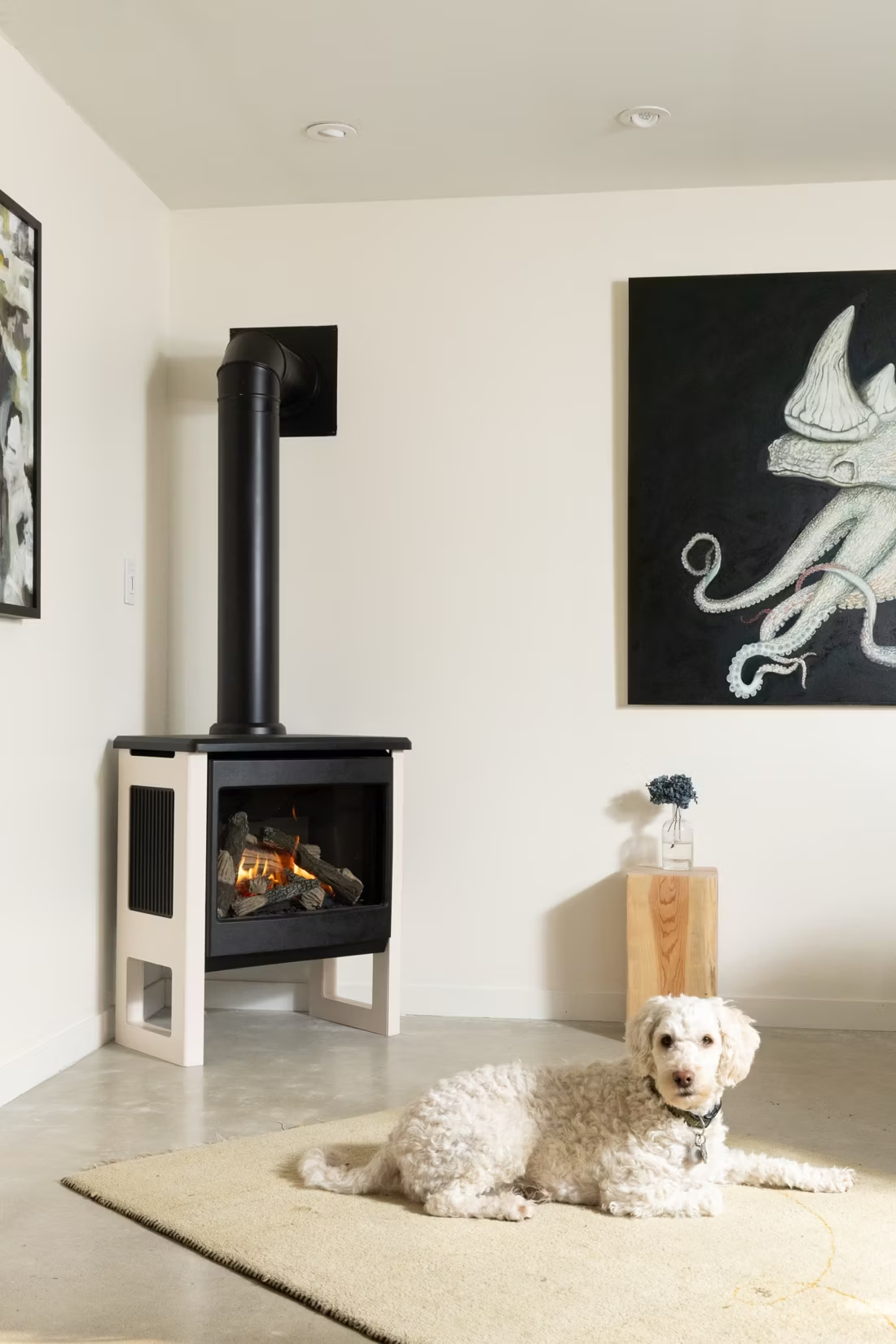
From Punta Gorda to Port Charlotte, Englewood, and Boca Grande, a gas fireplace here is less about surviving winter and more about a warm focal point on cool evenings—and real heat when a storm takes the grid down. Find the right unit and connect with a trusted local dealer.
Every Project Starts From One of These Five Situations
Built for ambiance, ready for the next storm.
Charlotte County sits in climate zone 2A with an average winter low around 52 degrees and only a very light overall winter heating need—a fraction of what a place like Duluth, Minnesota logs in a single month. Furnaces here run rarely, if at all. But that doesn't mean gas fireplaces are a novelty: they're a common feature in living rooms across Punta Gorda, Port Charlotte, and Englewood, valued for the ambiance of real flame on the handful of genuinely chilly nights each December through February, and for the finished, high-end look they give a Gulf Coast living room whether or not the burner ever runs on a given evening.
The other driver is resilience. Charlotte County took a direct hit from Hurricane Ian in 2022, and Punta Gorda and Port Charlotte saw extended power outages afterward. That experience has pushed more homeowners toward gas fireplaces and inserts with battery-backup or self-generating ignition systems that keep working when the grid doesn't—a fireplace that still lights on demand during a post-storm outage is a meaningful upgrade over a decorative unit that needs household power to fire up. Natural gas mains don't reach most of the county outside a handful of newer developments, so propane is the standard fuel source for the majority of installations here, and any dealer worth using will size the tank, the line, and the venting to match.
Three steps. No salesperson until you're ready.
Tell us about your project
Your zip code, your situation, and the fuel you're leaning toward—or let the answers point you to one.
See what's actually available
The brands dealers within 100 miles genuinely carry—real options, never a catalog mirage.
Get your dealer & Project Guide
A trusted local dealer, plus the free Project Guide & Parts List that names every component of the job.
Frequently Asked Questions
How much does a gas fireplace installation cost in Charlotte County?
Most gas fireplace and insert installations in Charlotte County run somewhere between $4,000 and $9,000, with the spread coming down to the unit itself, whether a propane tank needs to be installed or upsized, and how much venting work is involved. A direct-vent insert going into an existing masonry fireplace with a propane line already nearby sits toward the lower end. A new built-in fireplace for a remodel—with framing, venting through an exterior wall, and a fresh propane run—lands higher. Coastal installs in Boca Grande or Englewood sometimes carry a modest premium for corrosion-resistant venting components suited to salt air. A local dealer will give you a firm number after seeing the space.
Do I even need a gas fireplace with winters this mild?
It's a fair question in a county with such a light overall winter heating need and winter lows that average in the low 50s. The honest answer is that a gas fireplace in Charlotte County is rarely doing the work of heating a whole house—it's a focal-point feature that gets used on the genuinely cool nights in December and January, and it doubles as heat you can rely on if a storm knocks out power. Homeowners here choose gas fireplaces for the look and the flame more than for BTU output, and that's a perfectly reasonable reason to install one.
Is wood heat an option in Charlotte County, or should I stick with gas?
Wood-burning stoves and fireplaces are genuinely uncommon in Charlotte County—the mild climate simply doesn't create the demand you'd see further north, and most local dealers stock little to no wood-burning equipment. The oak, mahogany, and pine common on local properties are grown as shade and landscape trees rather than a firewood resource, and after Hurricane Ian took down a lot of mature oak canopy, most of that wood went to chippers and cleanup crews rather than woodpiles. For anyone weighing the two, gas is the far more practical choice here—no smoke, no cutting or storing wood, and equipment that's actually stocked and serviced locally.
Should I use propane or natural gas for my fireplace?
For the vast majority of Charlotte County, the answer is propane. Natural gas mains reach only a limited number of newer developments and don't extend through most of unincorporated Port Charlotte, Englewood, or the barrier islands. Propane is the standard fuel source for a gas fireplace here, either from an existing household tank or a new tank set specifically for the fireplace. Most fireplace models can be configured for either fuel, so the fireplace you like isn't limited by which one you have—your installer sets the correct orifice and regulator for propane.
Will my gas fireplace still work if the power goes out during a storm?
It can, depending on the ignition system. Units with IPI (intermittent pilot ignition) typically run on AA batteries that kick in automatically when grid power drops, so the fireplace still lights on demand. Valor fireplaces take a different approach: the pilot's thermocouple generates its own electricity, so there are no batteries to keep charged at all. After the extended outages Charlotte County saw following Hurricane Ian, this is one of the first questions we'd suggest asking any local dealer—a fireplace that only works with a live outlet loses most of its value as backup heat during hurricane season.
Do I need a permit to install a gas fireplace in Charlotte County?
Yes. Charlotte County requires a building permit for the fireplace installation and a separate gas permit for any propane line work, and the gas line itself has to be run by a licensed gas fitter. Most established local hearth dealers handle both permits as part of the job and coordinate the gas fitter directly, which is one of the real advantages of working with a dedicated fireplace retailer instead of a general contractor—you're not left managing two separate trades and two separate inspections.
Vented or vent-free—which makes more sense in a humid climate like this?
Vented (direct-vent) gas fireplaces draw combustion air from outside and exhaust the byproducts back outside through a sealed system. Vent-free units burn directly into the room, which adds water vapor and combustion byproducts to your indoor air. In a Gulf Coast county where indoor humidity and mold are already a constant concern, adding more moisture indoors from a vent-free unit is a real downside—most local dealers steer Charlotte County homeowners toward direct-vent units for exactly this reason, on top of the fact that they're the more universally accepted option for insurance and resale.
How often does a gas fireplace need to be serviced here?
An annual inspection is recommended for any gas fireplace or insert, and it matters more in a coastal county like Charlotte. Salt air off the Gulf and Charlotte Harbor accelerates corrosion on vent caps, screens, and exterior components faster than it would inland, so a yearly check of the venting and burner assembly catches problems before they become expensive. Expect to pay roughly $150 to $250 for a standard annual service call from a local gas appliance technician.
Can I convert my existing fireplace to gas instead of replacing it?
Often, yes. Many homes in Charlotte County's retirement and golf communities were built with a wood-burning masonry fireplace that's rarely, if ever, used. A gas insert can go into that existing firebox, using a stainless liner run through the chimney as the vent path, which preserves the look of the fireplace while making it something you'll actually use. Converting typically costs less than a full new-construction gas fireplace since the framing and chimney are already in place—your dealer will confirm whether your existing flue and clearances work for the insert you want.
Why is my open fireplace making my house colder?
Open fireplaces suck—literally. As the fire burns, it consumes air your furnace already paid to heat and pulls it out through the chimney, so the house is actually colder after the fire goes out than before you lit it. An insert fixes this: it seals the chimney, puts fixed glass across the front, and turns that hole in your house into a real heat source.
Is my gas fireplace wasting gas?
If it was installed more than 15 years ago, probably. Older gas fireplaces keep a standing pilot light burning all the time, and that little flame can cost a couple hundred dollars a year. Newer models use pilot-on-demand ignition—the pilot lights only when you use the fireplace and goes out when you turn it off.
Can I install a fireplace myself?
If you're putting a fire in your house on purpose, it's best to work with an expert. Unless you're genuinely experienced in framing, gas line, vent pipe, and the national code on clearances to combustibles, have a professional do it—and ideally the same company that sells you the fireplace, so warranty, service, and liability all live under one roof.
What is an in-home preview and do I need one?
It's a visit where a hearth professional measures your space, confirms the model you picked actually works in your home, and walks the specs—framing, gas line, venting, finish work—before anything is ordered. Some details you just can't know until you see the house. Never make a down payment without one; it's the single most-skipped step that burns buyers.
Find your gas fireplace in Charlotte County.
Tell us a bit about your home and we'll match you with a trusted local dealer and a free Project Guide & Parts List—the right gas fireplace or insert for your space, the exact parts including the vent kit, and a plan built around propane availability and storm-ready ignition.
Find Your Fireplace →