
The easiest fireplace upgrade in the Naugatuck Valley—no chimney required.
From the old brass-mill triple-deckers of Waterbury and Naugatuck to the colonials up in Watertown and Thomaston, electric fireplaces bring real ambiance and zone heat to homes that were never built with a working chimney in mind. Find the right unit and connect with a trusted local dealer.
Every Project Starts From One of These Five Situations
Heat and ambiance, wherever your home needs it.
Naugatuck Valley runs along the river from Waterbury down through Naugatuck, Beacon Falls, Seymour, Ansonia, and Derby, with Watertown and Thomaston up on the higher ground to the west. Winters here average around 19°F on the cold nights and bring a long, hard heating season—a stretch of cold not far off from what Buffalo, NY sees most winters, if a touch milder. Housing stock in the Valley skews old: brass-era triple-deckers and worker cottages in Waterbury and Naugatuck, colonials in Watertown and Thomaston, many of them with masonry fireplaces that haven't drawn a proper flame in decades, and just as many multi-family units with no fireplace opening at all.
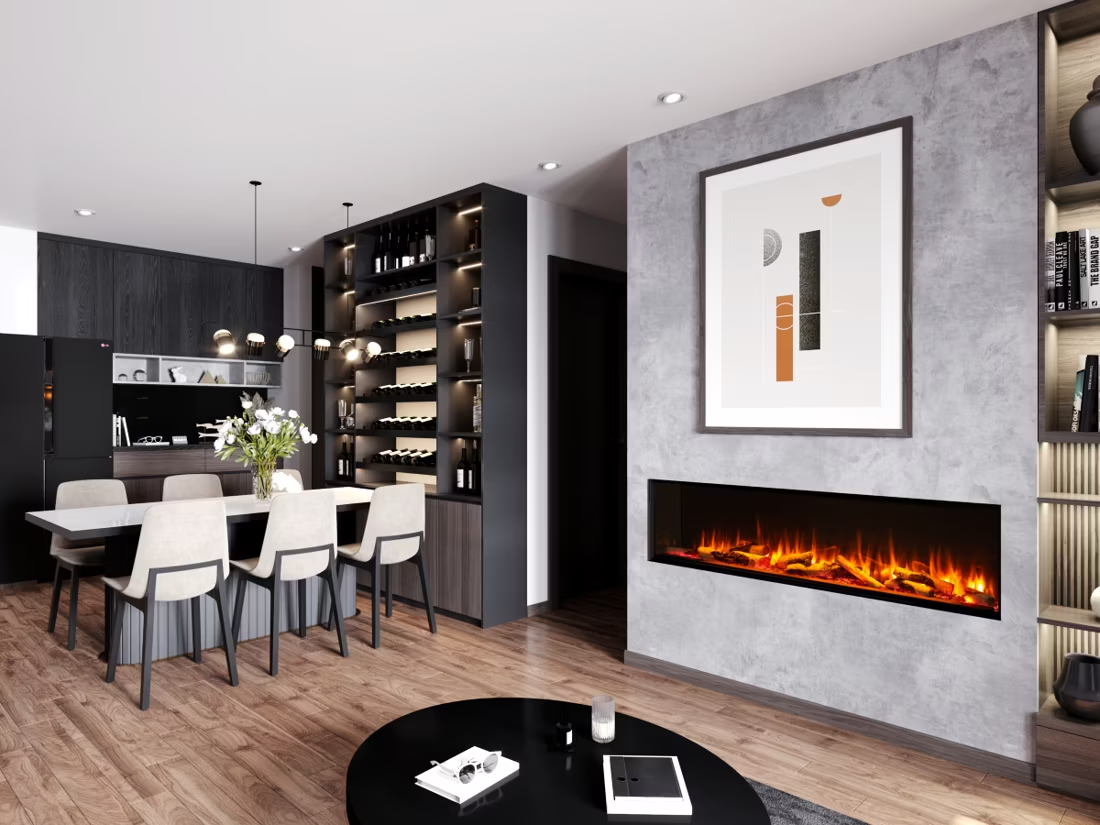
That's exactly where electric earns its place. It doesn't care whether your home has a working flue, a gas line, or a chimney at all—plug-in units run off a standard outlet, and built-in linear models need only a dedicated circuit an electrician can add in an afternoon. For the many Naugatuck Valley homes still heated primarily by oil (still common throughout Eversource and United Illuminating service territory here), an electric insert or built-in adds instant supplemental warmth to the room you're actually sitting in, with none of the venting, gas-line coordination, or annual chimney sweep that wood and gas installs require.
Three steps. No salesperson until you're ready.
Tell us about your project
Your zip code, your situation, and the fuel you're leaning toward—or let the answers point you to one.
See what's actually available
The brands dealers within 100 miles genuinely carry—real options, never a catalog mirage.
Get your dealer & Project Guide
A trusted local dealer, plus the free Project Guide & Parts List that names every component of the job.
Frequently Asked Questions
How much does an electric fireplace cost to buy and install in Naugatuck Valley?
Unit prices in this category run wide: a small plug-in insert or freestanding stove starts around $200-$400, while a built-in linear electric fireplace with a realistic flame effect and heater runs $1,000-$3,000 for the unit itself. Installation is the part that varies most by home. A plug-in unit needs nothing more than an outlet. A built-in model typically needs a dedicated 20-amp circuit, which most licensed electricians in the Valley can add for roughly $300-$800 depending on how far the panel is from the install location—an easier job in a Watertown colonial with an updated panel than in some of the older Waterbury multi-families still running knob-and-tube in parts of the house.
What size electric fireplace do I need for my Naugatuck Valley home?
Most electric fireplaces are sized by width rather than square footage, and the heater output (typically 4,700-5,200 BTU, roughly 1,500 watts) is fairly standard across brands regardless of size—the width mainly affects the flame display, not how much heat you get. For a single room in the 150-300 sq ft range, which covers most living rooms in the Valley's older housing stock, a standard 1,500-watt insert or built-in will noticeably warm the space on a 19-degree night as long as you're using it to supplement your existing oil or gas heat rather than replace it entirely. For open-concept additions or larger remodeled spaces, some homeowners add a second unit rather than expect one fireplace to carry the whole room.
Do I need a permit to install an electric fireplace in Naugatuck Valley?
A simple plug-in unit needs no permit at all—it's no different from plugging in a space heater. A built-in model that requires new electrical wiring or a dedicated circuit does need an electrical permit, pulled through your town's building department. Waterbury, Naugatuck, Ansonia, Derby, Seymour, Watertown, and Thomaston each issue their own electrical permits, and any electrician doing the circuit work should pull it as a matter of course. It's a much lighter lift than the gas-line or chimney permits required for gas or wood installs—usually a same-day inspection once the wiring is roughed in.
Insert, built-in, or mantel package—which fits my home?
If you've got one of the Valley's many decommissioned masonry fireplaces—common in the older Waterbury and Ansonia neighborhoods where the chimney was capped or lined decades ago—an electric insert is usually the cleanest fix: it slides into the existing firebox opening and uses the mantel and surround you already have. For homes without an existing fireplace, a built-in linear unit gets framed into a wall like a piece of millwork, which is popular in newer renovations and additions throughout the Valley. A mantel package (fireplace plus surround sold together) is the fastest option for a room with no fireplace infrastructure at all—it's freestanding, needs only an outlet, and can be repositioned if you move.
How much actual heat does an electric fireplace put out?
Most electric fireplaces top out around 1,500 watts, which translates to roughly 5,000 BTU—enough to noticeably warm a single room but not enough to heat a whole house. Think of it as zone heat: it's well suited to taking the edge off a living room or bedroom on a cold Valley night and letting you turn the thermostat down elsewhere, especially useful in the many Naugatuck Valley homes still running on oil heat. It is not a substitute for your furnace or boiler during a genuine cold snap, and it will not function as backup heat during a power outage the way a wood stove can—that's the one real tradeoff for the convenience.
Can I install an electric fireplace in an apartment or rental in Waterbury or Naugatuck?
Yes, and it's one of the more common uses in this part of the Valley given how much multi-family and rental housing there is in Waterbury and Naugatuck's old mill-worker neighborhoods. A plug-in insert or freestanding unit requires no permanent alteration to the unit and no landlord sign-off beyond checking your lease's appliance clause. Built-in models that require new wiring are a bigger ask of a landlord, but many will approve it since the work is minor compared to venting or gas-line changes—worth checking with your landlord and getting written approval before an electrician opens a wall.
Electric vs. wood or gas—which is right for my home?
Wood offers real radiant heat and works during a power outage, which matters in a Valley that still sees winter storms knock out lines along the river corridor—but it requires a chimney, cutting or buying cordwood (oak, maple, birch, and ash are the common local species), and annual sweeping. Gas delivers instant, higher-output heat but needs either a natural gas line or a propane tank and adds real installation cost for venting and gas-fitting. Electric wins on simplicity: no venting, no fuel to haul, works in nearly any room including apartments and condos, but it produces the least heat of the three and needs power to run at all. For a lot of Naugatuck Valley homeowners already on oil heat, electric is the ambiance-plus-zone-heat add rather than a heating decision.
Is an electric fireplace expensive to run given Connecticut electric rates?
Connecticut's electric rates, through both Eversource and United Illuminating depending on which side of the Valley you're on, run above the national average, so it's worth being realistic about running costs. A 1,500-watt unit run on high for several hours a night will show up on the bill, but because it's used as supplemental zone heat rather than whole-home heating, most owners run it a few hours in the evening rather than all day—which keeps the added cost modest compared to what the same wattage would cost run continuously. It's not the cheapest way to heat a house, but it's rarely meant to be; it's meant to warm the room you're in.
Can I put an electric insert into my old masonry fireplace that no longer works?
Yes—this is one of the most common projects in the Valley's older housing stock, especially in Waterbury, Ansonia, and Derby homes built during the brass era where the original chimney was capped, relined for a furnace flue, or simply never inspected in decades. An electric insert slides into the existing firebox opening without touching the chimney at all, since it doesn't vent anything—no liner inspection, no flue repair, no masonry work. It's often the fastest way to bring a dead fireplace back to functional and attractive use in these older homes.
Can I put a TV above my fireplace?
Yes—with an asterisk. Fireplaces are hot and TVs don't like heat. Either put a mantel between them to deflect rising warmth, or choose a fireplace with heat-management technology that creates a cool zone on the wall above—the wall stays around 125 degrees, barely warm, while the room still gets full heat. If you like clean lines and don't want a mantel, heat management is the answer.
Does an electric fireplace need a vent or chimney?
No—that's its superpower. An electric fireplace needs a wall and an outlet, period. No vent pipe, no gas line, no clearances to design around, which is why it works in bedrooms, offices, apartments, and walls where venting a gas or wood unit would be impractical or impossible. Installation is typically the simplest and least expensive of any fireplace type.
What is an in-home preview and do I need one?
It's a visit where a hearth professional measures your space, confirms the model you picked actually works in your home, and walks the specs—framing, gas line, venting, finish work—before anything is ordered. Some details you just can't know until you see the house. Never make a down payment without one; it's the single most-skipped step that burns buyers.
Can I install a fireplace myself?
If you're putting a fire in your house on purpose, it's best to work with an expert. Unless you're genuinely experienced in framing, gas line, vent pipe, and the national code on clearances to combustibles, have a professional do it—and ideally the same company that sells you the fireplace, so warranty, service, and liability all live under one roof.
Stove and Fireplace Dealers in Naugatuck Valley County
Listings include WhyFire partner dealers, dealers we have verified as authorized for the brands we recommend, and established local businesses that carry hearth products. Every listing shows which one it is. The ones marked Preferred run on WhyFire's software, so they can show you real pricing and book your appointment right here. No manufacturer pays for placement. How we verify dealers →
Neighborhood Chimney Service
Tani’s Masonry Supply, LLC
Fireplace Surplus
Four Seasons Fire & Hearth
Black Swan Fireside Hearth & Home
Best In Backyards
New Haven Masonry
House Of Warmth Stove & Fireplace Shop
The Trading Post
Spotless Chimney Sweeping & Solutions
Leahy’s Metered Gas Service
Fire House Stoves & Spas
Dean's Stove Shop
Hocon Gas Of Torrington
Find your electric fireplace in Naugatuck Valley.
Tell us a bit about your home and we'll match you with the right electric insert, built-in, or mantel package—plus a free Project Guide & Parts List and a trusted local dealer to install it.
Find Your Fireplace →