
No chimney, no permit, no problem for Naugatuck Valley homes.
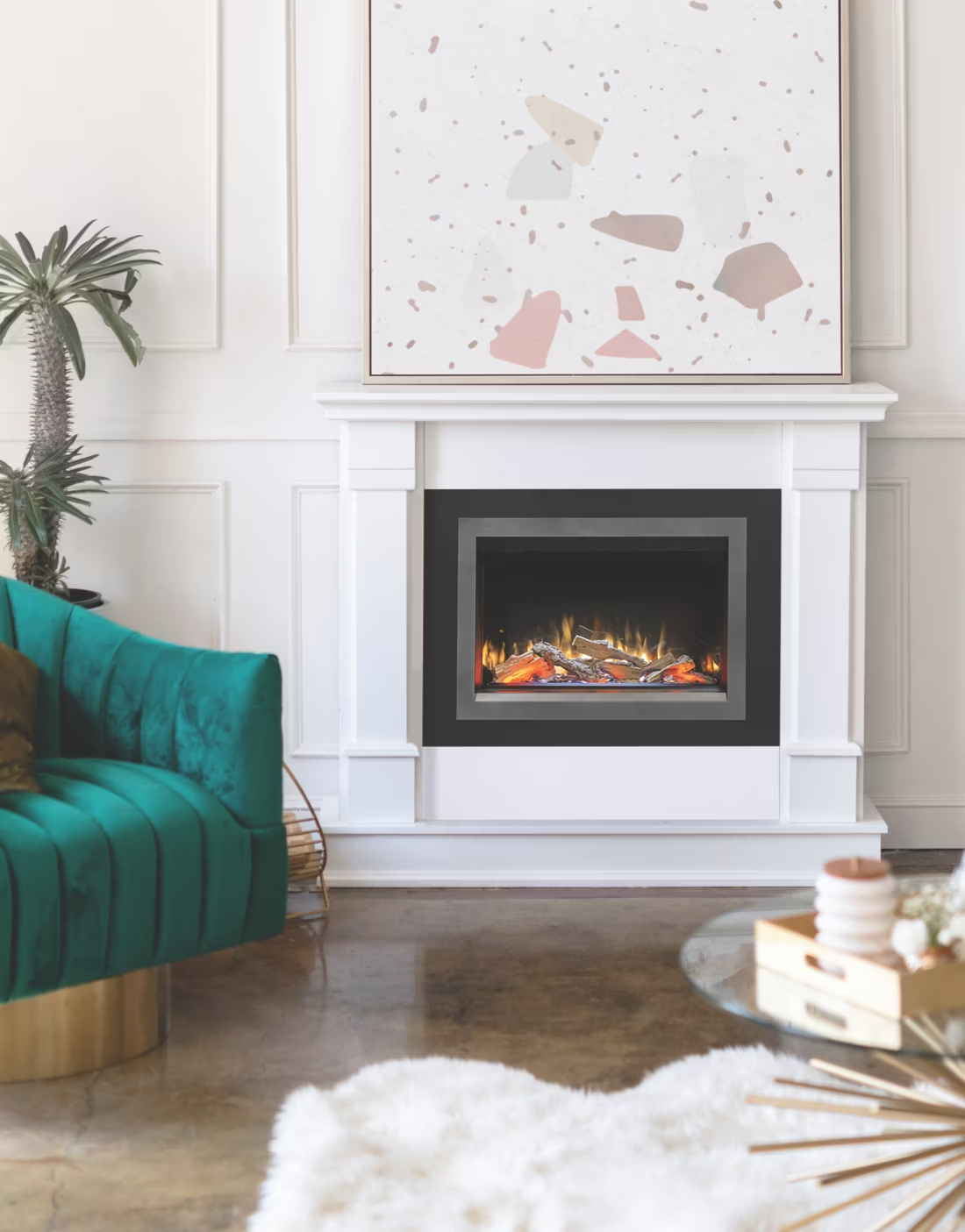
Real-looking flame and instant zone heat for Naugatuck Valley living rooms, basements, and bedrooms—no flue, no gas line, no masonry work. Find the right unit and get matched with a trusted local dealer.
Every Project Starts From One of These Five Situations
Ambiance and zone heat, minus the venting headache.
Naugatuck sits low in the Naugatuck River Valley at about 216 feet, with average winter lows near 20°F and a real New England heating season lasting into the colder months of the year, though milder than notoriously cold spots like Burlington, Vermont. A lot of homes here have oil or gas furnaces doing the heavy lifting, which is exactly where electric fireplaces earn their place: finished basements, bonus rooms, condos, and bedrooms where running a chimney or a new gas line isn't practical or worth the cost.
Naugatuck is served by United Illuminating and Connecticut Light & Power, and Connecticut's residential rates—around 31 cents per kWh with UI and about 25 cents with CL&P—are among the highest in the country. That makes electric fireplaces a poor choice as a whole-home primary heat source, but a smart one for supplemental, on-demand warmth in a single room: no venting, no combustion byproducts, and a plug-in or simple 120V hardwire install in most cases. I'd size these as zone heaters and ambiance pieces, not furnace replacements.
Three steps. No salesperson until you're ready.
Tell us about your project
Your zip code, your situation, and the fuel you're leaning toward—or let the answers point you to one.
See what's actually available
The brands dealers within 100 miles genuinely carry—real options, never a catalog mirage.
Get your dealer & Project Guide
A trusted local dealer, plus the free Project Guide & Parts List that names every component of the job.
Frequently Asked Questions
How much does an electric fireplace installation cost in Naugatuck?
Plug-in electric fireplaces and freestanding stoves start around $300–$800 installed, since most just need a standard 120V outlet and no permit. Built-in electric inserts or wall-mount units with a dedicated circuit typically run $800–$2,500, depending on the unit size, whether an electrician needs to run a new line, and any surround or mantel carpentry. Full built-in electric fireplace installations with custom framing and finish work can run higher. A local dealer will confirm exact pricing after seeing your space.
Will an electric fireplace actually lower my heating bill in Naugatuck?
Probably not if you're hoping it replaces your furnace—Connecticut's electric rates through United Illuminating (about 31 cents/kWh) and CL&P (about 25 cents/kWh) are well above the national average, so running a 1,500-watt heater for hours a day adds up fast, often $5–$8 a day of continuous use. Where electric fireplaces do save money is zone heating: closing off a bedroom or den and running the electric unit there instead of heating the whole house with oil or gas lets you turn the thermostat down elsewhere. Used that way, most Naugatuck homeowners see it as a comfort and ambiance upgrade with modest savings, not a bill-slasher on its own.
Do I need a permit for an electric fireplace in Naugatuck?
A plug-in electric fireplace or stove that uses a standard outlet doesn't require a permit. If you're having an electrician install a dedicated circuit for a built-in insert or wall unit, that electrical work does require a permit through the Borough of Naugatuck Building Department, and it should be pulled by the licensed electrician doing the work. There's no fire-code review like there is for wood or gas appliances since there's no combustion or venting involved—that's one of the appeals.
Can I put an electric insert into my existing masonry fireplace?
Yes, and it's a common project in older Naugatuck Valley homes with an existing wood-burning fireplace that's rarely used. An electric insert slides into the firebox opening, plugs into a nearby outlet or a new dedicated circuit, and gives you a realistic flame effect and up to about 5,000 BTU of supplemental heat without opening the chimney flue or cutting any wood. It's one of the fastest, least invasive upgrades a local dealer installs—often done in an afternoon.
Will my electric fireplace work if the power goes out?
No—electric fireplaces need power to run the heating element, flame effect, and any fan, so they go dark along with everything else during a Naugatuck Valley outage. If backup heat during storms matters to you, that's where a wood stove has a real edge: Naugatuck Valley properties have plenty of oak, maple, birch, and ash available, and a wood stove keeps producing heat with zero electricity. Many local homeowners run electric for daily ambiance and convenience and keep a wood or gas appliance elsewhere in the house for outage resilience.
Where does an electric fireplace make the most sense in a Naugatuck home?
Finished basements, primary bedrooms, home offices, and condo or apartment units are the best fits—anywhere a chimney, gas line, or venting isn't feasible or isn't worth the cost for supplemental heat. Naugatuck has a good number of older multi-family and condo conversions where residents can't modify exterior walls for venting; an electric unit sidesteps that entirely. It's also a popular choice for renters and anyone doing a basement remodel who wants a fireplace focal point without structural work.
Electric vs. gas fireplace—which should I choose in Naugatuck?
Gas delivers real, substantial heat output and can be sized to actually offset furnace use in a room, but it requires venting or a gas line and a higher upfront install cost. Electric skips the venting and gas work entirely, installs in a fraction of the time, and costs far less upfront, but given United Illuminating and CL&P's rates, it's genuinely more expensive to run per BTU than gas and isn't meant to carry real heating load. For a Naugatuck home where the goal is ambiance and light supplemental warmth in one room, electric wins on simplicity and cost. For a room you want to meaningfully heat during a cold January stretch with 20°F lows, gas is the better tool.
Electric vs. wood stove—which fits my Naugatuck Valley home?
Wood stoves burn locally abundant oak, maple, birch, and ash, produce real radiant heat that can carry a whole room or more through Naugatuck's long, solidly cold winter, and keep working when the power's out—but they need a chimney, clearances, and annual sweeping. Electric fireplaces need none of that, install almost anywhere, and cost little upfront, but they're supplemental only and stop working in an outage, plus Connecticut's above-average electric rates make heavy daily use costly. If you already have a working chimney and want real heat, wood is worth a look. If you want a fast, mess-free ambiance upgrade in a room without a flue, electric is the practical choice.
What size electric fireplace do I need, and what will it cost to run?
Most electric fireplaces and inserts top out around 4,700–5,200 BTU (roughly 1,500 watts) regardless of size—bigger units mostly add screen size and flame realism, not more heat. At United Illuminating's rate of about 31 cents/kWh, running a 1,500-watt unit for 5 hours costs roughly $2.30 a day; at CL&P's roughly 25 cents/kWh, closer to $1.90. For a single bedroom or den in a Naugatuck home, that's usually enough supplemental warmth; for an open great room, you're better off pairing it with your existing furnace rather than expecting the fireplace to carry the space alone. A local dealer can help you pick wattage and features (thermostat control, remote, multi-color flame) based on the room.
Does an electric fireplace need a vent or chimney?
No—that's its superpower. An electric fireplace needs a wall and an outlet, period. No vent pipe, no gas line, no clearances to design around, which is why it works in bedrooms, offices, apartments, and walls where venting a gas or wood unit would be impractical or impossible. Installation is typically the simplest and least expensive of any fireplace type.
How much does an electric fireplace cost to run?
With the heater on, a typical unit draws about 1,500 watts—at average electric rates that's roughly 20 cents an hour. Run the flame effect alone and it costs pennies; the flames are LED-driven and use about as much power as a light bulb. There's no pilot light, no fuel delivery, and essentially no maintenance.
Can a fireplace actually lower my heating bill?
Yes—by creating a comfort zone. A furnace heats every square foot of the house just to warm the one room you're in; a gas fireplace on low burns roughly a sixth of the gas a typical furnace does. Set the furnace around 55–60 degrees as a baseline, then heat the rooms your family actually uses. Families who heat this way commonly save $20–$60 a month.
Does a fireplace add value to my home?
On average, a fireplace adds back to the home about the same amount you spent installing it. Add the monthly savings from heating the rooms you actually use instead of the whole house—often hundreds of dollars a year—and the value case is strong before you even count what a fire does for how your family uses the room.
Nearby Dealers
Hearth shops serving Naugatuck and the surrounding area. Every listing shows whether it is a WhyFire partner, a dealer we have verified as authorized for the brands we recommend, or a local business carrying hearth products. No manufacturer pays for placement. How we verify dealers →
Neighborhood Chimney Service
Tani’s Masonry Supply, LLC
Fireplace Surplus
Four Seasons Fire & Hearth
New Haven Masonry
Best In Backyards
Black Swan Fireside Hearth & Home
House Of Warmth Stove & Fireplace Shop
Spotless Chimney Sweeping & Solutions
Leahy’s Metered Gas Service
The Trading Post
Fire House Stoves & Spas
Jj Sullivan Inc.
Electric Service in Naugatuck
An electric fireplace's heater draws about 1,500 watts—pennies per hour at local rates.
United Illuminating Co
Connecticut Light & Power Co
Find your electric fireplace in Naugatuck.
Tell us a bit about your home and we'll match you with the right electric fireplace or insert—and connect you with a trusted local dealer who'll hand you a free Project Guide & Parts List for your space.
Find Your Fireplace →