
Real warmth, zero mess, in Woodbury Center.
Instant, flame-effect heat for the colonial-era homes of Woodbury Center—no chimney, no cordwood, no venting. Find the right unit and get matched with a trusted local dealer.
Every Project Starts From One of These Five Situations
The easiest fireplace to add to an old New England home.
Woodbury Center sits in the Naugatuck Valley at about 435 feet, where winters bring an average low near 18°F and a long, cold season on par with Burlington, VT for sheer duration of cold. A lot of the housing stock here is 18th- and 19th-century colonial, with masonry fireplaces that were never built to modern code, or chimneys that have been capped for decades. Ripping into that masonry to run a new wood or gas appliance is expensive and sometimes not even structurally practical. An electric insert or built-in unit sidesteps all of it—it drops into an existing firebox or mounts on a wall with no venting, no gas line, and no chimney work.
The tradeoff worth knowing up front: Connecticut Light & Power's residential rate runs 25.31 cents per kWh, well above the national average, which makes electric resistance heat expensive as a primary heat source over a winter this long and cold. That's exactly why most Woodbury Center homeowners use electric fireplaces the way they're actually good at being used—as supplemental zone heat and ambiance in a den, sunroom, or bedroom, layered on top of an existing oil or propane furnace rather than replacing it.
Three steps. No salesperson until you're ready.
Tell us about your project
Your zip code, your situation, and the fuel you're leaning toward—or let the answers point you to one.
See what's actually available
The brands dealers within 100 miles genuinely carry—real options, never a catalog mirage.
Get your dealer & Project Guide
A trusted local dealer, plus the free Project Guide & Parts List that names every component of the job.
Frequently Asked Questions
How much does an electric fireplace installation cost in Woodbury Center?
Most electric fireplace projects here run $300 to $2,500. A plug-in insert that drops into an existing masonry firebox or a wall-mounted unit on a standard 120V outlet sits at the low end—often a same-day job. Built-in units that require a dedicated 240V circuit, new wall framing, or custom cabinetry surround run toward the higher end, since that involves an electrician in addition to the installer. Because there's no venting or gas line to run, electric installs are consistently the least expensive fireplace category—a meaningful factor if you're weighing options against a wood or gas retrofit in one of Woodbury Center's older homes.
What does it actually cost to run an electric fireplace here?
At Connecticut Light & Power's residential rate of 25.31 cents per kWh, a typical 1,500-watt electric fireplace costs roughly 38 cents per hour of heater-on use—call it $25 to $40 a month if you run it most evenings through a cold stretch. The flame effect alone (heater off, LED only) draws almost nothing, so many owners run the visual year-round and only switch on the heating element when they want it. Given the rate, it's worth being upfront: this isn't a cheap way to heat a whole room around the clock, but it's a reasonable cost for supplemental warmth in the room you're actually sitting in.
Which type of electric fireplace fits an old Woodbury Center home best?
For homes with an existing but non-functional masonry fireplace—common throughout Woodbury Center's colonial housing stock—an electric insert that slides into the firebox is usually the cleanest fit, since it hides the wiring and uses an opening you already have. For rooms with no fireplace at all, a wall-mounted linear unit or a freestanding electric stove works without any construction. Built-in wall units look the most like a real fireplace but require the most electrical work, which matters in houses that may still have older panel capacity or knob-and-tube wiring in parts of the structure.
Do I need a permit to install an electric fireplace in Woodbury Center?
A simple plug-in insert or wall-mounted unit on an existing outlet typically doesn't require a permit. If the installation involves a new dedicated circuit, a subpanel, or any structural framing for a built-in unit, that electrical work needs to go through the Town of Woodbury Building Department and be pulled by a licensed electrician. Most local dealers will tell you up front whether your chosen unit needs new wiring, and a licensed electrician handles that permit as part of the job.
Electric vs. wood—which makes more sense for my house?
Wood remains the more effective heat source for this region's long, cold winter heating season—locally available oak, maple, birch, and ash burn hot and long, and a wood stove keeps working through a power outage, which an electric unit cannot. But wood means chimney work, clearances, and permitting that many of Woodbury Center's historic fireboxes weren't built to accommodate without real masonry investment. Electric wins on simplicity and upfront cost, and it's the practical choice for a room where you want fireplace ambiance without touching the chimney. A lot of local homeowners end up with wood or a furnace for real heat and electric for the rooms where convenience matters more.
What's the best electric fireplace brand for a historic home?
Dimplex and Napoleon both make insert models sized to fit standard older masonry fireboxes without custom surround work, which matters in a house where the opening was built for a real fire, not a modern appliance. If you want a mantel-style unit to match existing colonial trim, several manufacturers offer wood-look surrounds designed to blend with period woodwork rather than look like an obvious retrofit. A local dealer can measure your specific firebox opening and tell you which models will actually fit without modification.
Can an electric fireplace serve as my primary heat source?
Not realistically in this climate. At CL&P's 25.31-cent rate and an average winter low of 18°F, running electric resistance heat as a whole-room primary source for months at a time gets expensive fast, and most units are only rated for a single room anyway (typically up to 400-1,000 square feet). Electric fireplaces are best treated as zone heat—supplementing your furnace in the room you use most—rather than a replacement for central heating over a Naugatuck Valley winter.
Are electric fireplaces safe to install in an older Woodbury Center home?
Yes, with one caveat worth checking: some homes in this area still have portions of original knob-and-tube wiring or older electrical panels that weren't sized for modern loads. A plug-in unit on a standard outlet is generally fine, but before adding a dedicated circuit for a built-in electric fireplace, it's worth having an electrician confirm your panel has capacity and that the circuit you're tapping isn't legacy wiring. Local installers who work regularly in older Naugatuck Valley homes will flag this during a walkthrough before quoting the job.
Electric vs. pellet stove—which is the better fit?
Pellet stoves burning regional brands like New England Wood Pellet, Lignetics, or Maine Woods Pellet Co. put out real, substantial heat and can genuinely offset furnace use through a cold Naugatuck Valley winter, but they need a vent through an exterior wall or chimney, a hopper to load, and periodic ash cleanout. Electric units need none of that—no venting, no fuel storage, no maintenance—but they cost more to run per BTU given CL&P's rate and won't meaningfully dent your heating bill. For a den or bedroom where you want reliable ambiance with minimal upkeep, electric wins; for a room where you want to actually cut oil or propane use, pellet is the stronger option.
Do electric fireplaces actually produce heat?
Yes—most put out around 4,800–5,000 BTUs from a standard outlet, which comfortably warms a bedroom, office, or den as a comfort-zone heater. What they won't do is carry a whole house the way wood, gas, or pellet can. Think of electric as ambiance-first with honest supplemental heat: flames on with no heat in July, flames plus warmth in January.
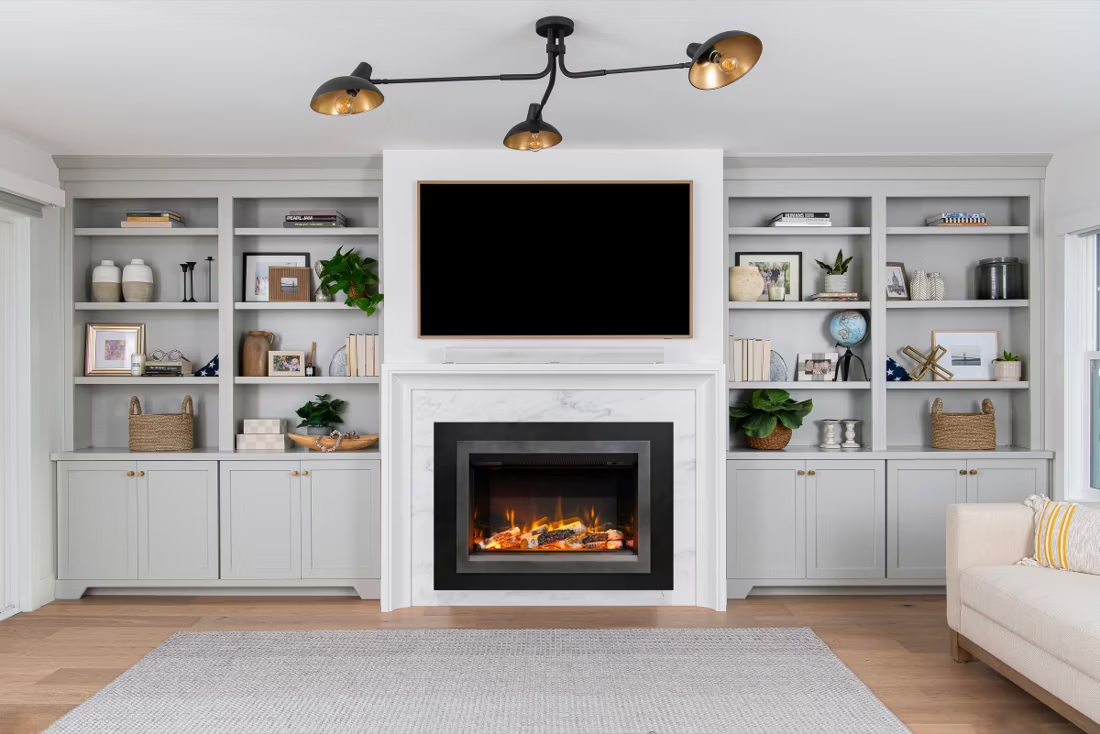
Can I put a TV above my fireplace?
Yes—with an asterisk. Fireplaces are hot and TVs don't like heat. Either put a mantel between them to deflect rising warmth, or choose a fireplace with heat-management technology that creates a cool zone on the wall above—the wall stays around 125 degrees, barely warm, while the room still gets full heat. If you like clean lines and don't want a mantel, heat management is the answer.
Can a fireplace actually lower my heating bill?
Yes—by creating a comfort zone. A furnace heats every square foot of the house just to warm the one room you're in; a gas fireplace on low burns roughly a sixth of the gas a typical furnace does. Set the furnace around 55–60 degrees as a baseline, then heat the rooms your family actually uses. Families who heat this way commonly save $20–$60 a month.
Does a fireplace add value to my home?
On average, a fireplace adds back to the home about the same amount you spent installing it. Add the monthly savings from heating the rooms you actually use instead of the whole house—often hundreds of dollars a year—and the value case is strong before you even count what a fire does for how your family uses the room.
Nearby Dealers
Hearth shops serving Woodbury Center and the surrounding area. Every listing shows whether it is a WhyFire partner, a dealer we have verified as authorized for the brands we recommend, or a local business carrying hearth products. No manufacturer pays for placement. How we verify dealers →
Neighborhood Chimney Service
Black Swan Fireside Hearth & Home
Four Seasons Fire & Hearth
House Of Warmth Stove & Fireplace Shop
Tani’s Masonry Supply, LLC
The Trading Post
Best In Backyards
Leahy’s Metered Gas Service
Fireplace Surplus
Fire House Stoves & Spas
Action Chutes
New Haven Masonry
Hocon Gas Of Torrington
Dean's Stove Shop
Electric Service in Woodbury Center
An electric fireplace's heater draws about 1,500 watts—pennies per hour at local rates.
Connecticut Light & Power Co
Find your electric fireplace in Woodbury Center.
Tell us a bit about your home and we'll match you with the right electric fireplace or insert, plus a free Project Guide & Parts List and your recommended local dealer in the Naugatuck Valley.
Find Your Fireplace →