
Reliable heat for a valley winter that runs from November to April.
With a winter season as long and cold as Buffalo, NY's, and winter lows averaging 19°F along the Naugatuck River corridor, Valley homes need heat that works every day of a long season, not just on the coldest nights. I'll match you with a trusted local dealer who knows whether Eversource, Connecticut Natural Gas, or propane serves your street—and which venting path actually works in your home.
Every Project Starts From One of These Five Situations
Heat on demand across the Valley's old mill towns.
Naugatuck Valley runs along its namesake river through Waterbury, Naugatuck, Beacon Falls, Seymour, Ansonia, Derby, and Shelton—former brass and rubber manufacturing towns now home to nearly 400,000 people in a mix of early-1900s mill housing and newer construction on the surrounding hillsides. The region's heating season is comparable in length and severity to Buffalo, NY, running from late fall well into April. Wood heat has a real presence here—oak, maple, birch, and ash are the species most Valley households burn or see for sale by the cord—but for daily heat in main living spaces, gas has become the default, especially in homes being remodeled or in the newer subdivisions climbing out of the river valley toward Bethlehem, Middlebury, and Oxford.
Gas service in the Valley is split by territory: Eversource (the former Yankee Gas system) covers Waterbury, Naugatuck, Watertown, and Thomaston, while Connecticut Natural Gas serves the lower Valley towns of Derby, Ansonia, Shelton, and parts of Seymour. Outside those mains—pockets of Beacon Falls, Bethlehem, and the more rural edges of Oxford—propane from a regional bulk supplier is the standard fallback. Either fuel works well in a direct-vent gas fireplace or insert, which matters in a Valley housing stock full of century-old masonry chimneys that were never built to modern liner standards. A sealed, direct-vent system sidesteps that problem entirely and gives you real heat output during the ice storms that periodically take out power along the river's hillier stretches.
Three steps. No salesperson until you're ready.
Tell us about your project
Your zip code, your situation, and the fuel you're leaning toward—or let the answers point you to one.
See what's actually available
The brands dealers within 100 miles genuinely carry—real options, never a catalog mirage.
Get your dealer & Project Guide
A trusted local dealer, plus the free Project Guide & Parts List that names every component of the job.
Frequently Asked Questions
How much does a gas fireplace installation cost in Naugatuck Valley?
Most gas fireplace installations in the Valley run $4,500 to $11,000. A direct-vent insert dropped into an existing masonry firebox—common in the older housing stock around Waterbury, Ansonia, and Derby—tends to land toward the lower end, especially if a gas line is already run to that wall. A new built-in fireplace for a remodel or an addition, with fresh framing, venting, and gas line work, sits higher. Homes on propane rather than a gas main sometimes see added cost for a tank set. A local dealer will walk the space and give you a firm number before any work starts.
Can I convert my existing wood fireplace to gas?
Yes, and it's one of the most common projects in the Valley given how much of the housing stock dates to the early 1900s mill-town building boom. A gas insert fits into the existing firebox and vents up through your current masonry chimney with a new stainless liner, so you keep the original mantel and surround while gaining controllable, on-demand heat. This is especially worthwhile in Waterbury and Ansonia rowhouse-style homes where the original chimney has aged past safe use for wood but is still structurally sound enough to serve as a vent chase for a lined gas insert.
Do I need natural gas, or can I run a fireplace on propane?
Either works. Most gas fireplace models can be set up for natural gas or propane with the right orifice and regulator. If you're inside the Eversource footprint around Waterbury and Naugatuck, or the Connecticut Natural Gas territory covering Derby, Ansonia, and Shelton, tying into an existing gas line—especially if you already have gas heat or a gas water heater—is usually the simplest path. In pockets of Beacon Falls, Bethlehem, and rural Oxford where no gas main reaches the property, a propane tank from a regional supplier is the standard setup, and plenty of Valley homeowners run their fireplace that way with no meaningful difference in performance.
Will my gas fireplace work if the power goes out?
Most will, with the right ignition system. Units with intermittent pilot ignition (IPI) run on a battery backup that kicks in automatically when power drops, so the fireplace still lights on demand. Some models, including Valor's, generate their own electricity off the pilot assembly's thermocouple and need no battery at all. That distinction matters in the Valley, where ice storms and downed limbs along the hillier stretches near Watertown, Thomaston, and Oxford can knock out power for a day or more during a hard winter—a gas fireplace with battery or self-powered ignition keeps a warm room available even when the furnace can't run.
What's the difference between a gas fireplace, gas insert, and gas stove?
A gas fireplace is a fully framed-in built-up unit, the right choice for new construction or a full remodel—common in the newer homes going up around Oxford and Middlebury. A gas insert seals into an existing masonry firebox and uses the current chimney as its vent chase, which fits most of the older housing in Waterbury, Naugatuck, and Ansonia. A gas stove is a freestanding, cabinet-style unit that doesn't need an existing fireplace at all, a good option for the smaller rooms typical of early-1900s mill housing or a finished basement without any chimney access. A local dealer can tell you which configuration actually fits your space after seeing it in person.
Do I need a permit to install a gas fireplace in Naugatuck Valley?
Yes. Each Valley town—Waterbury, Naugatuck, Ansonia, Derby, Shelton, and the rest—issues its own building and gas permits through its local building department, and Connecticut requires the gas line work to be done by a licensed gas-fitter. Going through a full-service hearth dealer means the permit filing, the gas line, the venting, and the final inspection sign-off are handled as one coordinated job rather than something you have to piece together across separate trades and town offices.
Should I get a vented or vent-free gas fireplace?
Vented, direct-vent units pull combustion air from outside and exhaust it back outside through a sealed pipe, keeping all combustion byproducts out of the living space. Vent-free units are legal in Connecticut but come with strict room-size minimums and require an oxygen depletion sensor. Valley homes—particularly older, tightly renovated units in Waterbury and Naugatuck's converted mill buildings—often have less air infiltration than they used to, which is exactly the situation where most local dealers steer homeowners toward direct-vent: it heats just as effectively without adding moisture or combustion byproducts to an already tight envelope.
How often does a gas fireplace need to be serviced?
Plan on an annual inspection, ideally in October before the heating season settles in for good. A technician checks the burner, pilot or ignition assembly, gas connections, and venting, and cleans the glass—a shorter visit than a wood chimney sweep, but still worth doing every year for a unit that may run daily through a winter as long and cold as Buffalo, NY's. Budget roughly $150 to $250 for a standard annual service call from a local gas appliance technician in the Valley.
Gas vs. wood—which makes more sense for a Naugatuck Valley home?
Wood—cut and split from the oak, maple, birch, and ash common throughout the Valley—remains popular as backup heat and for the ritual of a real fire, and pellet stoves from regional brands like Lignetics, New England Wood Pellet, and Maine Woods Pellet Co are a cleaner-burning alternative for households that want set-it-and-forget-it convenience without a gas line. But for daily heat in a main living space, gas wins on convenience: instant, thermostat-controlled output with no ash to manage and no wood to stack. Many Valley homeowners run both—gas in the family room for everyday use, a wood or pellet stove elsewhere as backup for the ice storms that occasionally take out power along the river.
Can I put a TV above my fireplace?
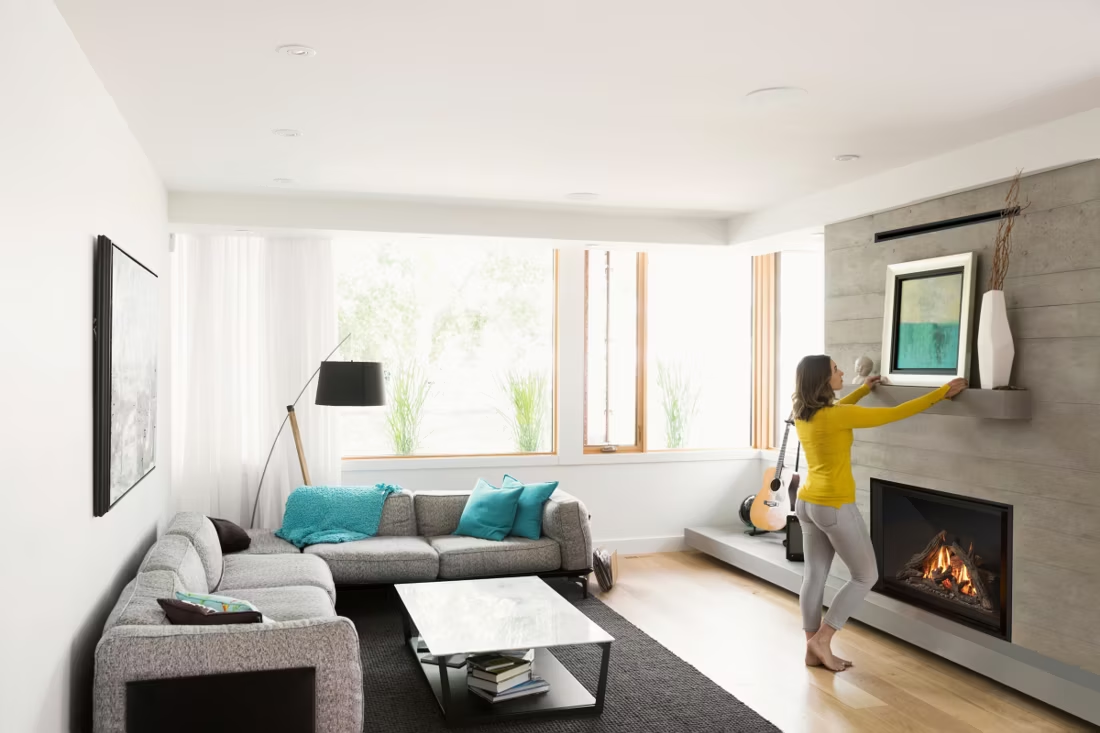
Yes—with an asterisk. Fireplaces are hot and TVs don't like heat. Either put a mantel between them to deflect rising warmth, or choose a fireplace with heat-management technology that creates a cool zone on the wall above—the wall stays around 125 degrees, barely warm, while the room still gets full heat. If you like clean lines and don't want a mantel, heat management is the answer.
Does a gas fireplace work when the power is out?
Yes—modern gas fireplaces have a battery backup for the ignition system that lasts for weeks, so no power equals no problem. Your furnace can't say that: no electricity, no blower, no heat. It's one of the most common reasons families add a fireplace, and worth confirming on any model you're considering.
What is an in-home preview and do I need one?
It's a visit where a hearth professional measures your space, confirms the model you picked actually works in your home, and walks the specs—framing, gas line, venting, finish work—before anything is ordered. Some details you just can't know until you see the house. Never make a down payment without one; it's the single most-skipped step that burns buyers.
How much should I budget for a fireplace?
For an average home—covering the fireplace, the vent pipe, and basic installation—a budget between $3,900 and $5,500 gives you a lot of options across wood, gas, and pellet. By the time you add finish work, gas line, and electrical, the average complete installation lands between $5,000 and $12,000 all-in. In a remodel or new build, a good rule is to put about 2.5% of the total project cost toward the fireplace.
Stove and Fireplace Dealers in Naugatuck Valley County
Listings include WhyFire partner dealers, dealers we have verified as authorized for the brands we recommend, and established local businesses that carry hearth products. Every listing shows which one it is. The ones marked Preferred run on WhyFire's software, so they can show you real pricing and book your appointment right here. No manufacturer pays for placement. How we verify dealers →
Neighborhood Chimney Service
Tani’s Masonry Supply, LLC
Fireplace Surplus
Four Seasons Fire & Hearth
Black Swan Fireside Hearth & Home
Best In Backyards
New Haven Masonry
House Of Warmth Stove & Fireplace Shop
The Trading Post
Spotless Chimney Sweeping & Solutions
Leahy’s Metered Gas Service
Fire House Stoves & Spas
Dean's Stove Shop
Hocon Gas Of Torrington
Get your free Project Guide & Parts List for a gas fireplace in Naugatuck Valley.
Tell me about your home and which Valley town you're in, and I'll match you with a trusted local dealer and send over a free Project Guide & Parts List—the exact equipment, vent kit, and recommended installer for your gas fireplace project, no big-box guesswork.
Find Your Fireplace →