
Every fuel type, every mill town in the Naugatuck Valley.
Wood, gas, pellet, and electric fireplace resources for the river valley towns from Waterbury down through Naugatuck, Ansonia, Derby, and Shelton. Pick a fuel and get matched with a local dealer who actually installs it here.
Every Project Starts From One of These Five Situations
5,892 heating degree days along a former mill corridor now built on gas and oil heat.
The Naugatuck Valley runs a tight industrial corridor along the Naugatuck River, from Waterbury south through Naugatuck, Ansonia, Derby, and Shelton. Winter lows average around 19°F and the region logs roughly 5,892 heating degree days a season—a load comparable to Madison, Wisconsin, though the valley's density and older housing stock mean the heating season here is shaped as much by home age and existing ductwork as by raw cold. Oak, maple, birch, and ash are the wood species most commonly split and burned in this part of Connecticut, much of it sourced from local tree services and firewood dealers rather than public land, since there's no national forest permit system in play this far into southern New England.
With no air quality non-attainment designations or curtailment programs affecting the valley, hearth choices here come down to home layout, existing gas or oil infrastructure, and personal preference rather than regulatory restriction. That's different from western basin counties where inversions dictate what can burn on a given day—in the Naugatuck Valley, a homeowner in a 1920s Waterbury triple-decker faces a very different install than someone in a newer Shelton colonial with a full basement and an existing gas line. This hub rolls up hearth retailers, service techs, and fuel suppliers across the whole valley. Pick your fuel below for local dealers, install costs, and unit recommendations specific to your town.
Four fuels. One honest answer for Naugatuck Valley County.
Wood
81 models available near Naugatuck Valley County.
Find your wood stove →Gas
365 models available near Naugatuck Valley County.
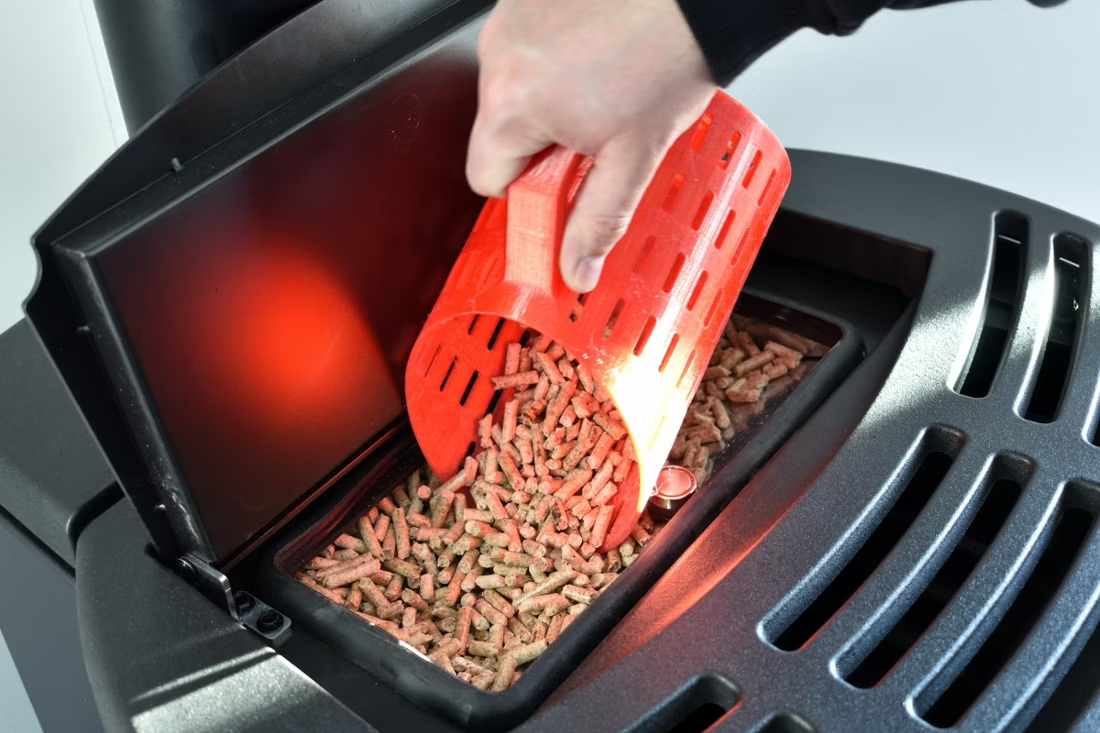
Find your gas fireplace →Pellet
See what's available near Naugatuck Valley County.
Find your pellet stove →Electric
11 models available near Naugatuck Valley County.
Find your electric fireplace →Three steps. No salesperson until you're ready.
Tell us about your project
Your zip code, your situation, and the fuel you're leaning toward—or let the answers point you to one.
See what's actually available
The brands dealers within 100 miles genuinely carry—real options, never a catalog mirage.
Get your dealer & Project Guide
A trusted local dealer, plus the free Project Guide & Parts List that names every component of the job.
Frequently Asked Questions
Which fireplace fuel makes the most sense in the Naugatuck Valley?
All four fuels show up regularly here, and the right pick usually comes down to what's already in the house. Gas is the most common upgrade in the valley since most towns along the Route 8 corridor have natural gas service through Eversource, and converting an old masonry fireplace to a gas insert is a common project in Waterbury and Ansonia's older housing stock. Wood still has a following, especially in Seymour and the more wooded outskirts of Beacon Falls, where oak and maple are easy to source locally and a good secondary-burn stove can comfortably carry a home through the coldest stretches. Pellet stoves are a solid option for homeowners without gas access who want more heat output and less daily tending than wood—New England Wood Pellet and Lignetics both distribute in the region. Electric fireplaces are widely used as supplemental heat and ambiance, particularly in condos and multi-family units where venting a wood or gas unit isn't practical.
Do I need a permit to install a fireplace or stove in the Naugatuck Valley?
Yes, almost always. Each town in the valley—Waterbury, Naugatuck, Ansonia, Derby, Seymour, Shelton—runs its own building department, so permitting goes through your local town hall rather than a single county office. Wood stove and insert installs need a permit and inspection to confirm clearances and chimney liner condition, which matters a lot in this region given how many homes still have original 1900s-era masonry chimneys. Gas installs require a licensed gas fitter and a separate permit for any new gas line work. Pellet stoves are permitted similarly to wood stoves. Electric fireplaces typically don't need a permit unless you're adding a dedicated circuit for a built-in unit. Most retailers we match homeowners with handle this paperwork as part of the installation.
Are there any air quality restrictions on wood burning in this part of Connecticut?
No—the Naugatuck Valley doesn't carry a non-attainment designation or a curtailment program the way some western basin regions do, so there are no burn-day restrictions tied to air quality here. That said, a lot of the valley's housing stock is older, and many homes still have their original masonry fireplace or chimney, which means the practical limiting factor is usually chimney condition rather than regulation. A liner inspection before installing any new wood or pellet appliance is worth doing regardless—older mortar and clay tile liners common in Waterbury and Ansonia homes often need relining before a new stove can be safely connected.
Can I find a retailer in the valley that carries more than one fuel type?
Yes, and it's common here. Many Naugatuck Valley dealers carry gas and pellet lines side by side, and a fair number also stock wood stoves for the more rural edges of Seymour and Beacon Falls. That mix makes sense given the range of housing in the valley, from dense multi-family buildings in Waterbury and Derby to detached homes with more clearance and chimney options further out. A multi-fuel retailer lets you compare a gas insert against a pellet stove in the same showroom, which is useful if you're retrofitting an existing masonry fireplace and aren't sure yet which route fits your flue and budget. We match you with the dealer whose lineup and service area actually cover your town rather than the biggest name in the region.
How far in advance should I schedule installation or a chimney inspection?
Book by late summer or early fall if you can. With 5,892 heating degree days and lows regularly dipping to around 19°F, demand for chimney sweeps, gas inspections, and installs spikes hard once the first real cold snap hits—the same crunch you'd see in Buffalo or Duluth once the calendar turns to November. Older valley homes with original chimneys often need a liner inspection or repair before a new stove or insert can go in, and that work takes longer to schedule than a straightforward drop-in gas unit. Getting ahead of the rush also means you're not stuck without heat if a problem turns up mid-inspection.
What does a fireplace installation typically cost in the Naugatuck Valley?
Costs track fairly closely with the rest of southern New England. Wood stove or insert installs generally run $4,000–$8,500, with chimney relining common in older valley homes adding $1,500–$3,500 to that. Gas fireplaces, inserts, and stoves typically run $4,000–$10,500 depending on whether Eversource service already reaches the home or a new gas line needs to be run. Pellet stove and insert installs usually land around $4,000–$7,000. Electric fireplaces are the most affordable option—$200–$2,800 for the unit, plus $300–$1,000 in labor for anything beyond a simple plug-in placement. The county + fuel pages above break these numbers down further with local retailer pricing.
What is an in-home preview and do I need one?
It's a visit where a hearth professional measures your space, confirms the model you picked actually works in your home, and walks the specs—framing, gas line, venting, finish work—before anything is ordered. Some details you just can't know until you see the house. Never make a down payment without one; it's the single most-skipped step that burns buyers.
How much should I budget for a fireplace?
For an average home—covering the fireplace, the vent pipe, and basic installation—a budget between $3,900 and $5,500 gives you a lot of options across wood, gas, and pellet. By the time you add finish work, gas line, and electrical, the average complete installation lands between $5,000 and $12,000 all-in. In a remodel or new build, a good rule is to put about 2.5% of the total project cost toward the fireplace.
Can a fireplace actually lower my heating bill?
Yes—by creating a comfort zone. A furnace heats every square foot of the house just to warm the one room you're in; a gas fireplace on low burns roughly a sixth of the gas a typical furnace does. Set the furnace around 55–60 degrees as a baseline, then heat the rooms your family actually uses. Families who heat this way commonly save $20–$60 a month.
Wood, gas, pellet, or electric—how do I choose?
Match the fuel to your life, not the other way around. Wood: lowest fuel cost and total power-outage independence, but you're hauling and stacking. Gas: press a button, set a thermostat, no maintenance to speak of. Pellet: wood economics with automatic feeding, in exchange for weekly cleaning and a need for electricity. Electric: plugs in anywhere with honest supplemental heat. Nobody regrets the fuel that fits how they actually live.
Stove and Fireplace Dealers in Naugatuck Valley County
Listings include WhyFire partner dealers, dealers we have verified as authorized for the brands we recommend, and established local businesses that carry hearth products. Every listing shows which one it is. The ones marked Preferred run on WhyFire's software, so they can show you real pricing and book your appointment right here. No manufacturer pays for placement. How we verify dealers →
Neighborhood Chimney Service
Tani’s Masonry Supply, LLC
Fireplace Surplus
Four Seasons Fire & Hearth
Black Swan Fireside Hearth & Home
Best In Backyards
New Haven Masonry
House Of Warmth Stove & Fireplace Shop
The Trading Post
Spotless Chimney Sweeping & Solutions
Leahy’s Metered Gas Service
Fire House Stoves & Spas
Dean's Stove Shop
Hocon Gas Of Torrington
Get matched with a local Naugatuck Valley dealer.
Pick your fuel below and we'll put together a free Project Guide & Parts List—the right unit, the vent kit it needs, and the local dealer we recommend for your project.
Find Your Fireplace →