
Find your pellet stove in the Naugatuck Valley.
Steady, thermostat-controlled heat for the old mill towns along the Naugatuck River—from Waterbury to Ansonia, Derby, Seymour, and Naugatuck. Find the right stove or insert, and connect with a trusted local dealer.
Every Project Starts From One of These Five Situations
Consistent heat for a river valley that runs cold five months a year.
The Naugatuck Valley—Waterbury, Naugatuck, Ansonia, Derby, Seymour, Beacon Falls, and the smaller towns strung along the river between them—sees a long, steady heating season lasting roughly from October through April, with winter lows averaging around 19°F. That's a notch milder than Burlington, Vermont, but it's still enough sustained cold that most Valley homes run a furnace or boiler from November through March. A lot of that housing stock dates back to the Valley's brass-manufacturing era—brick triple-deckers and older frame houses with drafty rooms that benefit from a dedicated zone-heat source.
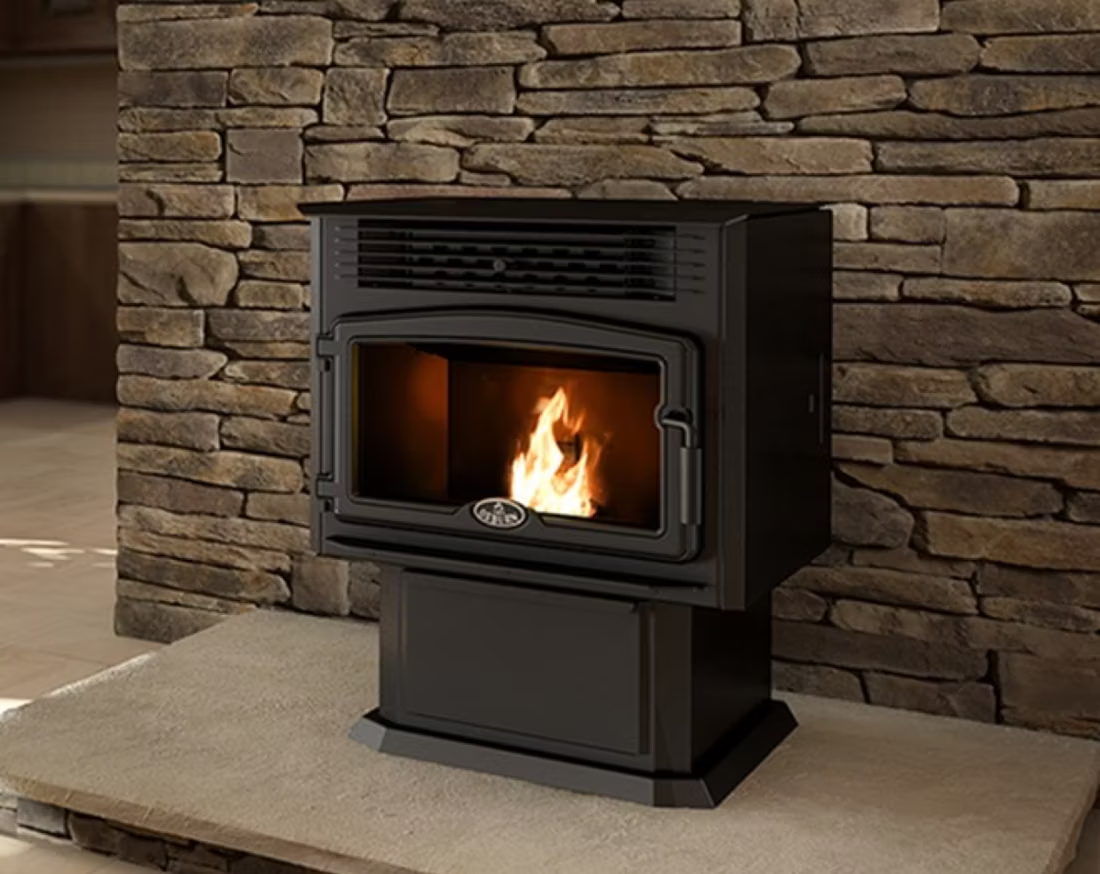
Pellet stoves fit that need well: load the hopper, set the thermostat, and get even, consistent heat without the daily splitting and hauling a wood stove demands. The Valley also sits close to the supply—Lignetics, New England Wood Pellet, and Maine Woods Pellet Co. all produce pellets within a day's drive, so fuel stays regionally sourced rather than trucked in from the Midwest or South. And because this part of Connecticut has no winter inversion or non-attainment air quality designation, there's no curtailment season to plan around—you can run a pellet stove on the coldest night of the year without checking an advisory first.
Three steps. No salesperson until you're ready.
Tell us about your project
Your zip code, your situation, and the fuel you're leaning toward—or let the answers point you to one.
See what's actually available
The brands dealers within 100 miles genuinely carry—real options, never a catalog mirage.
Get your dealer & Project Guide
A trusted local dealer, plus the free Project Guide & Parts List that names every component of the job.
Frequently Asked Questions
How much does a pellet stove installation cost in the Naugatuck Valley?
A pellet stove or insert installation in the Naugatuck Valley typically runs $3,000 to $6,500, depending on the unit, whether you're venting through an exterior wall or reusing an existing masonry chimney, and whether new electrical work is needed for the hopper and blower. Insert conversions into an existing fireplace opening usually land on the lower end since the masonry space is already framed and the chimney does most of the work. Freestanding stoves installed where there's no existing fireplace run higher once wall penetration and a hearth pad are added. A local dealer will give you a firm number after looking at your venting path in person.
What size pellet stove do I need for my home?
Sizing comes down to square footage, ceiling height, and how well insulated the space is—a real variable across the Valley's mixed housing stock. As a general guide, smaller pellet stoves (rated for roughly 1,000-1,500 sq ft) suit a single room or an add-on, while larger units (2,000+ sq ft) can handle open floor plans or supplement a whole first floor. Older triple-deckers in Waterbury and borough-era housing in Naugatuck often carry less insulation than newer construction out toward Oxford or Southbury, so a local dealer will factor that into the recommendation rather than sizing off square footage alone.
Where can I find certified pellet stove installers near me?
Look for NFI (National Fireplace Institute)-certified installers, who are trained specifically on the venting and clearance requirements pellet appliances need. Dealers serving the Valley generally cover Waterbury, Naugatuck, Ansonia, Derby, Seymour, and Beacon Falls without a travel charge, with some also reaching Oxford, Middlebury, and Watertown. Because pellet stoves vent through smaller-diameter pipe than wood stoves, correct installation matters for both draft performance and safety—stick with a dealer who installs what they sell rather than a general contractor doing it as a side job.
What's the difference between a pellet stove and a pellet insert?
A pellet stove is a freestanding unit on its own hearth pad, vented through a wall or an existing chimney—it can go almost anywhere with the right clearances. A pellet insert slides into an existing masonry fireplace opening, which is common in the Valley's older homes with fireplaces that were never great at actually heating a room. For a house in Ansonia or Derby with an underused wood fireplace, an insert is often the more efficient upgrade; for a home without an existing fireplace, a freestanding stove is the simpler install.
Do I need a permit to install a pellet stove in the Naugatuck Valley?
Yes—a building permit is required, issued by whichever town you're in rather than a single county office, since Connecticut towns each handle their own permitting. Waterbury, Naugatuck, Ansonia, Derby, and Seymour all run their own building departments, and most local dealers coordinate the permit and inspection as part of the installation. Because pellet appliances burn cleaner and more completely than wood, and the Valley carries no winter air quality non-attainment designation, there's no curtailment period or burn-ban season to schedule the install around.
What's the best pellet stove for the Naugatuck Valley's climate?
For most Valley homes, a mid-size pellet stove burning roughly 2.5 to 3 bags a day on moderate settings matches the region's long, steady heating season lasting roughly from October through April without running flat-out constantly. Look for a hopper that holds at least 40 pounds if you want an overnight burn without a refill, and a unit with battery-backup capability—pellet stoves need electricity to run the auger and blower, and the Valley does see occasional ice-storm outages. Local dealers carrying Lignetics, New England Wood Pellet, or Maine Woods Pellet Co. fuel can also tell you which stoves burn cleanest with the regional pellet blends they stock.
How much pellet fuel will I need, and where do I buy it?
Pellets from Lignetics, New England Wood Pellet, and Maine Woods Pellet Co. are widely stocked at hardware stores and hearth dealers throughout the Valley, and because all three are produced regionally, supply has stayed steady even during past national pellet shortages. A ton of pellets—about fifty 40-pound bags—typically lasts an average Valley home 1.5 to 2.5 heating seasons as primary heat, or longer as supplemental heat. Buying a full ton in early fall before the first cold snap is the standard local move; pellets store fine in a dry garage or basement as long as bags are kept off a damp floor.
How much maintenance does a pellet stove need?
Pellet stoves need less upkeep than a wood-burning chimney, but they're not maintenance-free. Plan on cleaning the burn pot and ash pan weekly during heavy use, a full cleaning of the exhaust venting and hopper mechanism once a season, and an annual professional inspection to check the auger motor, blower, and gaskets. Valley dealers who sell pellet stoves generally offer this service, and it's worth scheduling before the season starts rather than mid-winter, when everyone else is calling too.
Pellet stove vs. wood stove—which is right for my home?
Wood stoves burn what's abundant regionally—oak, maple, birch, and ash are all common in the Valley—and they work without electricity, which matters if a Nor'easter takes down power for a few days. Pellet stoves need electricity for the auger and blower, but they're far less hands-on day to day: no splitting, stacking, or hauling, and a thermostat that holds a steady temperature instead of the rise-and-fall heat curve of a wood fire. For Valley homeowners who want reliable, low-maintenance zone heat and don't need it to double as emergency backup, pellet is usually the easier fit. For homes at real risk of extended outages, or households with a reliable firewood source already, wood still has an edge.
Why is a fireplace insert so efficient?
An insert does two things: it seals the chimney completely, so you stop losing air you already paid to heat, and it radiates warmth into the room through the firebox and glass. Most add a heat-exchange fan that pulls cool room air underneath, wraps it around the hot firebox, and pushes it back out warm. Your home is more efficient before you've even lit the first fire.
What's the difference between an insert and a zero-clearance fireplace?
An insert is a fireplace that slides into a pre-existing wood-burning fireplace—if you don't have one, there's nothing to insert it into. A zero-clearance fireplace is built into a framed wall, which makes it the answer for remodels and new construction. Simple test: existing masonry fireplace means insert; blank or framed wall means zero-clearance.
Can a fireplace actually lower my heating bill?
Yes—by creating a comfort zone. A furnace heats every square foot of the house just to warm the one room you're in; a gas fireplace on low burns roughly a sixth of the gas a typical furnace does. Set the furnace around 55–60 degrees as a baseline, then heat the rooms your family actually uses. Families who heat this way commonly save $20–$60 a month.
Can I install a fireplace myself?
If you're putting a fire in your house on purpose, it's best to work with an expert. Unless you're genuinely experienced in framing, gas line, vent pipe, and the national code on clearances to combustibles, have a professional do it—and ideally the same company that sells you the fireplace, so warranty, service, and liability all live under one roof.
Stove and Fireplace Dealers in Naugatuck Valley County
Listings include WhyFire partner dealers, dealers we have verified as authorized for the brands we recommend, and established local businesses that carry hearth products. Every listing shows which one it is. The ones marked Preferred run on WhyFire's software, so they can show you real pricing and book your appointment right here. No manufacturer pays for placement. How we verify dealers →
Neighborhood Chimney Service
Tani’s Masonry Supply, LLC
Fireplace Surplus
Four Seasons Fire & Hearth
Black Swan Fireside Hearth & Home
Best In Backyards
New Haven Masonry
House Of Warmth Stove & Fireplace Shop
The Trading Post
Spotless Chimney Sweeping & Solutions
Leahy’s Metered Gas Service
Fire House Stoves & Spas
Dean's Stove Shop
Hocon Gas Of Torrington
Pellet Brands Stocked Around Naugatuck Valley County
Manufacturers will point you to the nearest stocking dealer.
Find your pellet stove in the Naugatuck Valley.
Tell us a bit about your home and we'll put together a free Project Guide & Parts List—the right pellet stove or insert, the exact vent kit, and a trusted local dealer to install it.
Find Your Fireplace →