
The clean, no-vent way to add warmth in Arapahoe County.
From Aurora townhomes to Centennial basements to Greenwood Village remodels, electric fireplaces fit the way most of Arapahoe County actually builds and lives. Find the right unit and connect with a trusted local dealer.
Every Project Starts From One of These Five Situations
Electric heat that works with how Arapahoe County actually lives.
Arapahoe County is home to more than 662,000 people spread across Aurora, Centennial, Greenwood Village, Englewood, Littleton's eastern edge, Sheridan, and a wide belt of newer master-planned subdivisions. Winters here are moderate by Rocky Mountain standards—average lows around 17°F and a solidly moderate heating season, a Front Range climate that calls for real supplemental heat but rarely the extreme cold-weather demands of the high country an hour west. Solid-fuel appliances are essentially off the table across the county: wood and pellet stoves are rated not-applicable here, since most housing stock is townhomes, condos, and HOA-governed subdivisions where venting and cutting permits through the Arapaho-Roosevelt National Forest are geared toward backcountry cabins, not suburban Aurora lots.
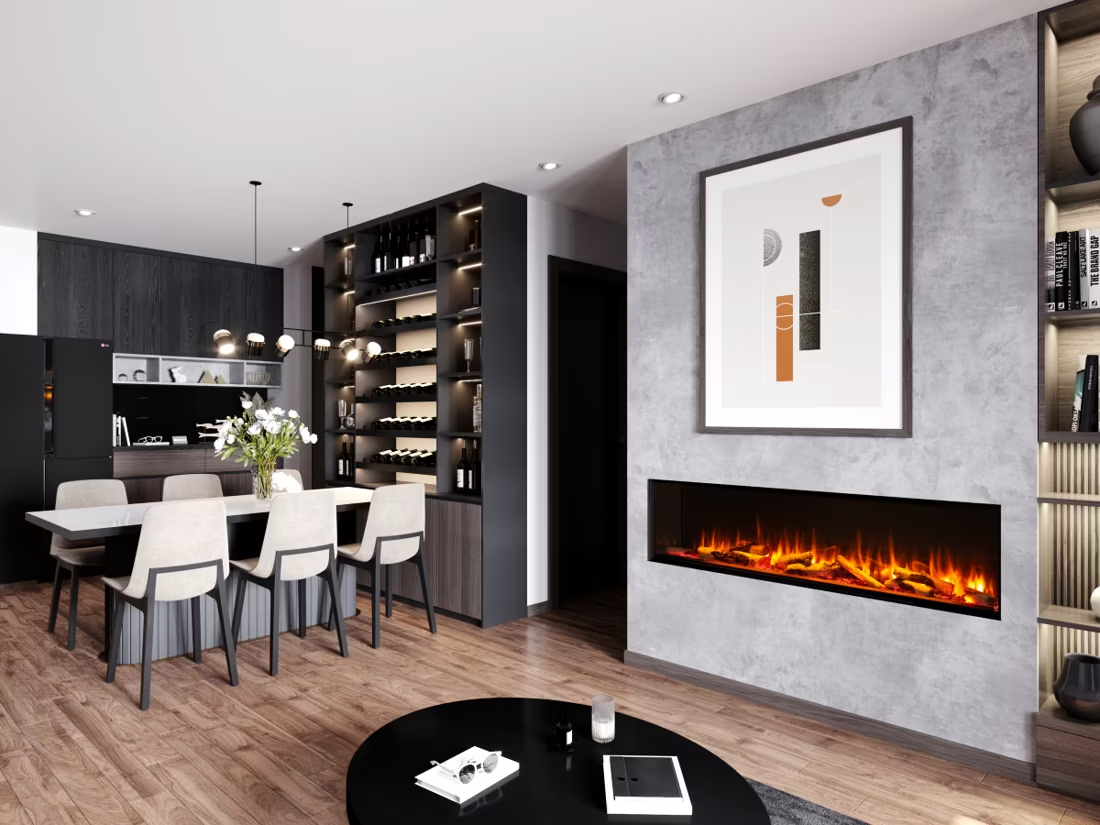
That's exactly the gap electric fireplaces fill. No chimney, no gas line, no combustion venting through a shared wall—just a 120V plug-in unit or a hardwired 240V insert that an electrician can set in an afternoon. Arapahoe County's Regional Air Quality Council issues winter inversion and wildfire-smoke advisories that periodically restrict wood burning across the Denver metro; electric units are never affected, which matters for anyone who wants reliable ambiance and heat regardless of the day's air quality index. Xcel Energy, the primary electric utility across most of the county, makes running one straightforward and predictable to budget for.
Three steps. No salesperson until you're ready.
Tell us about your project
Your zip code, your situation, and the fuel you're leaning toward—or let the answers point you to one.
See what's actually available
The brands dealers within 100 miles genuinely carry—real options, never a catalog mirage.
Get your dealer & Project Guide
A trusted local dealer, plus the free Project Guide & Parts List that names every component of the job.
Frequently Asked Questions
How much does an electric fireplace installation cost in Arapahoe County?
Plug-in electric fireplaces and inserts start around $400–$800 installed, since most just need a standard outlet and a mounting bracket—a common choice for Centennial and Aurora condos or a finished basement remodel. Hardwired built-in units that require a dedicated 240V circuit run closer to $1,200–$2,500 once an electrician runs new wiring and a breaker. Full mantel-and-surround builds in a Greenwood Village or Cherry Creek-area remodel can push higher depending on custom cabinetry. Local dealers will give you a firm number after seeing your electrical panel and the wall or alcove you're working with.
Do I need a permit for an electric fireplace in Arapahoe County?
Plug-in units generally don't require a permit since no new wiring is involved. Hardwired installations that add a new circuit typically need an electrical permit—through the City of Aurora, City of Centennial, City of Englewood, or the Arapahoe County Building Division for unincorporated areas like parts of Byers or Deer Trail. Most licensed electricians and hearth dealers pull this permit as part of the job, so you're not left coordinating inspections yourself. Unlike wood or gas appliances, there's no chimney or venting inspection to schedule—the electrical permit is usually the only step.
What's the difference between a plug-in electric fireplace and a built-in insert?
A plug-in unit is freestanding or wall-mounted, runs on a standard outlet, and can be relocated if you move—a good fit for renters and condo owners in Aurora or Sheridan where landlords may not allow permanent changes. A built-in insert is designed to be recessed into a wall, existing masonry opening, or custom cabinetry and usually needs a dedicated 240V line for full heat output. For Arapahoe County homes converting an old wood-burning fireplace that's rarely used, an insert-style electric unit is a popular option—it fills the existing opening and eliminates the need to sweep a chimney you were never using anyway.
Will an electric fireplace actually heat my room, or is it just for looks?
Most electric fireplaces output around 4,600–5,000 BTUs on high, enough to noticeably warm a single room (roughly 400–1,000 sq ft) but not intended to replace central heat for a whole house. In Arapahoe County's climate—averaging 17°F on the coldest nights—that makes an electric unit ideal as supplemental or zone heat in a finished basement, a home office, or a bonus room where running the furnace for one space feels wasteful. If you're trying to heat a larger open floor plan, a gas insert or built-in fireplace will outperform electric on raw heat output; talk to a local dealer about your square footage before deciding.
Electric vs. gas fireplace—which is right for my Arapahoe County home?
Gas fireplaces put out significantly more heat and are common across the county where natural gas service is already run to the home, making them a better fit for a primary living room or great room. Electric fireplaces cost far less to install, need no gas line or venting, work in any wall or alcove, and are the only realistic option in many condos, townhomes, and HOA communities across Aurora and Centennial that restrict combustion appliances. If you're renovating a basement, adding ambiance to a bedroom, or living somewhere venting isn't feasible, electric wins on simplicity. If you want a fireplace to meaningfully cut your furnace's workload in a larger room, gas is worth the extra investment.
Does my HOA allow electric fireplaces in Arapahoe County?
Most HOA-governed communities across Arapahoe County—from Southlands and Saddle Rock Golf Club in Aurora to Piney Creek and The Farm in Centennial—restrict or outright prohibit exterior venting for wood and gas appliances, but electric fireplaces are almost universally allowed since they require no chimney, flue, or exterior vent penetration. That said, some HOAs still have covenants around visible exterior modifications for hardwired units near windows or walls facing common areas, so it's worth a quick check of your community's design guidelines before a built-in installation. A local dealer familiar with the area's HOA patterns can usually tell you what's typically approved without a fuss.
Are electric fireplaces affected by winter air quality advisories in Arapahoe County?
No—and that's one of their real advantages here. The Regional Air Quality Council issues winter inversion and wildfire-smoke advisories across the Denver metro, including Arapahoe County, that sometimes ask residents to voluntarily limit wood burning on high-pollution days. Electric fireplaces produce zero combustion emissions, so they're never subject to these advisories. For households that want a fire feature they can use every day regardless of the air quality index, that's a meaningful difference from wood or open-hearth options.
What happens to my electric fireplace during a power outage?
An electric fireplace won't run without power, since both the heater and flame-effect display are electric—worth knowing given occasional winter outages on Xcel Energy's grid during heavy Front Range storms. If backup heat during outages matters to you, a gas fireplace or insert with a battery-backup ignition system is a better primary choice, with electric reserved for supplemental rooms. Most Arapahoe County households pairing the two use gas in the main living area and electric in a bedroom, basement, or office where daily convenience matters more than outage resilience.
Where can I see electric fireplaces in person before buying in Arapahoe County?
Local hearth dealers serving the Aurora, Centennial, and Englewood area typically have working showroom displays so you can compare flame realism, heat output, and finish options side by side—something that's hard to judge from an online listing or a big-box store floor model. A dealer visit also lets you talk through whether your wall has adequate outlet access, whether a hardwired circuit is worth the upgrade, and how the unit will look once trimmed out. Find My Fireplace matches you with a trusted local dealer rather than pointing you at a catalog, so the recommendation reflects what's actually installable in your specific room.
Can I put a TV above my fireplace?
Yes—with an asterisk. Fireplaces are hot and TVs don't like heat. Either put a mantel between them to deflect rising warmth, or choose a fireplace with heat-management technology that creates a cool zone on the wall above—the wall stays around 125 degrees, barely warm, while the room still gets full heat. If you like clean lines and don't want a mantel, heat management is the answer.
Does an electric fireplace need a vent or chimney?
No—that's its superpower. An electric fireplace needs a wall and an outlet, period. No vent pipe, no gas line, no clearances to design around, which is why it works in bedrooms, offices, apartments, and walls where venting a gas or wood unit would be impractical or impossible. Installation is typically the simplest and least expensive of any fireplace type.
Does a fireplace add value to my home?
On average, a fireplace adds back to the home about the same amount you spent installing it. Add the monthly savings from heating the rooms you actually use instead of the whole house—often hundreds of dollars a year—and the value case is strong before you even count what a fire does for how your family uses the room.
How much should I budget for a fireplace?
For an average home—covering the fireplace, the vent pipe, and basic installation—a budget between $3,900 and $5,500 gives you a lot of options across wood, gas, and pellet. By the time you add finish work, gas line, and electrical, the average complete installation lands between $5,000 and $12,000 all-in. In a remodel or new build, a good rule is to put about 2.5% of the total project cost toward the fireplace.
Stove and Fireplace Dealers in Arapahoe County
Listings include WhyFire partner dealers, dealers we have verified as authorized for the brands we recommend, and established local businesses that carry hearth products. Every listing shows which one it is. The ones marked Preferred run on WhyFire's software, so they can show you real pricing and book your appointment right here. No manufacturer pays for placement. How we verify dealers →
Midtown Chimney Fireplace Store
Spa Brokers V
Spa Brokers Iii
Spa Brokers
Fireplace And Grill Experts - Service Only
Thoshini LLC
Spa Brokers (Corporate)
Rio Grande Co.
Outdoor Kitchen Dist. Inc
Proud Souls Barbecue & Provisions
Aria Custom Design
Distinctive Mantel Designs
Spa Brokers
Spa Brokers
Western Fireplace Supply
Spa Brokers
Find your electric fireplace match in Arapahoe County.
Tell us about your room and your home's wiring, and we'll match you with a trusted local dealer and put together a free Project Guide & Parts List—the exact unit, mounting hardware, and electrical scope for your Arapahoe County home.
Find Your Fireplace →