
Electric heat built for Glendale's dense, code-tight buildings.
No flue, no gas line, no HOA fight—just a fireplace that plugs in and works. Find the right unit for your condo or townhome and connect with a trusted local dealer.
Every Project Starts From One of These Five Situations
A tiny city built vertically—and built for electric heat.
Glendale is barely a third of a square mile, fully surrounded by Denver, and packed with mid-rise condos and apartment towers along Cherry Creek. At 5,352 feet with winter lows averaging 18°F and a long, demanding heating season, this is a genuinely cold-climate zone (5B)—not a place where a fireplace is purely decorative. But most of Glendale's housing stock makes wood or gas installation impractical or outright prohibited: shared walls, no chimney access, and HOA or fire-code restrictions on open flame and venting in multi-unit buildings.
Electric fireplaces solve that problem cleanly. A built-in unit needs a standard outlet or a dedicated 240V circuit, no combustion air, no vent stack through a shared roof, and no gas line to coordinate with a landlord or HOA board. Public Service Company of Colorado (Xcel Energy) serves nearly all of Glendale at a residential rate around $0.1505/kWh, so running one is predictable and cheap to budget compared to central heat. For a city where most homes are vertical and shared-wall, electric is often the only realistic supplemental heat option—and it happens to be a good one.
Three steps. No salesperson until you're ready.
Tell us about your project
Your zip code, your situation, and the fuel you're leaning toward—or let the answers point you to one.
See what's actually available
The brands dealers within 100 miles genuinely carry—real options, never a catalog mirage.
Get your dealer & Project Guide
A trusted local dealer, plus the free Project Guide & Parts List that names every component of the job.
Frequently Asked Questions
How much does an electric fireplace installation cost in Glendale?
A plug-in freestanding or wall-mount unit runs $300 to $900 installed, since it just needs an existing outlet and a mounting bracket—no electrician required in most cases. A built-in electric fireplace or insert that requires a new dedicated circuit, wall framing, or trim work typically runs $1,200 to $2,500, including a licensed electrician's time. Because so much of Glendale's housing stock is condos and apartments, the built-in category is common here—owners want the look of a fireplace without any venting or structural changes to a shared building.
Will an electric fireplace actually heat my condo, or is it just for looks?
Most electric fireplaces are rated around 1,500 watts on the heat setting, which works out to roughly 5,000 BTU—enough to noticeably warm a bedroom or living room, but not enough to replace central heat on a night when temperatures drop into the high teens, which happens regularly in Glendale. Think of it as effective zone heating: run it in the room you're actually in and let it take some of the load off your building's HVAC, rather than expecting it to carry the whole unit through a Front Range cold snap.
Do I need a permit for an electric fireplace in Glendale?
A plug-in unit that uses an existing outlet doesn't require a permit. If you're installing a built-in electric fireplace that needs a new circuit or any electrical panel work, that requires an electrical permit—for most Glendale properties this goes through the City of Glendale's building department, though condo and apartment owners should also check with their HOA or building management first, since many multi-unit buildings have their own rules about wall modifications even for electric-only installs.
Will my HOA or condo association allow an electric fireplace?
Electric is almost always the easiest fuel type to get approved in Glendale's condo and apartment buildings, precisely because it doesn't involve venting, combustion, or any changes to shared chimney or gas infrastructure. Most HOAs that flatly prohibit wood-burning or gas units due to fire code will approve a plug-in or built-in electric fireplace without much friction. Still, always confirm in writing before a built-in installation that involves cutting into a wall—some associations require notification even for electrical-only work.
How much does it cost to run an electric fireplace in Glendale?
At Xcel Energy's residential rate of about $0.1505 per kWh, a 1,500-watt unit running on the heat setting costs roughly $0.22 to $0.23 per hour. Run it for four hours on a cold evening and you're looking at under a dollar. Most units also let you run the flame effect alone, with the heater off, for essentially no meaningful electricity cost—useful if you just want the ambiance without the heat output in Glendale's shoulder-season months.
What's the difference between an electric fireplace, insert, and log set?
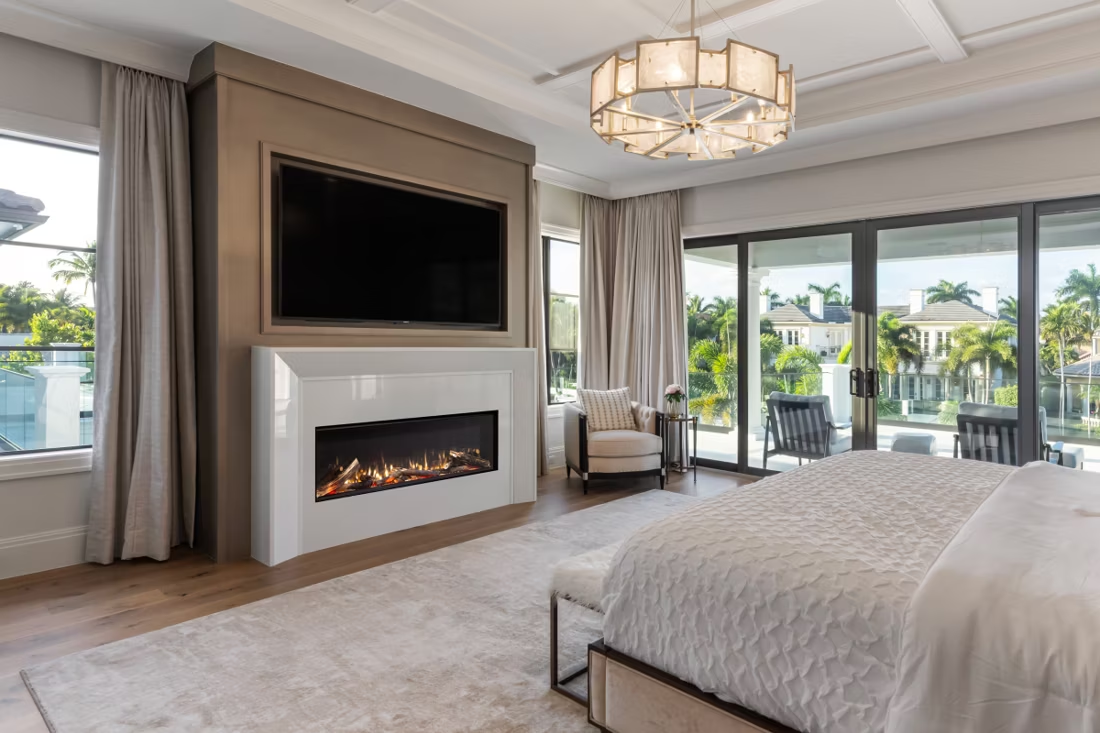
A built-in electric fireplace is a wall-mounted or recessed unit designed to be the focal point of a room, often with a linear or widescreen flame display. An electric insert is sized to slide into an existing masonry or built-in firebox opening—a common choice for Glendale homes with an old, unused wood-burning fireplace that residents want converted without venting work. An electric log set is the simplest option: a self-contained log unit that sits inside an existing firebox and plugs in, requiring no installation at all beyond an outlet.
Can an electric fireplace be my primary heat source in Glendale?
Not reliably. With a long, demanding heating season and winter lows that average 18°F, Glendale needs more sustained heating capacity than a typical 1,500-watt electric unit can deliver across an entire home. Electric fireplaces work best as supplemental zone heat—warming the room you're in and letting you turn down the thermostat elsewhere—rather than as a whole-home heating solution. For most Glendale condos and apartments, that supplemental role pairs well with existing forced-air or baseboard heat.
What are good electric fireplace brands for a Glendale condo or apartment?
Dimplex and Napoleon both make widely available built-in and insert models with realistic flame technology that hold up well in smaller Front Range living spaces. Touchstone's Sideline series is popular for wall-mount installs in tighter condo layouts where depth is limited. SimpliFire makes insert-style units that fit well into existing fireboxes for anyone converting an old, code-restricted wood fireplace. A local dealer can tell you which models fit your specific opening or wall dimensions.
Electric vs. gas—which makes more sense for my Glendale home?
Gas delivers more heat output and a more realistic flame, and Public Service Company of Colorado supplies natural gas throughout most of the Denver metro including Glendale, so fuel access generally isn't the obstacle. The obstacle is usually the building itself: gas fireplaces need venting to the exterior, which is often difficult or restricted in multi-unit condos and apartments without existing chimney infrastructure. Electric skips that problem entirely. If you own a detached home or have an existing vented fireplace to convert, gas is worth comparing. If you're in one of Glendale's condo or apartment buildings without existing venting, electric is usually the more realistic path.
Does an electric fireplace need a vent or chimney?
No—that's its superpower. An electric fireplace needs a wall and an outlet, period. No vent pipe, no gas line, no clearances to design around, which is why it works in bedrooms, offices, apartments, and walls where venting a gas or wood unit would be impractical or impossible. Installation is typically the simplest and least expensive of any fireplace type.
Can I put a TV above my fireplace?
Yes—with an asterisk. Fireplaces are hot and TVs don't like heat. Either put a mantel between them to deflect rising warmth, or choose a fireplace with heat-management technology that creates a cool zone on the wall above—the wall stays around 125 degrees, barely warm, while the room still gets full heat. If you like clean lines and don't want a mantel, heat management is the answer.
Can I install a fireplace myself?
If you're putting a fire in your house on purpose, it's best to work with an expert. Unless you're genuinely experienced in framing, gas line, vent pipe, and the national code on clearances to combustibles, have a professional do it—and ideally the same company that sells you the fireplace, so warranty, service, and liability all live under one roof.
What is an in-home preview and do I need one?
It's a visit where a hearth professional measures your space, confirms the model you picked actually works in your home, and walks the specs—framing, gas line, venting, finish work—before anything is ordered. Some details you just can't know until you see the house. Never make a down payment without one; it's the single most-skipped step that burns buyers.
Nearby Dealers
Hearth shops serving Glendale and the surrounding area. Every listing shows whether it is a WhyFire partner, a dealer we have verified as authorized for the brands we recommend, or a local business carrying hearth products. No manufacturer pays for placement. How we verify dealers →
Aria Custom Design
Distinctive Mantel Designs
Spa Brokers
Outdoor Kitchen Dist. Inc
Spa Brokers V
Rio Grande Co.
Fireplace And Grill Experts - Service Only
Proud Souls Barbecue & Provisions
Spa Brokers (Corporate)
Spa Brokers
Spa Brokers Iii
Spa Brokers
Thoshini LLC
Spa Brokers
Western Fireplace Supply
Electric Service in Glendale
An electric fireplace's heater draws about 1,500 watts—pennies per hour at local rates.
Public Service Co Of Colorado
Find your electric fireplace in Glendale.
Tell us about your condo, apartment, or home, and we'll put together a free Project Guide & Parts List—the right electric fireplace or insert for your space, matched with a trusted local dealer who can install it correctly.
Find Your Fireplace →