
Electric warmth for Columbine Valley, without the smoke or the permits.
Clean, instant heat for this small Front Range town near Denver—no chimney, no gas line, and no exposure to the metro's winter no-burn days. Find the right electric fireplace or insert and connect with a trusted local dealer.
Every Project Starts From One of These Five Situations
Clean heat that skips the metro's wood-smoke restrictions.
Columbine Valley sits at 5,359 feet along the South Platte just south of Denver, in a climate zone (5B) with a long, cold winter season that stretches from October through April, and average winter lows near 19°F. That's real cold—comparable to Madison, Wisconsin—but it's cold that arrives inside a dense metro air basin. Winter inversions trap wood smoke over the Front Range, and the Regional Air Quality Council calls voluntary and mandatory no-burn days most winters. Wood stoves and pellet appliances aren't a realistic option for most homes in this small town of under 2,000 residents, both because of those restrictions and because Columbine Valley's tight lots and HOA-governed architecture leave little room for chimneys or venting.
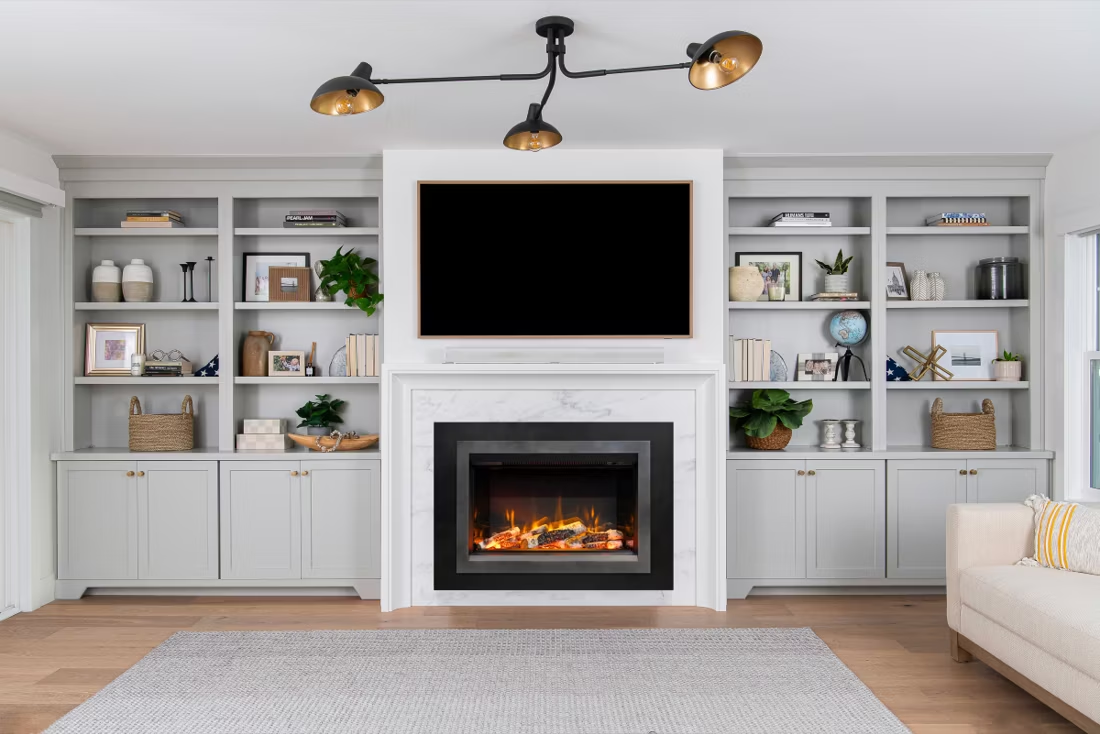
Electric fireplaces and inserts fill that gap. Public Service Company of Colorado (Xcel Energy) delivers both electric and natural gas service here at a residential rate of about $0.15/kWh, and an electric insert or built-in unit draws no combustion air, needs no flue, and keeps running on any no-burn day the state calls. For a mid-century ranch or split-level near the Columbine Country Club, that means real supplemental zone heat in a den or bonus room without touching the chimney, the gas line, or the HOA's exterior-alteration rules.
Three steps. No salesperson until you're ready.
Tell us about your project
Your zip code, your situation, and the fuel you're leaning toward—or let the answers point you to one.
See what's actually available
The brands dealers within 100 miles genuinely carry—real options, never a catalog mirage.
Get your dealer & Project Guide
A trusted local dealer, plus the free Project Guide & Parts List that names every component of the job.
Frequently Asked Questions
How much does it cost to install an electric fireplace in Columbine Valley?
Most electric fireplace projects here fall into two categories. A plug-in or recessed electric insert that uses an existing standard outlet typically runs $400 to $1,200 installed, including a new mantel surround or reface if you're dropping it into an old masonry firebox. A built-in wall unit or a larger insert that needs its own dedicated 20-amp circuit runs higher—usually $1,500 to $3,000 once an electrician's rough-in and finish work are included. Because Columbine Valley homes are mostly on Public Service Company of Colorado's grid with standard 200-amp panels, adding a dedicated circuit is usually straightforward, but a local installer will confirm panel capacity before quoting a final number.
What does it actually cost to run an electric fireplace here?
At Xcel Energy's Columbine Valley residential rate of roughly $0.1505 per kWh, a typical 1,500-watt electric fireplace costs about 23 cents an hour to run on full heat. Most owners use theirs for supplemental heat in the evening—say four to six hours—which works out to roughly $1 to $1.35 a day, or $30 to $40 a month during a cold stretch. That's meaningfully cheaper than running a portable space heater constantly, and most units let you run the flame effect alone, with the heater off, for close to no electrical cost at all.
Do I need a permit to install an electric fireplace in Columbine Valley?
A plug-in unit that uses an existing outlet doesn't require a permit. If your installer needs to run a new dedicated circuit or open a wall for a built-in unit, that electrical work does require a permit—the Town of Columbine Valley contracts its building and electrical permit review to Arapahoe County, and most local installers pull that permit as part of the job. It's a same-day inspection process in most cases, nothing like the multi-step review a wood-burning appliance or gas line install would trigger.
What's the difference between an electric insert, a built-in unit, and a freestanding electric stove?
An electric insert is sized to slide into an existing masonry fireplace opening, which makes it the most common retrofit for Columbine Valley's older ranch and split-level homes that already have a wood-burning firebox sitting unused. A built-in electric fireplace is framed into a wall like a TV—no existing firebox required, popular in newer remodels and additions. A freestanding electric stove looks like a traditional wood stove but plugs into a wall outlet and can go almost anywhere with floor clearance. All three use the same core heating technology; the choice comes down to what opening (or lack of one) you're working with.
Will an electric fireplace actually heat my house, or is it just for looks?
Most electric fireplaces sold today put out a genuine 4,600 to 5,100 BTUs—enough to comfortably heat a 400 to 1,000 square foot room, which makes them solid supplemental heat for a den, basement, or bonus room rather than a whole-house solution. In Columbine Valley's climate, with average winter lows around 19°F, that's realistic zone heating layered on top of your existing furnace, not a replacement for it. If you're trying to heat more square footage than that, talk to a local dealer about a larger built-in unit or a second zone.
What happens to my electric fireplace during a power outage?
It stops working—there's no battery backup or standby mode, since the entire unit runs on household current. That's the one real tradeoff against a wood or gas appliance, and it's worth planning around if you're in Columbine Valley for reliable emergency heat during a winter storm. Many homeowners here pair an electric fireplace for everyday convenience with a gas fireplace or insert elsewhere in the house for outage-proof backup heat, since Public Service Company of Colorado supplies both electric and gas service to the area.
Electric vs. gas fireplace—which is right for my Columbine Valley home?
Both fuels are common here, and Public Service Company of Colorado (Xcel Energy) delivers both to the town, so the choice usually comes down to what you want out of the unit. Electric fireplaces install faster, cost less upfront, need no venting, and produce zero emissions inside or outside the home—good for a bonus room, primary bedroom, or condo with HOA restrictions on exterior venting. Gas fireplaces put out more real heat, keep working during a power outage, and give you an actual flame with combustion heat behind it, but they require a gas line and a vented or direct-vent flue path through the wall or roof. If you want ambiance and light supplemental heat with minimal installation, go electric. If you want a fireplace that can carry real heating load and survive an outage, gas is the better fit.
Does wood smoke from neighboring homes or winter inversions affect my fireplace choice?
It's part of why electric has become the default choice for supplemental heat in Columbine Valley. The Front Range's winter inversions trap smoke and particulates low over the Denver metro area, and the Regional Air Quality Council calls Action Day burn restrictions on the worst days—restrictions that apply to wood-burning appliances, not electric or gas. If ambiance and backup warmth matter to you but you don't want a unit that's ever off-limits on a bad-air day, electric sidesteps the issue completely.
Can I install a wood stove or pellet stove in Columbine Valley instead?
It's rare, and most local dealers won't push it. Between the Front Range's winter no-burn advisories, the town's tight residential lots, and HOA architectural rules that make new chimneys difficult to approve, wood and pellet appliances just aren't a practical fit for most homes here—which is a real difference from mountain towns further west. If you have property outside town limits, or a cabin near the Arapaho-Roosevelt National Forests where cutting permits run $5 to $20 per cord during the May-through-October season, wood heat makes a lot more sense. For a home inside Columbine Valley itself, gas and electric are the realistic options, and that's what local hearth dealers are set up to install.
Can I put a TV above my fireplace?
Yes—with an asterisk. Fireplaces are hot and TVs don't like heat. Either put a mantel between them to deflect rising warmth, or choose a fireplace with heat-management technology that creates a cool zone on the wall above—the wall stays around 125 degrees, barely warm, while the room still gets full heat. If you like clean lines and don't want a mantel, heat management is the answer.
Do electric fireplaces actually produce heat?
Yes—most put out around 4,800–5,000 BTUs from a standard outlet, which comfortably warms a bedroom, office, or den as a comfort-zone heater. What they won't do is carry a whole house the way wood, gas, or pellet can. Think of electric as ambiance-first with honest supplemental heat: flames on with no heat in July, flames plus warmth in January.
How much should I budget for a fireplace?
For an average home—covering the fireplace, the vent pipe, and basic installation—a budget between $3,900 and $5,500 gives you a lot of options across wood, gas, and pellet. By the time you add finish work, gas line, and electrical, the average complete installation lands between $5,000 and $12,000 all-in. In a remodel or new build, a good rule is to put about 2.5% of the total project cost toward the fireplace.
Can a fireplace actually lower my heating bill?
Yes—by creating a comfort zone. A furnace heats every square foot of the house just to warm the one room you're in; a gas fireplace on low burns roughly a sixth of the gas a typical furnace does. Set the furnace around 55–60 degrees as a baseline, then heat the rooms your family actually uses. Families who heat this way commonly save $20–$60 a month.
Nearby Dealers
Hearth shops serving Columbine Valley and the surrounding area. Every listing shows whether it is a WhyFire partner, a dealer we have verified as authorized for the brands we recommend, or a local business carrying hearth products. No manufacturer pays for placement. How we verify dealers →
Proud Souls Barbecue & Provisions
Outdoor Kitchen Dist. Inc
Spa Brokers
Spa Brokers Iii
Aria Custom Design
Distinctive Mantel Designs
Spa Brokers
Spa Brokers V
Thoshini LLC
Fireplace And Grill Experts - Service Only
Rio Grande Co.
Western Fireplace Supply
Spa Brokers
Spa Brokers (Corporate)
Spa Brokers
Electric Service in Columbine Valley
An electric fireplace's heater draws about 1,500 watts—pennies per hour at local rates.
Public Service Co Of Colorado
Find your electric fireplace in Columbine Valley.
Tell us a bit about your home and we'll match you with the right electric fireplace, insert, or built-in unit—plus a free Project Guide & Parts List with the exact parts and your recommended local dealer.
Find Your Fireplace →