
Add Real Fireplace Warmth Without a Chimney in Aurora.
No gas line, no venting, no HOA headaches. Find the right electric fireplace or insert for your Aurora home and connect with a trusted local dealer.
Every Project Starts From One of These Five Situations
The easiest fireplace upgrade for Aurora's condos, townhomes, and newer subdivisions.
Aurora sits east of Denver at 5,565 feet, and while winters here aren't as brutal as places like Bismarck or Fargo, the city still logs a winter heating season on par with places like Colorado Springs, with average winter lows around 17°F. That's enough cold to want supplemental warmth, but Aurora's housing stock—a mix of townhomes, condo complexes, and HOA-governed subdivisions built out east toward Southlands and Saddle Rock—often makes traditional venting difficult or against the covenants entirely.
Electric fireplaces solve that problem outright. There's no flue, no gas line, and in many cases no permit required at all—a plug-in insert can go into a bonus room, a basement, or a rental unit the same afternoon it arrives. Public Service Co of Colorado (Xcel Energy) serves electric service throughout Aurora at a residential rate around $0.1505 per kWh, which keeps the running cost of a typical unit modest even used regularly through the Front Range's long heating season.
Three steps. No salesperson until you're ready.
Tell us about your project
Your zip code, your situation, and the fuel you're leaning toward—or let the answers point you to one.
See what's actually available
The brands dealers within 100 miles genuinely carry—real options, never a catalog mirage.
Get your dealer & Project Guide
A trusted local dealer, plus the free Project Guide & Parts List that names every component of the job.
Frequently Asked Questions
How much does an electric fireplace installation cost in Aurora?
Plug-in electric inserts and freestanding units in Aurora typically run $400 to $1,500 installed, since most just need a standard 120V outlet and a wall opening or mantel to sit in. Built-in wall-mount or recessed models that require an electrician to run a dedicated circuit—common in newer Aurora townhomes and basement remodels—run closer to $1,200 to $3,500 depending on the wall opening work and whether drywall or trim needs to be modified. A local dealer will confirm exact pricing after seeing your space, but electric is consistently the lowest-cost fireplace option compared to gas or masonry work.
Can an electric fireplace actually heat a room, or is it just for looks?
Most electric fireplaces sold today include a built-in heater rated around 1,500 watts—the practical ceiling for a standard household circuit—which is enough to comfortably heat a 400 to 600 square foot room as supplemental zone heat. They won't replace your furnace on a 10-degree Aurora morning, but they're genuinely useful for a basement family room, a home office, or a bonus room where running the central system feels wasteful. Many models let you run the flame effect with the heater off, which is common in Aurora during shoulder-season months when the fireplace is more ambiance than necessity.
Do I need a permit to install an electric fireplace in Aurora?
A plug-in electric insert or freestanding unit that uses an existing outlet typically doesn't require a permit. If you're having a built-in unit hardwired or need an electrician to add a dedicated circuit—which the City of Aurora Building Division treats as standard electrical work—that portion of the job requires an electrical permit, usually pulled by the electrician doing the work. Framing a new wall niche for a built-in unit can also trigger a building permit depending on scope. Most local dealers coordinate this directly rather than leaving it to the homeowner.
Electric vs. gas fireplace—which makes more sense for my Aurora home?
Gas is standard and widely available across Aurora, and for homes with an existing gas line, a gas fireplace or insert delivers more heat output and a more traditional flame. But electric wins on flexibility: no venting, no gas line extension, and installation in places gas can't easily reach—interior walls, condo units, finished basements without existing chimneys, or homes where an HOA restricts solid-fuel or open-flame appliances. If you're in a newer Aurora townhome or a rental property, electric is usually the more practical and lower-cost path. If you already have gas service and want maximum heat output for a primary living space, gas is worth the higher install cost.
Why isn't wood burning much of an option in Aurora?
Wood stoves and fireplaces are technically legal in unincorporated Arapahoe County and parts of the metro area, but they're not a practical fit for most Aurora homes. Aurora sits within the Denver metro nonattainment area for air quality, and winter inversions combined with wildfire smoke drift mean the region issues periodic burn restrictions during poor air days. Add in the fact that most of Aurora's newer subdivisions and condo associations prohibit solid-fuel appliances outright, and wood heat simply isn't part of the local hearth market the way it is in mountain towns an hour west. Electric and gas are the practical choices here.
What types of electric fireplaces are available for Aurora homes?
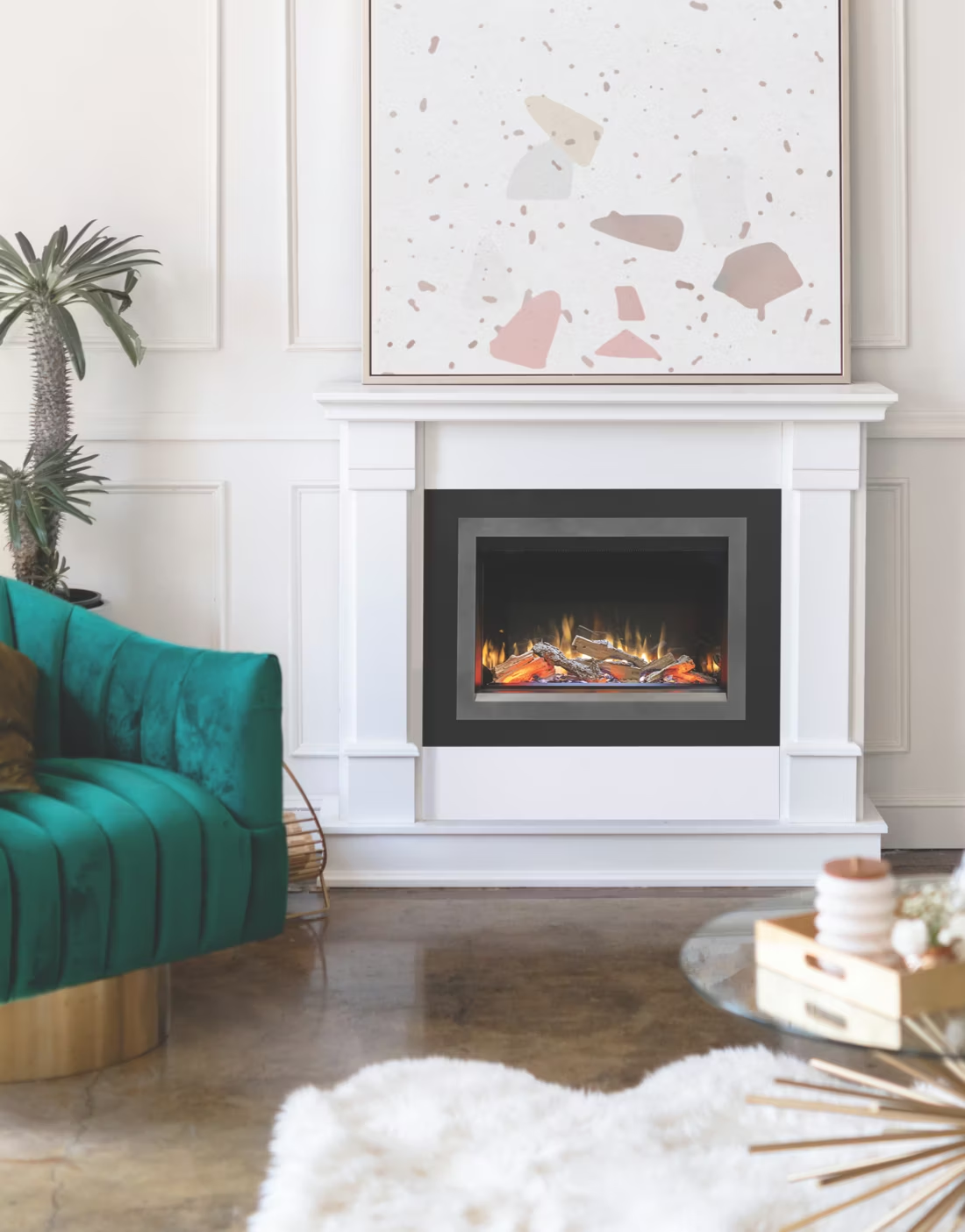
You'll find four main categories from local dealers: freestanding electric stoves that plug in and sit anywhere, mantel packages that pair an electric insert with a surround for a traditional look, wall-mount units that hang like a flat-screen TV for a modern profile, and recessed built-in inserts that go into a framed wall niche for a seamless, flush finish. Freestanding and mantel units are the easiest retrofit for existing Aurora homes; wall-mount and built-in units are popular in newer construction and remodels where the wall can be opened up ahead of time.
How much does it cost to run an electric fireplace in Aurora?
At Public Service Co of Colorado's residential rate of about $0.1505 per kWh, a typical 1,500-watt electric fireplace running on high costs roughly 23 cents an hour to operate. Run it four hours an evening through a cold Aurora winter month and you're looking at around $27 to $30 in added electricity use—far less than most homeowners expect, and a fraction of what supplemental space heaters or running the whole-home furnace longer would cost.
Where do electric fireplaces work best in an Aurora home?
Basements are the single most common install we see referred to local Aurora dealers, since finished basements rarely have existing venting and electric solves that instantly. Bonus rooms, home offices, and primary bedrooms are close behind—spaces where a full gas or wood installation would be overkill. Electric is also the default answer for condo and apartment units across Aurora's denser zip codes like 80012 and 80247, where HOA rules or building codes often prohibit anything requiring venting or an open flame.
Is an electric fireplace safer or better than a space heater?
Both use electric resistance heat, but electric fireplaces are built with a more robust housing, tip-over and overheat safety switches, and a cool-touch glass or screen face, making them a better long-term fixture than a portable space heater—especially in homes with kids or pets. They also double as a permanent design feature rather than something you store in a closet each spring. For Aurora homeowners weighing the two, a fixed electric fireplace insert or wall-mount unit is generally the safer, more durable choice for regular use.
Can I put a TV above my fireplace?
Yes—with an asterisk. Fireplaces are hot and TVs don't like heat. Either put a mantel between them to deflect rising warmth, or choose a fireplace with heat-management technology that creates a cool zone on the wall above—the wall stays around 125 degrees, barely warm, while the room still gets full heat. If you like clean lines and don't want a mantel, heat management is the answer.
Do electric fireplaces actually produce heat?
Yes—most put out around 4,800–5,000 BTUs from a standard outlet, which comfortably warms a bedroom, office, or den as a comfort-zone heater. What they won't do is carry a whole house the way wood, gas, or pellet can. Think of electric as ambiance-first with honest supplemental heat: flames on with no heat in July, flames plus warmth in January.
What is an in-home preview and do I need one?
It's a visit where a hearth professional measures your space, confirms the model you picked actually works in your home, and walks the specs—framing, gas line, venting, finish work—before anything is ordered. Some details you just can't know until you see the house. Never make a down payment without one; it's the single most-skipped step that burns buyers.
Should the dealer who sells my fireplace also install it?
Ideally, yes. A fireplace project involves vent pipe, gas line, electrical, and often tile or stone. Hire three or four separate trades and you own the liability and the game of telephone between them. One company selling and installing means one accountable party, start to finish—ask about factory training, on-time completion records, and what happens if an inspection fails.
Nearby Dealers
Hearth shops serving Aurora and the surrounding area. Every listing shows whether it is a WhyFire partner, a dealer we have verified as authorized for the brands we recommend, or a local business carrying hearth products. No manufacturer pays for placement. How we verify dealers →
Midtown Chimney Fireplace Store
Spa Brokers (Corporate)
Spa Brokers V
Fireplace And Grill Experts - Service Only
Rio Grande Co.
Spa Brokers Iii
Spa Brokers
Thoshini LLC
Distinctive Mantel Designs
Aria Custom Design
Spa Brokers
Outdoor Kitchen Dist. Inc
Spa Brokers
Proud Souls Barbecue & Provisions
Spa Brokers
Western Fireplace Supply
Electric Service in Aurora
An electric fireplace's heater draws about 1,500 watts—pennies per hour at local rates.
Public Service Co Of Colorado
Find your electric fireplace in Aurora.
Tell us about your space and we'll match you with the right electric fireplace or insert, plus a free Project Guide & Parts List and a trusted local Aurora dealer to install it.
Find Your Fireplace →