
Bring reliable, instant heat to your Arapahoe County home.
From Aurora and Centennial to the unincorporated stretches near Byers and Deer Trail, gas fireplaces deliver dependable warmth through Arapahoe County's cold Front Range nights. We'll match you with a trusted local dealer who knows the venting, the permits, and what actually fits your home.
Every Project Starts From One of These Five Situations
The default heat source for a fast-growing Front Range county.
Arapahoe County stretches from the dense subdivisions of Aurora and Centennial down through Littleton and Greenwood Village to the open plains near Byers and Deer Trail, sitting at roughly 5,400 to 6,000 feet along Colorado's Front Range. With a long, demanding winter heating season and winter lows averaging 17°F—plus the occasional Arctic front that drops temperatures well below zero for a day or two—most of the county's 662,000-plus residents rely on central forced-air heat as their primary system, with a gas fireplace or insert providing the zone heat and ambiance that a furnace vent can't.
Wood heat is genuinely rare here. The county's namesake national forest—Arapaho-Roosevelt—sits up in the mountains northwest of Denver, well outside Arapahoe County's own borders, so there's no local stand of pinyon, juniper, or ponderosa to cut from without a drive out of the county. Add in the Regional Air Quality Council's high pollution advisory program, which restricts uncertified wood-burning devices across the Denver metro during winter inversions, and gas becomes the practical choice for anyone who wants real flame without the smoke concerns. Xcel Energy provides natural gas service throughout most of the county's incorporated cities, making a direct-vent gas fireplace or insert a straightforward add to an existing masonry hearth or a new-construction great room.
Three steps. No salesperson until you're ready.
Tell us about your project
Your zip code, your situation, and the fuel you're leaning toward—or let the answers point you to one.
See what's actually available
The brands dealers within 100 miles genuinely carry—real options, never a catalog mirage.
Get your dealer & Project Guide
A trusted local dealer, plus the free Project Guide & Parts List that names every component of the job.
Frequently Asked Questions
How much does a gas fireplace installation cost in Arapahoe County?
A typical gas fireplace or insert installation in Arapahoe County runs $3,800 to $9,500, depending on the unit, the venting path, and whether new gas line work is needed. A direct-vent insert into an existing masonry fireplace in an Aurora or Centennial subdivision—where the gas line is often already run to the kitchen or furnace—tends to land on the lower end. A new built-in gas fireplace for a remodel or great room addition, with fresh framing and venting, sits in the middle. Homes in the unincorporated county's eastern reaches near Byers or Deer Trail, where a propane tank installation may be part of the job, run toward the higher end. Your matched local dealer will give you a firm number after an in-home walkthrough.
Can I convert my existing wood-burning fireplace to gas?
Yes, and it's one of the more common upgrades among Arapahoe County's older subdivisions—many homes built in the 1970s and 1980s in Aurora, Littleton, and Cherry Creek-area neighborhoods still have an open masonry wood fireplace that rarely gets used, partly because of RAQC pollution advisories that restrict uncertified wood devices during winter inversions. Converting to a gas insert typically runs $4,200 to $8,500, using your existing chimney as the venting path with a stainless liner. It keeps the look of the original fireplace while giving you instant, code-compliant heat you can use even on advisory days.
Do I need natural gas, or can I use propane?
Either works, but the answer usually comes down to where in the county you live. Xcel Energy supplies natural gas throughout most of Aurora, Centennial, Littleton, and Greenwood Village, so if your home already has gas appliances, adding a fireplace is a simple tie-in. Out toward the unincorporated eastern plains near Byers and Deer Trail, natural gas lines often don't reach, and propane—supplied by regional tank companies—is the standard fallback. Most gas fireplace models can be configured for either fuel; your installer sets the orifice and regulator to match.
Will my gas fireplace still work if the power goes out?
Most modern gas fireplaces with intermittent pilot ignition (IPI) include a battery backup—typically a few AA batteries inside the unit—that keeps the igniter working when the power drops, which matters during the ground blizzards and high-wind events that occasionally knock out power along the Front Range. A few brands, including Valor, generate their own electricity from the pilot's thermocouple and skip batteries entirely. If backup heat during an outage matters to you, ask your matched dealer about the ignition system before you settle on a model—it's a bigger practical difference than it sounds.
What's the difference between a gas fireplace, insert, and stove?
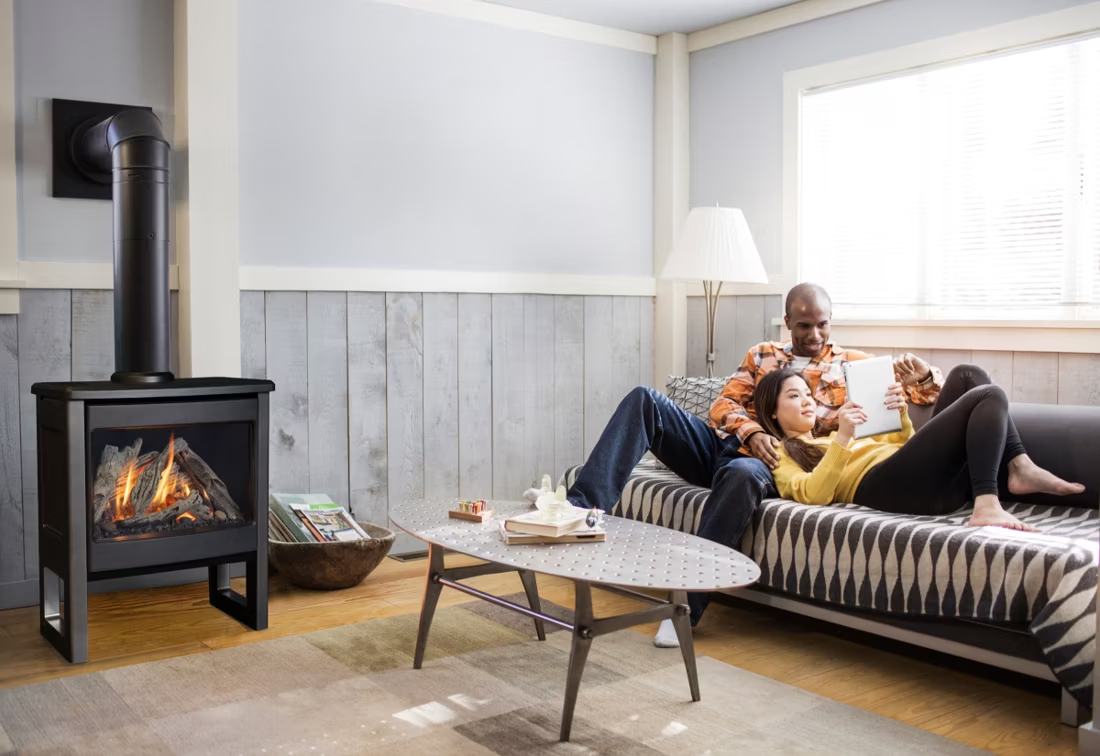
A gas fireplace is a fully built-in unit framed into a wall—the right choice for new construction or a remodel without an existing hearth. A gas insert slides into an existing masonry fireplace opening, using the chimney as its vent path, which is the common route for Arapahoe County's older subdivision homes with a wood fireplace they no longer use. A gas stove is a freestanding cabinet-style unit that sits on the floor like a wood stove but runs on gas—a good fit for a room with no chimney at all. Most homeowners here with an existing fireplace go with an insert; new rooms or additions usually call for a built-in.
Do I need a permit to install a gas fireplace in Arapahoe County?
Yes—both a building permit and a gas line permit are required for new gas fireplace installations. Depending on where your home sits, that permit is pulled through the Arapahoe County Building Division for unincorporated areas, or through the local permitting office in Aurora, Centennial, Littleton, or Greenwood Village if you're within city limits. A licensed gas-fitter has to handle the line work regardless of jurisdiction, which is one reason working with a certified hearth dealer is easier than coordinating separate trades yourself—they typically pull the permits and schedule inspections as part of the install.
Should I choose a vented or vent-free gas fireplace?
Vented (direct-vent) gas fireplaces draw combustion air from outside and exhaust the byproducts back outdoors through a sealed pipe—they're the cleanest, safest option and the most common choice across Arapahoe County. Vent-free units burn without any external venting and release some water vapor and combustion byproducts into the room; they're legal in Colorado with proper sizing and oxygen-depletion sensors, but given the Denver metro's winter inversion pattern and existing air quality concerns, most local dealers steer homeowners toward direct-vent models for day-to-day peace of mind. Ask your matched dealer which fits your specific room and floor plan.
How often should my gas fireplace be serviced?
An annual inspection is the standard recommendation for any gas appliance, including direct-vent fireplaces and inserts. A technician checks the burner, pilot assembly, venting, and gas connections, and cleans the glass and interior—a much smaller job than a chimney sweep, but just as important for safety. Expect to pay roughly $150 to $225 for a standard annual service call from an Arapahoe County hearth or gas appliance technician.
Why is gas so much more common than wood heat in Arapahoe County?
Partly geography, partly air quality. Arapahoe County itself has no national forest land—the Arapaho-Roosevelt National Forest that shares its name sits well up in the mountains northwest of Denver, so there's no nearby stand of ponderosa pine, aspen, pinyon, or juniper to cut without leaving the county. Layer on the Regional Air Quality Council's high pollution advisory program, which restricts uncertified wood-burning devices across the Denver metro during winter inversions, and gas becomes the practical default for the dense subdivisions in Aurora, Centennial, and Littleton. Wood stoves aren't unheard of in the county's rural eastern edge near Byers and Deer Trail, but for the vast majority of Arapahoe County households, gas is the fuel that actually fits.
Can I put a TV above my fireplace?
Yes—with an asterisk. Fireplaces are hot and TVs don't like heat. Either put a mantel between them to deflect rising warmth, or choose a fireplace with heat-management technology that creates a cool zone on the wall above—the wall stays around 125 degrees, barely warm, while the room still gets full heat. If you like clean lines and don't want a mantel, heat management is the answer.
What's the difference between an insert and a zero-clearance fireplace?
An insert is a fireplace that slides into a pre-existing wood-burning fireplace—if you don't have one, there's nothing to insert it into. A zero-clearance fireplace is built into a framed wall, which makes it the answer for remodels and new construction. Simple test: existing masonry fireplace means insert; blank or framed wall means zero-clearance.
How much should I budget for a fireplace?
For an average home—covering the fireplace, the vent pipe, and basic installation—a budget between $3,900 and $5,500 gives you a lot of options across wood, gas, and pellet. By the time you add finish work, gas line, and electrical, the average complete installation lands between $5,000 and $12,000 all-in. In a remodel or new build, a good rule is to put about 2.5% of the total project cost toward the fireplace.
Can I install a fireplace myself?
If you're putting a fire in your house on purpose, it's best to work with an expert. Unless you're genuinely experienced in framing, gas line, vent pipe, and the national code on clearances to combustibles, have a professional do it—and ideally the same company that sells you the fireplace, so warranty, service, and liability all live under one roof.
Stove and Fireplace Dealers in Arapahoe County
Listings include WhyFire partner dealers, dealers we have verified as authorized for the brands we recommend, and established local businesses that carry hearth products. Every listing shows which one it is. The ones marked Preferred run on WhyFire's software, so they can show you real pricing and book your appointment right here. No manufacturer pays for placement. How we verify dealers →
Midtown Chimney Fireplace Store
Spa Brokers V
Spa Brokers Iii
Spa Brokers
Fireplace And Grill Experts - Service Only
Thoshini LLC
Spa Brokers (Corporate)
Rio Grande Co.
Outdoor Kitchen Dist. Inc
Proud Souls Barbecue & Provisions
Aria Custom Design
Distinctive Mantel Designs
Spa Brokers
Spa Brokers
Western Fireplace Supply
Spa Brokers
Find your gas fireplace in Arapahoe County.
Tell us about your home and we'll match you with a trusted local dealer and a free Project Guide & Parts List—the exact parts, vent kit, and recommended installer for your Arapahoe County gas fireplace project.
Find Your Fireplace →