
Find your fireplace in Arapahoe County, Colorado.
From Aurora and Centennial to Littleton and the rural stretch out toward Byers, get matched with a trusted local dealer who knows what actually gets permitted and installed in this county—not just what's popular somewhere else.
Every Project Starts From One of These Five Situations
Suburban Denver winters, a heating season similar to Madison, Wisconsin, and a metro built on gas and electric heat.
Arapahoe County stretches from the dense Denver-Aurora core through Centennial, Littleton, Englewood, and Greenwood Village, out to the far more rural plains around Byers and Deer Trail near the Arapaho-Roosevelt National Forests. Average winter lows around 17°F put the county in roughly the same winter heating-load range as Madison, Wisconsin—a real, sustained heating season from October into April, but not the extreme cold of the high Rockies just to the west. Xcel Energy serves the overwhelming majority of homes here with both natural gas and electricity, which is a big part of why gas and electric fireplaces are the default choice across the county's subdivisions and townhome communities.
Wood and pellet appliances are the exception rather than the rule in Arapahoe County, and it's worth being direct about why. The Denver-Aurora metro is a designated nonattainment area for ozone and winter fine-particulate pollution, and the same inversion pattern that traps Denver's brown cloud settles over Arapahoe County's suburban core on cold, still days. Many newer subdivisions in Aurora, Centennial, and Littleton carry HOA covenants that prohibit wood-burning units outright, and new-construction gas conversions have become the norm. A handful of legacy homes and rural properties toward Byers and Deer Trail still burn ponderosa pine, aspen, pinyon, or juniper cut under Arapaho-Roosevelt National Forest permits, and pellet brands like Bear Mountain, Lignetics, and Forest Energy are available regionally for the few who use them—but for most of the county's 662,681 residents, gas and electric are the fireplaces that actually get installed. This hub covers the whole county fuel by fuel, so pick what fits your address and lot.
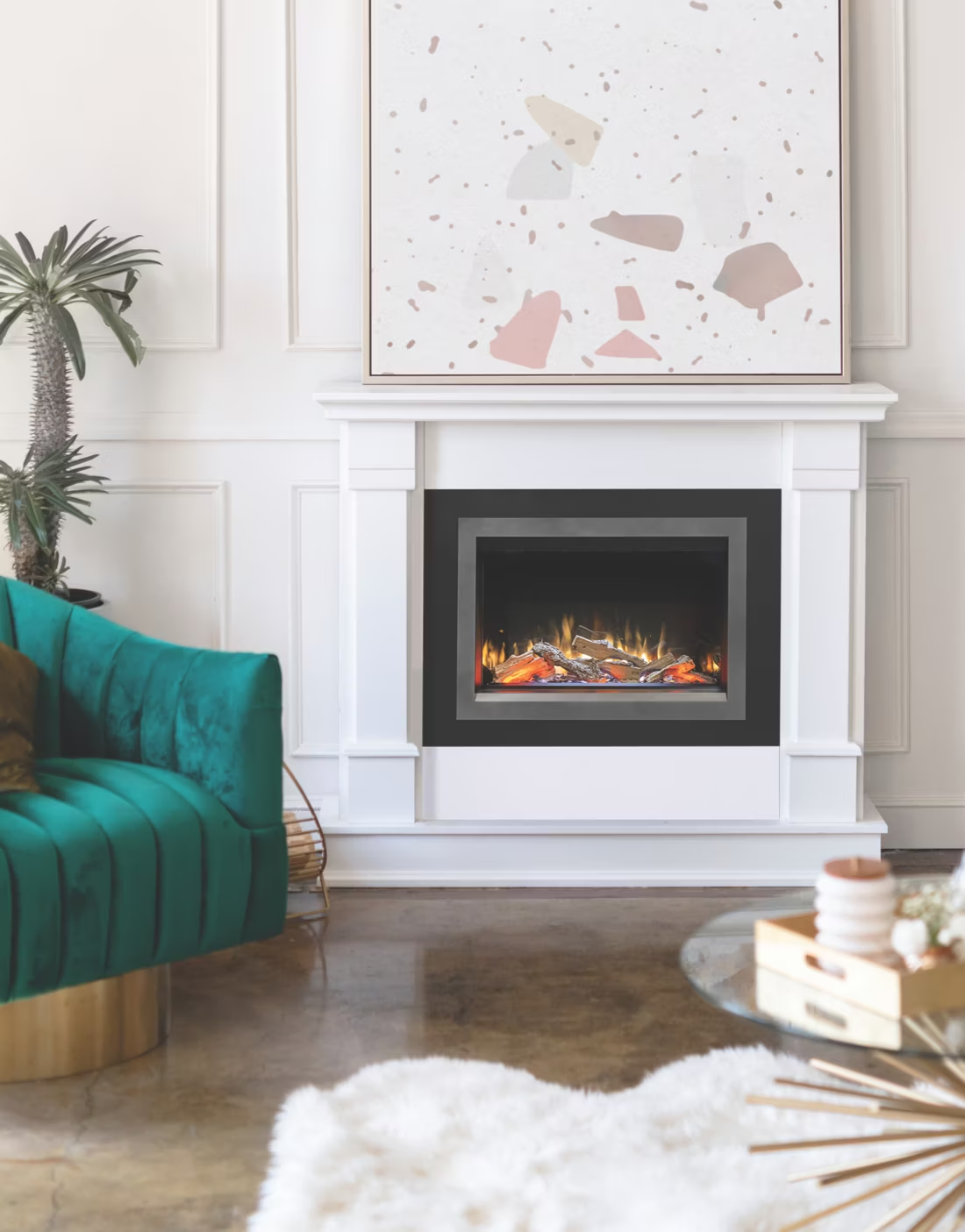
Four fuels. One honest answer for Arapahoe County.
Three steps. No salesperson until you're ready.
Tell us about your project
Your zip code, your situation, and the fuel you're leaning toward—or let the answers point you to one.
See what's actually available
The brands dealers within 100 miles genuinely carry—real options, never a catalog mirage.
Get your dealer & Project Guide
A trusted local dealer, plus the free Project Guide & Parts List that names every component of the job.
Frequently Asked Questions
Which fireplace fuel makes the most sense in Arapahoe County?
For the vast majority of homes in Aurora, Centennial, Littleton, and Englewood, gas is the practical default—Xcel Energy's natural gas network reaches nearly every subdivision, and a gas insert or direct-vent fireplace gives you real heat output through a winter on par with Madison, Wisconsin without any fuel storage or daily tending. Electric fireplaces are a strong secondary or standalone option, especially in townhomes, condos, and newer construction where venting a gas line isn't straightforward. Wood and pellet stoves are genuinely rare in this county—winter inversions over the Denver-Aurora metro and HOA covenants in most newer developments have pushed both fuels to the margins. The exception is the rural eastern county around Byers and Deer Trail, where a small number of homeowners still burn ponderosa pine or aspen cut under Arapaho-Roosevelt National Forest permits.
Do I need a permit for a gas or electric fireplace install in Arapahoe County?
Yes, in nearly every case, though who issues it depends on where you live. Homes in Aurora, Centennial, Littleton, and Englewood go through those cities' own building departments, while unincorporated parts of the county—including much of the area toward Byers and Deer Trail—go through Arapahoe County's building division. Gas fireplace and insert installs require a licensed gas fitter and a gas-line permit in addition to the general building permit; electric fireplace installs usually only need a permit if you're adding a new dedicated circuit rather than plugging into an existing outlet. The retailers we match homeowners with in this county handle that paperwork as part of the install almost every time.
Why are wood-burning fireplaces so restricted in Arapahoe County?
The Denver-Aurora metro area is a designated nonattainment area for ozone and winter fine-particulate pollution, and Arapahoe County's suburban core sits right in the path of the inversion pattern that traps that pollution near the ground on cold, still days. That's on top of HOA covenants—a large share of newer construction in Centennial, Aurora, and Littleton is built under associations that prohibit wood-burning appliances outright in favor of gas or electric. Combined, those two forces mean wood-burning fireplaces have largely disappeared from new installs across the county's dense core, even though the same appliances remain common just west in the mountain counties.
Can I still install a wood stove if I live in the rural eastern part of the county, like Byers or Deer Trail?
It's more realistic out there than anywhere else in Arapahoe County. Properties near Byers and Deer Trail tend to sit on larger lots without HOA restrictions, and Forest Service firewood permits through the Arapaho-Roosevelt National Forests keep fuel costs low for ponderosa pine, aspen, pinyon, or juniper. You'll still need an EPA 2020 NSPS-certified stove to get permitted through Arapahoe County's building division, and you're still technically inside the broader Denver-Aurora airshed, so it's worth checking current burn-restriction guidance before you commit—but a certified wood stove is a genuinely viable choice for a rural eastern-county property in a way it usually isn't in Aurora or Centennial.
What does a gas or electric fireplace installation typically cost in Arapahoe County?
Gas fireplace, insert, or stove installs typically run $4,500–$11,000 depending on whether you're extending a gas line from an existing Xcel Energy service or converting a wood-burning firebox to gas—that conversion work is common here given how many older Aurora and Littleton homes were originally built with wood fireplaces. Electric fireplaces are far less expensive: $200–$3,000 for the unit itself, plus $400–$1,200 in labor if you need a dedicated circuit run for a built-in model rather than a plug-and-play unit. The county + fuel pages above break these numbers down further by city.
How do I find a retailer that covers both my city and my neighboring one, like Aurora and Centennial?
Most established hearth retailers in this county run installation and service crews across several cities rather than sticking to one, since Aurora, Centennial, Littleton, and Englewood sit close enough together that a single dealer can reasonably cover all four. We match you with a retailer whose service area, fuel lineup, and permitting relationships actually fit your city and your project, rather than defaulting you to whichever dealer has the biggest ad budget.
What is an in-home preview and do I need one?
It's a visit where a hearth professional measures your space, confirms the model you picked actually works in your home, and walks the specs—framing, gas line, venting, finish work—before anything is ordered. Some details you just can't know until you see the house. Never make a down payment without one; it's the single most-skipped step that burns buyers.
How much should I budget for a fireplace?
For an average home—covering the fireplace, the vent pipe, and basic installation—a budget between $3,900 and $5,500 gives you a lot of options across wood, gas, and pellet. By the time you add finish work, gas line, and electrical, the average complete installation lands between $5,000 and $12,000 all-in. In a remodel or new build, a good rule is to put about 2.5% of the total project cost toward the fireplace.
Can a fireplace actually lower my heating bill?
Yes—by creating a comfort zone. A furnace heats every square foot of the house just to warm the one room you're in; a gas fireplace on low burns roughly a sixth of the gas a typical furnace does. Set the furnace around 55–60 degrees as a baseline, then heat the rooms your family actually uses. Families who heat this way commonly save $20–$60 a month.
Does a fireplace add value to my home?
On average, a fireplace adds back to the home about the same amount you spent installing it. Add the monthly savings from heating the rooms you actually use instead of the whole house—often hundreds of dollars a year—and the value case is strong before you even count what a fire does for how your family uses the room.
Stove and Fireplace Dealers in Arapahoe County
Listings include WhyFire partner dealers, dealers we have verified as authorized for the brands we recommend, and established local businesses that carry hearth products. Every listing shows which one it is. The ones marked Preferred run on WhyFire's software, so they can show you real pricing and book your appointment right here. No manufacturer pays for placement. How we verify dealers →
Midtown Chimney Fireplace Store
Spa Brokers V
Spa Brokers Iii
Spa Brokers
Fireplace And Grill Experts - Service Only
Thoshini LLC
Spa Brokers (Corporate)
Rio Grande Co.
Outdoor Kitchen Dist. Inc
Proud Souls Barbecue & Provisions
Aria Custom Design
Distinctive Mantel Designs
Spa Brokers
Spa Brokers
Western Fireplace Supply
Spa Brokers
Get matched with a local Arapahoe County dealer.
Pick your fuel below and we'll put together a free Project Guide & Parts List—the right unit, the vent kit it needs, and the local dealer we recommend for your project.
Find Your Fireplace →