
Here's the honest case for pellet heat in Utah County.
Utah County's valley floor—Provo, Orem, American Fork, Lehi, Spanish Fork—runs on natural gas, and winter inversions trigger mandatory no-burn restrictions on solid-fuel devices. Pellet stoves still have a place on rural acreage, in canyon cabins, and as backup heat. We'll help you find out honestly, and connect you with a trusted local dealer if it fits.
Every Project Starts From One of These Five Situations
Natural gas, not pellets, heats the Utah Valley floor.
Utah County sits in an enclosed valley at roughly 4,500 feet, rimmed by the Wasatch Range to the east and the Lake Mountains and Utah Lake to the west—geography that traps cold air and pollution against the valley floor for days at a time. With 1.16 million residents packed into Provo, Orem, American Fork, Lehi, Spanish Fork, Payson, and a dozen other cities along the I-15 corridor, winter inversions are a defining feature of the season: PM2.5 builds up under the temperature inversion cap, and the Utah Division of Air Quality regularly calls mandatory no-burn actions on Red and Yellow air days—restrictions that apply to solid-fuel burning devices, pellet stoves included, unless the appliance is a home's sole source of heat.
That, combined with Dominion Energy's natural gas lines reaching nearly every incorporated city in the county, is why pellet stoves occupy a narrow niche here rather than the mainstream role they play in colder, more rural parts of the Mountain West. The homeowners who do install one are usually outside city gas service—up Provo Canyon, American Fork Canyon, or Spanish Fork Canyon, on unincorporated acreage near Elberta or Goshen, or in a detached shop or outbuilding where running a gas line isn't practical. Bagged pellets from Bear Mountain, Lignetics, and Forest Energy are sold through regional farm-and-ranch retailers, and while there's no dense wood-cutting culture here the way there is in the surrounding national forests, a handful of residents do pull firewood permits from the Uinta-Wasatch-Cache or Manti-La Sal National Forests for pinyon, juniper, and aspen—mostly for camp use or an occasional fire, not for daily heat.
Three steps. No salesperson until you're ready.
Tell us about your project
Your zip code, your situation, and the fuel you're leaning toward—or let the answers point you to one.
See what's actually available
The brands dealers within 100 miles genuinely carry—real options, never a catalog mirage.
Get your dealer & Project Guide
A trusted local dealer, plus the free Project Guide & Parts List that names every component of the job.
Frequently Asked Questions
How much does a pellet stove installation cost in Utah County?
Because pellet stoves are a niche product here, pricing isn't as standardized locally as it is for gas fireplace installs. Nationally, a pellet stove or insert installation—including the unit, venting, and a basic electrical hookup for the hopper and blower—typically runs $3,000 to $6,500. Expect the lower end for a straightforward freestanding stove in a shop or outbuilding, and the higher end for an insert into an existing masonry fireplace inside an incorporated city, where a licensed installer will also need to route power and coordinate with your city's building department. Get a firm quote from a trusted local dealer before assuming a number—the range depends heavily on your specific venting path.
Why don't more homes in Utah County use pellet stoves?
Two things work against pellet stoves here. First, natural gas from Dominion Energy reaches nearly every incorporated city on the valley floor—Provo, Orem, American Fork, Lehi, Spanish Fork—so most homeowners default to a gas fireplace or insert rather than a solid-fuel appliance. Second, Utah County is part of the Wasatch Front's winter inversion basin, where the Utah Division of Air Quality issues mandatory no-burn actions on solid-fuel burning devices during Red and Yellow air days—exactly the stretches of cold weather when you'd want to run a stove. Pellet stoves burn cleaner than cordwood, but they're still classified as solid-fuel devices under the state's rule, so the restriction generally applies unless the unit is your home's sole heat source.
Are pellet stoves exempt from Utah's mandatory no-burn days?
Not automatically. Utah's winter action rule for PM2.5 applies to all solid-fuel burning devices, including EPA-certified pellet stoves, during mandatory no-burn periods called by the Division of Air Quality on Red and Yellow air days. The one common exemption is for homes where the device is the sole source of heat—a real scenario for some off-grid cabins in the canyons or rural acreage outside city limits. If you're weighing a pellet stove specifically to dodge inversion-day restrictions, confirm your situation with the DAQ and your local building department before you buy, since the rule is tied to your heating setup, not the appliance's efficiency rating.
Where in Utah County does a pellet stove actually make sense?
The clearest fit is rural acreage outside city natural gas service—up toward Diamond Fork, Spanish Fork Canyon, or the farmland around Elberta and Goshen—where running a gas line isn't practical and a pellet stove offers cleaner, more automated heat than cordwood. Detached shops, barns, and outbuildings are another common use case, since a pellet stove needs only a wall vent and a standard outlet rather than a full gas line extension. Cabins up Provo Canyon or American Fork Canyon that see occasional winter use are a third scenario—a pellet stove there provides supplemental heat without the daily upkeep of feeding a wood stove.
Pellet stove vs. gas insert—which should I actually get in Utah County?
For the vast majority of homes on the valley floor—inside Provo, Orem, American Fork, Lehi, and the other I-15 cities—a gas insert or fireplace is the more practical choice. Dominion Energy's natural gas network already reaches your house, gas units aren't affected by the state's solid-fuel no-burn rule, and you get instant, thermostat-controlled heat with none of the hopper-loading or ash cleanup a pellet stove requires. A pellet stove only pulls ahead if you're outside gas service, want a hedge against power outages with a battery backup, or specifically want the look of a real flame burning wood pellets rather than a gas burner. A local dealer can walk you through both options against your actual address and utility access.
Do I need a permit to install a pellet stove in Utah County?
Yes. A pellet stove installation needs a building permit, and depending on how the unit is wired, possibly an electrical permit as well. If your home is inside an incorporated city—Provo, Orem, American Fork, Lehi, Spanish Fork, and the rest—permits are issued through that city's building department. On unincorporated land, permits go through the Utah County Building Division. Most installers handle the permit application as part of the job, but confirm that up front since it's less routine here than a gas fireplace permit.
Where can I buy pellets in Utah County?
Bagged pellets from Bear Mountain, Lignetics, and Forest Energy are the most common regional brands, typically sold through farm-and-ranch retailers and hardware stores along the Wasatch Front rather than dedicated hearth shops, since demand here is lower than in more pellet-heavy parts of the Mountain West. Expect to pay somewhere in the $250 to $350 per ton range depending on the brand and whether you're buying a single pallet or a full-season supply, and plan to stock up in fall—supply at local retailers can tighten once cold weather sets in and demand from surrounding rural counties picks up.
Pellet stove or electric fireplace—which is better for a Utah County home?
Electric fireplaces and heaters are common throughout Utah County and require no venting, no fuel storage, and no permit for a simple plug-in unit—a real advantage for condos, apartments, and homes in incorporated cities where HOA rules or lot size make a vented appliance impractical. A pellet stove produces meaningfully more heat output and can keep running on a small battery backup during an outage, which electric units generally can't do without a whole-home generator. If your main goal is ambiance or light supplemental warmth in a room already served by central heat, electric is simpler. If you need real backup heat for a rural property, pellet is the stronger option.
Wood stove vs. pellet stove—does either make sense in Utah County?
Both are uncommon here for the same reason: natural gas covers most of the valley floor, and the county's winter inversions trigger mandatory no-burn restrictions on solid-fuel devices, wood and pellet alike, on Red and Yellow air days. Where either makes sense is the same handful of scenarios—rural acreage outside gas service, canyon cabins, or outbuildings. Between the two, pellet stoves burn cleaner and are easier to operate day to day, while wood stoves work without electricity and pair with a Forest Service cutting permit from the Uinta-Wasatch-Cache or Manti-La Sal National Forest if you want to harvest your own pinyon, juniper, or aspen during the May-to-October season. For most Utah County properties where either is being considered, a gas or electric option is worth comparing first.
Why is my open fireplace making my house colder?
Open fireplaces suck—literally. As the fire burns, it consumes air your furnace already paid to heat and pulls it out through the chimney, so the house is actually colder after the fire goes out than before you lit it. An insert fixes this: it seals the chimney, puts fixed glass across the front, and turns that hole in your house into a real heat source.
Are pellet stoves loud?
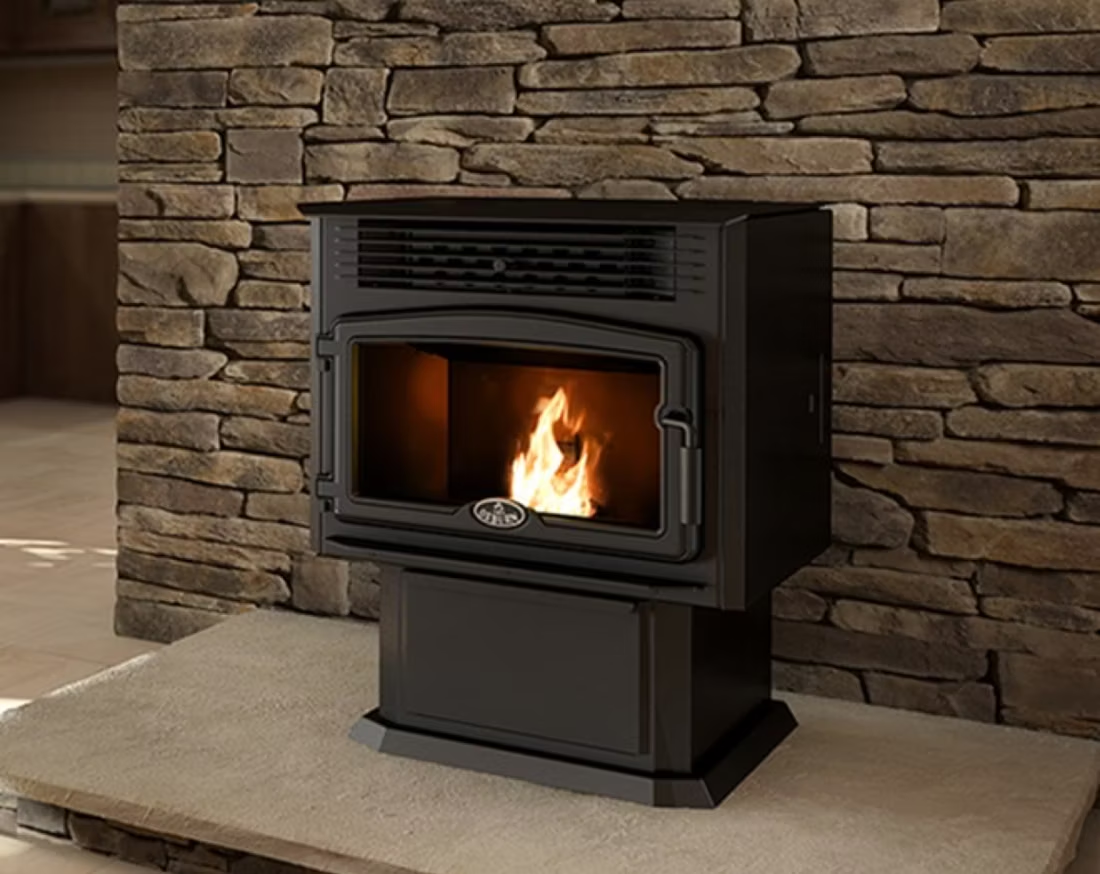
They make some noise—there are two fans running plus an auger motor that turns as it feeds pellets. But there's a real range: premium models are engineered quiet, and the best offer a whisper-quiet mode you can comfortably watch TV next to. If noise matters in your room, ask to hear a stove running before you buy—it's a five-minute test that saves years of annoyance.
How much should I budget for a fireplace?
For an average home—covering the fireplace, the vent pipe, and basic installation—a budget between $3,900 and $5,500 gives you a lot of options across wood, gas, and pellet. By the time you add finish work, gas line, and electrical, the average complete installation lands between $5,000 and $12,000 all-in. In a remodel or new build, a good rule is to put about 2.5% of the total project cost toward the fireplace.
Can I install a fireplace myself?
If you're putting a fire in your house on purpose, it's best to work with an expert. Unless you're genuinely experienced in framing, gas line, vent pipe, and the national code on clearances to combustibles, have a professional do it—and ideally the same company that sells you the fireplace, so warranty, service, and liability all live under one roof.
Stove and Fireplace Dealers in Utah County
Listings include WhyFire partner dealers, dealers we have verified as authorized for the brands we recommend, and established local businesses that carry hearth products. Every listing shows which one it is. The ones marked Preferred run on WhyFire's software, so they can show you real pricing and book your appointment right here. No manufacturer pays for placement. How we verify dealers →
Modscapes Outdoor Living
Southwest Plumbing Supply - Springville
First Class Fireplace
Modscapes Modern Living
Delta Stone Products, Inc.
Pellet Brands Stocked Around Utah County
Manufacturers will point you to the nearest stocking dealer.
Find out if pellet heat makes sense for your Utah County home.
Tell us about your property and we'll give you an honest read on whether pellet heat is a fit—and if it is, match you with a trusted local dealer and a free Project Guide & Parts List covering the exact parts, including the vent kit, for your project.
Find Your Fireplace →