
Pellet Heat in a Natural Gas Town.
In Spanish Fork's Utah Valley, natural gas already runs to most homes—so pellet stoves are a small, deliberate choice rather than the default. If you're one of the homeowners considering one, we'll match you with a local dealer who will tell you honestly whether it fits your house.
Every Project Starts From One of These Five Situations
A niche choice where gas lines already run to nearly every house.
Spanish Fork sits at 4,679 feet in Utah Valley, part of the fast-growing corridor along the Wasatch Front. Winters are real—average lows around 22°F and a solid winter heating season—but they're moderate compared to a true cold-climate market like Bozeman, MT, which sees a noticeably longer, colder heating season. That, combined with near-universal natural gas access through Utah County, is a big part of why pellet fuel is flagged as not-applicable for this market: most homeowners already have a gas line to the house, and gas heat is simply cheaper to install and run here than a pellet appliance and its hopper-and-auger upkeep.
Utah County, including Spanish Fork, also sits inside the Wasatch Front's PM2.5 nonattainment airshed. During winter inversions, the Utah Division of Air Quality calls mandatory action days that restrict solid-fuel burning devices, with the tightest limits falling on older, uncertified wood stoves. EPA-certified pellet stoves generally burn cleaner and sometimes retain more operating days than an old wood stove would, but the burn-ban backdrop is one more reason solid-fuel heat hasn't caught on broadly here. The homeowners who do install a pellet stove in Spanish Fork are usually after backup heat for outages, a wood-look fire without a masonry chimney, or a supplemental heat source in a shop or basement—not primary heat for the whole house.
Three steps. No salesperson until you're ready.
Tell us about your project
Your zip code, your situation, and the fuel you're leaning toward—or let the answers point you to one.
See what's actually available
The brands dealers within 100 miles genuinely carry—real options, never a catalog mirage.
Get your dealer & Project Guide
A trusted local dealer, plus the free Project Guide & Parts List that names every component of the job.
Frequently Asked Questions
Are pellet stoves common in Spanish Fork?
Not really, and it's worth saying plainly: pellet is flagged as a niche fit for this market. With natural gas available to nearly every neighborhood in Spanish Fork and Utah County generally, most homeowners install a gas fireplace or gas furnace rather than a pellet appliance. The handful of pellet installs we see locally tend to be in basements, shops, cabins without gas service, or homes where someone specifically wants backup heat that doesn't depend on the gas utility. It's a legitimate choice, just not the default one here.
How much does a pellet stove installation cost in Spanish Fork?
Expect roughly $3,500 to $6,500 for a typical freestanding pellet stove installation, including the unit, wall-thimble venting, and a hearth pad if needed—on the lower end of that range if you already have a suitable spot near an exterior wall, higher if the installer has to run venting further or add electrical for the auger and blower. Because pellet installs are less common along the Wasatch Front than gas conversions, plan on your dealer likely serving a wider service area out of Provo, Orem, or the broader Utah Valley rather than a shop based in Spanish Fork itself.
Where can I buy pellet fuel in Spanish Fork?
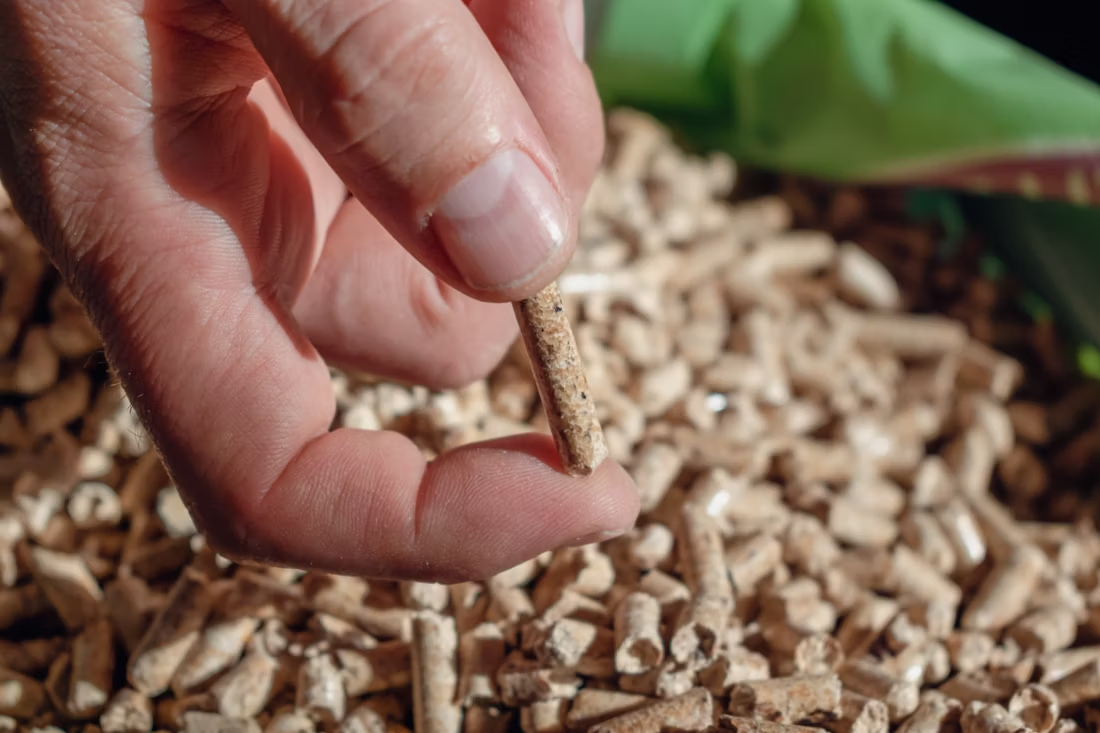
Bagged pellets aren't stocked on every corner here the way they are in more wood-and-pellet-heavy parts of the country. Regional brands like Bear Mountain, Lignetics, and Forest Energy show up at farm supply and home improvement stores across Utah Valley, typically running $250 to $320 per ton depending on the softwood or hardwood blend. Because pellet demand is lower in Spanish Fork specifically, some homeowners buy a season's supply at once from a Provo or Orem retailer rather than counting on year-round local stock.
Will a pellet stove work during a power outage?
Not without a backup power source. Pellet stoves rely on an electric auger to feed fuel and a blower to distribute heat, so a standard unit shuts down the moment the power goes out—unlike a wood stove, which keeps burning regardless. Spanish Fork gets electricity from both PacifiCorp and the municipally owned Spanish Fork City Corporation utility, and outages are relatively infrequent along the Wasatch Front, but if backup heat during a storm is the whole point of your project, ask your dealer about a battery backup or UPS system, or consider whether a vented gas unit might serve that goal better given how widely gas service already reaches Spanish Fork.
Do I need a permit to install a pellet stove in Spanish Fork?
Yes—a building permit through the Spanish Fork City Building Department is standard for a new solid-fuel appliance installation, and the unit needs to be EPA-certified to meet current emissions standards. Because pellet stoves vent horizontally through an exterior wall rather than requiring a full masonry chimney, the permitting and inspection process is generally simpler and faster than a wood stove install. Most dealers who handle pellet installs in this area will pull the permit as part of the job.
Do winter inversions in Utah County affect pellet stove use?
They can, though less severely than they affect older wood stoves. Utah County sits inside the Wasatch Front's PM2.5 nonattainment area, and the Utah Division of Air Quality calls mandatory action days during winter inversions that restrict solid-fuel burning. EPA-certified pellet stoves burn cleaner than uncertified wood stoves and often keep more operating flexibility on restricted days, but rules can change year to year—check the current Utah DAQ mandatory action day status before relying on a pellet stove during a heavy inversion stretch.
Pellet vs. gas—which is right for my home in Spanish Fork?
For most Spanish Fork homes, gas wins on convenience and cost: natural gas is already run to the majority of neighborhoods, gas fireplaces and inserts fire up instantly with no fuel storage or ash cleanup, and Utah's residential gas rates keep operating costs low. Pellet stoves offer a real, visible flame and biomass heat some homeowners prefer, plus a heat source that isn't tied to the same utility line as your furnace—useful if you want a genuinely separate backup system. But you'll be sourcing and storing bagged fuel yourself and running the stove on electricity for the auger and blower, which narrows the appeal in a market where gas infrastructure is already this widespread.
Why don't more Spanish Fork homes burn wood or pellets given the nearby national forests?
It's a fair question—the Uinta-Wasatch-Cache and Manti-La Sal National Forests both issue cutting permits for $5 to $20 per cord during the May-to-October season, and pinyon, juniper, and aspen are all common locally. But wood requires self-supply, storage, and hands-on tending, and pellets still require purchased bagged fuel and electricity to run—neither offers the plug-and-play convenience of the gas lines already serving most Spanish Fork subdivisions. In a fast-growing suburban market like this one, that convenience usually wins out over the lower fuel cost of a Forest Service permit.
If I still want a pellet stove in Spanish Fork, what should I look for?
Start with an EPA-certified unit sized to the actual room or space you're heating—pellet stoves are efficient but not typically installed as whole-house primary heat in a market like this, so oversizing is a common mistake. Look at established brands with solid parts availability along the Wasatch Front, since local pellet-specific service techs are fewer here than in wood- or pellet-heavy regions. A local dealer can walk you through hopper capacity, auger reliability, and whether a battery backup makes sense for your situation—that's exactly the kind of detail we'll cover in your free Project Guide & Parts List once you're matched.
Why is a fireplace insert so efficient?
An insert does two things: it seals the chimney completely, so you stop losing air you already paid to heat, and it radiates warmth into the room through the firebox and glass. Most add a heat-exchange fan that pulls cool room air underneath, wraps it around the hot firebox, and pushes it back out warm. Your home is more efficient before you've even lit the first fire.
Why is my open fireplace making my house colder?
Open fireplaces suck—literally. As the fire burns, it consumes air your furnace already paid to heat and pulls it out through the chimney, so the house is actually colder after the fire goes out than before you lit it. An insert fixes this: it seals the chimney, puts fixed glass across the front, and turns that hole in your house into a real heat source.
Can I install a fireplace myself?
If you're putting a fire in your house on purpose, it's best to work with an expert. Unless you're genuinely experienced in framing, gas line, vent pipe, and the national code on clearances to combustibles, have a professional do it—and ideally the same company that sells you the fireplace, so warranty, service, and liability all live under one roof.
Does a fireplace add value to my home?
On average, a fireplace adds back to the home about the same amount you spent installing it. Add the monthly savings from heating the rooms you actually use instead of the whole house—often hundreds of dollars a year—and the value case is strong before you even count what a fire does for how your family uses the room.
Nearby Dealers
Hearth shops serving Spanish Fork and the surrounding area.
Pellet Brands Stocked Around Spanish Fork
Manufacturers will point you to the nearest stocking dealer.
Find your pellet stove in Spanish Fork.
Tell us about your home and honestly, whether pellet even makes sense next to Utah Valley's gas infrastructure, and we'll match you with a trusted local dealer plus a free Project Guide & Parts List built for your specific project.
Find Your Fireplace →