
Warm Up Without Adding to the Inversion.
Clean-burning pellet heat for Lindon homes along the Wasatch Front, where winter inversions make what comes out of your chimney matter. Find the right stove or insert and connect with a trusted local dealer.
Every Project Starts From One of These Five Situations
Built for Utah Valley's inversion season.
Lindon sits at 4,663 feet in Utah Valley, wedged between Mount Timpanogos and Utah Lake, where winter lows average 24°F and the region logs roughly 5,000 heating degree days a year. It's a real but not brutal cold-climate zone (5B)—nothing like the sub-zero stretches of Bozeman or Fargo, but cold enough that supplemental heat matters most nights from November through February.
What makes Lindon and the rest of Utah County distinct is what happens to the air, not just the temperature. Cold air settles into the valley against the mountains and traps pollution close to the ground—a winter inversion that the Utah Division of Air Quality tracks closely, sometimes issuing mandatory no-burn action days when particulate levels spike. EPA-certified pellet stoves are typically exempt from those restrictions because they burn far cleaner than an open wood fireplace or uncertified stove, which is a big part of why pellet appliances have caught on here. Regional pellet brands like Bear Mountain, Lignetics, and Forest Energy are sold through hearth shops up and down the Wasatch Front, so fuel supply isn't a concern even in the depths of inversion season.
Three steps. No salesperson until you're ready.
Tell us about your project
Your zip code, your situation, and the fuel you're leaning toward—or let the answers point you to one.
See what's actually available
The brands dealers within 100 miles genuinely carry—real options, never a catalog mirage.
Get your dealer & Project Guide
A trusted local dealer, plus the free Project Guide & Parts List that names every component of the job.
Frequently Asked Questions
How much does a pellet stove installation cost in Lindon?
Most pellet stove and insert installations in Lindon run $3,500 to $6,500, depending on the unit, whether you're venting through an existing masonry fireplace or need a new wall penetration, and whether an electrical outlet needs to be added near the install point. Pellet appliances vent through a simple side-wall or roof pipe rather than a full masonry chimney, which keeps most installs on the lower end of hearth-appliance pricing compared to wood. Local dealers will give you a firm number after seeing your space.
Where do I buy pellet fuel in Lindon, and what does it cost?
Bear Mountain, Lignetics, and Forest Energy are the regional brands most commonly stocked at hearth retailers and farm/hardware stores along the Wasatch Front, and Lindon's location just off I-15 makes pickup or delivery easy from several Utah County suppliers. Expect to pay roughly $250 to $325 per ton depending on brand and whether you buy by the pallet (fifty 40-lb bags) or single bags. A typical Lindon home burns 1.5 to 3 tons per season depending on square footage and how much the stove is used for primary versus supplemental heat.
Will a pellet stove work if the power goes out?
Not without backup power. Pellet stoves rely on an electric auger to feed fuel and a blower to distribute heat, so a standard outage will shut the unit down even with a full hopper. Winter windstorms off the Wasatch Front occasionally knock out power in Utah County, so if backup heat during outages matters to you, ask your dealer about pairing the stove with a small battery backup or generator setup sized for the unit's low draw—most pellet stoves pull under 400 watts, so even a modest battery system can keep one running for hours. At PacifiCorp's residential rate of about 12.5 cents per kWh, running a pellet stove day to day costs very little either way.
Are pellet stoves exempt from mandatory burn restrictions during inversions?
In most cases, yes. The Utah Division of Air Quality issues mandatory no-burn action days for Utah County during severe winter inversions, and those restrictions are aimed at solid-fuel burning devices generally—but EPA-certified pellet stoves are commonly treated as exempt because of how much cleaner they burn than open wood fireplaces or older uncertified stoves. It's worth confirming exemption status for your specific model with UDAQ or your installer, since the rules occasionally get updated, but this exemption is a major reason Lindon homeowners choose pellet over wood.
Do I need a permit to install a pellet stove in Lindon?
Yes—a building permit is typically required for a new pellet stove or insert installation through the City of Lindon Building Department, covering the venting path, clearances, and any electrical work for the outlet the unit needs. Most hearth dealers handle the permit application as part of a full-service install, so you generally aren't filing paperwork yourself. Because pellet venting is simpler than a masonry wood chimney, inspections tend to move quickly compared to wood stove installs.
What size pellet stove do I need for a Lindon home?
With Lindon's roughly 5,000 heating degree days and winter lows in the mid-20s, most homes here don't need the largest units on the market—a mid-size pellet stove in the 40,000 to 50,000 BTU range handles a typical 1,500 to 2,500 square foot home as primary or strong supplemental heat, while smaller 20,000 to 30,000 BTU units suit a single large room or an addition. Hopper capacity matters too: a 40-to-60 lb hopper generally gets you through an overnight burn without a refill. A local dealer can size the right unit based on your square footage, ceiling height, and how open your floor plan is.
Pellet stove vs. wood stove—which makes more sense in Lindon?
Wood is the traditional option here, with pinyon, juniper, and aspen all common locally and cutting permits available for $5 to $20 per cord through the Uinta-Wasatch-Cache and Manti-La Sal National Forests between May and October. Wood also keeps working without electricity, which matters for true emergency heat. Pellet stoves trade that self-sufficiency for convenience and cleaner burning—no splitting, stacking, or hauling cordwood, less ash, and a much better shot at staying legal during a UDAQ mandatory action day. For Lindon homes focused on daily comfort and air quality compliance, pellet often wins; for homes prioritizing off-grid backup heat, wood still has the edge.
What's the difference between a pellet insert and a freestanding pellet stove?
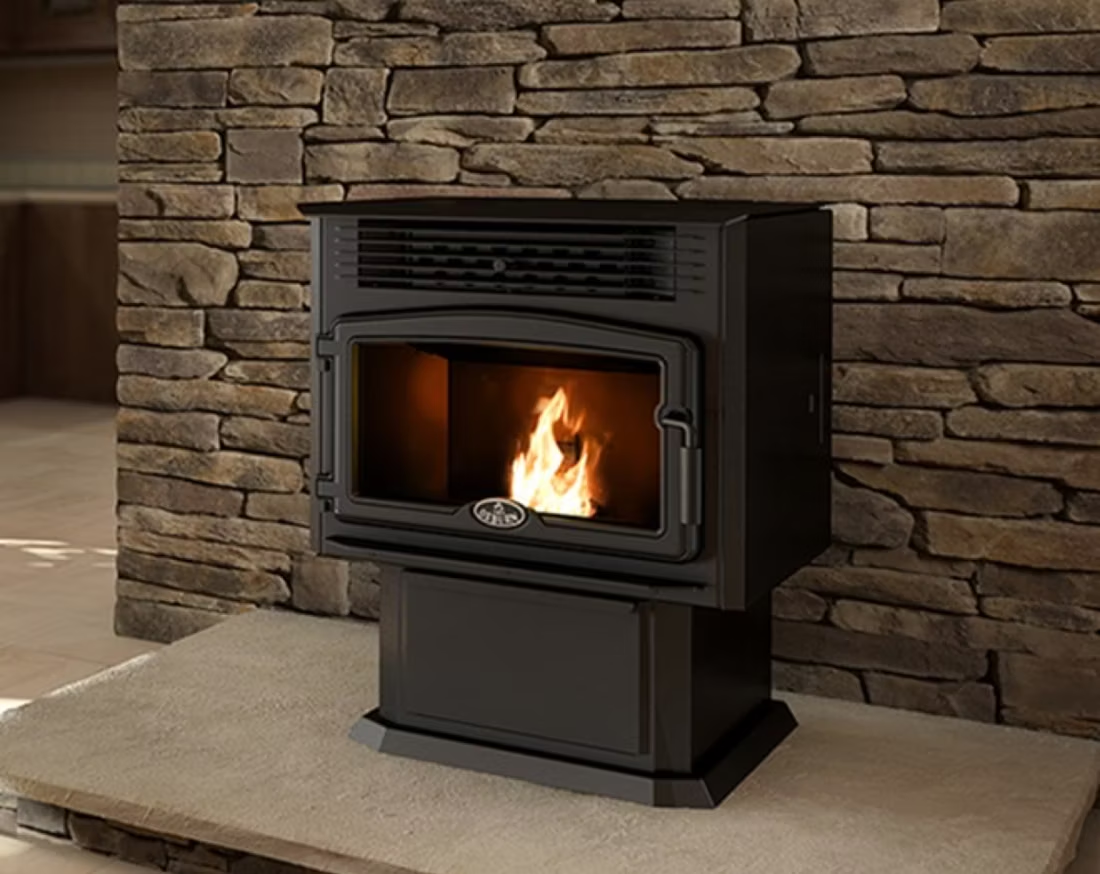
A pellet insert slides into an existing masonry fireplace opening, using a liner run through your current chimney for venting—a common upgrade for Lindon's older homes near downtown that still have open wood fireplaces nobody uses. A freestanding pellet stove sits on its own hearth pad and vents through a side wall or roof penetration, making it the better fit for newer construction along Lindon's residential developments that were never built with a fireplace at all. Both use the same pellet-fed technology; the choice mostly comes down to what your home already has to work with.
How much maintenance does a pellet stove need?
Pellet stoves need more routine attention than gas but less than wood: the burn pot and ash pan should be cleaned every few days to weekly depending on use, and a full professional cleaning of the exhaust venting, hopper, and auger system is recommended once a year. In Lindon, the smart timing is early fall, before inversion season sets in and the stove starts seeing daily use—a clean, properly tuned unit burns more efficiently and produces less visible exhaust, which matters if you're relying on its clean-burn exemption during action days.
What's the difference between an insert and a zero-clearance fireplace?
An insert is a fireplace that slides into a pre-existing wood-burning fireplace—if you don't have one, there's nothing to insert it into. A zero-clearance fireplace is built into a framed wall, which makes it the answer for remodels and new construction. Simple test: existing masonry fireplace means insert; blank or framed wall means zero-clearance.
Why is my open fireplace making my house colder?
Open fireplaces suck—literally. As the fire burns, it consumes air your furnace already paid to heat and pulls it out through the chimney, so the house is actually colder after the fire goes out than before you lit it. An insert fixes this: it seals the chimney, puts fixed glass across the front, and turns that hole in your house into a real heat source.
Does a fireplace add value to my home?
On average, a fireplace adds back to the home about the same amount you spent installing it. Add the monthly savings from heating the rooms you actually use instead of the whole house—often hundreds of dollars a year—and the value case is strong before you even count what a fire does for how your family uses the room.
Should the dealer who sells my fireplace also install it?
Ideally, yes. A fireplace project involves vent pipe, gas line, electrical, and often tile or stone. Hire three or four separate trades and you own the liability and the game of telephone between them. One company selling and installing means one accountable party, start to finish—ask about factory training, on-time completion records, and what happens if an inspection fails.
Nearby Dealers
Hearth shops serving Lindon and the surrounding area. Every listing shows whether it is a WhyFire partner, a dealer we have verified as authorized for the brands we recommend, or a local business carrying hearth products. No manufacturer pays for placement. How we verify dealers →
First Class Fireplace
Modscapes Outdoor Living
Modscapes Modern Living
Southwest Plumbing Supply - Springville
Delta Stone Products, Inc.
Standard Plumbing
All Hours Plumbing, Drain Cleaning, Heating & Cooling
Uintah Fireplace And Design
Ignite Fireplace
Degrees Above Fireplaces
Wasatch Fireplace & Stove
Bills Comfort Systems
Pellet Brands Stocked Around Lindon
Manufacturers will point you to the nearest stocking dealer.
Find your pellet stove in Lindon.
Tell us a bit about your home and we'll put together a free Project Guide & Parts List—the right pellet stove or insert, the vent kit it needs, and a trusted local Lindon-area dealer to install it.
Find Your Fireplace →