
Every fuel type, every corner of Utah County.
From Provo and Orem out to Lehi, American Fork, Spanish Fork, and Payson, this hub rolls up hearth retailers, service techs, and fuel suppliers across the whole Wasatch Front valley. Pick a fuel and get matched with a local dealer who actually installs it here.
Every Project Starts From One of These Five Situations
A winter heating load similar to Salt Lake-area valleys, a Wasatch Front inversion, and a county that leans hard on gas heat.
Utah County sits on the valley floor of the Wasatch Front, hemmed in by the Wasatch Range to the east and the Lake Mountains to the west, with roughly 1.16 million residents spread across Provo, Orem, Lehi, American Fork, Spanish Fork, Pleasant Grove, and Payson. At an average winter low of 24°F and a six-month heating season, the climate here is real but milder than intermountain neighbors like Bozeman or Helena—a six-month heating season rather than a brutal one. Pinyon, juniper, and aspen grow in the surrounding Uinta-Wasatch-Cache and Manti-La Sal National Forests, and plenty of Utah County residents pull firewood permits there for camping stoves, fire pits, or cabins up the canyons.
What that firewood rarely fuels is a primary household fireplace, and that's by design. Utah County sits inside the Wasatch Front's PM2.5 nonattainment area, and winter temperature inversions trap smoke and vehicle exhaust against the valley floor for days at a time—the same weather pattern that produces Utah's mandatory 'no-burn' action days, when solid-fuel burning is restricted to homes where a wood or pellet stove is the sole source of heat. Summer wildfire smoke adds a second seasonal air-quality strain. The practical result is that gas fireplaces and inserts, backed by Dominion Energy Utah's natural gas network, and electric fireplaces for supplemental or zone heat, are the fuels most households here actually install—wood and pellet units are legal in narrow circumstances but aren't what we'd steer a typical Utah County homeowner toward. This hub covers every fuel and every city in the county; pick yours below for local dealers, install costs, and unit recommendations specific to your address.
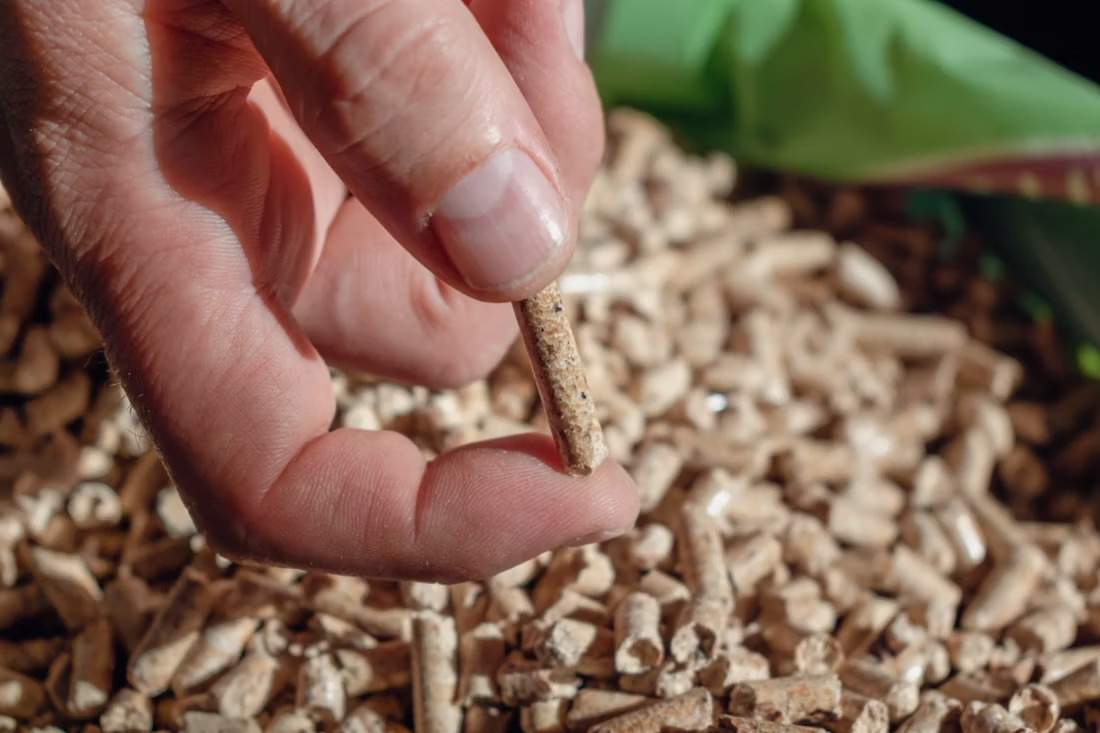
Four fuels. One honest answer for Utah County.
Three steps. No salesperson until you're ready.
Tell us about your project
Your zip code, your situation, and the fuel you're leaning toward—or let the answers point you to one.
See what's actually available
The brands dealers within 100 miles genuinely carry—real options, never a catalog mirage.
Get your dealer & Project Guide
A trusted local dealer, plus the free Project Guide & Parts List that names every component of the job.
Frequently Asked Questions
Which fireplace fuel makes the most sense in Utah County?
For most Utah County homes, gas is the default choice. Dominion Energy Utah's network reaches nearly every neighborhood from Provo to Payson, and a gas insert or built-in gives you instant heat without adding to the wood smoke that already collects in the valley during winter inversions. Electric fireplaces are a strong secondary pick—they work well in bedrooms, basements, and finished spaces where running a gas line isn't practical, and they carry zero restrictions on inversion days. Wood and pellet stoves exist here, largely as legacy installations or in homes where solid fuel is the sole heat source, but they're a narrow fit given the county's air-quality rules rather than a mainstream recommendation.
Why aren't wood and pellet stoves recommended in Utah County the way they might be elsewhere?
Utah County sits inside the Wasatch Front's PM2.5 nonattainment area, and the same mountain-ringed geography that makes Provo and Orem scenic also traps smoke at the surface during winter inversions. When particulate levels spike, the state calls mandatory action days that prohibit burning wood or pellets in any home that has another heat source—furnace, gas fireplace, or electric baseboard all count. Only households where a wood or pellet stove is the sole source of heat are exempt. Pinyon, juniper, and aspen from the Uinta-Wasatch-Cache and Manti-La Sal National Forests are still cut under Forest Service permit, but that wood mostly ends up in fire pits and cabin stoves outside the valley rather than in a primary household hearth.
Do I need a permit to install a gas or electric fireplace in Utah County?
Gas fireplace and insert installs almost always need a building permit plus a licensed gas fitter for the line connection, and permitting runs through your own city's building department rather than a single county office—Provo, Orem, Lehi, American Fork, and Spanish Fork each issue their own. Electric fireplace installs typically skip the permit process for plug-in units, but a hardwired built-in that needs a new circuit will require an electrical permit through the same city department. Most retailers we match homeowners with handle this paperwork as part of the install.
I already have a wood-burning fireplace—can I still use it?
You can, but only within the rules of Utah's mandatory action day program. On days when the Division of Air Quality calls a no-burn action for PM2.5, solid-fuel burning is prohibited unless your wood or pellet stove is registered as the sole source of heat for the home. Many older wood fireplaces in Utah County's established Provo and Orem neighborhoods predate the current rules and are grandfathered for occasional use, but if you're remodeling or replacing the unit, most homeowners in this position convert to a gas insert or direct-vent gas fireplace, which sidesteps the restriction entirely and cuts install and venting costs at the same time.
How does installation and service coverage work across a county this size?
With over 1.1 million people spread from Alpine down to Santaquin, Utah County has one of the deeper benches of hearth retailers and service techs in the state, and most dealers run crews the full length of the I-15 corridor. Expect solid same-week scheduling in Provo, Orem, and Lehi, and slightly longer lead times toward the county's southern edge near Payson or up the canyons. Booking your annual gas fireplace inspection in late summer, before the valley's first inversion sets in, is the easiest way to avoid the fall scheduling crunch.
What does a fireplace installation typically cost in Utah County?
Costs track closely with fuel type and how much venting or gas-line work is involved. Gas fireplace, insert, or stove installs generally run $4,500–$11,000, with the higher end covering new gas line runs to a room that didn't previously have one. Electric fireplaces are the more affordable route—$200–$3,000 for the unit, plus $400–$1,200 in labor for a built-in that needs a dedicated circuit; a plug-and-play unit can go in for the price of the fireplace alone. Where a wood or pellet stove install does make sense—sole-source heating situations, mainly—pricing runs comparable to gas once EPA-certified equipment and venting are factored in. The county + fuel pages above break these numbers down further with local retailer pricing.
What is an in-home preview and do I need one?
It's a visit where a hearth professional measures your space, confirms the model you picked actually works in your home, and walks the specs—framing, gas line, venting, finish work—before anything is ordered. Some details you just can't know until you see the house. Never make a down payment without one; it's the single most-skipped step that burns buyers.
Wood, gas, pellet, or electric—how do I choose?
Match the fuel to your life, not the other way around. Wood: lowest fuel cost and total power-outage independence, but you're hauling and stacking. Gas: press a button, set a thermostat, no maintenance to speak of. Pellet: wood economics with automatic feeding, in exchange for weekly cleaning and a need for electricity. Electric: plugs in anywhere with honest supplemental heat. Nobody regrets the fuel that fits how they actually live.
How much should I budget for a fireplace?
For an average home—covering the fireplace, the vent pipe, and basic installation—a budget between $3,900 and $5,500 gives you a lot of options across wood, gas, and pellet. By the time you add finish work, gas line, and electrical, the average complete installation lands between $5,000 and $12,000 all-in. In a remodel or new build, a good rule is to put about 2.5% of the total project cost toward the fireplace.
Does a fireplace add value to my home?
On average, a fireplace adds back to the home about the same amount you spent installing it. Add the monthly savings from heating the rooms you actually use instead of the whole house—often hundreds of dollars a year—and the value case is strong before you even count what a fire does for how your family uses the room.
Stove and Fireplace Dealers in Utah County
Listings include WhyFire partner dealers, dealers we have verified as authorized for the brands we recommend, and established local businesses that carry hearth products. Every listing shows which one it is. The ones marked Preferred run on WhyFire's software, so they can show you real pricing and book your appointment right here. No manufacturer pays for placement. How we verify dealers →
Modscapes Outdoor Living
Southwest Plumbing Supply - Springville
First Class Fireplace
Modscapes Modern Living
Delta Stone Products, Inc.
Get matched with a local Utah County dealer.
Pick your fuel below and we'll put together a free Project Guide & Parts List—the right unit for your city's air-quality rules and gas or electric service, the vent kit it needs, and the local dealer we recommend for your project.
Find Your Fireplace →