
A Niche Heat Source in Gas-Heavy Eagle Mountain.
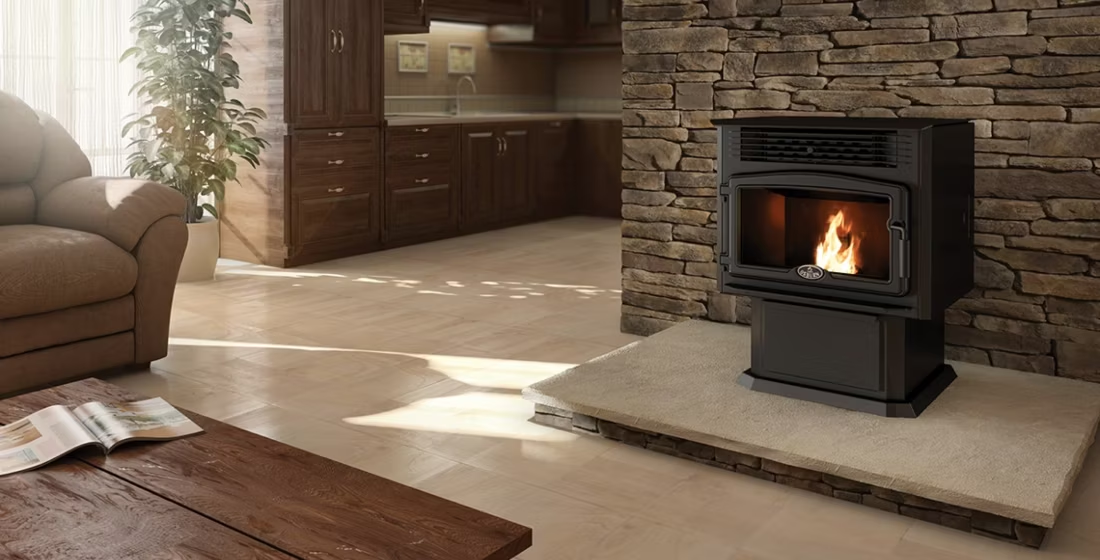
Pellet stoves are uncommon in this fast-growing Cedar Valley community, but for the right home—a detached shop, an older property, a backup-heat setup—they still make sense. We will tell you honestly whether one fits your house, and connect you with a trusted local dealer if it does.
Every Project Starts From One of These Five Situations
Most Eagle Mountain homes heat with gas—pellet stoves are the exception.
Eagle Mountain sits at nearly 4,900 feet on the western bench of Cedar Valley in Utah County, one of the fastest-growing cities in the state. Almost the entire housing stock is new construction from the last two decades, built by production builders who wire homes for natural gas and electric from day one. Winters here are real—average lows around 13°F, a long, demanding heating season, and a climate zone (5B) that demands serious heat—but the default answer to that cold has almost always been a gas furnace and a gas fireplace, not a hopper-fed stove.
Utah Valley's winter inversion is the other half of the story. When cold air settles over the valley, PM2.5 can spike for days and the state issues mandatory no-burn actions on solid-fuel devices. That reality, combined with builder defaults and HOA covenants common in Eagle Mountain's master-planned subdivisions, is why pellet stoves show up so rarely here—not because they do not work, but because almost nobody is asking for one. Regional pellet producers like Bear Mountain, Lignetics, and Forest Energy still distribute fuel throughout Utah, so for the homeowner who wants one—a detached shop, a casita, a rural property toward Cedar Fort or Fairfield, or simply a backup heat source that does not depend on the grid staying up—the option is real. It is just a minority choice in this market.
Three steps. No salesperson until you're ready.
Tell us about your project
Your zip code, your situation, and the fuel you're leaning toward—or let the answers point you to one.
See what's actually available
The brands dealers within 100 miles genuinely carry—real options, never a catalog mirage.
Get your dealer & Project Guide
A trusted local dealer, plus the free Project Guide & Parts List that names every component of the job.
Frequently Asked Questions
Why is pellet heat so uncommon in Eagle Mountain?
Eagle Mountain is almost entirely new-construction housing, and production builders here default to natural gas and electric appliances rather than solid-fuel units. Many HOAs in the city's master-planned neighborhoods specify gas or electric fireplaces in the base build. Add in Utah Valley's well-documented winter inversion, when PM2.5 can spike for days and the state issues mandatory no-burn actions, and there is little incentive for a builder—or most homeowners—to add an appliance that could get restricted on exactly the days you'd want to run it. That is why pellet shows up as a marginal fit for this city specifically, not because pellet stoves are bad heaters.
Can I still install a pellet stove in Eagle Mountain if I want one?
Yes. A small number of homeowners here install pellet stoves or inserts anyway—usually in detached shops, garages, older properties, or homes on the outskirts toward Cedar Fort and Fairfield where gas service is thinner. EPA-certified pellet appliances generally burn clean enough to be treated differently from uncertified wood stoves under Utah's air quality rules, though you should confirm current mandatory-action requirements with Utah Division of Air Quality before you rely on one during an inversion event. A local dealer who actually installs these in Utah County can walk you through what applies to your address.
Where can I buy pellet fuel near Eagle Mountain?
Pellet fuel is not hard to find even though pellet stoves themselves are rare locally. Bear Mountain, Lignetics, and Forest Energy all distribute pellets throughout Utah, and you will typically find bagged pellets at hardware and farm-supply stores along the Wasatch Front in Lehi, American Fork, and Saratoga Springs. Expect somewhere in the $250 to $320 per ton range at most northern Utah retailers, with premium hardwood blends running higher than standard softwood pellets.
What does a pellet stove installation cost in Eagle Mountain?
Because so few installers here work on pellet appliances compared to gas fireplaces, pricing varies more than in pellet-heavy markets. As a general baseline, pellet stove installations nationally run roughly $3,000 to $6,000 depending on the unit, venting path, and any hearth pad work required for clearances. Get at least two quotes locally and confirm your installer is NFI-certified specifically for pellet appliances—not just gas or wood—since the venting and electrical requirements differ from what most Eagle Mountain installers handle day to day.
Will a pellet stove keep working if the power goes out?
Not on its own. Pellet stoves rely on an electric auger to feed fuel and a blower to distribute heat, so a standard unit stops working the moment the power drops—an important consideration in Cedar Valley, where wind events occasionally knock out PacifiCorp service for hours at a time. Some models accept a battery backup or a small inverter generator to keep the auger and blower running through an outage. If backup heat during a power failure is your main goal, ask a local dealer about battery-backup kits before you buy, or consider whether a wood-burning unit fits your situation better.
Pellet stove or gas fireplace—why do most homes here choose gas?
Gas fireplaces light instantly, require no fuel storage or hopper refills, and are what production builders in Eagle Mountain install by default, which keeps installation simpler since the gas line is often already run. Pellet stoves need a hopper filled every day or two during heavy use, produce a small amount of ash, and require electricity to operate—but they burn a renewable, often locally sourced fuel and can run independent of a gas utility. For most Eagle Mountain homeowners, gas wins on convenience and builder compatibility. For someone specifically wanting a solid-fuel option without the wood-handling of a traditional stove, pellet is the middle ground.
Do I need a permit to install a pellet stove in Eagle Mountain?
Yes, a building permit is required for a new solid-fuel or pellet appliance installation, typically through the City of Eagle Mountain Building Department. Because pellet installs are infrequent here, it's worth confirming with the department directly what documentation they expect, including venting details and clearance-to-combustible specs from the manufacturer. A dealer who has pulled these permits before in Utah County will save you back-and-forth with the plan reviewer.
If I wanted to burn my own wood instead, is that an option near Eagle Mountain?
Firewood cutting permits are available through the Uinta-Wasatch-Cache and Manti-La Sal National Forests, both within reach of Cedar Valley, running roughly $5 to $20 per cord during the May-to-October season, with pinyon, juniper, and aspen the common species harvested. That said, wood stoves face the same air-quality and builder-default headwinds as pellet stoves in Eagle Mountain, and are flagged even more rarely installed here. If you're weighing self-cut wood against bagged pellets, a wood stove gives you that option; a pellet stove trades it for consistent, thermostat-controlled heat from a bag.
Pellet stove vs. electric fireplace—which makes more sense for my home?
An electric fireplace is the simpler, cheaper path in Eagle Mountain—plug it in, no venting, no permit in most cases, and it runs on the same PacifiCorp service (around 12.5 cents per kWh) already powering your home. It's better suited to ambiance and light supplemental warmth than to carrying real heating load through a 13°F night. A pellet stove costs more to install and needs a fuel supply, but it produces genuine radiant heat and can offset a real share of your gas furnace's workload. If you want a design accent, electric is the easier call. If you want a secondary heat source with real output, pellet is worth the extra step even in a market where it's uncommon.
What's the difference between an insert and a zero-clearance fireplace?
An insert is a fireplace that slides into a pre-existing wood-burning fireplace—if you don't have one, there's nothing to insert it into. A zero-clearance fireplace is built into a framed wall, which makes it the answer for remodels and new construction. Simple test: existing masonry fireplace means insert; blank or framed wall means zero-clearance.
Why is my open fireplace making my house colder?
Open fireplaces suck—literally. As the fire burns, it consumes air your furnace already paid to heat and pulls it out through the chimney, so the house is actually colder after the fire goes out than before you lit it. An insert fixes this: it seals the chimney, puts fixed glass across the front, and turns that hole in your house into a real heat source.
What is an in-home preview and do I need one?
It's a visit where a hearth professional measures your space, confirms the model you picked actually works in your home, and walks the specs—framing, gas line, venting, finish work—before anything is ordered. Some details you just can't know until you see the house. Never make a down payment without one; it's the single most-skipped step that burns buyers.
Does a fireplace add value to my home?
On average, a fireplace adds back to the home about the same amount you spent installing it. Add the monthly savings from heating the rooms you actually use instead of the whole house—often hundreds of dollars a year—and the value case is strong before you even count what a fire does for how your family uses the room.
Nearby Dealers
Hearth shops serving Eagle Mountain and the surrounding area.
Pellet Brands Stocked Around Eagle Mountain
Manufacturers will point you to the nearest stocking dealer.
Find your pellet stove in Eagle Mountain.
Tell us about your home and your goals, and if a pellet stove is genuinely the right fit, we'll match you with a trusted local dealer and send over a free Project Guide & Parts List—the exact parts, including the vent kit, for your Eagle Mountain project.
Find Your Fireplace →