
Gas heat for a county built on natural gas.
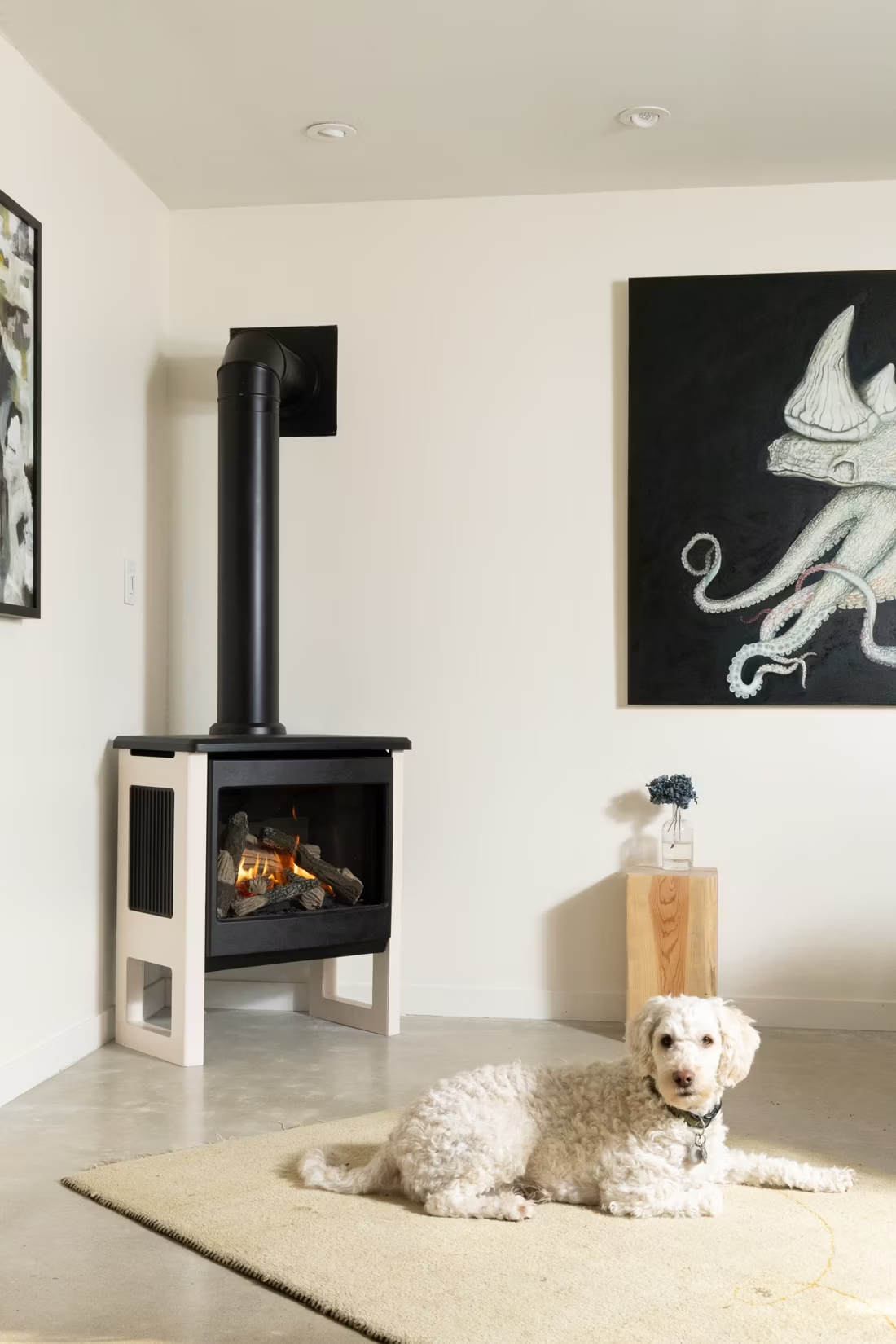
Allegheny County sits atop the Marcellus Shale, and it shows—natural gas service reaches most of Pittsburgh and its 129 surrounding municipalities. Find the right fireplace, insert, or stove for your home, and get matched with a trusted local dealer who can size the venting and pull the permit.
Every Project Starts From One of These Five Situations
A gas-rich region, and a gas-first hearth.
Allegheny County is home to more than 2.25 million people spread across Pittsburgh and 129 surrounding municipalities, sitting in climate zone 5A with a long winter heating season and average winter lows around 22°F—similar heating demand to Buffalo, NY. What sets the county apart is what's underneath it: Allegheny sits over the Marcellus Shale gas fields, and natural gas infrastructure runs deep here, both literally and culturally. Peoples Natural Gas is the dominant utility across the City of Pittsburgh and most of the county, with Columbia Gas of Pennsylvania serving several outlying municipalities.
That infrastructure, combined with the county's housing stock, makes gas the default hearth fuel here. Much of Pittsburgh's inner neighborhoods—Lawrenceville, Bloomfield, Squirrel Hill, the South Side—were built during the steel-boom decades of the early 1900s and still have their original open masonry fireplaces, which convert cleanly to a direct-vent gas insert. Allegheny County is also designated a non-attainment area for fine-particulate air quality, a legacy of its industrial history, which is part of why wood- and pellet-burning appliances are rare here relative to the rest of Pennsylvania—most homeowners look at gas or, for row homes and high-rises without a flue, an electric fireplace instead.
Three steps. No salesperson until you're ready.
Tell us about your project
Your zip code, your situation, and the fuel you're leaning toward—or let the answers point you to one.
See what's actually available
The brands dealers within 100 miles genuinely carry—real options, never a catalog mirage.
Get your dealer & Project Guide
A trusted local dealer, plus the free Project Guide & Parts List that names every component of the job.
Frequently Asked Questions
How much does a gas fireplace installation cost in Allegheny County?
Most gas fireplace and insert installations in Allegheny County run somewhere between $3,500 and $10,000, depending on the unit, the venting path, and whether new gas line work is needed. On the lower end: a direct-vent gas insert dropped into an existing masonry fireplace—common in Pittsburgh's older rowhouse neighborhoods—with a gas line already stubbed nearby. On the higher end: a new built-in gas fireplace for a remodel or new-construction home in a suburb like Peters Township or Fox Chapel, where framing, venting, and a gas line run from scratch add cost. A trusted local dealer will give you a firm number after seeing your chimney or wall condition in person.
Can I convert my existing masonry fireplace to gas?
In most cases, yes—and it's one of the most common projects local dealers handle in Allegheny County, given how many homes in Pittsburgh's older neighborhoods still have their original coal-era or wood-era masonry fireplaces. A direct-vent or B-vent gas insert typically uses a stainless liner run through your existing chimney, and your installer coordinates the gas line tie-in with either Peoples Natural Gas or Columbia Gas of Pennsylvania depending on your service area. Homes already piped for gas—a furnace or water heater already running on it—are usually the quickest and least expensive conversions.
Is natural gas available throughout Allegheny County, or do some areas need propane?
Natural gas service reaches the large majority of Allegheny County—Peoples Natural Gas covers the City of Pittsburgh and most of the surrounding municipalities, and Columbia Gas of Pennsylvania serves several others. A handful of more rural pockets, particularly near the county's southern and eastern edges around places like Elizabeth Township or parts of the Allegheny River valley, sit outside the gas main and rely on propane instead. Either fuel works in nearly any gas fireplace model—your dealer will just configure the orifice and regulator to match.
Will my gas fireplace work if the power goes out?
Most will, with the right ignition system. Units with IPI (intermittent pilot ignition) run on a battery backup that kicks in automatically when power drops, so the fireplace still lights on demand. Valor's gas fireplaces skip the battery altogether—the pilot's thermocouple generates its own electricity to run the valve. That matters in Allegheny County's hillier neighborhoods and outlying municipalities, where ice storms and downed lines can knock out power for a day or more at a time. Ask your dealer which ignition system a given unit uses before you commit.
What's the difference between a gas fireplace, gas insert, and gas stove?
A gas fireplace is a built-in unit framed into a wall—the standard choice for new construction or a full remodel in newer suburban homes around the county. A gas insert slides into an existing masonry opening, which is why it's so common in Pittsburgh's older housing stock—Lawrenceville, Bloomfield, the North Side—where an open fireplace already exists but doesn't produce much usable heat. A gas stove is a freestanding cabinet unit, useful in row homes or additions where there's no existing fireplace opening to work with but a flue or exterior wall for direct-venting is available.
Do I need a permit to install a gas fireplace in Allegheny County?
Yes, but who issues it depends on where you live. Allegheny County doesn't run a single countywide building department—most of its 129 municipalities, including the City of Pittsburgh's Bureau of Building Inspection, handle their own permitting for gas line and appliance work. Any new gas line run also requires a PA One Call utility locate before digging. A local dealer who's pulled permits in your specific municipality before will know exactly what's required and typically handles the paperwork as part of the install.
Should I get a vented or vent-free gas fireplace?
Vented (direct-vent or B-vent) units draw combustion air from outside and exhaust it back outside through sealed venting—they're the cleaner, more universally recommended option, and the one most local dealers install by default. Vent-free units burn directly into the room and are legal in Pennsylvania under strict sizing and ventilation rules, but they release some combustion byproducts indoors. Given that Allegheny County is designated a non-attainment area for fine particulates, most dealers here steer homeowners toward vented direct-vent models, especially for primary living spaces where the fireplace runs for hours at a stretch.
How often should a gas fireplace be serviced?
Plan on an annual inspection, ideally before the start of heating season each fall. A technician checks the burner, pilot assembly, venting, and gas connections, and cleans the glass and interior—a much smaller job than a wood chimney sweep, but still worth doing every year for safety and warranty compliance. Local gas appliance service providers in the Pittsburgh area typically charge in the $150-$250 range for a standard inspection.
Why is gas so much more common than wood or pellet in Allegheny County?
Two things line up here: infrastructure and air quality. Peoples Natural Gas and Columbia Gas of Pennsylvania make natural gas an easy, already-in-the-wall option for most homes in the county, while Allegheny's non-attainment designation for fine-particulate air quality—a holdover from its steel and coal industry decades—makes new wood and pellet installations less common, especially inside Pittsburgh proper. Pellet brands like Energex, Hamer Pellet Fuel, and Greene Team Pellet Fuel are sold regionally and still used by a smaller number of rural households on the county's edges, and species like oak, hickory, maple, and cherry are around if someone wants to burn wood. But for most homeowners in the denser parts of the county, gas is simply the default, cleaner choice.
Why is a fireplace insert so efficient?
An insert does two things: it seals the chimney completely, so you stop losing air you already paid to heat, and it radiates warmth into the room through the firebox and glass. Most add a heat-exchange fan that pulls cool room air underneath, wraps it around the hot firebox, and pushes it back out warm. Your home is more efficient before you've even lit the first fire.
Why is my open fireplace making my house colder?
Open fireplaces suck—literally. As the fire burns, it consumes air your furnace already paid to heat and pulls it out through the chimney, so the house is actually colder after the fire goes out than before you lit it. An insert fixes this: it seals the chimney, puts fixed glass across the front, and turns that hole in your house into a real heat source.
Can a fireplace actually lower my heating bill?
Yes—by creating a comfort zone. A furnace heats every square foot of the house just to warm the one room you're in; a gas fireplace on low burns roughly a sixth of the gas a typical furnace does. Set the furnace around 55–60 degrees as a baseline, then heat the rooms your family actually uses. Families who heat this way commonly save $20–$60 a month.
How much should I budget for a fireplace?
For an average home—covering the fireplace, the vent pipe, and basic installation—a budget between $3,900 and $5,500 gives you a lot of options across wood, gas, and pellet. By the time you add finish work, gas line, and electrical, the average complete installation lands between $5,000 and $12,000 all-in. In a remodel or new build, a good rule is to put about 2.5% of the total project cost toward the fireplace.
Stove and Fireplace Dealers in Allegheny County
Listings include WhyFire partner dealers, dealers we have verified as authorized for the brands we recommend, and established local businesses that carry hearth products. Every listing shows which one it is. The ones marked Preferred run on WhyFire's software, so they can show you real pricing and book your appointment right here. No manufacturer pays for placement. How we verify dealers →
All Seasons Fireplace & Home
Fireplace & Patioplace
A Capital Roofing
Fireplace And Patio Place
Howell Craft Inc.
Northern Woodworking
Tri-State Stoves
Halls Pools & Fireplaces
The Stove Place
Suburban Insulation
Clear Water Pools LLC
Samson Glass And Mirror
Fireplace And Patio Place
Tomayko Construction & Alternative Heating Llc.
Find your gas fireplace in Allegheny County.
Tell us about your home and we'll match you with a trusted local dealer and send over a free Project Guide & Parts List—a plan for your gas fireplace project in Allegheny County with the exact parts, including the vent kit, and a dealer who can install it right.
Find Your Fireplace →