
Warm, Clean Heat Without the Smoke Restrictions.
McKeesport sits inside a regional air quality non-attainment area, where gas delivers dependable winter warmth without adding smoke or particulates to the Mon Valley. Find the right fireplace or insert and connect with a trusted local dealer.
Every Project Starts From One of These Five Situations
The Mon Valley's air quality favors clean-burning heat.
McKeesport sits along the Monongahela River at just under 1,000 feet elevation, in a climate zone (5A) with winter lows averaging around 20°F and a heating season that runs well into the colder months. That's a real heating season—colder than Philadelphia, though milder than Rust Belt neighbors like Buffalo, NY, which sees a noticeably longer, colder winter. Homes here, many built during the city's steel-era boom, still lean hard on supplemental heat to get through January and February.
What sets McKeesport apart is the air quality designation: Allegheny County has long been classified as a non-attainment area for fine particulates, a legacy of the region's industrial history. That designation makes wood stoves and pellet stoves a much less common choice inside city limits—most McKeesport homeowners upgrading a fireplace turn to gas instead, since it produces heat without adding smoke to a valley that already has air quality challenges. Natural gas service reaches most of the city through Peoples Natural Gas, the dominant provider across the Pittsburgh metro, while Duquesne Light and Pennsylvania Power Co. serve the area's electric needs for homeowners weighing an electric insert as a secondary option.
Three steps. No salesperson until you're ready.
Tell us about your project
Your zip code, your situation, and the fuel you're leaning toward—or let the answers point you to one.
See what's actually available
The brands dealers within 100 miles genuinely carry—real options, never a catalog mirage.
Get your dealer & Project Guide
A trusted local dealer, plus the free Project Guide & Parts List that names every component of the job.
Frequently Asked Questions
How much does a gas fireplace installation cost in McKeesport?
Most gas fireplace and insert installations in the McKeesport area run between roughly $4,000 and $9,500, depending on the unit, the venting path, and whether new gas line work is needed. A direct-vent insert dropped into an existing masonry fireplace—common in McKeesport's older steel-era homes—with gas already run to the room tends to land on the lower end. A new built-in gas fireplace in a remodel, requiring framing, a fresh gas line, and through-wall venting, runs closer to the higher end. A local installer will give you a firm number after seeing the space in person.
Can I convert my existing wood fireplace to gas?
Yes, and it's a common project in McKeesport's older housing stock, much of which was built with masonry fireplaces during the city's early-20th-century steel boom. A gas insert typically slides into the existing firebox and vents through the original chimney using a stainless liner. Given Allegheny County's non-attainment status for particulates, this conversion has a real upside beyond convenience—it eliminates the wood smoke output entirely. Expect to spend $4,000 to $8,000 depending on the insert and whether the home already has a gas line nearby.
Do I need natural gas service, or can I use propane?
Most of McKeesport falls within the Peoples Natural Gas service territory, so if your home already has a gas water heater, range, or furnace, adding a gas fireplace is usually a straightforward tap-in. Propane is a viable alternative for homes on the outer edges of Allegheny County that fall outside natural gas lines, or for detached garages and outbuildings. Most gas fireplace models can be set up for either fuel—your installer configures the orifice and regulator to match.
Will a gas fireplace work if the power goes out?
Most modern gas fireplaces will. Units with intermittent pilot ignition (IPI) include a battery backup—usually AA batteries built into the control module—that keeps the fireplace lighting on demand even with the power out. Valor units go a step further: their pilot assembly generates its own electricity through the thermocouple, so there are no batteries to remember at all. For McKeesport winters, where an ice storm along the river valley can knock out power for a day or two, that self-sufficiency matters more than it sounds.
What's the difference between a gas fireplace, gas insert, and gas stove?
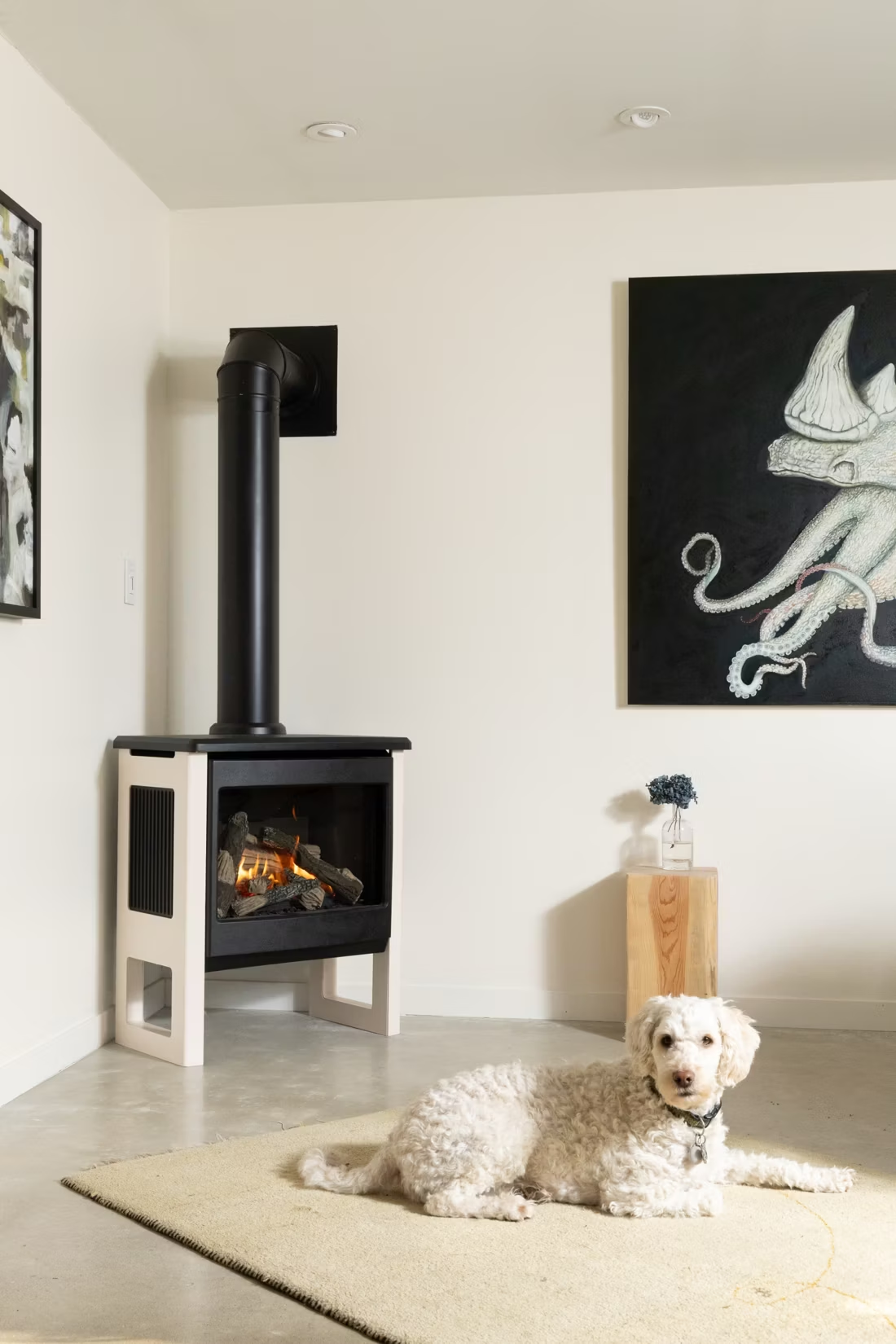
A gas fireplace is a fully built-in unit framed into a wall—the choice for new construction or a full remodel. A gas insert is sized to slide into an existing masonry firebox, which fits a lot of McKeesport's older brick homes that still have their original fireplace opening. A gas stove is a freestanding cast-iron or steel unit that sits on the floor, similar in footprint to a wood stove, but runs on gas. For most homeowners here with an existing fireplace, an insert is the simplest upgrade because it reuses the chimney chase you already have.
Do I need a permit to install a gas fireplace in McKeesport?
Yes. The City of McKeesport requires a building permit for new gas appliance installations, and any gas line work has to be done by a licensed gas fitter and inspected before it's signed off. Most hearth retailers and HVAC contractors who install fireplaces handle the permitting and inspection scheduling as part of the job, so you're not coordinating multiple trades yourself.
Should I get a vented or vent-free gas fireplace?
Vented (direct-vent) gas fireplaces pull combustion air from outside and exhaust it back outside through sealed venting—they're the standard choice and the one most local installers recommend. Vent-free units burn gas directly into the room air and are legal in Pennsylvania under specific room-size and ventilation rules, but given that Allegheny County is already a non-attainment area for fine particulates, most McKeesport homeowners and installers lean toward direct-vent units to avoid adding anything to indoor or outdoor air quality. It's worth asking your local dealer to walk through both, but direct-vent is the more common install here.
How often does a gas fireplace need to be serviced?
Plan on an annual inspection, ideally before the heating season ramps up in October or November. A technician checks the burner, pilot assembly, venting, and gas connections, and cleans the glass and interior. It's a shorter visit than a wood chimney sweep, but skipping it is how pilot and igniter problems go unnoticed until the coldest week of the year. Local service techs in the Pittsburgh area typically charge $150 to $250 for this visit.
Why don't more McKeesport homes use wood or pellet stoves?
They're not off the table, but they're genuinely uncommon here. Allegheny County's long-standing non-attainment designation for fine particulates makes wood and pellet burning a harder sell within city limits, and McKeesport's dense, older rowhouse and duplex lots don't leave much room for wood storage or chimney clearances anyway. A handful of homeowners on larger outlying lots still burn local oak, hickory, maple, or cherry as backup heat, but for most of the city, gas is the practical, code-friendly, and air-quality-conscious choice—instant heat with none of the smoke.
Is my gas fireplace wasting gas?
If it was installed more than 15 years ago, probably. Older gas fireplaces keep a standing pilot light burning all the time, and that little flame can cost a couple hundred dollars a year. Newer models use pilot-on-demand ignition—the pilot lights only when you use the fireplace and goes out when you turn it off.
What's the difference between an insert and a zero-clearance fireplace?
An insert is a fireplace that slides into a pre-existing wood-burning fireplace—if you don't have one, there's nothing to insert it into. A zero-clearance fireplace is built into a framed wall, which makes it the answer for remodels and new construction. Simple test: existing masonry fireplace means insert; blank or framed wall means zero-clearance.
Can I install a fireplace myself?
If you're putting a fire in your house on purpose, it's best to work with an expert. Unless you're genuinely experienced in framing, gas line, vent pipe, and the national code on clearances to combustibles, have a professional do it—and ideally the same company that sells you the fireplace, so warranty, service, and liability all live under one roof.
Can a fireplace actually lower my heating bill?
Yes—by creating a comfort zone. A furnace heats every square foot of the house just to warm the one room you're in; a gas fireplace on low burns roughly a sixth of the gas a typical furnace does. Set the furnace around 55–60 degrees as a baseline, then heat the rooms your family actually uses. Families who heat this way commonly save $20–$60 a month.
Nearby Dealers
Hearth shops serving McKeesport and the surrounding area. Every listing shows whether it is a WhyFire partner, a dealer we have verified as authorized for the brands we recommend, or a local business carrying hearth products. No manufacturer pays for placement. How we verify dealers →
Howell Craft Inc.
A Capital Roofing
All Seasons Fireplace & Home
Fireplace And Patio Place
Fireplace & Patioplace
Clear Water Pools LLC
Tomayko Construction & Alternative Heating Llc.
Tri-State Stoves
Halls Pools & Fireplaces
Samson Glass And Mirror
Scenery Hill Hardware
The Stove Place
Northern Woodworking
Find your gas fireplace in McKeesport.
Tell us about your home and we'll match you with a trusted local dealer and send over your free Project Guide & Parts List—the exact parts, vent kit, and installer recommendation for your McKeesport gas fireplace project.
Find Your Fireplace →