
Instant Warmth, Built for West View's Cold Snaps.
With a long, cold winter season and winter lows averaging 20°F, West View homes lean on gas for dependable heat. Find the right unit and connect with a vetted local dealer.
Every Project Starts From One of These Five Situations
The natural choice for a dense Pittsburgh borough.
West View is a small, tightly built borough of about 6,660 people tucked into Allegheny County's North Hills, just north of Pittsburgh. At 1,111 feet elevation and climate zone 5A, winters here run cold but not extreme—closer to a milder version of what Buffalo, NY sees, without the lake-effect snow totals. Most housing stock dates to the early-to-mid 20th century: narrow lots, duplexes, and single-family homes built close together, many with an existing masonry fireplace that was never designed for serious heat output.
Wood and pellet heat see little uptake in West View, and for practical reasons: the borough sits in a designated air quality non-attainment area, lot sizes leave little room for cordwood storage or extra chimney clearances, and there's no nearby public land for cutting permits the way there is in more rural parts of Pennsylvania. Gas fills that gap cleanly. Peoples Natural Gas serves most of the Pittsburgh metro area including West View, and Duquesne Light provides the electric service that keeps battery-backup ignition systems running during winter outages. For a borough this size, a direct-vent gas insert or fireplace is usually the most realistic upgrade to an old masonry hearth.
Three steps. No salesperson until you're ready.
Tell us about your project
Your zip code, your situation, and the fuel you're leaning toward—or let the answers point you to one.
See what's actually available
The brands dealers within 100 miles genuinely carry—real options, never a catalog mirage.
Get your dealer & Project Guide
A trusted local dealer, plus the free Project Guide & Parts List that names every component of the job.
Frequently Asked Questions
How much does a gas fireplace installation cost in West View?
Most gas fireplace and insert installations in the West View area run $4,000 to $9,500, depending on the unit, whether a gas line is already run to the fireplace location, and how much venting work is involved. Because so much of West View's housing stock includes an existing masonry fireplace, the most common project is a direct-vent insert dropped into that opening with a liner run up the existing chimney—that tends to land on the lower-to-middle end of the range. New construction or additions without an existing chimney cost more once framing and a fresh gas line are factored in. A local dealer will give you a firm number after seeing the space.
Can I convert my old masonry fireplace to gas?
Yes, and given how many West View homes were built with a traditional masonry fireplace decades ago, this is one of the most common jobs local installers handle here. A gas insert slides into the existing firebox, a stainless liner runs up through your current chimney, and the old open hearth becomes a sealed, efficient heat source. Typical cost runs $4,500 to $8,500 depending on whether the home already has a gas line nearby—homes on streets already served by Peoples Natural Gas tend to see lower install costs than homes needing a longer line extension.
Does West View have natural gas service, or do I need propane?
Most of West View is served by Peoples Natural Gas, which covers the broader Pittsburgh metro area, so the majority of homes here already have gas service for a furnace, water heater, or range. If your street or specific address isn't currently connected, a propane tank is a straightforward backup—most gas fireplace models can be configured for either fuel with the right orifice kit. Your installer will confirm which fuel line is realistic for your address before you buy a unit.
Will a gas fireplace still work if the power goes out?
Most direct-vent gas fireplaces use IPI (intermittent pilot ignition) with a small battery backup that kicks in automatically if Duquesne Light service drops—the unit lights on demand off the batteries until power returns. Valor units take a slightly different approach: they generate their own electricity through the pilot's thermocouple, so there's no battery to remember. Given how many older West View blocks lose power during ice storms and heavy wind events, this is worth asking your dealer about directly when comparing units.
What's the difference between a gas fireplace, insert, and stove?
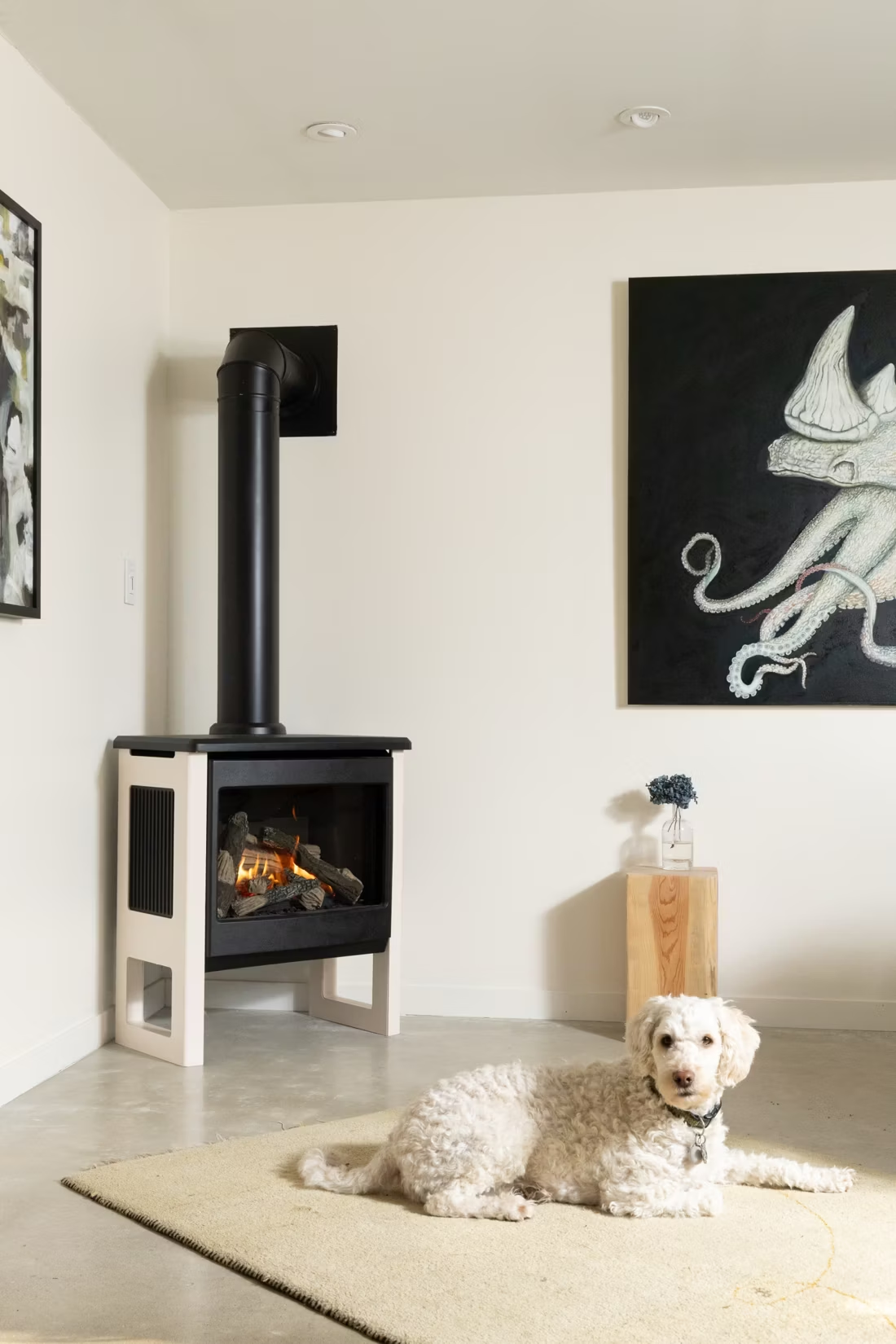
A gas fireplace is a fully built-in unit framed into a wall—the right call for new construction or a remodel without an existing hearth. A gas insert is built to slide into an existing masonry fireplace opening, which describes a large share of West View's older housing stock. A gas stove is a freestanding unit that sits on the floor, often used in smaller rooms or additions where there's no fireplace opening at all. For most West View homeowners working with an existing chimney, an insert is the straightforward upgrade.
Do I need a permit to install a gas fireplace in West View?
Yes. The West View Borough Building Department requires a permit for new gas fireplace and insert installations, and Pennsylvania's Uniform Construction Code requires the gas line work be done by a licensed plumber or gas fitter. Most hearth dealers who work in the borough handle the permit application and inspection scheduling as part of the install, so you're not coordinating multiple trades yourself.
Should I get a vented or vent-free gas fireplace?
Vent-free gas fireplaces are legal in Pennsylvania, but I'd steer most West View homeowners toward a vented, direct-vent unit instead. Direct-vent models draw combustion air from outside and exhaust it back outside through a sealed pipe, which matters here specifically because West View sits in a designated air quality non-attainment area—adding an unvented combustion source to already-tight indoor air in an older, closely built home isn't the direction most local installers recommend. A direct-vent insert or fireplace gives you real heat output without that tradeoff.
How often does a gas fireplace need to be serviced?
Plan on an annual inspection, ideally before the coldest stretch of the season hits. A technician checks the burner, pilot assembly, venting, and gas connections, and cleans the glass and interior—a much shorter visit than a wood chimney sweep, but still important for safety and for keeping the manufacturer's warranty intact. Expect to pay roughly $150 to $250 for a standard annual service call in the Pittsburgh area.
Why is gas so much more common than wood or pellet heat in West View?
It comes down to the borough's geography and air quality status. West View sits in a designated non-attainment area for air quality, which discourages new wood-burning installations, and the borough's narrow lots leave little practical room for cordwood storage or the chimney clearances a wood stove needs. There's also no nearby public forest land for the kind of cutting permits that make wood heat cheap and popular in more rural parts of Pennsylvania. Gas sidesteps all of that—no fuel storage, no particulate emissions, and a straightforward retrofit into the masonry fireplace most older West View homes already have.
Can I put a TV above my fireplace?
Yes—with an asterisk. Fireplaces are hot and TVs don't like heat. Either put a mantel between them to deflect rising warmth, or choose a fireplace with heat-management technology that creates a cool zone on the wall above—the wall stays around 125 degrees, barely warm, while the room still gets full heat. If you like clean lines and don't want a mantel, heat management is the answer.
What's the difference between an insert and a zero-clearance fireplace?
An insert is a fireplace that slides into a pre-existing wood-burning fireplace—if you don't have one, there's nothing to insert it into. A zero-clearance fireplace is built into a framed wall, which makes it the answer for remodels and new construction. Simple test: existing masonry fireplace means insert; blank or framed wall means zero-clearance.
What is an in-home preview and do I need one?
It's a visit where a hearth professional measures your space, confirms the model you picked actually works in your home, and walks the specs—framing, gas line, venting, finish work—before anything is ordered. Some details you just can't know until you see the house. Never make a down payment without one; it's the single most-skipped step that burns buyers.
Should the dealer who sells my fireplace also install it?
Ideally, yes. A fireplace project involves vent pipe, gas line, electrical, and often tile or stone. Hire three or four separate trades and you own the liability and the game of telephone between them. One company selling and installing means one accountable party, start to finish—ask about factory training, on-time completion records, and what happens if an inspection fails.
Nearby Dealers
Hearth shops serving West View and the surrounding area. Every listing shows whether it is a WhyFire partner, a dealer we have verified as authorized for the brands we recommend, or a local business carrying hearth products. No manufacturer pays for placement. How we verify dealers →
Northern Woodworking
Fireplace & Patioplace
All Seasons Fireplace & Home
The Stove Place
Suburban Insulation
Fireplace And Patio Place
Halls Pools & Fireplaces
Tri-State Stoves
Buck Stove & Fireplace
Fireplace And Patio Place
A Capital Roofing
Howell Craft Inc.
Home Improvement Center
Get matched with a gas fireplace dealer in West View.
Tell us about your home and we'll send you a free Project Guide & Parts List—the exact parts, including the vent kit, and a trusted local dealer to install it.
Find Your Fireplace →