
Clean gas heat built for Green Tree's hillside homes.
Instant, reliable warmth for Allegheny County's tight lots and older housing stock—find the right gas fireplace and connect with a trusted local dealer.
Every Project Starts From One of These Five Situations
The practical choice for a dense Pittsburgh suburb.
Green Tree sits on a hillside just southwest of downtown Pittsburgh, its narrow lots and mid-century housing stock packed closely together across barely two square miles. Winters here bring a heating season on par with a cold six-month stretch and average lows near 20°F—colder than Philadelphia, though nowhere near the snow totals of Buffalo, NY. That's still enough cold to make a secondary or supplemental heat source worth having, especially in the borough's older bungalows and split-levels where the original furnace struggles to keep every room even.
Allegheny County has a documented history of air quality non-attainment, and Green Tree's tight lot sizes leave little room for firewood storage or seasoning anyway—which is a big part of why wood and pellet stoves see so little uptake here. Gas fills that gap. It delivers real, on-demand heat without smoke, ash, or a woodpile taking up the side yard, and it pairs naturally with a borough where most homes are already piped for gas heat.
Three steps. No salesperson until you're ready.
Tell us about your project
Your zip code, your situation, and the fuel you're leaning toward—or let the answers point you to one.
See what's actually available
The brands dealers within 100 miles genuinely carry—real options, never a catalog mirage.
Get your dealer & Project Guide
A trusted local dealer, plus the free Project Guide & Parts List that names every component of the job.
Frequently Asked Questions
How much does a gas fireplace installation cost in Green Tree?
Most gas fireplace installations in the Pittsburgh area run somewhere between $4,000 and $10,000, with the final number driven mostly by venting. A direct-vent insert dropped into an existing masonry fireplace with a gas line already run to the room sits at the low end. A new built-in gas fireplace in an addition or finished basement—common in Green Tree's split-level homes—costs more once framing, venting through an exterior wall, and a new gas line are added. Local hearth dealers will give you a firm number after seeing the room.
Can I convert my existing wood-burning fireplace to gas?
Yes, and it's a common project in Green Tree's older housing stock, much of which was built with a traditional brick fireplace as the focal point of the living room. A gas insert typically uses the existing chimney as its vent path, with a stainless liner run down the flue, so you keep the fireplace opening you already have while gaining real, adjustable heat output. Given Allegheny County's air quality non-attainment status, converting also means you're no longer contributing wood smoke to the airshed—a benefit during the winter inversions that occasionally settle into the Pittsburgh river valleys.
Does Green Tree have natural gas service, or would I need propane?
Green Tree is a fully built-out inner-ring suburb, and the overwhelming majority of homes already have natural gas service for their furnace and water heater—adding a fireplace to that existing line is usually straightforward. Propane installations are rare here; you'd typically only see them in the handful of homes that never connected to gas for one reason or another. Your installer can confirm what's already run to your house and size the fireplace accordingly.
Will my gas fireplace still work if the power goes out?
Most will, provided you choose the right ignition system. Units with IPI (intermittent pilot ignition) run off small onboard batteries that keep the fireplace lighting on demand even when Duquesne Light service is interrupted, which happens occasionally in Green Tree during ice storms and high winds off the hillside. Valor fireplaces take a different approach: their pilot assembly generates its own electricity through the thermocouple, so there's no battery to remember to replace. Either way, ask about the ignition system specifically if outage backup matters to you.
What's the difference between a gas fireplace, insert, and stove?
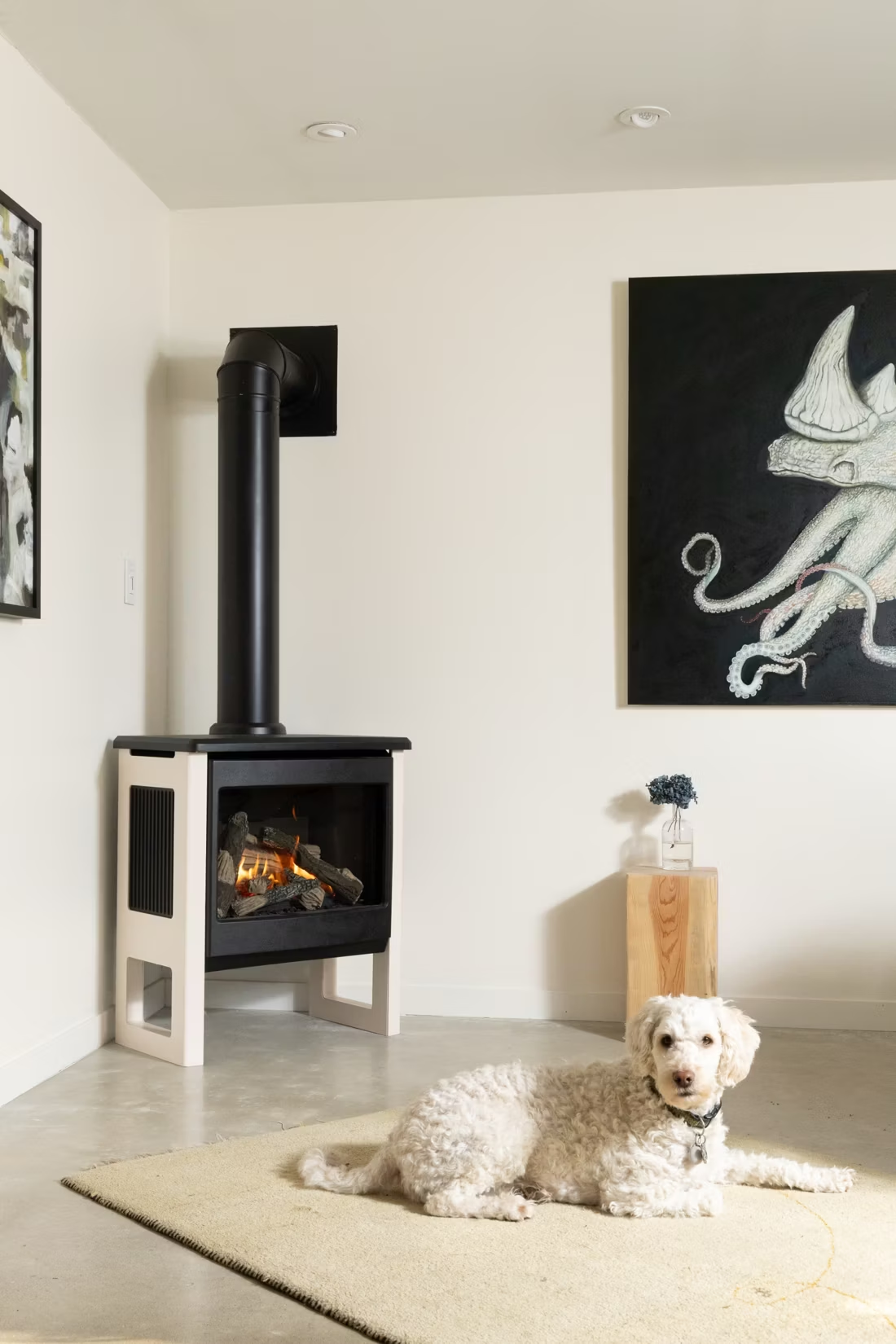
A gas fireplace is a built-in unit framed into a wall—the right call for a finished basement or an addition without an existing hearth. A gas insert is sized to slide into an existing masonry fireplace opening, which describes most of the older homes in Green Tree. A gas stove is a freestanding cabinet unit, similar in footprint to a wood stove, useful in a room with no chimney or fireplace at all. For the borough's housing stock, heavy on original brick fireplaces from the 1940s and 50s, an insert is usually the straightforward answer.
Do I need a permit to install a gas fireplace in Green Tree?
Yes. Green Tree Borough requires a building permit for gas fireplace installations, and the gas line connection itself needs to be run or modified by a licensed gas fitter, separate from the general building permit. Most hearth dealers coordinate both pieces as part of the installation, so you're not stuck managing two different trades and two different inspections yourself.
Are vent-free gas fireplaces allowed in Green Tree?
Vent-free (unvented) gas fireplaces are legal in Pennsylvania, but they release combustion byproducts directly into the room, and given Allegheny County's non-attainment status for air quality, many local installers steer homeowners toward direct-vent units instead. Direct-vent fireplaces pull combustion air from outside and exhaust it back outside through a sealed pipe, so indoor air quality isn't a tradeoff. In a tightly built borough like Green Tree, where homes sit close together and additions are often finished basements with limited natural ventilation, direct-vent is the more common and more comfortable choice.
How often should a gas fireplace be serviced?
Plan on an annual inspection, ideally before the first cold snap in November. A technician checks the burner, pilot assembly, venting, and gas connections, and cleans the glass, which tends to fog with buildup under daily use. This typically runs $150 to $250 in the Pittsburgh area and takes far less time than a wood-stove chimney sweep, but skipping it is still the most common reason a fireplace stops lighting reliably mid-winter.
Why don't more homes in Green Tree use wood or pellet stoves?
Two practical reasons. First, Allegheny County has a documented non-attainment history for fine particulate air quality, and wood smoke is a meaningful contributor—local air quality guidance discourages solid-fuel burning during inversion events that settle into the Pittsburgh river valleys. Second, Green Tree's lots are small and closely built, which leaves little space to store or season firewood, even with oak, hickory, and maple readily available elsewhere in Western Pennsylvania. Gas sidesteps both issues: no smoke, no woodpile, and heat you can dial up or down instantly. A handful of Green Tree homeowners still run an existing wood fireplace occasionally for ambiance, but it isn't the primary heat strategy here the way it might be in a more rural part of the county.
Why is a fireplace insert so efficient?
An insert does two things: it seals the chimney completely, so you stop losing air you already paid to heat, and it radiates warmth into the room through the firebox and glass. Most add a heat-exchange fan that pulls cool room air underneath, wraps it around the hot firebox, and pushes it back out warm. Your home is more efficient before you've even lit the first fire.
What's the difference between an insert and a zero-clearance fireplace?
An insert is a fireplace that slides into a pre-existing wood-burning fireplace—if you don't have one, there's nothing to insert it into. A zero-clearance fireplace is built into a framed wall, which makes it the answer for remodels and new construction. Simple test: existing masonry fireplace means insert; blank or framed wall means zero-clearance.
What is an in-home preview and do I need one?
It's a visit where a hearth professional measures your space, confirms the model you picked actually works in your home, and walks the specs—framing, gas line, venting, finish work—before anything is ordered. Some details you just can't know until you see the house. Never make a down payment without one; it's the single most-skipped step that burns buyers.
How much should I budget for a fireplace?
For an average home—covering the fireplace, the vent pipe, and basic installation—a budget between $3,900 and $5,500 gives you a lot of options across wood, gas, and pellet. By the time you add finish work, gas line, and electrical, the average complete installation lands between $5,000 and $12,000 all-in. In a remodel or new build, a good rule is to put about 2.5% of the total project cost toward the fireplace.
Nearby Dealers
Hearth shops serving Green Tree and the surrounding area. Every listing shows whether it is a WhyFire partner, a dealer we have verified as authorized for the brands we recommend, or a local business carrying hearth products. No manufacturer pays for placement. How we verify dealers →
Fireplace & Patioplace
All Seasons Fireplace & Home
The Stove Place
Tri-State Stoves
Northern Woodworking
Howell Craft Inc.
A Capital Roofing
Samson Glass And Mirror
Fireplace And Patio Place
Suburban Insulation
Halls Pools & Fireplaces
Buck Stove & Fireplace
Clear Water Pools LLC
Scenery Hill Hardware
Fireplace And Patio Place
Tomayko Construction & Alternative Heating Llc.
Find your gas fireplace in Green Tree.
Tell us about your Green Tree home and we'll put together a free Project Guide & Parts List—the exact parts, vent kit, and a trusted local Allegheny County dealer recommendation for your gas fireplace project.
Find Your Fireplace →