
Reliable Gas Heat for Carnegie's Long, Damp Winters.
Clean, instant heat for Carnegie's older rowhouses and mill-era homes—without adding to Allegheny County's air quality burden. Find the right unit and connect with a trusted local dealer.
Every Project Starts From One of These Five Situations
A clean-burning fit for a non-attainment county.
Carnegie sits in a river valley just southwest of Pittsburgh, at about 771 feet elevation with roughly 5,379 heating degree days a year and winter lows averaging 20°F. That's a milder winter than you'd find in Buffalo, NY, but still cold enough that heating runs steadily from November through March, and the borough's early-1900s mill-town housing stock—brick rowhouses and frame homes with older masonry chimneys—often needs a real upgrade to heat efficiently.
Allegheny County is a designated non-attainment area for fine particulate matter, and the Allegheny County Health Department keeps a close eye on residential burning as a result. That makes gas the practical choice for a lot of Carnegie homeowners: it delivers real heat at the flip of a switch, doesn't add smoke to a valley that already traps it on cold, still days, and works well whether you're converting an old fireplace or starting from scratch in a renovated rowhouse.
Three steps. No salesperson until you're ready.
Tell us about your project
Your zip code, your situation, and the fuel you're leaning toward—or let the answers point you to one.
See what's actually available
The brands dealers within 100 miles genuinely carry—real options, never a catalog mirage.
Get your dealer & Project Guide
A trusted local dealer, plus the free Project Guide & Parts List that names every component of the job.
Frequently Asked Questions
How much does a gas fireplace installation cost in Carnegie?
Most gas fireplace installations in Carnegie run between $4,500 and $10,000, with the total depending on the unit, the venting path, and whether new gas line work is needed. A direct-vent insert dropped into an existing masonry fireplace with gas already run to that wall lands on the lower end. New construction or a remodel that needs framing, venting through an exterior wall, and a fresh gas line typically sits higher. Given how many Carnegie homes have older gas service and older masonry, a local installer's in-home visit is worth it before you get a firm number.
Can I convert my existing wood fireplace to gas?
Yes, and it's a common project in Carnegie's older housing stock. A gas insert is fitted into your existing masonry firebox with a stainless liner run up the original chimney, so you keep the look of the fireplace while gaining real, controllable heat. Expect $4,500 to $9,000 depending on the insert and whether your home's existing gas line reaches the fireplace wall or needs to be extended. It's also a straightforward way to retire an old, drafty masonry fireplace that many of Carnegie's early-1900s homes were built with.
Is natural gas available in Carnegie, or will I need propane?
Natural gas service is common throughout Carnegie and the surrounding Allegheny County suburbs, and most homes already have gas for the furnace, water heater, or range—which usually makes adding a fireplace a matter of extending an existing line rather than starting from zero. Homes on the edges of the borough or in more rural pockets of the county without gas service can run a fireplace on propane instead, using a tank installed by a local propane supplier. Either fuel works with most direct-vent units; your installer sets the orifice and regulator to match.
Will my gas fireplace work during a power outage?
Most modern gas fireplaces will, which matters in a hilly river-valley borough like Carnegie where storms and downed lines can knock out power for stretches. Units with IPI (intermittent pilot ignition) run on battery backup—usually AA batteries built into the unit—that kicks in the moment power drops, so the fireplace lights and runs as normal. Valor units go a step further: their pilot generates its own electricity through the thermocouple, so there's no battery to remember at all. With Duquesne Light and Pennsylvania Power Co. serving different pockets of the area, ask your installer which ignition system fits your situation.
What's the difference between a gas fireplace, gas insert, and gas stove?
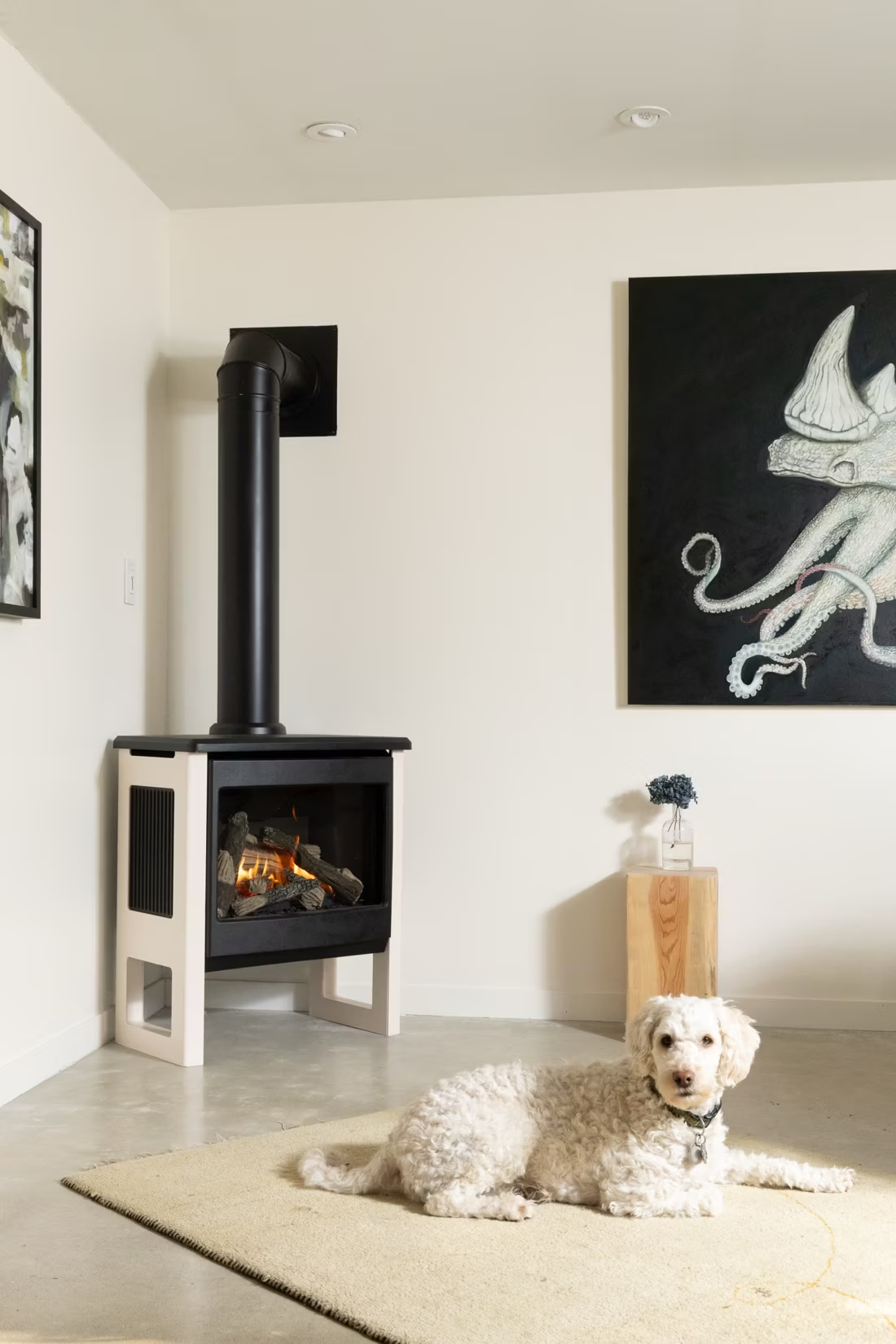
A gas fireplace is a fully built-in unit framed into a wall—the right call for new construction or a full remodel. A gas insert slides into an existing masonry firebox and uses the chimney as its vent path, which suits Carnegie's stock of older homes with real fireplaces already in place. A gas stove is a freestanding cast-iron or steel unit that sits on the floor like a wood stove but runs on gas, and works well in rowhouses or additions without an existing chimney. For most Carnegie homeowners upgrading an old fireplace, an insert is the simplest and most cost-effective route.
Do I need a permit to install a gas fireplace in Carnegie?
Yes—a building permit through the Carnegie Borough Building Department is required for new gas fireplace installations, and any new or extended gas line needs to be run by a licensed gas-fitter and inspected. Most local hearth dealers coordinate the permit, the gas line, and the final inspection as part of the installation, which is one of the real advantages of hiring a certified installer over a general handyman for this kind of work.
What's the difference between vented and vent-free gas fireplaces?
Vented gas fireplaces—direct-vent or B-vent—pull combustion air from outside and exhaust the byproducts back outside through a sealed vent. Vent-free units burn gas directly into the room with no external venting, which is more efficient on paper but releases some water vapor and combustion byproducts indoors. Pennsylvania allows vent-free units, but given Allegheny County's non-attainment status and the tighter square footage of many Carnegie rowhouses, direct-vent units are the more common and more comfortable choice locally—they don't compete with the room's air quality or require the strict sizing rules vent-free installs demand.
How often should my gas fireplace be serviced?
Plan on an annual inspection, ideally before the first cold snap in October or November. A certified technician checks the burner, pilot assembly, venting, and gas connections, and cleans the glass and interior—a much quicker visit than a wood chimney sweep, but just as important, especially in older Carnegie homes where gas lines and venting may be decades old. Most local service providers charge in the $150 to $250 range for a standard annual visit.
Why don't more homes in Carnegie use wood stoves instead?
Wood is genuinely scarce as a heating fuel choice in Carnegie, even though oak, hickory, maple, and cherry all grow throughout western Pennsylvania. Allegheny County's non-attainment status for fine particulates means wood smoke gets more scrutiny here than in most of the state, and Carnegie's dense rowhouse lots and tight setbacks make chimney clearances and wood storage impractical for a lot of homeowners. Gas sidesteps both problems—no smoke, no cordwood, and it fits neatly into a rowhouse's existing masonry fireplace. A handful of Carnegie homeowners still keep a wood stove for backup heat or atmosphere, but it's the exception rather than the rule here.
Why is my open fireplace making my house colder?
Open fireplaces suck—literally. As the fire burns, it consumes air your furnace already paid to heat and pulls it out through the chimney, so the house is actually colder after the fire goes out than before you lit it. An insert fixes this: it seals the chimney, puts fixed glass across the front, and turns that hole in your house into a real heat source.
Why is a fireplace insert so efficient?
An insert does two things: it seals the chimney completely, so you stop losing air you already paid to heat, and it radiates warmth into the room through the firebox and glass. Most add a heat-exchange fan that pulls cool room air underneath, wraps it around the hot firebox, and pushes it back out warm. Your home is more efficient before you've even lit the first fire.
Does a fireplace add value to my home?
On average, a fireplace adds back to the home about the same amount you spent installing it. Add the monthly savings from heating the rooms you actually use instead of the whole house—often hundreds of dollars a year—and the value case is strong before you even count what a fire does for how your family uses the room.
How much should I budget for a fireplace?
For an average home—covering the fireplace, the vent pipe, and basic installation—a budget between $3,900 and $5,500 gives you a lot of options across wood, gas, and pellet. By the time you add finish work, gas line, and electrical, the average complete installation lands between $5,000 and $12,000 all-in. In a remodel or new build, a good rule is to put about 2.5% of the total project cost toward the fireplace.
Nearby Dealers
Hearth shops serving Carnegie and the surrounding area. Every listing shows whether it is a WhyFire partner, a dealer we have verified as authorized for the brands we recommend, or a local business carrying hearth products. No manufacturer pays for placement. How we verify dealers →
Fireplace & Patioplace
All Seasons Fireplace & Home
The Stove Place
Tri-State Stoves
Northern Woodworking
Howell Craft Inc.
Samson Glass And Mirror
A Capital Roofing
Suburban Insulation
Fireplace And Patio Place
Buck Stove & Fireplace
Scenery Hill Hardware
Clear Water Pools LLC
Halls Pools & Fireplaces
Fireplace And Patio Place
Find your gas fireplace in Carnegie.
Tell us a bit about your home and we'll put together a free Project Guide & Parts List—the right gas fireplace or insert, the exact vent kit your install needs, and a trusted local Carnegie-area dealer to install it.
Find Your Fireplace →