
Instant Heat for White Oak's Cold Allegheny Winters.
White Oak winters average lows near 20°F across a heating season of roughly 5,580 degree days. A properly sized gas fireplace or insert delivers real heat at the flip of a switch—find the right one and get matched with a trusted local dealer.
Every Project Starts From One of These Five Situations
Clean heat for a compact Mon Valley borough.
White Oak sits at about 857 feet in the Monongahela River valley southeast of Pittsburgh, in a Rust Belt heating climate that's real but not extreme—milder than places like Buffalo NY or Duluth MN, but still enough cold-weather months that a fireplace gets meaningful winter use rather than sitting decorative. Like much of Allegheny County, White Oak falls within a federal non-attainment area for fine particulates, a legacy of the region's industrial history that still shapes how local air quality is regulated today.
That air quality reality, combined with tight borough lot sizes and older housing stock, is a big part of why wood and pellet appliances see very little new installation here—solid-fuel setups are more common out in the less-developed pockets of Allegheny County. Gas, by contrast, fits White Oak well: most homes in this built-up, close-in suburb are already tied into gas service for furnaces and water heaters, so adding a direct-vent gas fireplace or insert is usually a straightforward extension rather than a new utility hookup. For homes outside the gas service footprint, propane fills the gap with the same equipment and largely the same install process.
Three steps. No salesperson until you're ready.
Tell us about your project
Your zip code, your situation, and the fuel you're leaning toward—or let the answers point you to one.
See what's actually available
The brands dealers within 100 miles genuinely carry—real options, never a catalog mirage.
Get your dealer & Project Guide
A trusted local dealer, plus the free Project Guide & Parts List that names every component of the job.
Frequently Asked Questions
How much does a gas fireplace installation cost in White Oak?
For the Pittsburgh-area market, a gas insert installed into an existing masonry fireplace typically runs $3,500 to $7,500, since it uses the chimney you already have as the venting path. A new built-in direct-vent gas fireplace—the kind that requires framing and a fresh gas line run, common in additions or remodels of White Oak's older housing stock—tends to land closer to $6,000 to $9,000. Homes that need a longer gas line trenched from the meter, or a propane tank set for homes without gas service, will run toward the higher end. A local dealer can give you a firm number after seeing the space.
Can I convert my existing wood fireplace to gas?
Yes, and it's one of the more common projects in a borough like White Oak, where a lot of the housing stock dates to the early-to-mid 1900s and still has an original open masonry fireplace built for wood or coal. A gas insert with a stainless liner run up the existing flue converts that fireplace into a sealed, efficient heat source without touching the chimney's exterior. Given the region's non-attainment status for particulates, this swap also means one less solid-fuel appliance adding to local air quality concerns—a detail some White Oak homeowners weigh alongside the convenience factor.
Do I need natural gas, or can I use propane?
Either works, and the right choice mostly comes down to what's already run to your house. Because White Oak is a fairly dense, long-established Allegheny County borough, most homes already have natural gas service for the furnace and water heater, which makes adding a fireplace a matter of tapping an existing line rather than installing new utility infrastructure. Homes on the edges of town or in pockets without gas service can run the same fireplace models on propane, with a local supplier handling tank setup. Your installer sets the orifice and regulator for whichever fuel you're on—the fireplace itself looks and performs the same either way.
Will my gas fireplace work during a power outage?
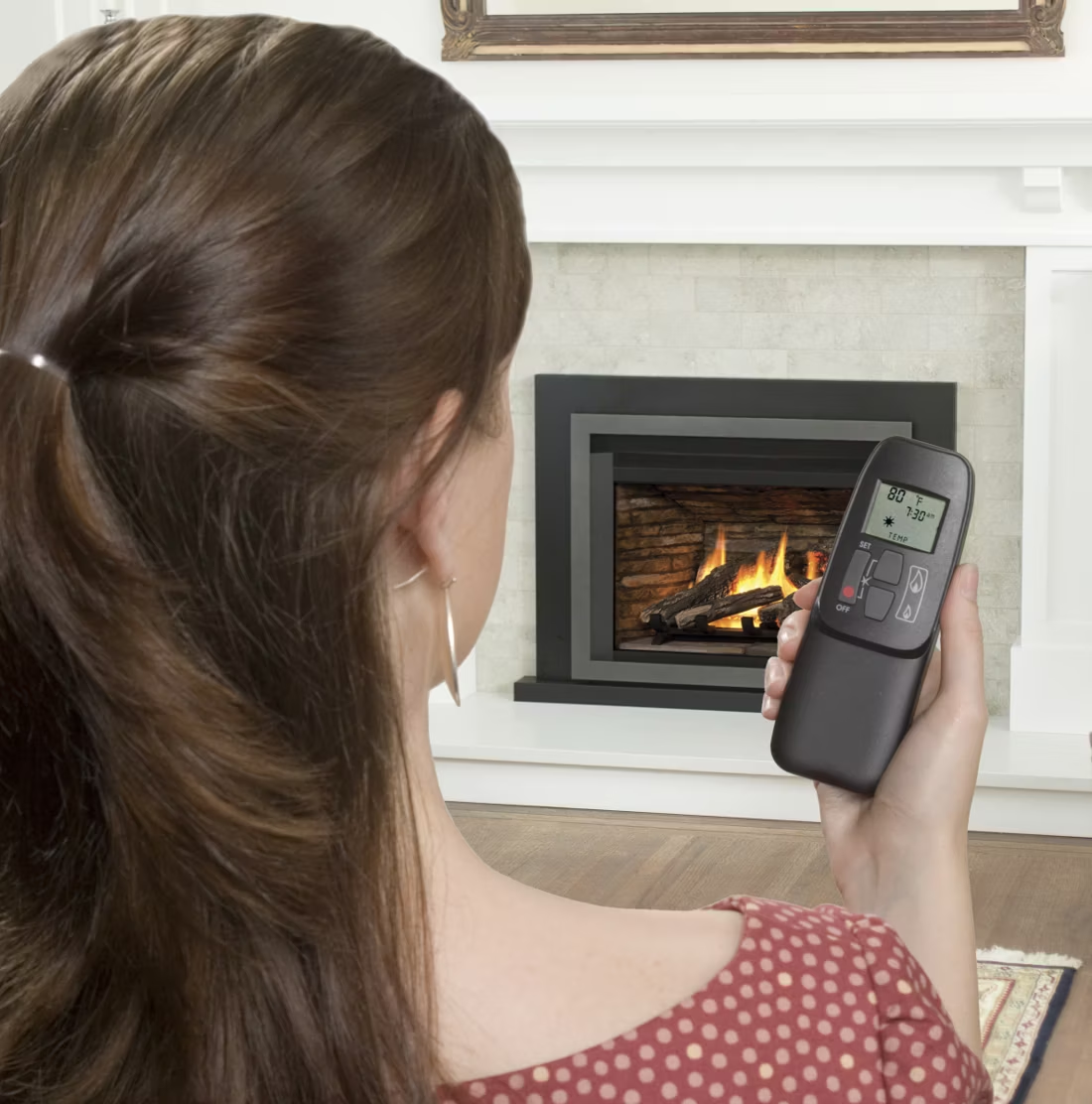
Most modern gas fireplaces with intermittent pilot ignition (IPI) include a battery backup—usually a few AA batteries inside the unit—that keeps the igniter working when the power drops, so the fireplace still lights on demand. Some brands go a step further and generate their own electricity off the pilot flame's thermocouple, meaning no batteries to remember at all. That matters in White Oak: with a residential electric rate around 19.5 cents per kWh through Duquesne Light or Pennsylvania Power, running electric space heaters through an extended outage gets expensive fast, and a gas fireplace with reliable backup ignition can carry a room through a storm-related outage for a fraction of the cost.
What's the difference between a gas fireplace, gas insert, and gas stove?
A gas fireplace is a fully built-in unit framed into a wall—the right call for additions, finished basements, or new construction that doesn't already have a hearth opening. A gas insert is sized to slide into an existing masonry firebox, which describes a large share of the older homes around White Oak. A gas stove is a freestanding cast-iron or steel unit that sits on the floor on its own hearth pad, useful in rooms with no existing fireplace and no interest in framing one in. For most White Oak homeowners working with a fireplace their house already has, an insert is the simplest and most cost-effective path.
Do I need a permit to install a gas fireplace in White Oak?
Yes—new gas fireplace and insert installations generally require both a building permit and sign-off on the gas line work, coordinated through your local building permit office and a licensed gas-fitter. A certified hearth dealer working in White Oak Borough will typically handle this paperwork as part of the installation rather than leaving you to chase down separate trades and inspections yourself. Given the air quality oversight this part of Allegheny County operates under, it's also worth confirming your chosen unit meets current appliance standards before you buy.
What's the difference between vented and vent-free gas fireplaces?
Vented (direct-vent) gas fireplaces pull combustion air from outside and exhaust it back outside through sealed venting—they're the cleanest option for indoor air and the most common choice in this region. Vent-free units burn gas directly into the room without external venting; they're legal in Pennsylvania under specific room-size and ventilation rules, but they do release some moisture and combustion byproducts indoors. In a county that already carries non-attainment status for particulates, most local dealers steer White Oak homeowners toward direct-vent models—they deliver strong heat output without adding anything to the indoor air you're already breathing.
How often should my gas fireplace be serviced?
Plan on an annual inspection, usually before the heating season ramps up in fall. A technician checks the burner, pilot assembly, venting, and gas connections, and cleans the glass and interior—a much quicker visit than a wood chimney sweep, but just as important for safe operation. In the Pittsburgh area, this typically runs $150 to $250 depending on the unit and any parts needed. Units that run daily through a full White Oak winter benefit from staying on that yearly schedule rather than waiting until something acts up.
Gas vs. wood—which makes sense for a White Oak home?
Around White Oak, this isn't really a close call. New wood-burning installations are uncommon in the borough—tight lot sizes, older attached and semi-attached housing, and the area's non-attainment status for fine particulates all push new projects toward gas rather than solid fuel. That's a shift from the broader Allegheny County backwoods, where oak, hickory, maple, and cherry are all cut and burned regularly. If you already own an older wood-burning fireplace, converting it to gas is usually the more practical path forward: no wood storage, no ash, no added strain on local air quality, and heat that starts with the flip of a switch instead of a match.
Is my gas fireplace wasting gas?
If it was installed more than 15 years ago, probably. Older gas fireplaces keep a standing pilot light burning all the time, and that little flame can cost a couple hundred dollars a year. Newer models use pilot-on-demand ignition—the pilot lights only when you use the fireplace and goes out when you turn it off.
What's the difference between an insert and a zero-clearance fireplace?
An insert is a fireplace that slides into a pre-existing wood-burning fireplace—if you don't have one, there's nothing to insert it into. A zero-clearance fireplace is built into a framed wall, which makes it the answer for remodels and new construction. Simple test: existing masonry fireplace means insert; blank or framed wall means zero-clearance.
Can I install a fireplace myself?
If you're putting a fire in your house on purpose, it's best to work with an expert. Unless you're genuinely experienced in framing, gas line, vent pipe, and the national code on clearances to combustibles, have a professional do it—and ideally the same company that sells you the fireplace, so warranty, service, and liability all live under one roof.
Can a fireplace actually lower my heating bill?
Yes—by creating a comfort zone. A furnace heats every square foot of the house just to warm the one room you're in; a gas fireplace on low burns roughly a sixth of the gas a typical furnace does. Set the furnace around 55–60 degrees as a baseline, then heat the rooms your family actually uses. Families who heat this way commonly save $20–$60 a month.
Nearby Dealers
Hearth shops serving White Oak and the surrounding area. Every listing shows whether it is a WhyFire partner, a dealer we have verified as authorized for the brands we recommend, or a local business carrying hearth products. No manufacturer pays for placement. How we verify dealers →
A Capital Roofing
Howell Craft Inc.
Fireplace And Patio Place
All Seasons Fireplace & Home
Fireplace & Patioplace
Tomayko Construction & Alternative Heating Llc.
Clear Water Pools LLC
Tri-State Stoves
Halls Pools & Fireplaces
Samson Glass And Mirror
Scenery Hill Hardware
Northern Woodworking
The Stove Place
Find your gas fireplace in White Oak.
Tell us about your home and your existing fireplace, and we'll put together a free Project Guide & Parts List—the right gas fireplace or insert, the vent kit it needs, and a trusted local White Oak-area dealer to install it.
Find Your Fireplace →