
Keep Your Family Warm and Safe—No Matter What
Most of Bergen County heats with natural gas or electric—but in the county's larger-lot, more wooded towns, a wood stove still makes sense for backup heat and real ambiance. Find the right dealer for your specific street.
Every Project Starts From One of These Five Situations
A dense, gas-served county with a few wooded exceptions.
Bergen County is one of the most densely populated counties in New Jersey—807,371 people packed into roughly 70 municipalities, most of them tightly built subdivisions in towns like Hackensack, Fort Lee, Teaneck, and Paramus, all served by PSE&G natural gas. With a climate zone of 5A and an average winter low around 26°F, winters here are real but moderate—closer to Madison, WI in overall winter heating load than to a true northern-tier climate. That combination of gas infrastructure, small lots, and a manageable climate is exactly why wood heat rarely comes up as a primary heating choice countywide.
The exception is the county's northwest corner—Mahwah, Saddle River, Upper Saddle River, Franklin Lakes, Woodcliff Lake—where lots are larger, tree cover is heavier, and oak, hickory, and maple are the dominant species on the property itself. In those towns, and in older homes with existing masonry fireplaces in places like Ridgewood, Tenafly, and Englewood, a wood stove or insert still gets installed—usually for backup heat during the ice storms and nor'easters that knock out power along the Hudson corridor, or for the ambiance a gas insert can't quite replicate. There are no regional air quality non-attainment concerns or winter inversion restrictions here, which is one less hurdle for the homeowners who do want one.
Three steps. No salesperson until you're ready.
Tell us about your project
Your zip code, your situation, and the fuel you're leaning toward—or let the answers point you to one.
See what's actually available
The brands dealers within 100 miles genuinely carry—real options, never a catalog mirage.
Get your dealer & Project Guide
A trusted local dealer, plus the free Project Guide & Parts List that names every component of the job.
Frequently Asked Questions
How much does a wood stove installation cost in Bergen County?
Because wood stove requests are far less common here than gas or electric fireplace work, pricing tends to track general Northeast averages rather than a deep local market: roughly $4,000 to $8,500 for a stove or insert into an existing masonry fireplace, depending on the model, liner work, and hearth pad requirements. New construction without an existing chimney runs higher once Class A pipe and roof penetration are added. In a county this dense, expect fewer dealers to actively stock wood units compared to gas—get a quote from someone who installs wood regularly, not as a side offering.
What size wood stove do I need for a Bergen County home?
With Bergen County's winter heating load roughly comparable to Madison, WI, and average winter lows around 26°F, most homes here don't need a stove sized for extreme cold—a small to medium unit (up to about 1,500 sq ft of coverage) is usually plenty, especially since the stove is typically supplemental heat layered on top of existing gas or electric HVAC rather than the sole heat source. Older colonials in towns like Ridgewood or Englewood with drafty original windows may want to size up slightly. A local dealer will factor in your insulation and whether the stove needs to carry the whole house during an outage or just one room.
Are there wood stove installers in Bergen County, or is this mostly a gas-fireplace market?
It's largely a gas and electric market—most Bergen County hearth retailers lean heavily toward direct-vent gas because that's what the majority of the county's 70-plus municipalities actually request. That said, dealers serving the northwest towns (Mahwah, Saddle River, Franklin Lakes) and older housing stock in Ridgewood and Tenafly do install wood stoves and inserts regularly. Look for NFI or CSIA-certified installers specifically, since a dealer's gas volume doesn't guarantee wood-burning expertise—venting and clearance mistakes on a wood unit are a real fire risk that a general contractor may not catch.
Should I get a wood stove or a wood insert for my Bergen County home?
If you own one of the many older colonials, Tudors, or capes in towns like Englewood, Tenafly, or Ridgewood with an existing masonry fireplace, an insert is usually the better fit—it uses the chimney you already have and turns a decorative, heat-losing fireplace into an actual heat source. A freestanding stove makes more sense in the county's newer construction or in wooded properties in Mahwah and Saddle River where there's no existing masonry to work with. Either way, your existing chimney's condition (draft, liner, clearance) needs an inspection before anything gets installed.
Do I need a permit to install a wood stove in Bergen County?
Yes. New Jersey's Uniform Construction Code requires a permit and an EPA-certified appliance for any new wood-burning installation, but because Bergen County is made up of roughly 70 separate municipalities, the permit is issued by whichever local construction office covers your town—Mahwah's building department handles Mahwah, Ridgewood's handles Ridgewood, and so on, rather than one countywide office. A reputable installer will know your specific municipality's process and typically pulls the permit as part of the job.
What's the best wood stove for a Bergen County climate?
With no wildfire smoke or winter inversion restrictions to work around, the choice comes down mostly to burn time and the wood on hand. Oak, hickory, and maple—all common on Bergen County's larger wooded lots—are dense hardwoods that burn long and hot, so a mid-size catalytic stove from a brand like Blaze King or Woodstock Soapstone can hold a fire well past the mild single-digit dips this county sees. For occasional or backup use rather than daily primary heat, a simpler non-catalytic model from Pacific Energy or Jotul is often the more practical and lower-maintenance choice.
How often should my chimney be inspected in Bergen County?
The CSIA recommends an annual inspection for any wood-burning appliance, and it matters even more here given how much of Bergen County's housing stock is older—many homes in Ridgewood, Englewood, and Tenafly have masonry chimneys original to homes built decades ago. Even light or occasional use (which describes most wood stoves in this county, since they're typically backup or supplemental heat) can leave a chimney due for a Level 1 sweep and inspection before burning season, particularly if the flue hasn't been checked since the last owner.
Where can I get firewood in Bergen County?
Since Bergen County isn't near public forest land, firewood here mostly comes from local tree services and seasoned-wood delivery companies rather than cutting permits. Oak, hickory, and maple—the species that dominate the county's wooded northwest towns—are the standard mix, and a well-seasoned cord typically runs $250 to $400 delivered depending on species and how far into the county you are. If you're in Mahwah, Saddle River, or Franklin Lakes, ask a local tree removal company directly—property owners there often have downed hardwood available for less than a delivered cord elsewhere.
Wood stove vs. pellet stove—which makes more sense in Bergen County?
Both are genuinely uncommon here, since the county is built around natural gas and electric heat, but they solve different problems. A wood stove keeps working with zero electricity, which is the real draw for Bergen County homeowners near the Hudson who've sat through a multi-day PSE&G outage after a nor'easter. A pellet stove is cleaner and easier to run day to day, but it needs power for the auger and blower—so it's a poor fit if backup heat during an outage is your main reason for wanting one at all. For most Bergen County households, wood only makes sense if outage resilience or an existing wooded property is part of the decision.
Why is a fireplace insert so efficient?
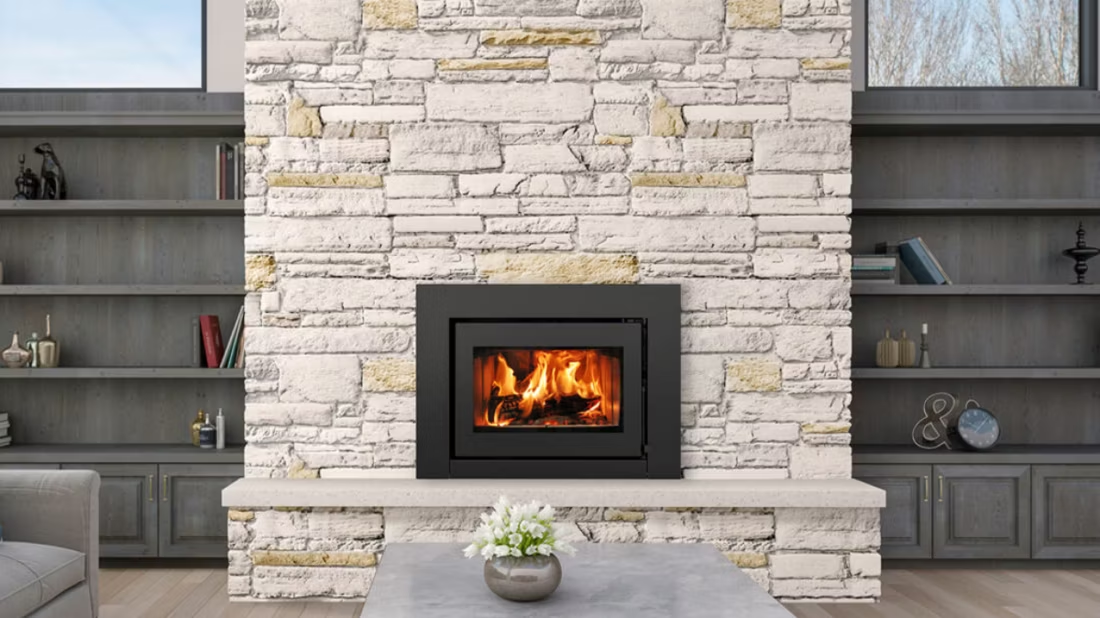
An insert does two things: it seals the chimney completely, so you stop losing air you already paid to heat, and it radiates warmth into the room through the firebox and glass. Most add a heat-exchange fan that pulls cool room air underneath, wraps it around the hot firebox, and pushes it back out warm. Your home is more efficient before you've even lit the first fire.
Why is my open fireplace making my house colder?
Open fireplaces suck—literally. As the fire burns, it consumes air your furnace already paid to heat and pulls it out through the chimney, so the house is actually colder after the fire goes out than before you lit it. An insert fixes this: it seals the chimney, puts fixed glass across the front, and turns that hole in your house into a real heat source.
Can I install a fireplace myself?
If you're putting a fire in your house on purpose, it's best to work with an expert. Unless you're genuinely experienced in framing, gas line, vent pipe, and the national code on clearances to combustibles, have a professional do it—and ideally the same company that sells you the fireplace, so warranty, service, and liability all live under one roof.
Does a fireplace add value to my home?
On average, a fireplace adds back to the home about the same amount you spent installing it. Add the monthly savings from heating the rooms you actually use instead of the whole house—often hundreds of dollars a year—and the value case is strong before you even count what a fire does for how your family uses the room.
Stove and Fireplace Dealers in Bergen County
Listings include WhyFire partner dealers, dealers we have verified as authorized for the brands we recommend, and established local businesses that carry hearth products. Every listing shows which one it is. The ones marked Preferred run on WhyFire's software, so they can show you real pricing and book your appointment right here. No manufacturer pays for placement. How we verify dealers →
Flue Tech
County Woodstoves Inc
Mcnamara Fireplace And Stove
Kjb Fireplaces
Light N Grid
Fireplaces By Design
Westchester Fireplace
Big Apple Fireplaces
All Shore Appliance
Fireplace And Outdoor Living
Harris Hearth And Home
Chimney Sweep Energy Barn
The Valley Fireplace
Agi Supply Inc
Fire Design
Hot Concepts Fireplaces
Costello's Hearth & Spa - Garden City Park
D & D Design Center
Get your free Project Guide & Parts List for a wood stove in Bergen County.
Tell us about your home—including your specific town—and we'll match you with a trusted local dealer and send a free Project Guide & Parts List covering the exact stove or insert, venting, and install plan for your project.
Find Your Fireplace →