
Keep Your Family Warm and Safe—No Matter What
Cresskill's tight Bergen County lots and mild winters mean most homes here run on gas or electric heat. For the handful of homeowners who still want a real wood fire, we'll help you find out what's actually installable and connect you with a local dealer.
Every Project Starts From One of These Five Situations
A dense NYC suburb built for gas, not cordwood.
Cresskill is a two-square-mile borough of about 9,100 people sitting just across the George Washington Bridge from Manhattan, at 42 feet of elevation with winter lows averaging a relatively mild 23°F. With a winter heating season on the milder side, the climate here is far gentler than the cordwood-heavy towns of the upper Midwest and Northeast—think Buffalo, NY, which sees a notably longer and harder burning season. Cresskill's older colonials and Cape Cods were largely built with masonry fireplaces for ambiance, not primary heat, and the borough's small, closely spaced lots leave little room for the clearances, wood storage, and chimney work that a modern EPA-certified stove or insert requires.
There's also no nearby public forest land offering firewood-cutting permits the way homeowners in more rural parts of the country rely on—Bergen County simply isn't set up for self-cut cordwood. That's why wood heat is genuinely rare here, and we'd rather tell you that plainly than pretend otherwise. That said, a small number of Cresskill homeowners still pursue it: people restoring a period fireplace to real use, those who want backup heat independent of the electric grid, or families splitting time between Cresskill and a second property upstate or in Vermont. If that's you, the move is finding a dealer who routinely handles tight-lot, older-home installs in North Jersey—not a big-box crew guessing at clearances.
Three steps. No salesperson until you're ready.
Tell us about your project
Your zip code, your situation, and the fuel you're leaning toward—or let the answers point you to one.
See what's actually available
The brands dealers within 100 miles genuinely carry—real options, never a catalog mirage.
Get your dealer & Project Guide
A trusted local dealer, plus the free Project Guide & Parts List that names every component of the job.
Frequently Asked Questions
How much does a wood stove installation cost in Cresskill?
We don't have a deep local sample to draw from because wood installs are uncommon in Cresskill specifically, but North Jersey homeowners doing an EPA-certified stove or insert typically land between $4,500 and $9,500, depending on the unit and whether new Class A chimney or liner work is needed. Converting an existing masonry fireplace into a wood insert tends to run toward the lower half of that range since the chimney already exists; a freestanding stove in a home with no chimney at all—which describes a fair number of Cresskill's mid-century additions—pushes toward the higher end once venting is built from scratch. A local dealer visit will get you a firm number.
Is a wood stove even allowed on a small Cresskill lot?
Often, yes, but clearance requirements matter more here than in a rural setting. New wood-burning installations still go through the Cresskill construction code office at Borough Hall, and the appliance itself must meet current EPA 2020 NSPS emissions standards regardless of state. The bigger constraint in a borough like Cresskill is physical: setback and clearance-to-combustible rules can be hard to satisfy on a narrow lot with a house close to the property line. This is exactly the kind of thing a local installer needs to walk your specific lot and existing chimney location before quoting anything—it's not a project to plan from a catalog photo.
What size wood stove do I need for a Cresskill home?
Given the borough's milder winters—average lows around 23°F rather than the sub-zero nights you'd see in Buffalo or Burlington—most Cresskill homes don't need a large, primary-heat stove. A small to mid-size stove (up to about 1,500 sq ft of coverage) is plenty for supplemental heat in a living room or den in most of the borough's colonials and capes. Very few homes here would justify a large whole-house unit designed for extreme cold. A local dealer can size the room accurately during an in-home visit—oversizing is the more common mistake in mild climates like this one, since a too-large stove smolders and creates creosote buildup instead of running clean.
Should I install a wood stove or convert my existing fireplace to an insert?
If your Cresskill home already has a working masonry fireplace—common in the borough's older housing stock—a wood insert is almost always the better path. It uses the chimney you already have, dramatically improves heat output over an open hearth, and avoids the clearance headaches of placing a freestanding stove on a small lot. A freestanding stove only makes sense if you have a room without an existing fireplace and enough floor space to meet clearance-to-combustible requirements, which can be tight in some of Cresskill's smaller floor plans. Either way, have a local installer confirm your existing flue is sound before committing.
Do I need a permit, and can I get a firewood-cutting permit locally?
You'll need a construction permit through the Borough of Cresskill for any new wood-burning installation, and the stove must be EPA 2020 NSPS certified. What you won't find is a firewood-cutting permit program—Bergen County has no national forest or state cutting-permit system the way you'd find out west or in northern New England, so self-cut cordwood isn't really an option here. Nearly all Cresskill wood-burning households buy seasoned firewood from a regional supplier rather than cutting their own.
What's the best wood stove for Cresskill's climate?
Because winters here are moderate compared to true cold-climate markets, an ultra-long-burn catalytic stove built for 20-hour overnight loads is usually more capacity than a Cresskill home needs. Mid-size non-catalytic stoves from brands like Pacific Energy or Lopi tend to be a better fit—they're efficient, easier to operate day-to-day, and sized appropriately for supplemental heat rather than round-the-clock primary heating. If you're converting an existing fireplace, ask a local dealer about insert models specifically, since they're built to different depth and clearance specs than freestanding stoves.
How often should my chimney be inspected in Cresskill?
The CSIA recommends an annual inspection for any wood-burning appliance, and that holds even for light-use households—which describes most Cresskill wood burners, given how few homes here rely on wood as a primary heat source. Plan on a sweep and Level 1 inspection once a year, ideally before the season's first fire in the fall. Older Bergen County masonry chimneys that sat unused for years before a homeowner decides to bring a fireplace back into service should get a full inspection before that first burn, since deteriorated flue liners are a common find in this area's older housing stock.
Where can I get firewood delivered in Cresskill?
Since there's no local cutting-permit program, virtually all Cresskill wood burners buy seasoned cordwood from regional North Jersey firewood suppliers who deliver by the cord. Oak, hickory, and maple are the common species sold locally and all season well for good BTU output. Expect to pay somewhere in the $300–$450 per cord range for seasoned hardwood delivered in Bergen County—request wood that's been split and stacked for at least six months to a year, since green wood is a real creosote risk in a lightly used chimney.
Wood vs. gas—which makes more sense for a Cresskill home?
For nearly everyone in Cresskill, gas is the more practical choice, and it shows in how common gas fireplaces and inserts are in the borough compared to wood. Gas lights instantly, requires no wood storage on a small lot, and fits the borough's housing stock without the clearance and chimney-condition issues wood installs run into. Electric fireplaces are an option too, though Orange & Rockland's residential rate of roughly 21 cents per kWh makes electric heat noticeably more expensive to run than gas for anything beyond occasional ambiance. Wood still has a place for the homeowner who wants an authentic fire, grid-independent backup heat, or is restoring a period fireplace—but for whole-home practicality in Cresskill, most people land on gas.
Why is a fireplace insert so efficient?
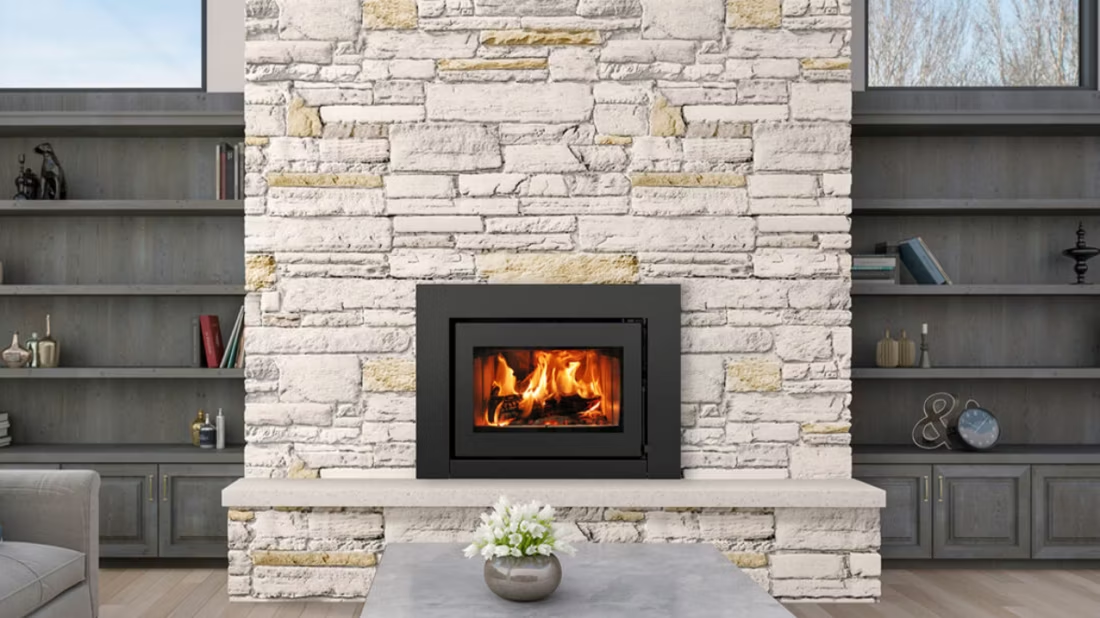
An insert does two things: it seals the chimney completely, so you stop losing air you already paid to heat, and it radiates warmth into the room through the firebox and glass. Most add a heat-exchange fan that pulls cool room air underneath, wraps it around the hot firebox, and pushes it back out warm. Your home is more efficient before you've even lit the first fire.
Why is my open fireplace making my house colder?
Open fireplaces suck—literally. As the fire burns, it consumes air your furnace already paid to heat and pulls it out through the chimney, so the house is actually colder after the fire goes out than before you lit it. An insert fixes this: it seals the chimney, puts fixed glass across the front, and turns that hole in your house into a real heat source.
What is an in-home preview and do I need one?
It's a visit where a hearth professional measures your space, confirms the model you picked actually works in your home, and walks the specs—framing, gas line, venting, finish work—before anything is ordered. Some details you just can't know until you see the house. Never make a down payment without one; it's the single most-skipped step that burns buyers.
Can a fireplace actually lower my heating bill?
Yes—by creating a comfort zone. A furnace heats every square foot of the house just to warm the one room you're in; a gas fireplace on low burns roughly a sixth of the gas a typical furnace does. Set the furnace around 55–60 degrees as a baseline, then heat the rooms your family actually uses. Families who heat this way commonly save $20–$60 a month.
Nearby Dealers
Hearth shops serving Cresskill and the surrounding area. Every listing shows whether it is a WhyFire partner, a dealer we have verified as authorized for the brands we recommend, or a local business carrying hearth products. No manufacturer pays for placement. How we verify dealers →
Flue Tech
County Woodstoves Inc
Mcnamara Fireplace And Stove
Westchester Fireplace
Kjb Fireplaces
Light N Grid
Big Apple Fireplaces
All Shore Appliance
Fireplace And Outdoor Living
Fireplaces By Design
The Valley Fireplace
Costello's Hearth & Spa - Garden City Park
Nordic Stove And Fireplace Center
Agi Supply Inc
Harris Hearth And Home
Westfair Pool & Spa Inc
D & D Design Center
See if wood heat makes sense for your Cresskill home.
Tell us about your home and your fireplace goals. If wood is a realistic fit, we'll match you with a trusted local dealer and send over a free Project Guide & Parts List—the exact stove or insert, vent kit, and installer recommended for your Cresskill property.
Find Your Fireplace →