
Keep Your Family Warm and Safe—No Matter What
Most Ridgewood homes run on natural gas from PSE&G, so wood stoves aren't the default here. For the Village's older homes with existing masonry fireplaces, though, a wood insert still makes sense—and we'll connect you with a local dealer who knows the difference.
Every Project Starts From One of These Five Situations
Wood is the exception here, not the rule.
Ridgewood sits at just 89 feet of elevation in Bergen County, with a climate zone of 5A and a moderate winter heating season—a real winter, but a mild one compared to the interior Northeast or upper Midwest, and nothing like the sustained sub-zero stretches you'd see in a place like Burlington, VT or Duluth, MN. More to the point, natural gas from Public Service Electric & Gas is available throughout the Village, and the vast majority of homes here—from the Tudors and Colonials near the downtown to newer construction near Glen Rock—heat with gas furnaces or boilers. Wood as a primary or supplemental heat source simply isn't part of daily life for most Ridgewood households the way it is in, say, rural New England or the mountain West.
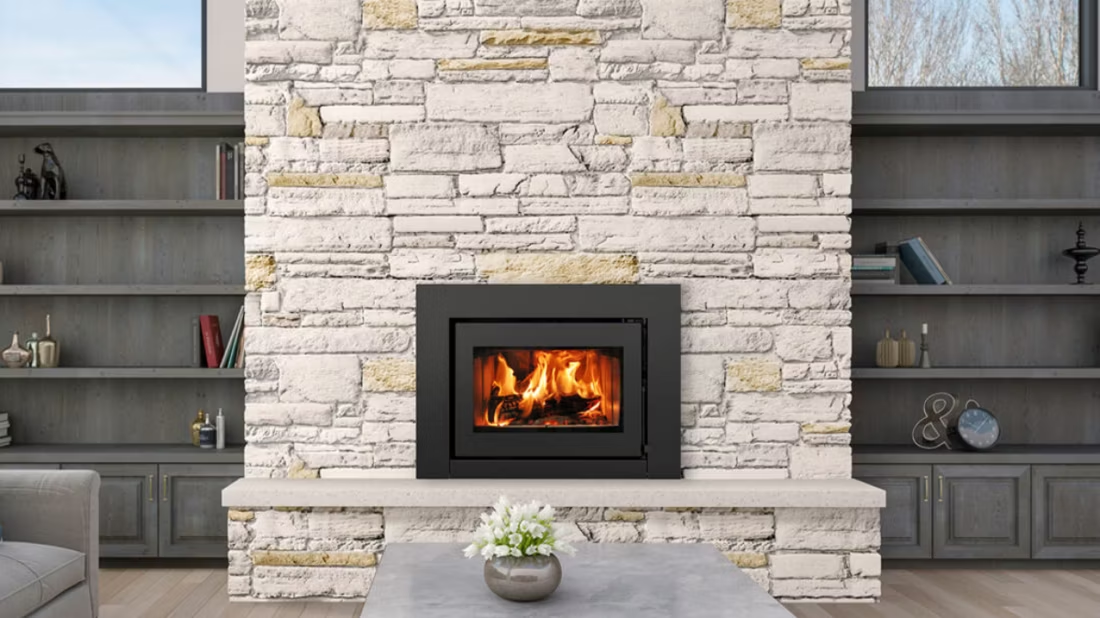
That said, wood isn't extinct here. A number of the Village's older homes still have working masonry fireplaces, and some owners install a wood insert to convert a drafty, inefficient hearth into real supplemental heat—useful during the ice storms that occasionally knock out PSE&G service for a day or two. Others simply want the ambiance of a real fire on a cold night without relying on it for heat. Local hardwood species like oak, hickory, and maple are plentiful in Bergen County and burn well, though you'll be buying seasoned cordwood from a tree service or firewood dealer rather than cutting your own—there's no national forest land nearby with cutting permits, unlike out west.
Three steps. No salesperson until you're ready.
Tell us about your project
Your zip code, your situation, and the fuel you're leaning toward—or let the answers point you to one.
See what's actually available
The brands dealers within 100 miles genuinely carry—real options, never a catalog mirage.
Get your dealer & Project Guide
A trusted local dealer, plus the free Project Guide & Parts List that names every component of the job.
Frequently Asked Questions
How much does a wood stove or insert installation cost in Ridgewood?
For a typical installation into an existing masonry fireplace—a wood insert with a stainless steel liner—expect a range similar to the rest of northern New Jersey, roughly $4,000 to $8,500 depending on the insert model and chimney condition. A freestanding wood stove in a home without an existing chimney costs more once Class A chimney pipe and a hearth pad are added, sometimes $8,000 to $13,000. Because wood installs are less common in Ridgewood than gas conversions, it's worth confirming that any installer you hire has real wood-burning experience, not just gas fireplace work.
Does a wood stove even make sense in a town like Ridgewood?
For most Ridgewood homeowners, no—natural gas is available nearly everywhere in the Village through PSE&G, and gas heat is simpler, cleaner, and doesn't require sourcing firewood or sweeping a chimney. Where wood does make sense is in older homes with an existing masonry fireplace that's currently unused or inefficient, or for homeowners who specifically want a backup heat source that works without electricity during a winter storm outage. If neither of those applies to your situation, a gas insert is usually the more practical choice for the same fireplace opening.
Do I need a permit to install a wood stove in Ridgewood?
Yes. New wood-burning appliance installations require a construction permit through the Village of Ridgewood Construction Code Office, and the unit itself needs to meet current EPA emissions standards. Because wood stove installs are relatively infrequent here compared to gas fireplace work, it's worth confirming your installer has pulled wood-stove permits in Bergen County before, so the inspection process goes smoothly. Ridgewood has no ongoing air quality advisories or winter burn curtailment periods, so once installed, there are no local restrictions on when you can burn.
I have an old masonry fireplace—what size insert do I need?
Many of Ridgewood's older Tudor and Colonial homes near downtown have masonry fireplace openings that were built decades before modern efficiency standards, so exact dimensions vary house to house. A local dealer will measure your firebox opening and flue to determine which insert models will fit and whether a liner resize is needed. Because these fireplaces were originally built for occasional ambiance rather than serious heat output, even a modest insert can be a significant upgrade—you don't need to oversize for a large square footage the way you might in a colder, more rural climate.
Where do I get firewood in Ridgewood if I install a stove?
There's no national forest or public cutting-permit land near Ridgewood, so firewood here comes from local tree services, landscapers, and seasonal firewood dealers rather than a self-cut permit. Oak, hickory, and maple are the common local hardwoods and all burn well once properly seasoned (six months to a year, split and covered). Expect to pay in the range typical for northern New Jersey, generally $300 to $400 per cord depending on species and whether it's delivered already seasoned.
Is a wood stove a good backup heat option during a power outage?
Yes, and this is one of the more legitimate reasons Ridgewood homeowners still install one. A traditional wood stove or insert doesn't need electricity to produce heat, unlike a gas furnace (which needs power for the blower and ignition) or most gas fireplaces without a battery backup. Bergen County sees occasional multi-day PSE&G outages after ice storms and nor'easters, and a properly installed wood stove will keep at least one room warm through that kind of event. If backup heat during outages is your main motivation, mention that specifically to your installer—it affects stove placement and sizing recommendations.
How often should my chimney be inspected if I install a wood insert?
The CSIA recommends an annual inspection for any wood-burning appliance, and that holds even for occasional-use fireplaces. Given that most Ridgewood installs are supplemental or ambiance-driven rather than daily primary heat, a yearly Level 1 inspection before burning season (typically September or October) is usually sufficient—you're not accumulating creosote at the rate a full-time wood-heat household would. Skipping inspections is still the leading cause of chimney fires, so it's not a step to defer even with light use.
Wood vs. gas—which makes more sense for my Ridgewood home?
For the large majority of Ridgewood homes, gas wins on convenience: instant on-off operation, no firewood storage or ash cleanup, and access to PSE&G's existing natural gas infrastructure throughout most of the Village. Wood's advantages are narrower here—it works without electricity during an outage, and it preserves the character of an existing masonry fireplace if you have one. If you're deciding between the two for the same fireplace opening and don't have a strong reason to prioritize storm-outage heat, a gas insert is the more common and generally more practical choice in this market.
What kind of wood stove or insert is best suited to occasional, supplemental use?
Since most Ridgewood wood installs are supplemental rather than whole-home primary heat, there's usually no need for a large-capacity catalytic stove built for 20-hour overnight burns in sub-zero conditions. Mid-size, non-catalytic inserts from brands like Pacific Energy or Lopi tend to be a better fit for an existing masonry fireplace opening used a few times a week in winter—easier to operate, simpler to maintain, and sized appropriately for the milder 5A climate and 22°F average winter lows Ridgewood actually sees. A local dealer can confirm the right size once they've seen your fireplace opening and home layout.
Why won't my new wood stove get going like my old one?
New wood stoves are 70%+ efficient, so far less heat goes up the flue—which also means less draft to get a fire established. The rule: build a genuinely hot fire for about 45 minutes before you choke it down. Skip that and you get smoke in the room, creosote in the chimney, and a fire that never takes off. Most performance complaints trace straight back to this.
Why is my open fireplace making my house colder?
Open fireplaces suck—literally. As the fire burns, it consumes air your furnace already paid to heat and pulls it out through the chimney, so the house is actually colder after the fire goes out than before you lit it. An insert fixes this: it seals the chimney, puts fixed glass across the front, and turns that hole in your house into a real heat source.
Does a fireplace add value to my home?
On average, a fireplace adds back to the home about the same amount you spent installing it. Add the monthly savings from heating the rooms you actually use instead of the whole house—often hundreds of dollars a year—and the value case is strong before you even count what a fire does for how your family uses the room.
Can a fireplace actually lower my heating bill?
Yes—by creating a comfort zone. A furnace heats every square foot of the house just to warm the one room you're in; a gas fireplace on low burns roughly a sixth of the gas a typical furnace does. Set the furnace around 55–60 degrees as a baseline, then heat the rooms your family actually uses. Families who heat this way commonly save $20–$60 a month.
Nearby Dealers
Hearth shops serving Ridgewood and the surrounding area. Every listing shows whether it is a WhyFire partner, a dealer we have verified as authorized for the brands we recommend, or a local business carrying hearth products. No manufacturer pays for placement. How we verify dealers →
Kjb Fireplaces
Mcnamara Fireplace And Stove
Flue Tech
Light N Grid
County Woodstoves Inc
Fireplaces By Design
Westchester Fireplace
Chimney Sweep Energy Barn
Big Apple Fireplaces
Fire Design
Agi Supply Inc
N & N Services
Fireplace And Outdoor Living
Harris Hearth And Home
All Shore Appliance
Find your wood fireplace in Ridgewood.
Tell us a bit about your home and existing fireplace, and we'll match you with a trusted local Ridgewood-area dealer plus a free Project Guide & Parts List—the exact parts, including the vent kit, for your specific install.
Find Your Fireplace →