
Real fireplace warmth for Bergen County homes—no chimney, no gas line required.
Zone heat and real ambiance for Bergen County's colonials, split-levels, and high-rise condos alike—no chimney, no gas line, and no venting to plan around. Tell us about your space and we'll connect you with a trusted local dealer.
Every Project Starts From One of These Five Situations
Built for Bergen County's dense, wired-in housing stock.
Bergen County is New Jersey's most populous county—more than 800,000 people spread across 70 separate municipalities, from the dense grid of Hackensack and Paramus to the Hudson River high-rise corridor in Fort Lee, Edgewater, and Cliffside Park, to more suburban north-county towns like Mahwah, Montvale, and Park Ridge. The climate here sits in Zone 5A with a winter heating season that runs roughly comparable to the New York City area, and winter lows averaging around 26°F—a real winter, but a far milder one than inland cold-climate cities like Buffalo, NY, where the heating season runs noticeably longer and colder. That moderate heating load is exactly why electric fireplaces make sense here as zone heat rather than a whole-home furnace replacement: they take the edge off a chilly family room or basement without needing to fight single-digit nights for months at a stretch.
Bergen County's housing stock is a mix of older colonials and Cape Cods with existing masonry fireplaces, split-levels without any chimney at all, and thousands of condo and co-op units along the river where a flue penetration simply isn't allowed by the building or the board. Wood stoves and pellet stoves are rare here—most municipalities' dense lot lines and clearance requirements make new solid-fuel installs impractical, and condo associations in Fort Lee and Edgewater generally prohibit them outright. Electric fireplaces sidestep all of that: no chimney, no gas line, no venting, and no combustion byproducts, which is why they've become a common choice for apartments, rentals, finished basements, and any Bergen County room where running new gas or masonry work isn't realistic. PSE&G serves electric power through most of the county, with Orange & Rockland (Rockland Electric) covering several towns in the northwest corner like Mahwah and Montvale.
Three steps. No salesperson until you're ready.
Tell us about your project
Your zip code, your situation, and the fuel you're leaning toward—or let the answers point you to one.
See what's actually available
The brands dealers within 100 miles genuinely carry—real options, never a catalog mirage.
Get your dealer & Project Guide
A trusted local dealer, plus the free Project Guide & Parts List that names every component of the job.
Frequently Asked Questions
How much does an electric fireplace installation cost in Bergen County?
Plug-in freestanding units and mantel or media console fireplaces typically run $300 to $900 and need nothing more than a standard outlet—no electrician, no permit. Built-in wall units and linear inserts that require a dedicated circuit run higher, generally $1,200 to $3,500 once an electrician runs new wiring behind drywall and a local installer handles the surround or trim work. In Bergen County's high-rise buildings—Fort Lee, Edgewater, Cliffside Park—factor in extra lead time for condo or co-op board approval before any electrical work begins, since most buildings require sign-off on new circuits even for a fireplace.
Do I need a permit to install an electric fireplace in Bergen County?
Bergen County doesn't issue building permits itself—each of its 70 municipalities handles that through its own building and electrical department, whether that's Hackensack, Paramus, Teaneck, Ridgewood, or any other town. A simple plug-in unit needs no permit since it just uses an existing outlet. A built-in unit that requires a new dedicated circuit typically does need an electrical permit and inspection from your local building department. If you're in a condo or co-op—common along the Fort Lee and Edgewater riverfront—your building's board approval process usually runs in parallel with, or instead of, the municipal permit.
Can I install an electric fireplace in a Bergen County condo or co-op?
Yes, and it's one of the best use cases for electric heat in this county. Because there's no chimney, no flue penetration, and no gas line involved, electric fireplaces avoid the restrictions that many Fort Lee, Edgewater, and Cliffside Park high-rises place on venting appliances. Most buildings only require a straightforward sign-off, though some older buildings ask for a licensed electrician's certification before approving any new circuit. Local dealers who regularly work Bergen's riverfront corridor already know the paperwork each building expects.
Why aren't wood stoves more common in Bergen County?
Wood heat just doesn't fit Bergen County's housing patterns the way it does in more rural parts of the state. This is New Jersey's most populous county—dense lots, attached housing, and condo buildings dominate, and most municipalities' clearance and setback rules make a new wood stove install genuinely hard to site. Plenty of older colonials in towns like Ridgewood and Glen Rock still have a traditional masonry fireplace burning local oak, hickory, or maple for occasional ambiance, but new wood-burning appliance installs are rare countywide, and condo associations along the river generally don't allow them at all. Electric fills that gap without any of the siting or venting problems.
How much does it cost to run an electric fireplace in Bergen County?
At New Jersey electric rates—roughly $0.15 to $0.20 per kWh through PSE&G or Orange & Rockland depending on where in the county you are—a typical 1,500-watt electric fireplace costs about $0.22 to $0.30 an hour to run on high heat. Used a few hours most evenings as zone heat in a family room or basement, that works out to roughly $10 to $30 a month for the heating season. Because Bergen's winters are moderate compared to colder inland climates, most homeowners here use electric fireplaces to take the edge off one room rather than trying to offset the whole furnace bill.
Electric vs. gas fireplace—which is right for my Bergen County home?
Natural gas service through PSE&G is widely available across most of Bergen County, and a gas fireplace or insert delivers more real heat output plus the look of an actual flame—a good fit for a main living room in a home that already has a hearth or gas line nearby. Electric makes more sense where running gas line or venting isn't realistic: condo and co-op units in Fort Lee or Edgewater, finished basements, rentals, bedrooms, or any room where you want supplemental warmth without construction. Plenty of Bergen County homeowners end up with both—gas in the main living area, electric in a secondary room.
What's the difference between an electric fireplace insert, a wall-mounted unit, and a mantel or media console unit?
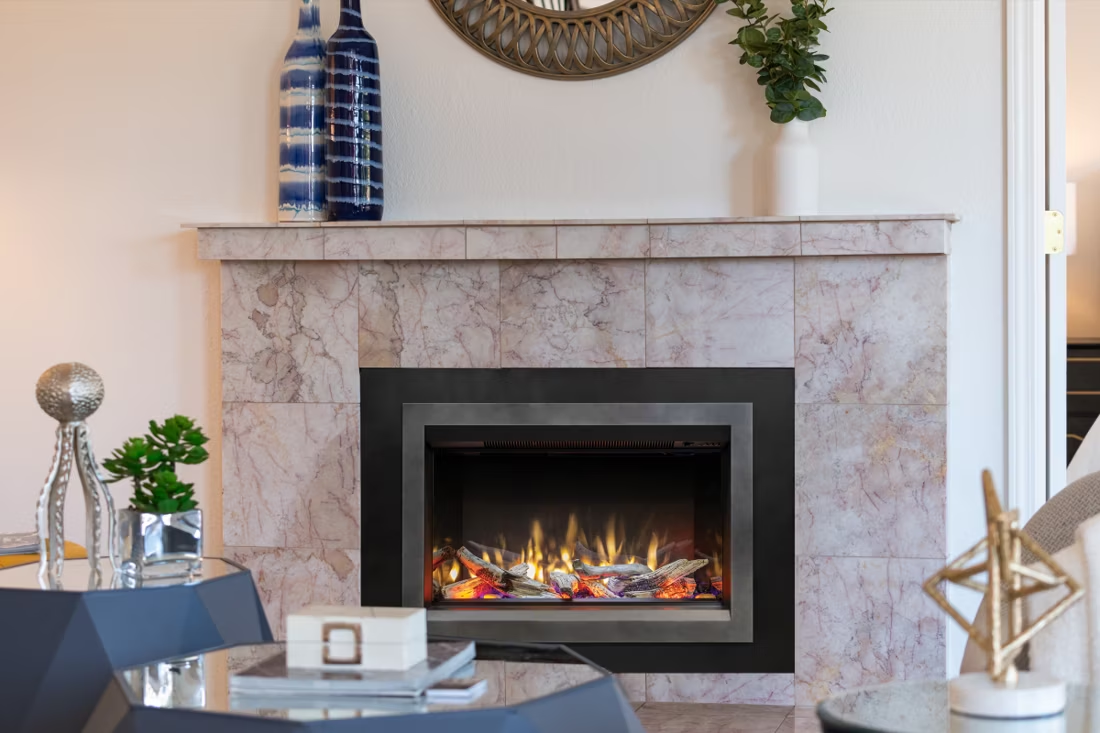
An insert slides into an existing masonry fireplace opening—a good option for one of Bergen County's older colonials or Cape Cods in towns like Ridgewood or Fair Lawn that already has a wood-burning fireplace you want to convert without construction. A wall-mounted linear unit hangs flush or recessed and works well in a basement or great room in the county's split-levels. A mantel or media console unit is fully freestanding, plugs into a standard outlet, and needs zero permanent installation—the most common choice for condos, rentals, and apartments along the county's high-rise corridor where you can't modify walls.
How much heat does an electric fireplace actually provide?
Most electric fireplaces are rated around 4,600 to 5,200 BTU (roughly 1,500 watts) and are built to heat a single room in the 400 to 600 square foot range, not a whole house. With Bergen County's winter lows averaging around 26°F and occasional single-digit nights, an electric fireplace works best as supplemental heat in the room you spend the most time in—letting you turn the thermostat down elsewhere—rather than as a stand-in for your furnace or boiler.
Are electric fireplaces safe for kids and pets?
Generally yes, and it's part of why they're popular in Bergen County's larger, multi-generational colonials as well as in condos with young families. Most models use a cool-touch glass front, produce no real flame, and generate no combustion byproducts, so there's no carbon monoxide risk or open flame to worry about the way there is with wood or gas. That makes them a common choice for family rooms, nurseries, and basements where safety around kids and pets is a priority.
Can I put a TV above my fireplace?
Yes—with an asterisk. Fireplaces are hot and TVs don't like heat. Either put a mantel between them to deflect rising warmth, or choose a fireplace with heat-management technology that creates a cool zone on the wall above—the wall stays around 125 degrees, barely warm, while the room still gets full heat. If you like clean lines and don't want a mantel, heat management is the answer.
Does an electric fireplace need a vent or chimney?
No—that's its superpower. An electric fireplace needs a wall and an outlet, period. No vent pipe, no gas line, no clearances to design around, which is why it works in bedrooms, offices, apartments, and walls where venting a gas or wood unit would be impractical or impossible. Installation is typically the simplest and least expensive of any fireplace type.
Can I install a fireplace myself?
If you're putting a fire in your house on purpose, it's best to work with an expert. Unless you're genuinely experienced in framing, gas line, vent pipe, and the national code on clearances to combustibles, have a professional do it—and ideally the same company that sells you the fireplace, so warranty, service, and liability all live under one roof.
Does a fireplace add value to my home?
On average, a fireplace adds back to the home about the same amount you spent installing it. Add the monthly savings from heating the rooms you actually use instead of the whole house—often hundreds of dollars a year—and the value case is strong before you even count what a fire does for how your family uses the room.
Stove and Fireplace Dealers in Bergen County
Listings include WhyFire partner dealers, dealers we have verified as authorized for the brands we recommend, and established local businesses that carry hearth products. Every listing shows which one it is. The ones marked Preferred run on WhyFire's software, so they can show you real pricing and book your appointment right here. No manufacturer pays for placement. How we verify dealers →
Flue Tech
County Woodstoves Inc
Mcnamara Fireplace And Stove
Kjb Fireplaces
Light N Grid
Fireplaces By Design
Westchester Fireplace
Big Apple Fireplaces
All Shore Appliance
Fireplace And Outdoor Living
Harris Hearth And Home
Chimney Sweep Energy Barn
The Valley Fireplace
Agi Supply Inc
Fire Design
Hot Concepts Fireplaces
Costello's Hearth & Spa - Garden City Park
D & D Design Center
Find your electric fireplace in Bergen County.
Tell us about your home—condo, colonial, split-level, wherever you are in Bergen County—and we'll match you with a trusted local dealer and a free Project Guide & Parts List: the exact unit, circuit requirements, and installation plan for your space.
Find Your Fireplace →