
Fireplace Warmth Without a Chimney in Edgewater.
No venting, no gas line, no masonry required—just real ambiance and supplemental heat for the condo towers and homes along the Edgewater waterfront.
Every Project Starts From One of These Five Situations
Built for river-view condos, not wood smoke.
Edgewater sits at 9 feet of elevation on the Hudson River directly across from Manhattan, and most of the borough's housing stock reflects that riverfront density—high-rise and mid-rise condo buildings along River Road, co-ops, and townhomes with little to no access to a masonry chimney or a place to run a Class A flue. With an average winter low of 28°F and a moderate winter heating season, Edgewater's winters are real but far milder than inland cold-climate markets like Burlington, VT, so most households don't need a whole-home wood or pellet system even if the building allowed one. In practice, wood-burning and pellet stoves are essentially not-applicable here—there's no local cutting-permit land, no chimney infrastructure in newer construction, and most HOA and co-op boards prohibit solid-fuel appliances outright.
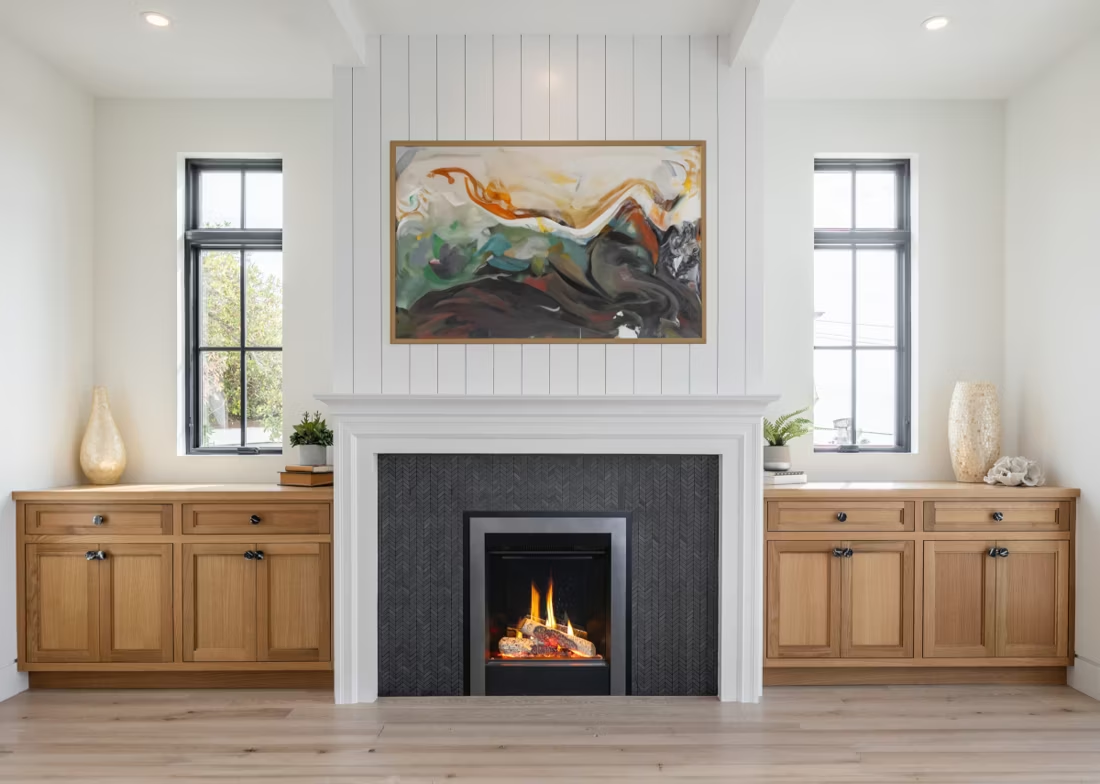
That's exactly where electric fireplaces fit. A wall-mounted unit, a built-in linear electric fireplace, or an electric insert dropped into an existing opening runs on standard household current supplied by PSE&G, Edgewater's utility, at a residential rate around 19.8 cents per kWh. No venting, no gas line, no combustion byproducts—which makes electric the only realistic fireplace option for a lot of River Road high-rise units, and a straightforward, code-light addition for single-family homes on the borough's east side near the Palisades. It won't replace a furnace, but it delivers real supplemental warmth on the room level and the kind of instant ambiance a lot of Edgewater buyers are after when they can't have an open flame.
Three steps. No salesperson until you're ready.
Tell us about your project
Your zip code, your situation, and the fuel you're leaning toward—or let the answers point you to one.
See what's actually available
The brands dealers within 100 miles genuinely carry—real options, never a catalog mirage.
Get your dealer & Project Guide
A trusted local dealer, plus the free Project Guide & Parts List that names every component of the job.
Frequently Asked Questions
How much does an electric fireplace installation cost in Edgewater?
A plug-in freestanding electric fireplace runs $200 to $1,200 installed with no electrical work required—you're just placing it and plugging it in. A built-in wall-mounted or linear electric fireplace, which usually needs a dedicated 120V or 240V circuit run by a licensed electrician, typically runs $1,000 to $3,000 depending on the unit and how far the electrician has to run wire. An electric insert dropped into an existing masonry or gas fireplace opening—common in Edgewater's older homes near the Palisades base—usually lands between $1,500 and $3,500. Local dealers can quote precisely once they've seen the room and the panel capacity.
Can I install an electric fireplace in my Edgewater condo or co-op?
In most cases, yes, and it's one of the most common reasons Edgewater buyers choose electric in the first place. Because electric units don't require venting, a chimney, or gas service, they typically fall outside the fire-safety restrictions that condo and co-op boards along River Road place on gas or wood appliances. That said, boards can still have rules about wall penetrations for a dedicated circuit or about weight-bearing for a built-in unit, so it's worth checking your building's alteration agreement before a wall-mount install. A plug-in freestanding model sidesteps board approval entirely since it involves no permanent changes to the unit.
What's the difference between an electric insert, a wall-mount unit, and a freestanding electric fireplace?
An electric insert is built to slide into an existing fireplace opening—masonry or a decommissioned gas firebox—and typically needs a nearby outlet or a new dedicated circuit. A wall-mount or built-in linear electric fireplace is designed to be recessed into or hung on a wall as a focal point, usually wired directly rather than plugged in, and is popular in newer Edgewater condo renovations where there's no existing fireplace at all. A freestanding electric fireplace is the simplest option—it looks like a stove or mantel unit, plugs into a standard outlet, and can move with you if you're renting one of the River Road towers. For anyone without a fireplace opening to work with, wall-mount and freestanding units are the two realistic paths.
Do I need a permit to install an electric fireplace in Edgewater?
A plug-in freestanding unit needs no permit since it involves no electrical or structural work. A built-in wall-mount unit or an insert wired to a new dedicated circuit requires an electrical permit through the Edgewater Construction/Zoning Department, and the work needs to be done by a licensed New Jersey electrician and inspected. Bergen County doesn't add a separate layer on top of the borough permit for this kind of work. Most local dealers coordinate the electrician and the permit as part of the installation, so homeowners rarely have to file anything themselves.
How much does it cost to run an electric fireplace in Edgewater?
Most electric fireplaces draw around 1,500 watts on the heat setting (less if you're running it for flame effect only, without heat). At PSE&G's residential rate of roughly 19.8 cents per kWh, that works out to about 30 cents an hour to run on full heat—noticeably higher than in states with cheaper power, since PSE&G's rate runs above the national average. Running the flame display alone, without the heater engaged, draws only 20-40 watts and costs a fraction of a cent per hour, which is why a lot of Edgewater condo owners run theirs for ambiance most of the year and heat only on the coldest nights.
Is an electric fireplace enough heat for an Edgewater winter?
As a whole-home heat source, no—but that's not really the job it's doing here. With an average winter low around 28°F and a winter heating season that's noticeably lighter than colder inland areas, Edgewater's winters are milder than inland New Jersey and well short of what places like Buffalo, NY or Minneapolis, MN see, so most homes are already carrying the heating load with a furnace or building-supplied heat. A 1,500-watt electric fireplace comfortably takes the chill off a single room—a living room, bedroom, or den—and works well as zone heat so you can turn the thermostat down elsewhere. It's a supplement, not a replacement, which fits how most Edgewater households actually use one.
Why don't more homes in Edgewater have wood-burning fireplaces?
It comes down to the housing stock and the geography, not air quality—Edgewater has no winter inversion or non-attainment issues to worry about. The borough is dense and largely multi-family, with condo towers along River Road that were built without masonry chimneys or flue chases, and most co-op and condo boards prohibit solid-fuel or open-flame appliances for insurance and fire-code reasons. There's also no nearby public land with cutting permits the way there is in more rural parts of the state, so self-sourced firewood isn't really part of the local picture. Even single-family homes on the bluff near the Palisades tend to have older, smaller fireplaces that owners are moving away from in favor of gas or electric rather than maintaining a chimney.
Electric vs. gas fireplace—which makes more sense for my Edgewater home?
Both are common here, and PSE&G supplies both electricity and natural gas to most of the borough, so fuel availability isn't the deciding factor. Gas gives you real flame and higher heat output, but it requires venting or a vent-free-compliant setup and a gas line, which can be a nonstarter in a condo building with strict alteration rules. Electric requires none of that—it's the more practical choice in a River Road high-rise or a co-op where running new gas piping isn't realistic, and it's also the faster, cheaper path in a single-family home if you just want supplemental heat and ambiance without the cost of venting work. Homeowners who already have gas service and want maximum heat output tend to lean gas; renters, condo owners, and anyone prioritizing simplicity tend to land on electric.
How long does an electric fireplace last, and what maintenance does it need?
Most electric fireplaces run 10 to 15 years before the heating element or LED flame components need replacing, and there's no chimney, flue, or venting to inspect or sweep—a real advantage for Edgewater's condo owners who don't want an annual service call. Basic upkeep is limited to dusting the unit, occasionally cleaning the glass front, and checking that the fan and heating element are running quietly. If the flame effect dims or the heater stops kicking on, it's usually a straightforward part swap rather than a full replacement, and most local dealers can service the units they sell.
Can I put a TV above my fireplace?
Yes—with an asterisk. Fireplaces are hot and TVs don't like heat. Either put a mantel between them to deflect rising warmth, or choose a fireplace with heat-management technology that creates a cool zone on the wall above—the wall stays around 125 degrees, barely warm, while the room still gets full heat. If you like clean lines and don't want a mantel, heat management is the answer.
Do electric fireplaces actually produce heat?
Yes—most put out around 4,800–5,000 BTUs from a standard outlet, which comfortably warms a bedroom, office, or den as a comfort-zone heater. What they won't do is carry a whole house the way wood, gas, or pellet can. Think of electric as ambiance-first with honest supplemental heat: flames on with no heat in July, flames plus warmth in January.
Can I install a fireplace myself?
If you're putting a fire in your house on purpose, it's best to work with an expert. Unless you're genuinely experienced in framing, gas line, vent pipe, and the national code on clearances to combustibles, have a professional do it—and ideally the same company that sells you the fireplace, so warranty, service, and liability all live under one roof.
Can a fireplace actually lower my heating bill?
Yes—by creating a comfort zone. A furnace heats every square foot of the house just to warm the one room you're in; a gas fireplace on low burns roughly a sixth of the gas a typical furnace does. Set the furnace around 55–60 degrees as a baseline, then heat the rooms your family actually uses. Families who heat this way commonly save $20–$60 a month.
Nearby Dealers
Hearth shops serving Edgewater and the surrounding area. Every listing shows whether it is a WhyFire partner, a dealer we have verified as authorized for the brands we recommend, or a local business carrying hearth products. No manufacturer pays for placement. How we verify dealers →
Big Apple Fireplaces
Flue Tech
County Woodstoves Inc
All Shore Appliance
Harris Hearth And Home
D & D Design Center
Mcnamara Fireplace And Stove
Costello's Hearth & Spa - Garden City Park
Westchester Fireplace
Kjb Fireplaces
Hot Concepts Fireplaces
The Valley Fireplace
Light N Grid
L&R Fireplace & Barbecue
Fireplace And Outdoor Living
Fireplaces By Design
Electric Service in Edgewater
An electric fireplace's heater draws about 1,500 watts—pennies per hour at local rates.
Public Service Elec & Gas Co
Find your electric fireplace in Edgewater.
Tell us about your Edgewater condo or home and we'll match you with a trusted local dealer and send over a free Project Guide & Parts List—sized to your space and your building's electrical setup.
Find Your Fireplace →