
Find Warmth Without a Flue in Little Ferry.
No chimney, no gas line, no construction mess—just real ambiance and supplemental heat for Little Ferry's condos, capes, and duplexes. Get matched with a trusted local dealer.
Every Project Starts From One of These Five Situations
Heat without venting, built for tight urban lots.
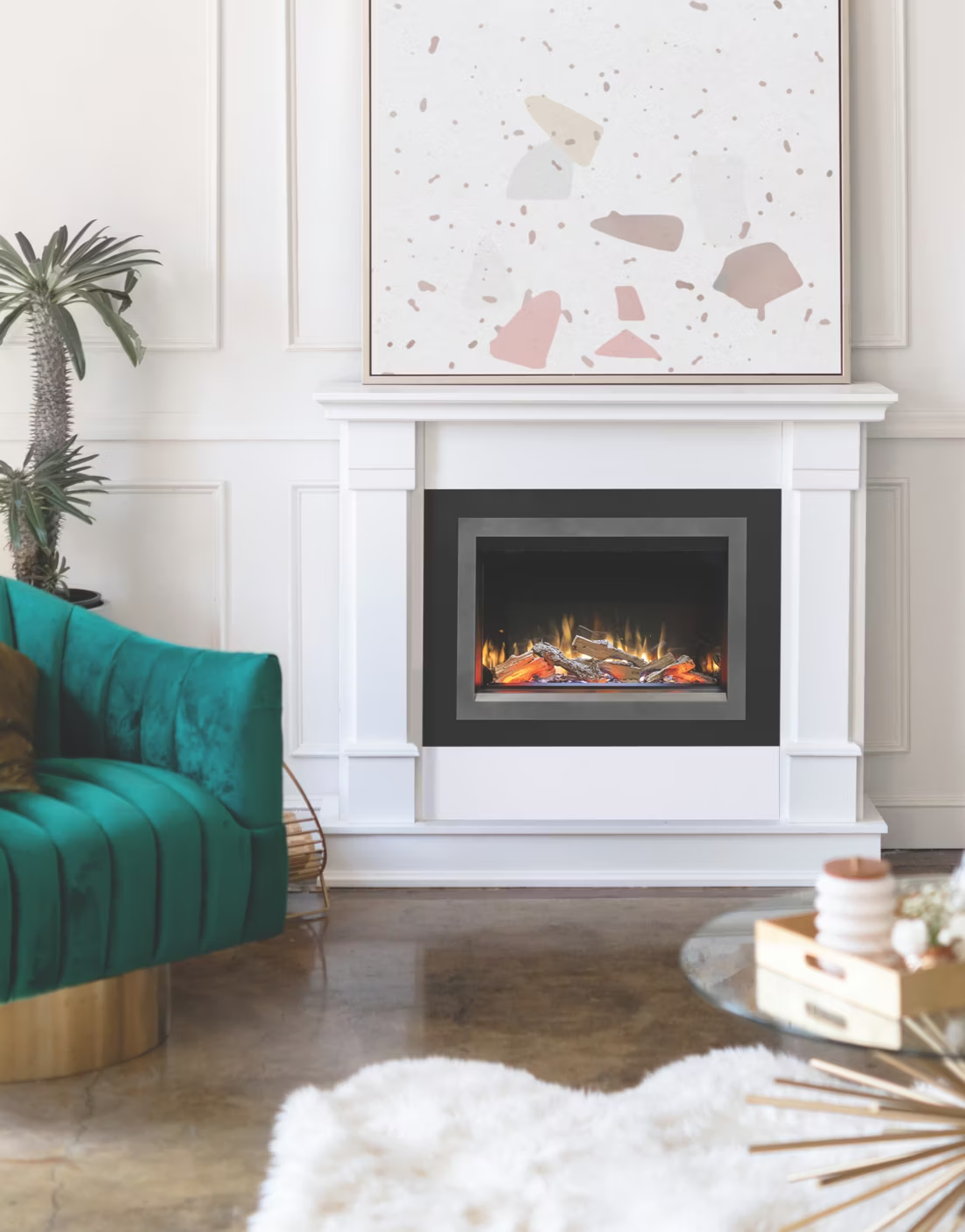
Little Ferry sits at just 7 feet of elevation in the Hackensack River meadowlands, packed into 1.2 square miles of attached duplexes, garden-style condos, and older Cape Cods along River Road and the Route 46 corridor. Many of these homes were never built with a masonry chimney, and plenty more are subject to co-op or HOA rules that rule out solid-fuel appliances entirely. That combination is exactly why electric fireplaces have become the default here—no flue, no venting, no combustion byproducts to manage in a tightly packed neighborhood.
With a winter heating season that's real but noticeably shorter than what a homeowner in Buffalo NY deals with most Januarys, and lows averaging around 26°F, Little Ferry's winters are real but far milder than Buffalo's—so an electric unit doesn't need to carry the whole heating load, just take the edge off on cold evenings. PSE&G serves the borough at a residential rate around $0.1981/kWh, which makes an electric fireplace an economical zone-heat option for a den or finished basement rather than a whole-house solution. It's also a practical fit for basements rebuilt after flooding: no ash, no open flame, and units that can be mounted well above any past waterline.
Three steps. No salesperson until you're ready.
Tell us about your project
Your zip code, your situation, and the fuel you're leaning toward—or let the answers point you to one.
See what's actually available
The brands dealers within 100 miles genuinely carry—real options, never a catalog mirage.
Get your dealer & Project Guide
A trusted local dealer, plus the free Project Guide & Parts List that names every component of the job.
Frequently Asked Questions
How much does an electric fireplace installation cost in Little Ferry?
A plug-in freestanding or wall-mount electric fireplace typically runs $300 to $1,200 installed, since most units just need an existing 15- or 20-amp outlet. Built-in units—wall inserts, linear models set into a framed wall, or units retrofitted into an existing (often unused) masonry opening in an older Little Ferry cape—run higher, generally $1,500 to $4,000, because they usually call for a licensed electrician to run a dedicated circuit, especially in homes with older knob-and-tube or undersized panels common in this part of Bergen County. A local dealer will confirm which category your project falls into during a home visit.
Do I need a permit to install an electric fireplace in Little Ferry?
A simple plug-in unit generally doesn't require a permit. A built-in installation that involves new wiring or a dedicated circuit does, and that permit runs through Little Ferry's Construction Department under Bergen County's shared code enforcement office. Inspectors will want to see GFCI protection on the circuit, which matters more here than in a lot of towns—Little Ferry's low elevation and history of flooding (including significant damage during Hurricane Ida in 2021) make GFCI-protected, above-grade wiring a real safety issue in basement installs, not just a checkbox.
How much does it actually cost to run an electric fireplace here?
At PSE&G's residential rate of about $0.1981 per kWh, a typical 1,500-watt electric fireplace running on its heat setting costs roughly $0.30 an hour to operate. Used for ambiance a few hours a night without the heater engaged, most households see only a few dollars added to the monthly bill. Run as supplemental heat for a den or finished basement for 4-5 hours a night through the winter, expect somewhere in the $35-$45/month range—modest compared to running central heat harder to cover the same room.
Electric vs. gas fireplace—which is right for my Little Ferry home?
Gas delivers more heat output and can genuinely offset a furnace on cold nights, but it requires either an existing gas line or new line work, plus venting and a borough building permit—a bigger project in a lot of Little Ferry's older housing stock. Electric skips all of that: no venting, no gas line, and installation as simple as a wall outlet for plug-in units. For a home already on natural gas with a fireplace opening ready to convert, gas is worth considering. For condos, rentals, HOA-restricted units, or homes without existing gas infrastructure, electric is usually the more realistic path.
Is an electric fireplace a good fit for a condo or rental in Little Ferry?
Yes—it's often the only realistic option. A large share of Little Ferry's housing is attached duplexes and garden-style condo buildings without individual chimneys, and many leases and co-op bylaws prohibit open-flame appliances outright. A plug-in electric fireplace requires zero structural changes, can be unplugged and taken along at move-out, and sidesteps any conversation with a landlord or HOA board about venting or gas lines.
Should I worry about flooding when installing an electric fireplace in my basement?
It's worth planning around. Little Ferry sits at roughly 7 feet of elevation along the Hackensack River, and the borough took on serious flood damage during Hurricane Ida in September 2021. For a basement installation, favor a wall-mounted unit set well above any past waterline rather than a floor-level insert, and make sure the circuit is GFCI-protected. If your basement has flooded before, a local electrician can advise on outlet height and circuit placement before your dealer installs the unit.
What size electric fireplace do I need?
Since electric fireplaces in Little Ferry are mostly used for ambiance plus supplemental zone heat rather than whole-home heating, sizing is about matching the visual scale of the opening or wall and the heater's output to the room. A 30"-40" wall unit suits a bedroom or den, delivering around 5,000 BTU (roughly 1,500 watts) of supplemental heat. A 50"-60" linear unit works better for an open living/dining area. If you're retrofitting an existing masonry opening in an older Cape Cod, an insert sized to that opening is usually the simplest fit—a local dealer can measure it for you.
What's the difference between an electric insert, a wall-mount, and a mantel package?
An insert is built to slide into an existing fireplace opening—a common option in older Little Ferry homes with a masonry firebox that was never actually fitted for wood burning. A wall-mount unit hangs flush on a wall like a flat-screen TV and needs no opening at all, which is the most common choice in condos and newer construction. A mantel package pairs a freestanding electric firebox with a surrounding mantel and surround, giving you a built-in look without cutting into a wall—a good option for a remodel where you want a focal point but don't have an existing opening to work with.
Why don't more homes in Little Ferry use wood or pellet stoves?
Little Ferry's tight lot sizes, attached duplexes, and dense residential streets make solid-fuel appliances impractical for most households—there's little room for cordwood storage, no local tradition of Forest Service cutting permits the way you'd find further west, and bulk pellet delivery isn't really part of the local fuel supply chain in this pocket of Bergen County. Between that and borough restrictions common in condo and duplex properties, electric (and gas where lines already run) has become the practical default for supplemental heat and fireplace ambiance here.
Can I put a TV above my fireplace?
Yes—with an asterisk. Fireplaces are hot and TVs don't like heat. Either put a mantel between them to deflect rising warmth, or choose a fireplace with heat-management technology that creates a cool zone on the wall above—the wall stays around 125 degrees, barely warm, while the room still gets full heat. If you like clean lines and don't want a mantel, heat management is the answer.
How much does an electric fireplace cost to run?
With the heater on, a typical unit draws about 1,500 watts—at average electric rates that's roughly 20 cents an hour. Run the flame effect alone and it costs pennies; the flames are LED-driven and use about as much power as a light bulb. There's no pilot light, no fuel delivery, and essentially no maintenance.
What is an in-home preview and do I need one?
It's a visit where a hearth professional measures your space, confirms the model you picked actually works in your home, and walks the specs—framing, gas line, venting, finish work—before anything is ordered. Some details you just can't know until you see the house. Never make a down payment without one; it's the single most-skipped step that burns buyers.
Does a fireplace add value to my home?
On average, a fireplace adds back to the home about the same amount you spent installing it. Add the monthly savings from heating the rooms you actually use instead of the whole house—often hundreds of dollars a year—and the value case is strong before you even count what a fire does for how your family uses the room.
Nearby Dealers
Hearth shops serving Little Ferry and the surrounding area. Every listing shows whether it is a WhyFire partner, a dealer we have verified as authorized for the brands we recommend, or a local business carrying hearth products. No manufacturer pays for placement. How we verify dealers →
Big Apple Fireplaces
Flue Tech
County Woodstoves Inc
Mcnamara Fireplace And Stove
Harris Hearth And Home
Kjb Fireplaces
All Shore Appliance
Hot Concepts Fireplaces
D & D Design Center
Light N Grid
Westchester Fireplace
Fireplaces By Design
Costello's Hearth & Spa - Garden City Park
The Valley Fireplace
Fireplace And Outdoor Living
Fireplaces R Us
Fire Design
Electric Service in Little Ferry
An electric fireplace's heater draws about 1,500 watts—pennies per hour at local rates.
Public Service Elec & Gas Co
Find your electric fireplace in Little Ferry.
Tell us a bit about your home and we'll match you with the right electric fireplace or insert, plus a free Project Guide & Parts List and a trusted local dealer to install it.
Find Your Fireplace →