
Instant Ambiance, No Chimney Required in Lodi.
Zero-clearance heat and real-looking flame for Lodi's rowhomes, two-families, and garden apartments—no masonry, no venting, no gas line. Find the right unit and connect with a trusted local dealer.
Every Project Starts From One of These Five Situations
The right fit for Lodi's tight lots and older buildings.
Lodi is a compact, 1.3-square-mile Bergen County borough of two-family houses, rowhomes, and garden apartment complexes wedged between Route 80 and the Garden State Parkway, just a few miles from the Manhattan skyline. At 33 feet of elevation with a climate zone of 5A, winters here are real but moderate—average lows around 26°F and a moderate overall winter heating load, well short of the punishing cold a place like Buffalo, NY sees each winter. That combination—cold enough to want supplemental heat, but not so extreme that you need a wood-burning workhorse—is exactly where electric fireplaces earn their keep.
Most Lodi housing stock predates central-chimney construction or was subdivided into multi-family units decades ago, which means many homes simply don't have a flue to work with and lot sizes rarely leave room for a cutting-and-stacking wood setup anyway. Electric fireplaces sidestep all of that: no venting, no gas line, no combustion byproducts to manage. Public Service Electric & Gas (PSE&G) serves Lodi at a residential rate around $0.1981/kWh—on the higher side nationally, which is worth knowing when you're comparing an electric unit's running cost to a gas alternative, but still cheap enough for the kind of supplemental zone heating most Lodi homeowners actually want.
Three steps. No salesperson until you're ready.
Tell us about your project
Your zip code, your situation, and the fuel you're leaning toward—or let the answers point you to one.
See what's actually available
The brands dealers within 100 miles genuinely carry—real options, never a catalog mirage.
Get your dealer & Project Guide
A trusted local dealer, plus the free Project Guide & Parts List that names every component of the job.
Frequently Asked Questions
How much does an electric fireplace installation cost in Lodi?
A plug-in electric fireplace insert or mantel package that uses an existing outlet typically runs $150 to $600 to install in Lodi, since there's no venting or gas line work involved—often just a licensed electrician confirming the circuit can handle the draw. A built-in wall unit or a custom mantel surround with a dedicated 20-amp circuit, common in Lodi's older two-family homes with limited electrical capacity, usually runs $800 to $2,500 once panel work and in-wall wiring are included. Recessed linear units set into a stud wall land in the $1,000 to $3,500 range with finish carpentry factored in.
Do electric fireplaces need a chimney or venting in Lodi?
No—and that's the main reason they're popular in Lodi's housing stock. Many of the borough's two-family homes, converted rowhouses, and garden apartment units were never built with a masonry chimney, and adding one after the fact is rarely practical on Lodi's smaller lots. Electric units are zero-clearance and vent-free by design: heat and light come from an internal heating element and LED flame effect, with no combustion, no exhaust, and no makeup air requirement. That makes them one of the few realistic fireplace options for condo units, top-floor apartments, and rental properties where venting simply isn't on the table.
What does it actually cost to run an electric fireplace in Lodi?
Most electric fireplaces draw around 1,500 watts on the heat setting, which is 1.5 kWh per hour. At PSE&G's residential rate of roughly $0.1981/kWh, that works out to about $0.30 per hour of heater use—closer to $0.02–$0.05 per hour if you're just running the flame effect without the heat. Running one for a typical 4-hour evening through a cold snap costs a little over a dollar. Compared to heating a whole home, that's inexpensive zone heat, though it's worth remembering PSE&G's rate runs higher than the national average, so an electric fireplace makes more financial sense as supplemental heat for a single room than as a whole-house solution.
Do I need a permit to install an electric fireplace in Lodi?
If you're using a freestanding or plug-in unit on an existing outlet, no permit is required—it's treated like any other appliance. If your installer is adding a new dedicated circuit, relocating an outlet, or doing in-wall wiring for a built-in unit, that electrical work requires a permit through the Lodi Building Department, and it needs to be pulled by a licensed electrician. This is common in Lodi's older two-family homes, where panels were sized for 1950s-era loads and sometimes need a subpanel or breaker upgrade before a new circuit can be added safely.
Electric vs. gas fireplace—which makes more sense for a Lodi home?
Gas is a real option in Lodi since natural gas service is widely available through PSE&G, and a direct-vent gas insert delivers more heat output and a more traditional flame. But gas installs require venting and gas line work, which is a bigger project in a rowhome or a rented unit where structural changes aren't practical. Electric skips all of that—it's the go-to choice for renters, condo owners, upper-floor apartments, and anyone who wants the look and some warmth without touching the building's structure. Homeowners with an existing gas line and a masonry fireplace to work with often lean gas; everyone else in Lodi's denser housing tends to land on electric.
What's the best type of electric fireplace for a Lodi apartment or two-family unit?
For smaller Lodi units, a slim wall-mount model (think Dimplex or Touchstone) mounted flush against a wall works well since it doesn't eat floor space and needs nothing more than a standard outlet. For a two-family home with a bit more wall real estate, a recessed linear insert set into a stud wall or a mantel package gives a more built-in look without any structural change. Renters should stick to freestanding or wall-mount units that don't require modifying the wall, since those are easiest to take along at move-out.
Will an electric fireplace actually heat a room in Lodi's winters?
For supplemental heat, yes. Most electric fireplaces put out 4,000 to 5,000 BTUs, enough to noticeably warm a 300–400 square foot room, which covers most living rooms in Lodi's rowhomes and apartment units. Given Lodi's moderate winter profile—average lows around 26°F and a moderate overall winter heating load, nowhere near the sustained deep cold of somewhere like Duluth, MN—an electric fireplace paired with your existing central or baseboard heat is plenty for most homes. It's not designed to be a whole-home primary heat source, and no electric fireplace on the market is.
Are electric fireplaces safe for older Lodi two-family homes?
Generally yes, and often safer than the alternatives. There's no open flame, no combustion gases, and no chimney to maintain or inspect, which removes the carbon monoxide and creosote concerns that come with wood or gas units. The one thing worth checking in Lodi's older housing stock is the electrical panel—homes built before the 1970s sometimes have limited amperage, and a licensed electrician should confirm the circuit can handle a built-in unit before installation, especially in a two-family property where the panel may already be split between units.
Why doesn't Find My Fireplace list wood or pellet options for Lodi?
Wood and pellet stoves just don't fit Lodi's housing reality. The borough's lot sizes are small, most properties lack a masonry chimney to vent through, and there's no practical space to store cordwood or pellet bags in a rowhome or apartment building. Air quality isn't a local concern here—Lodi has no wood-smoke restrictions—but the physical constraints of dense multi-family housing make electric and gas the two fuels that actually work for most homeowners in town. If you have a detached single-family home with yard space, it's worth a conversation with a local dealer, but it's the exception here rather than the rule.
Do electric fireplaces actually produce heat?
Yes—most put out around 4,800–5,000 BTUs from a standard outlet, which comfortably warms a bedroom, office, or den as a comfort-zone heater. What they won't do is carry a whole house the way wood, gas, or pellet can. Think of electric as ambiance-first with honest supplemental heat: flames on with no heat in July, flames plus warmth in January.
Does an electric fireplace need a vent or chimney?
No—that's its superpower. An electric fireplace needs a wall and an outlet, period. No vent pipe, no gas line, no clearances to design around, which is why it works in bedrooms, offices, apartments, and walls where venting a gas or wood unit would be impractical or impossible. Installation is typically the simplest and least expensive of any fireplace type.
Does a fireplace add value to my home?
On average, a fireplace adds back to the home about the same amount you spent installing it. Add the monthly savings from heating the rooms you actually use instead of the whole house—often hundreds of dollars a year—and the value case is strong before you even count what a fire does for how your family uses the room.
How much should I budget for a fireplace?
For an average home—covering the fireplace, the vent pipe, and basic installation—a budget between $3,900 and $5,500 gives you a lot of options across wood, gas, and pellet. By the time you add finish work, gas line, and electrical, the average complete installation lands between $5,000 and $12,000 all-in. In a remodel or new build, a good rule is to put about 2.5% of the total project cost toward the fireplace.
Nearby Dealers
Hearth shops serving Lodi and the surrounding area. Every listing shows whether it is a WhyFire partner, a dealer we have verified as authorized for the brands we recommend, or a local business carrying hearth products. No manufacturer pays for placement. How we verify dealers →
Flue Tech
Kjb Fireplaces
County Woodstoves Inc
Mcnamara Fireplace And Stove
Big Apple Fireplaces
Light N Grid
Harris Hearth And Home
Fireplaces By Design
Westchester Fireplace
Hot Concepts Fireplaces
All Shore Appliance
D & D Design Center
Fire Design
Chimney Sweep Energy Barn
Fireplaces R Us
Fireplace And Outdoor Living
Costello's Hearth & Spa - Garden City Park
The Valley Fireplace
Electric Service in Lodi
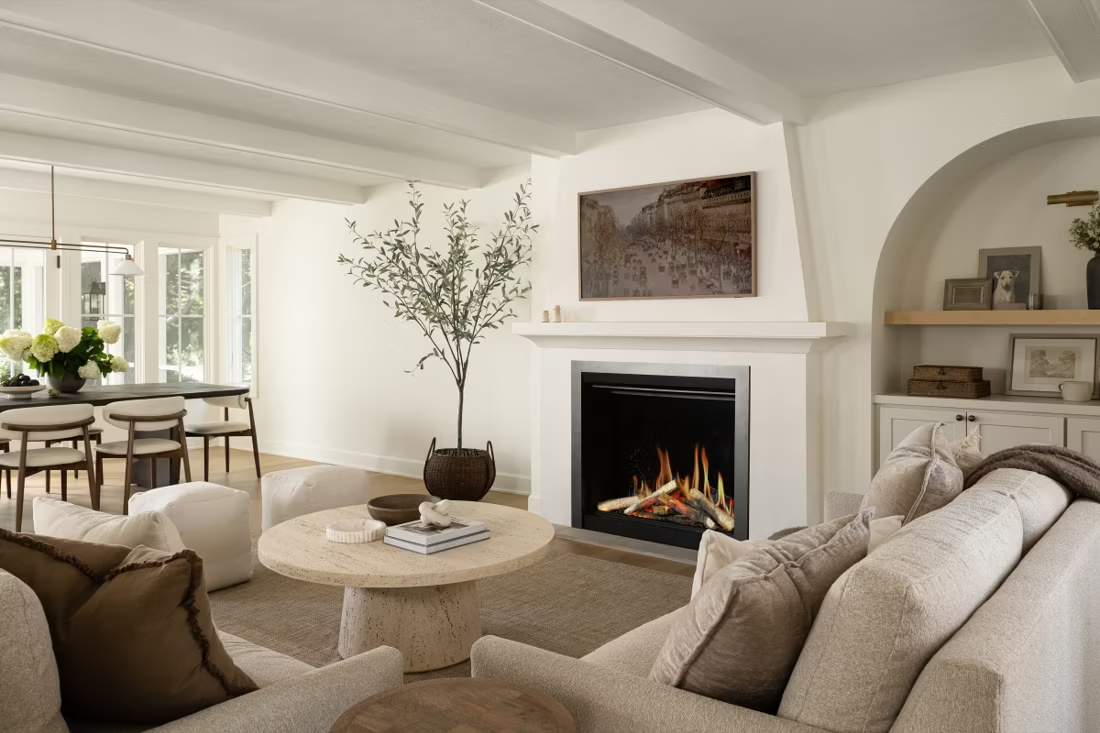
An electric fireplace's heater draws about 1,500 watts—pennies per hour at local rates.
Public Service Elec & Gas Co
Find your electric fireplace in Lodi.
Tell us about your home and we'll match you with a trusted local Lodi-area dealer and send over your free Project Guide & Parts List—the exact unit, mounting hardware, and electrical requirements for your space.
Find Your Fireplace →