
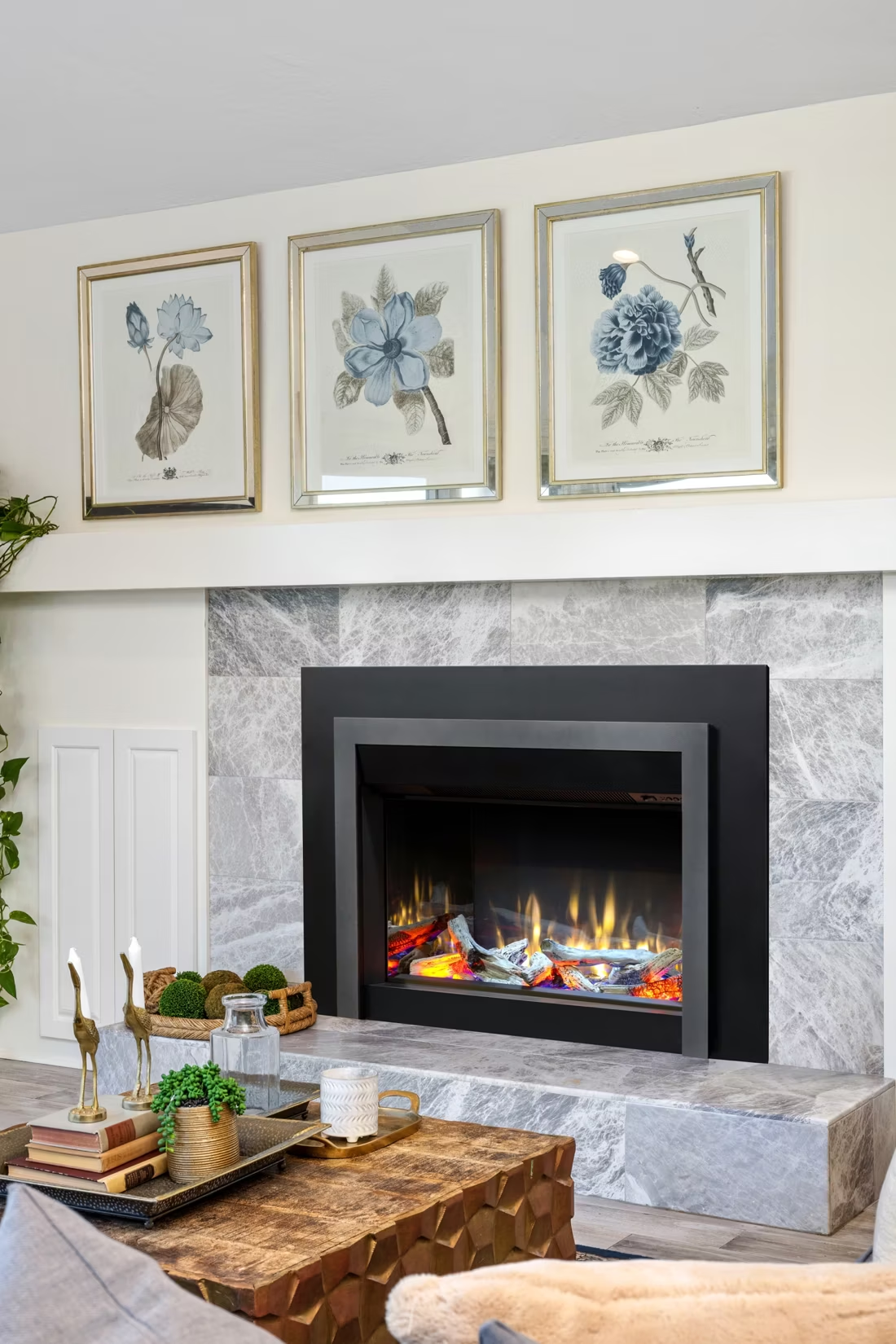
Warmth and ambiance without a chimney, flue, or gas line.
Oakland sees winter lows averaging 20°F and a solid six-month heating season—enough of a season that a zone-heat option in the family room or primary bedroom earns its keep. I'll match you with a trusted local dealer who knows what actually installs cleanly in a Bergen County home.
Every Project Starts From One of These Five Situations
Supplemental heat that skips the permit fight.
At 237 feet in northern Bergen County, Oakland doesn't get the deep-freeze extremes of a place like Burlington, VT, but a real six-month heating season still adds up, with plenty of nights in the 20s and below. That's cold enough that homeowners in the borough's split-levels and newer townhome developments off Ramapo Valley Road often want a supplemental heat source in one room—a finished basement, a primary bedroom, a home office—without opening up a wall for venting or running a gas line.
Plenty of Oakland households still split oak, hickory, and maple for a wood stove or insert, and that tradition isn't going anywhere. But electric fireplaces solve a different problem: no chimney, no flue, and in many cases no inspection beyond a standard outlet or a dedicated circuit if the unit calls for one. The tradeoff is the electric bill. Rockland Electric Co and Orange & Rockland Utils, the two utilities serving Oakland addresses, bill residential customers at roughly 20.4 to 21.4 cents per kWh—above the national average—so most local buyers treat electric fireplaces as zone heat for one room rather than a whole-house heating strategy.
Three steps. No salesperson until you're ready.
Tell us about your project
Your zip code, your situation, and the fuel you're leaning toward—or let the answers point you to one.
See what's actually available
The brands dealers within 100 miles genuinely carry—real options, never a catalog mirage.
Get your dealer & Project Guide
A trusted local dealer, plus the free Project Guide & Parts List that names every component of the job.
Frequently Asked Questions
How much does it cost to install an electric fireplace in Oakland?
A plug-in freestanding or wall-mount unit can run as little as $400 to $800 installed, since it just needs a standard outlet. A built-in linear unit set into a wall or existing masonry opening, with a dedicated 20-amp circuit run by an electrician, typically lands between $1,200 and $2,500 depending on how much wall or mantel finish work is involved. Homes in Oakland's older sections with existing masonry fireplaces often go the insert route, dropping install costs toward the lower half of that range since there's no new framing.
Do I need a permit for an electric fireplace in the Borough of Oakland?
A simple plug-in unit generally doesn't trigger a permit through the Oakland Borough Construction Department, since there's no new wiring or structural work involved. If your install calls for a new dedicated circuit, a recessed built-in, or any wall modification, an electrical permit is standard, and most local dealers coordinate the electrician and the inspection as part of the job. It's worth confirming with the Construction Department before work starts if your project involves anything beyond an outlet.
How much does it cost to actually run an electric fireplace in Oakland?
Most electric fireplaces draw around 1,500 watts on the high heat setting. At Rockland Electric or Orange & Rockland's residential rates of roughly 20.4 to 21.4 cents per kWh, that works out to about 30 to 32 cents an hour to run at full heat—noticeably more than the national average given how high both utilities' rates run compared to most of the country. Running the flame effect alone, without the heater engaged, costs only a few cents an hour, which is how most Oakland owners use theirs for ambiance on milder days.
What size electric fireplace do I need for a room in my Oakland home?
Most electric fireplace heaters are rated to comfortably supplement a room between 300 and 400 square feet, which covers a typical Oakland family room or finished basement space. Given winter lows around 20°F, a unit at the upper end of that heat output range makes sense if you want it to meaningfully offset the furnace rather than just take the chill off. For anything larger—an open-concept living and dining area, for example—plan on either a higher-output linear unit or accepting that it will function as supplemental rather than primary heat.
What's the difference between an electric insert, a built-in, and a freestanding unit?
An electric insert slides into an existing masonry firebox, which is a common upgrade for older Oakland homes with a dormant wood-burning fireplace that owners no longer want to maintain or feed with split oak and hickory. A built-in or linear unit is framed into a new wall opening, popular in basement remodels and additions. A freestanding or wall-mount unit needs nothing more than an outlet, which makes it the fastest and least invasive option for a rental, condo, or a room where you're not ready for construction.
Which electric fireplace brands do local Oakland dealers actually carry?
Dimplex, Napoleon, and Amantii are the brands that show up most often through hearth dealers serving Bergen County, covering everything from mantel packages to wide linear built-ins. A trusted local dealer will know which models are actually stocked or quickly available rather than special-order, and can tell you whether a given unit's heater output is realistic for your room given Oakland's winter temperatures.
How much maintenance does an electric fireplace need?
Very little compared to wood or gas. There's no chimney to sweep and no annual gas line inspection—mostly it's dusting the heater vents and blower a couple of times a season and occasionally replacing an LED module years down the line, which most owners never need to do. It's one of the appeals for homeowners who've dealt with the upkeep of a masonry fireplace originally built for burning local hardwood like maple and oak.
Will my electric fireplace still work if the power goes out?
No—an electric fireplace is entirely dependent on utility power, so during a Rockland Electric or Orange & Rockland outage from a nor'easter or ice storm, it goes dark along with everything else. That's the main reason some Oakland households keep a wood stove or gas insert as a backup heat source in addition to an electric unit for daily ambiance, rather than relying on electric alone for a room that needs to stay warm no matter what.
Electric vs. gas—which makes more sense for an Oakland living room?
Gas wins on raw heat output and keeps working during a power outage if it's equipped with a battery-backup ignition system, which matters given how storm-prone this part of Bergen County can be. Electric wins on install simplicity and upfront cost—no gas line, no venting, often no permit—and it's the more practical choice for a condo, a rental, or a room where running new gas piping isn't realistic. Given that Rockland Electric's rates run above the national average, most Oakland homeowners choosing electric are doing it for convenience and ambiance in a supplemental room, not to replace their primary heat.
Can I put a TV above my fireplace?
Yes—with an asterisk. Fireplaces are hot and TVs don't like heat. Either put a mantel between them to deflect rising warmth, or choose a fireplace with heat-management technology that creates a cool zone on the wall above—the wall stays around 125 degrees, barely warm, while the room still gets full heat. If you like clean lines and don't want a mantel, heat management is the answer.
Do electric fireplaces actually produce heat?
Yes—most put out around 4,800–5,000 BTUs from a standard outlet, which comfortably warms a bedroom, office, or den as a comfort-zone heater. What they won't do is carry a whole house the way wood, gas, or pellet can. Think of electric as ambiance-first with honest supplemental heat: flames on with no heat in July, flames plus warmth in January.
Can a fireplace actually lower my heating bill?
Yes—by creating a comfort zone. A furnace heats every square foot of the house just to warm the one room you're in; a gas fireplace on low burns roughly a sixth of the gas a typical furnace does. Set the furnace around 55–60 degrees as a baseline, then heat the rooms your family actually uses. Families who heat this way commonly save $20–$60 a month.
How much should I budget for a fireplace?
For an average home—covering the fireplace, the vent pipe, and basic installation—a budget between $3,900 and $5,500 gives you a lot of options across wood, gas, and pellet. By the time you add finish work, gas line, and electrical, the average complete installation lands between $5,000 and $12,000 all-in. In a remodel or new build, a good rule is to put about 2.5% of the total project cost toward the fireplace.
Nearby Dealers
Hearth shops serving Oakland and the surrounding area. Every listing shows whether it is a WhyFire partner, a dealer we have verified as authorized for the brands we recommend, or a local business carrying hearth products. No manufacturer pays for placement. How we verify dealers →
Kjb Fireplaces
Fireplaces By Design
Chimney Sweep Energy Barn
Light N Grid
Mcnamara Fireplace And Stove
N & N Services
Flue Tech
County Woodstoves Inc
Fire Design
Valley Mason Supply
Paradise Pool & Spa Inc.
Westchester Fireplace
Timberline Speciality Products
Agi Supply Inc
Timberline Stoves
Jones Service Co. LLC, Firecomfort
Jones Services Company, Llc
Electric Service in Oakland
An electric fireplace's heater draws about 1,500 watts—pennies per hour at local rates.
Rockland Electric Co
Orange & Rockland Utils Inc
Get your free Project Guide & Parts List for an Oakland electric fireplace.
Tell me about your room, your panel, and whether you're on Rockland Electric or Orange & Rockland, and I'll match you with a trusted local dealer and send a free Project Guide & Parts List sized to your space.
Find Your Fireplace →