
Instant warmth and real ambiance for Ozarks homes.
No chimney, no gas line, no venting—just plug-in or hardwired warmth for Springfield, Nixa, Republic, Ozark, and every community across Greene County. Find the right unit and connect with a trusted local dealer.
Every Project Starts From One of These Five Situations
Supplemental heat that never needs a chimney.
Greene County sits in climate zone 4A with a moderate winter heating season and average winter lows around 22°F—real cold, but nothing like the sustained sub-zero stretches you'd find in a place like Minneapolis. That moderate heating load is exactly why electric fireplaces have become such a common fit here: most Springfield-area homes already lean on a furnace or heat pump for whole-house heat, so an electric unit's job is zone warmth and atmosphere in a living room, finished basement, or primary suite rather than carrying the whole house through winter.
Whether you're inside Springfield city limits served by City Utilities of Springfield or out in Nixa, Republic, Ozark, or Willard on Liberty Utilities' lines, electric fireplaces install without a gas line, a masonry chimney, or an annual sweep. That makes them a favorite for renovations, finished basements, and newer construction throughout the county's growing suburbs—you get real flame-effect ambiance and supplemental warmth without the venting work a wood or gas project requires, and without giving up the option to burn oak, hickory, or walnut in a separate wood-burning setup elsewhere in the home if you want it.
Three steps. No salesperson until you're ready.
Tell us about your project
Your zip code, your situation, and the fuel you're leaning toward—or let the answers point you to one.
See what's actually available
The brands dealers within 100 miles genuinely carry—real options, never a catalog mirage.
Get your dealer & Project Guide
A trusted local dealer, plus the free Project Guide & Parts List that names every component of the job.
Frequently Asked Questions
How much does an electric fireplace installation cost in Greene County?
A basic cord-and-plug electric insert or freestanding unit typically runs $300 to $900 installed, since it plugs into a standard outlet and doesn't require an electrician. A built-in linear electric fireplace with a custom mantel or surround, which usually needs a dedicated 120V or 240V circuit run by a licensed electrician, runs closer to $1,500 to $3,500 in Greene County depending on the unit size and whether new framing or drywall work is involved. Retrofitting an electric insert into an existing masonry fireplace opening tends to land in the middle of that range. A local dealer can give you a firm number after seeing your space and your existing electrical setup.
How big of an electric fireplace do I need?
Electric fireplaces are sized by room coverage and wattage, not by whole-home BTU load the way a wood stove or gas furnace would be. Most standard units draw around 1,500 watts and comfortably supplement heat in a 400 to 1,000 square foot space—a living room, bonus room, or primary bedroom. For a larger open-concept great room common in newer Nixa or Republic construction, some homeowners choose a wider linear unit or run two smaller units in different zones rather than expecting one fireplace to cover the whole floor. Since Greene County winters rarely demand the fireplace to be your only heat source, sizing is more about the look and room coverage you want than survival heating.
Do I need a permit to install an electric fireplace in Greene County?
It depends on the installation. A plug-in electric insert or freestanding unit that uses an existing outlet generally doesn't require a permit. A built-in or wall-mounted unit that needs a new dedicated circuit does require an electrical permit, pulled either through the City of Springfield's building division if you're inside city limits or through Greene County's building department if you're in an unincorporated area. Most local dealers coordinate with a licensed electrician as part of the install, so the permit and inspection get handled without you having to manage separate trades.
What's the difference between an electric insert, a built-in, and a mantel package?
An electric insert is sized to slide into an existing fireplace opening—a common choice for Greene County homes converting an old wood-burning fireplace they no longer want to maintain. A built-in electric fireplace is designed to be framed into a wall during a remodel or new construction, giving a flush, custom look with a surround of your choosing. A mantel package pairs a freestanding or recessed electric unit with a manufactured mantel surround, which is the fastest and least invasive option since it typically just needs an outlet and no construction work. Which one fits depends on whether you're converting an existing fireplace, building new, or want something you can set up in an afternoon.
Can an electric fireplace actually heat a room, or is it just for looks?
Most electric fireplaces sold today include a real heating element, typically rated around 1,500 watts and roughly 5,000 BTUs, which is enough to noticeably warm a single room—useful supplemental heat on a 22°F morning in Springfield when you don't want to run the whole-house furnace just to warm up the space you're sitting in. They're not designed to replace your primary heating system in Greene County's climate, but many homeowners run them as their main heat source in a home office, sunroom, or finished basement that the central system doesn't reach efficiently. You can also run most models flame-only with the heater off, which is popular in warmer months for ambiance without added heat.
What's the best electric fireplace for Greene County's winters?
For genuine supplemental heat during Greene County's coldest stretches, look for a unit with a full 1,500-watt heating element and a built-in thermostat so it cycles rather than running full blast constantly. Linear models with adjustable flame color and heat-only settings work well in living areas where you want ambiance most of the year and heat during the winter months. If you're pulling double duty in a finished basement, a unit with a fan-forced heater tends to distribute warmth more evenly than a radiant-only design. A local dealer can match wattage and size to your specific room once they know your square footage and layout.
How much does it cost to run an electric fireplace in Greene County?
At a typical 1,500-watt setting, an electric fireplace costs a few cents to run per hour on residential electric rates from City Utilities of Springfield or Liberty Utilities—running several hours an evening through a Greene County winter usually adds a modest amount to a monthly bill rather than a dramatic one. That's part of the appeal compared to running central heat harder: you're only paying to warm the room you're actually using. Actual cost varies with your specific utility rate and how many hours a day you run it, but electric heat is generally the most predictable fuel cost of any fireplace type since there's no fuel delivery or seasonal price swing to account for.
Do electric fireplaces need any venting or chimney work?
No—this is one of the main reasons electric fireplaces are popular for Greene County renovations and finished basements. There's no combustion, so there's no venting, no chimney, and no makeup air requirement to plan around. That also means no annual chimney sweep or gas line inspection. The only trade you may need is an electrician if you're installing a hardwired built-in unit rather than a plug-in model—a much simpler scope of work than the venting and framing a wood or gas installation requires.
Electric vs. wood-burning—which is right for my Greene County home?
Wood-burning fireplaces and stoves are still a solid option in Greene County given the ready supply of local oak, hickory, walnut, and maple, and they keep working during a power outage—a real consideration when an ice storm knocks out electric service. Electric fireplaces trade that off for convenience: no ash, no wood handling, no chimney to inspect, and instant on-off operation from a remote or wall switch. Given the county's moderate winter heating season, most homeowners aren't relying on either fuel as their sole heat source, so the choice often comes down to whether you want the ritual and backup capability of a real fire or the simplicity of flipping a switch in a converted fireplace opening or a new built-in wall unit.
Can I put a TV above my fireplace?
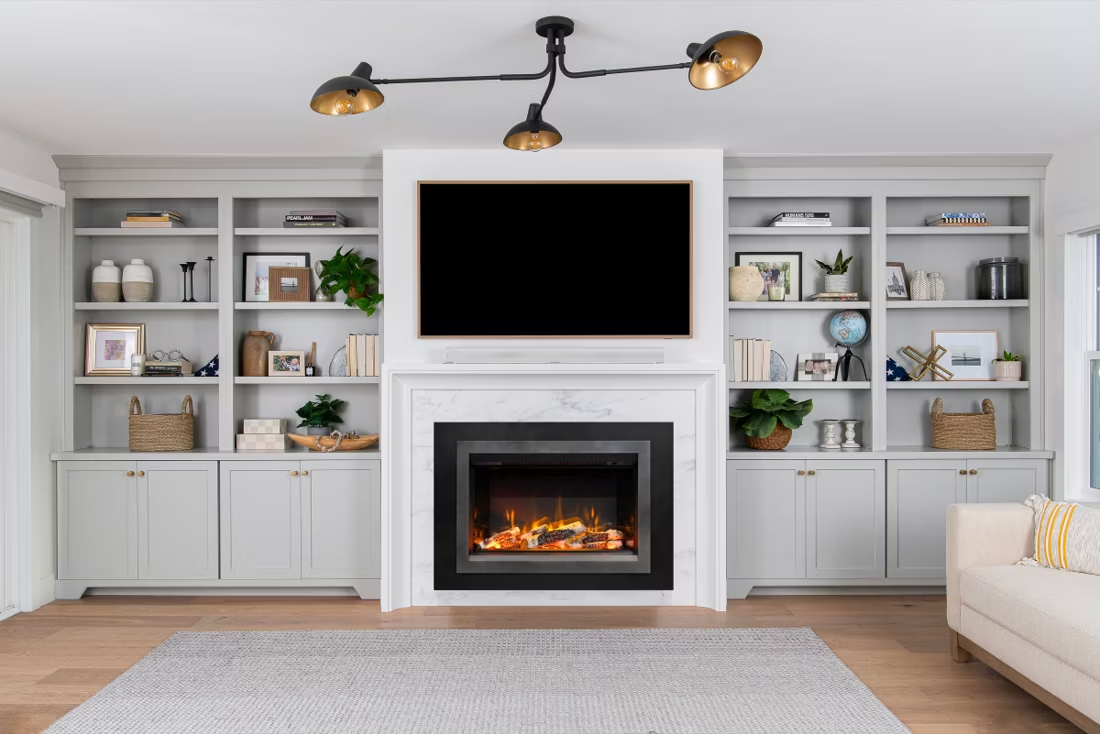
Yes—with an asterisk. Fireplaces are hot and TVs don't like heat. Either put a mantel between them to deflect rising warmth, or choose a fireplace with heat-management technology that creates a cool zone on the wall above—the wall stays around 125 degrees, barely warm, while the room still gets full heat. If you like clean lines and don't want a mantel, heat management is the answer.
Does an electric fireplace need a vent or chimney?
No—that's its superpower. An electric fireplace needs a wall and an outlet, period. No vent pipe, no gas line, no clearances to design around, which is why it works in bedrooms, offices, apartments, and walls where venting a gas or wood unit would be impractical or impossible. Installation is typically the simplest and least expensive of any fireplace type.
Can a fireplace actually lower my heating bill?
Yes—by creating a comfort zone. A furnace heats every square foot of the house just to warm the one room you're in; a gas fireplace on low burns roughly a sixth of the gas a typical furnace does. Set the furnace around 55–60 degrees as a baseline, then heat the rooms your family actually uses. Families who heat this way commonly save $20–$60 a month.
Does a fireplace add value to my home?
On average, a fireplace adds back to the home about the same amount you spent installing it. Add the monthly savings from heating the rooms you actually use instead of the whole house—often hundreds of dollars a year—and the value case is strong before you even count what a fire does for how your family uses the room.
Stove and Fireplace Dealers in Greene County
Listings include WhyFire partner dealers, dealers we have verified as authorized for the brands we recommend, and established local businesses that carry hearth products. Every listing shows which one it is. The ones marked Preferred run on WhyFire's software, so they can show you real pricing and book your appointment right here. No manufacturer pays for placement. How we verify dealers →
Abc Block And Brick
Smitty's Chimney Service
Meek's The Builder's Choice
Country Side Cottage
Aaron's Fireplace Co.
Hmi Fireplace Shop
Nixa Hardware
Missouri Stove & Chimney
Find your electric fireplace in Greene County.
Tell us a bit about your home and we'll match you with the right electric fireplace or insert—plus a free Project Guide & Parts List and a trusted local dealer to install it.# ,
Find Your Fireplace →