
Consistent, low-maintenance heat for Greene County winters.
Thermostat-controlled warmth for the Ozarks—from Springfield to Republic, Willard, Battlefield, and Strafford. Find the right pellet stove or insert, and connect with a trusted local dealer.
Every Project Starts From One of These Five Situations
Steady heat without the wood-splitting.
Greene County sits in the Missouri Ozarks, home to Springfield and the surrounding communities of Republic, Willard, Battlefield, Strafford, and Fair Grove—more than 328,000 people across a mix of city neighborhoods and wooded acreage. At climate zone 4A with a moderate winter heating season and average winter lows near 22°F, the county's winters are real but moderate—roughly half the heating load of a place like Duluth, MN, though ice storms and multi-day freezes are common enough to matter. Oak, hickory, walnut, and maple are the dominant hardwoods locally, and they're also the backbone of the wood-pellet supply that feeds this region's stoves and inserts.
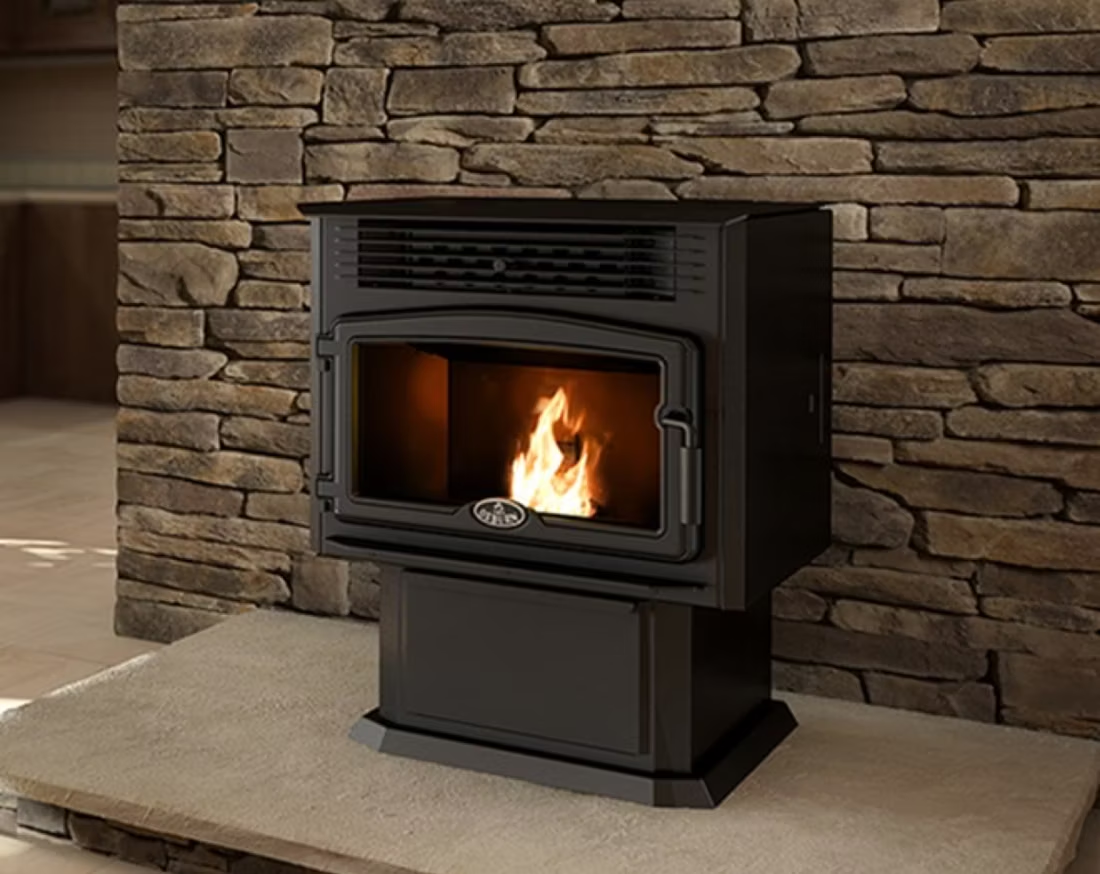
Pellet stoves have found a real niche in Greene County for homeowners who want the ambiance and backup-heat value of a solid-fuel appliance without splitting, stacking, or hauling cordwood. Regional pellet brands like Lignetics and Indeck Energy Services supply bagged hardwood pellets to hearth shops and hardware stores throughout the area, and with no local air quality restrictions or burn bans on the books, pellet appliances run year-round without the smoke-management concerns you'd find in a non-attainment region out West. A properly sized pellet insert or freestanding stove gives you thermostat-like control, a clean glass front, and a genuine hedge against winter power interruptions when it's paired with the right battery backup.
Three steps. No salesperson until you're ready.
Tell us about your project
Your zip code, your situation, and the fuel you're leaning toward—or let the answers point you to one.
See what's actually available
The brands dealers within 100 miles genuinely carry—real options, never a catalog mirage.
Get your dealer & Project Guide
A trusted local dealer, plus the free Project Guide & Parts List that names every component of the job.
Frequently Asked Questions
How much does a pellet stove installation cost in Greene County?
A typical freestanding pellet stove installation in Greene County runs roughly $3,500 to $6,500, including the unit, PL-vent (pellet-rated venting) through an exterior wall, and a hearth pad if your floor isn't already rated for it. Converting an existing masonry fireplace to a pellet insert usually lands in the same range, since the vent liner and surround kit make up much of the labor. Costs run higher if the installer has to route venting a long distance to an exterior wall or add electrical work for the hopper's auger and blower motor—ask any local dealer for a firm quote after they've seen your fireplace or install location in person.
Pellet stove vs. wood stove—which makes more sense for a Greene County home?
Wood is still the traditional choice in this part of the Ozarks, especially with oak and hickory easy to source locally, but pellet stoves have real advantages for homeowners who don't want to split and stack cordwood. A pellet stove's hopper can hold a day or more of fuel and feeds itself automatically, producing a steadier, more thermostat-like heat than a wood stove's load-and-tend cycle. The tradeoff is electricity: pellet stoves need power to run the auger, igniter, and combustion blower, so during an ice-storm outage—which does happen in this region—a pellet stove without a battery backup will go cold. Wood stoves keep working with zero power. If backup heat during outages matters most to you, ask your dealer about battery backup kits available for many pellet models.
What size pellet stove or insert do I need for my home?
Because Greene County's winters are moderate compared to the northern Midwest—average lows in the low 20s rather than single digits—most homes here don't need the largest pellet units on the market. A small pellet stove (up to around 1,000 sq ft) suits a single living area or an older Springfield bungalow used as supplemental heat, while a medium unit (1,000-1,800 sq ft) covers most open-concept ranch and two-story homes common in Republic, Willard, and Battlefield. Larger, well-insulated homes on acreage outside town may want to size up, but oversizing is a real risk here—a stove sized for Duluth-style cold will run on low output most of the season in this climate, which shortens burn-pot life and increases ash buildup. A local dealer can size your space correctly during an in-home visit.
Where can I buy wood pellets in Greene County?
Bagged hardwood pellets from regional producers like Lignetics and Indeck Energy Services are stocked at hearth shops and many hardware and farm-supply stores throughout the Springfield metro. Premium hardwood pellets typically run in the $250 to $300 per ton range in this part of Missouri, sold by the 40-pound bag or by the pallet (roughly 50 bags to a ton). Buying a full ton or pallet ahead of the season is the most cost-effective approach and guarantees supply during any cold snap, since demand—and occasionally availability—tightens up during hard winter stretches.
Do I need a permit to install a pellet stove in Greene County?
Most pellet stove and insert installations require a building permit, since they involve venting through an exterior wall or existing chimney and sometimes new electrical circuits for the unit. Inside Springfield city limits, that means a permit through the city's building permit office; in unincorporated Greene County, it goes through the county's building and resource management department. Most local hearth dealers handle the permit application and inspection scheduling as part of the installation, so it's worth confirming that's included in your quote before you sign.
How much maintenance does a pellet stove actually need?
Pellet stoves need more routine attention than a gas unit but far less than a wood stove and no annual chimney sweep. Plan on emptying the ash pan every few days to weekly during regular use, wiping the glass as needed, and vacuuming the burn pot and heat exchanger tubes every couple of weeks during heavy-use months. Most manufacturers recommend a full professional cleaning and inspection once a year—checking the exhaust blower, gaskets, and vent pipe for creosote and ash buildup—typically before the start of the Ozark heating season each fall.
How should I store pellets so they don't clump or absorb moisture?
Wood pellets are compressed sawdust and will swell, crumble, or jam a stove's auger if they pick up moisture, which matters in Greene County given the humid summers that precede burning season. Store bags off the concrete floor on a pallet or shelving in a dry garage or shed, and keep them in their original plastic packaging or a sealed bin rather than open bags. If you buy a full ton, a covered, elevated storage setup is worth the extra effort—pellets ruined by moisture won't feed properly and can damage the auger motor.
Will my pellet stove still work during a winter power outage?
Not without a backup power source. Pellet stoves rely on an electric auger to feed fuel and a combustion blower to exhaust properly, so a standard unit shuts down the moment power drops—which matters in a region that sees occasional ice storms capable of knocking out power for days. Many manufacturers offer battery backup packs or small UPS units rated specifically for pellet stoves, giving you several hours to a day of run time during an outage. If reliable heat during outages is a priority for your Greene County home, ask your local dealer about backup power options, or consider pairing pellet heat in your main living space with a wood-burning appliance elsewhere in the house.
Pellet vs. gas—which is the better fit for my Greene County home?
Natural gas service is widely available across Springfield and much of the surrounding metro through City Utilities of Springfield, which makes a gas fireplace or insert a strong option if instant on-off convenience and zero fuel handling matter most to you. Pellet stoves require loading a hopper and periodic ash removal, but they deliver a real, visible flame with radiant heat, run on a renewable hardwood byproduct fuel, and typically cost less to install than a full gas line and venting package if you don't already have gas service to the room. For homes outside the natural gas footprint in rural Greene County, pellet often ends up being the more practical clean-burning option compared to running new propane or gas lines.
Why is a fireplace insert so efficient?
An insert does two things: it seals the chimney completely, so you stop losing air you already paid to heat, and it radiates warmth into the room through the firebox and glass. Most add a heat-exchange fan that pulls cool room air underneath, wraps it around the hot firebox, and pushes it back out warm. Your home is more efficient before you've even lit the first fire.
Why is my open fireplace making my house colder?
Open fireplaces suck—literally. As the fire burns, it consumes air your furnace already paid to heat and pulls it out through the chimney, so the house is actually colder after the fire goes out than before you lit it. An insert fixes this: it seals the chimney, puts fixed glass across the front, and turns that hole in your house into a real heat source.
Can a fireplace actually lower my heating bill?
Yes—by creating a comfort zone. A furnace heats every square foot of the house just to warm the one room you're in; a gas fireplace on low burns roughly a sixth of the gas a typical furnace does. Set the furnace around 55–60 degrees as a baseline, then heat the rooms your family actually uses. Families who heat this way commonly save $20–$60 a month.
How much should I budget for a fireplace?
For an average home—covering the fireplace, the vent pipe, and basic installation—a budget between $3,900 and $5,500 gives you a lot of options across wood, gas, and pellet. By the time you add finish work, gas line, and electrical, the average complete installation lands between $5,000 and $12,000 all-in. In a remodel or new build, a good rule is to put about 2.5% of the total project cost toward the fireplace.
Stove and Fireplace Dealers in Greene County
Listings include WhyFire partner dealers, dealers we have verified as authorized for the brands we recommend, and established local businesses that carry hearth products. Every listing shows which one it is. The ones marked Preferred run on WhyFire's software, so they can show you real pricing and book your appointment right here. No manufacturer pays for placement. How we verify dealers →
Abc Block And Brick
Smitty's Chimney Service
Meek's The Builder's Choice
Country Side Cottage
Aaron's Fireplace Co.
Hmi Fireplace Shop
Nixa Hardware
Missouri Stove & Chimney
Pellet Brands Stocked Around Greene County
Manufacturers will point you to the nearest stocking dealer.
Find your pellet stove in Greene County.
Tell us a bit about your home and we'll match you with the right pellet stove or insert—plus a free Project Guide & Parts List with the exact venting and parts needed, and a trusted local dealer to install it.
Find Your Fireplace →