
Add Real Fireplace Warmth to Any Room in Springfield—No Chimney Required.
Plug-in comfort and zone heat for Ozark winters, without venting, gas lines, or a masonry chimney. Find the right electric unit and connect with a trusted local dealer.
Every Project Starts From One of These Five Situations
Zone heat for the Ozarks, without the venting.
Springfield sits at 1,291 feet on the Ozark Plateau, in climate zone 4A, where winters average a low of 22°F and the city logs a moderate winter heating season—real cold, but nothing like the much longer, deeper heating season a city like Minneapolis racks up. That moderate heating load is exactly why electric fireplaces have found a strong foothold here: most Springfield homes don't need a wood-burning or pellet appliance running as a primary heat source, they need supplemental warmth in a bedroom, basement, or sunroom on the coldest nights of the year.
Both electric utilities serving the area—City Utilities of Springfield at roughly 10.2 cents per kWh and Webster Electric Cooperative at roughly 11.5 cents per kWh out in unincorporated Greene County—make running a 1,500-watt electric fireplace a low-cost way to add heat exactly where you're sitting, rather than paying to heat the whole house. And because there's no chimney, no gas line, and no flue to size, an electric fireplace or insert typically installs in an afternoon, which is part of why they've become the go-to option for condos, rentals, finished basements, and older Springfield homes that were never built with a masonry fireplace in the first place.
Three steps. No salesperson until you're ready.
Tell us about your project
Your zip code, your situation, and the fuel you're leaning toward—or let the answers point you to one.
See what's actually available
The brands dealers within 100 miles genuinely carry—real options, never a catalog mirage.
Get your dealer & Project Guide
A trusted local dealer, plus the free Project Guide & Parts List that names every component of the job.
Frequently Asked Questions
How much does it cost to install an electric fireplace in Springfield?
Plug-in electric fireplaces and wall-mount units that run on a standard 120-volt outlet typically cost $300 to $1,200 installed, since there's no venting, gas line, or chimney work involved—most of that cost is the unit itself plus a few hours of labor for framing or mounting. Larger built-in electric fireplaces or inserts that need a dedicated 240-volt circuit run higher, often $1,000 to $2,500, because you're paying an electrician to run new wiring from the panel. Either way, installation in Springfield is far simpler and cheaper than a wood or gas project—local dealers can usually turn around a straightforward install within a day or two.
What does it cost to run an electric fireplace in Springfield?
Most electric fireplaces draw about 1,500 watts on the heat setting. At City Utilities of Springfield's residential rate of roughly $0.1019 per kWh, that works out to about 15 cents an hour to run. Out in the Webster Electric Cooperative service territory, where the residential rate runs closer to $0.1147 per kWh, it's closer to 17 cents an hour. Either way, running an electric fireplace to heat one room costs a fraction of raising the thermostat on your central furnace, which is the main reason people use them for zone heating rather than whole-house warmth.
Do I need a permit to install an electric fireplace in Springfield?
In most cases, no. A plug-in electric fireplace or insert that runs off an existing wall outlet doesn't require a permit—it's treated like any other appliance. If your unit needs a new dedicated circuit, a 240-volt line, or you're recessing a built-in unit into a wall, that electrical work typically does require a permit through the City of Springfield's Building Development Services office (or Greene County if you're outside city limits). A licensed electrician handling that circuit work will usually pull the permit as part of the job.
What size or type of electric fireplace works best in a Springfield home?
For a bedroom, home office, or den, a wall-mount or freestanding unit rated around 1,500 watts (roughly 5,100 BTU) is enough to noticeably warm a 300 to 400 square foot space on a cold Ozark night. For older Springfield homes with an existing but unused masonry fireplace, an electric insert is often the better fit—it slides into the existing firebox opening and gives you the look of a fire without touching the chimney. Larger open-concept living areas sometimes call for a built-in linear electric fireplace, which prioritizes flame appearance over heat output. A local dealer can size the right unit based on your room's square footage and how much of the heating load you actually want it to carry.
Can an electric fireplace replace my furnace as primary heat?
Not really, and it's worth being upfront about that. Springfield's moderate winter heating season and 22°F average winter low mean the furnace still has real work to do most winters. A standard electric fireplace tops out around 5,100 BTU, while a typical Springfield home needs 40,000 BTU or more to heat the whole house on a cold day. Electric fireplaces are built for zone heating—taking the chill off a specific room so you can turn the thermostat down elsewhere—not for replacing central heat. If whole-home heating is the goal, a gas furnace or heat pump is the right tool; the fireplace is for comfort and ambiance in the room you're actually using.
Electric vs. gas fireplace—which is right for my Springfield home?
Gas fireplaces produce real heat output—often 20,000 to 40,000 BTU—and can meaningfully offset a furnace on a cold day, but they require a gas line, venting, and a more involved installation running $4,000 to $10,000 depending on the unit and venting path. Electric fireplaces produce a fraction of the heat, are built for ambiance and zone warmth rather than whole-room heating on the coldest days, but install for a few hundred to a couple thousand dollars with none of the venting or gas work. For a primary living space where you want real supplemental heat, gas is usually the better call. For a bedroom, basement, or rental unit where ambiance and low-cost installation matter more, electric wins.
Why don't more Springfield homes have wood or pellet stoves?
It's less about restrictions and more about how the city has grown. Springfield's housing stock is dominated by post-1960s construction, multi-family units, and suburban subdivisions that were built around central gas or electric HVAC rather than a masonry chimney—even though the surrounding Ozarks are full of oak, hickory, walnut, and maple. Add in the hassle of sourcing and storing cordwood in a mid-sized city, and most homeowners here find electric or gas gives them the fireplace experience without the wood-handling, chimney maintenance, or space to store fuel. Wood stoves aren't off the table if you have an older home with an existing chimney, but they're a niche choice locally rather than the default.
Will my electric fireplace work during a power outage?
No—electric fireplaces need power to run the heating element, flame effect, and any fan, so they go dark the moment the power does. This is worth factoring in if you're comparing fuel types for emergency heat. If backup heat during an ice storm or outage matters to you, a battery-backed gas fireplace with an intermittent pilot ignition is the better choice for at least one room in the house. Most Springfield homeowners who choose electric are doing so for daily ambiance and zone heat rather than storm preparedness, and pair it with a generator or a separate backup plan if outages are a real concern.
How much maintenance does an electric fireplace need?
Very little, which is one of the main draws. There's no chimney to sweep, no gas line to inspect, and no ash to clean up. Maintenance is mostly dusting the unit, occasionally cleaning the glass front, and replacing the LED light strip after several years of heavy use—most units are rated for 20,000+ hours of flame-effect operation before the LEDs need swapping. The heating element itself typically lasts 10 or more years with normal use. Compare that to the annual chimney inspection a wood-burning setup requires, and it's easy to see why electric appeals to homeowners who want the look of a fire without an ongoing maintenance routine.
Can I put a TV above my fireplace?
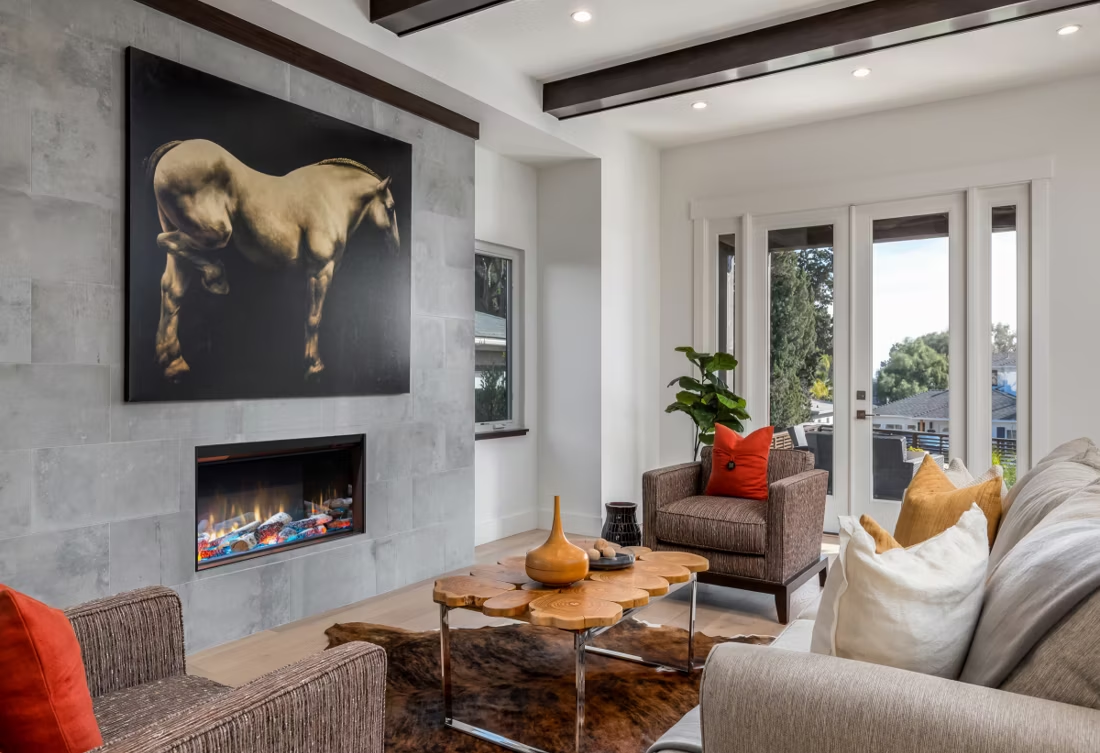
Yes—with an asterisk. Fireplaces are hot and TVs don't like heat. Either put a mantel between them to deflect rising warmth, or choose a fireplace with heat-management technology that creates a cool zone on the wall above—the wall stays around 125 degrees, barely warm, while the room still gets full heat. If you like clean lines and don't want a mantel, heat management is the answer.
Does an electric fireplace need a vent or chimney?
No—that's its superpower. An electric fireplace needs a wall and an outlet, period. No vent pipe, no gas line, no clearances to design around, which is why it works in bedrooms, offices, apartments, and walls where venting a gas or wood unit would be impractical or impossible. Installation is typically the simplest and least expensive of any fireplace type.
How much should I budget for a fireplace?
For an average home—covering the fireplace, the vent pipe, and basic installation—a budget between $3,900 and $5,500 gives you a lot of options across wood, gas, and pellet. By the time you add finish work, gas line, and electrical, the average complete installation lands between $5,000 and $12,000 all-in. In a remodel or new build, a good rule is to put about 2.5% of the total project cost toward the fireplace.
Does a fireplace add value to my home?
On average, a fireplace adds back to the home about the same amount you spent installing it. Add the monthly savings from heating the rooms you actually use instead of the whole house—often hundreds of dollars a year—and the value case is strong before you even count what a fire does for how your family uses the room.
Nearby Dealers
Hearth shops serving Springfield and the surrounding area. Every listing shows whether it is a WhyFire partner, a dealer we have verified as authorized for the brands we recommend, or a local business carrying hearth products. No manufacturer pays for placement. How we verify dealers →
Meek's The Builder's Choice
Abc Block And Brick
Country Side Cottage
Smitty's Chimney Service
Hmi Fireplace Shop
Nixa Hardware
Aaron's Fireplace Co.
Missouri Stove & Chimney
Electric Service in Springfield
An electric fireplace's heater draws about 1,500 watts—pennies per hour at local rates.
Webster Electric Coop
City Utilities Of Springfield - (Mo)
Find your electric fireplace in Springfield.
Tell us about your room and how you want to use it, and we'll match you with a trusted local Springfield dealer and send over a free Project Guide & Parts List—sized right for your space, with no chimney or gas line required.
Find Your Fireplace →