
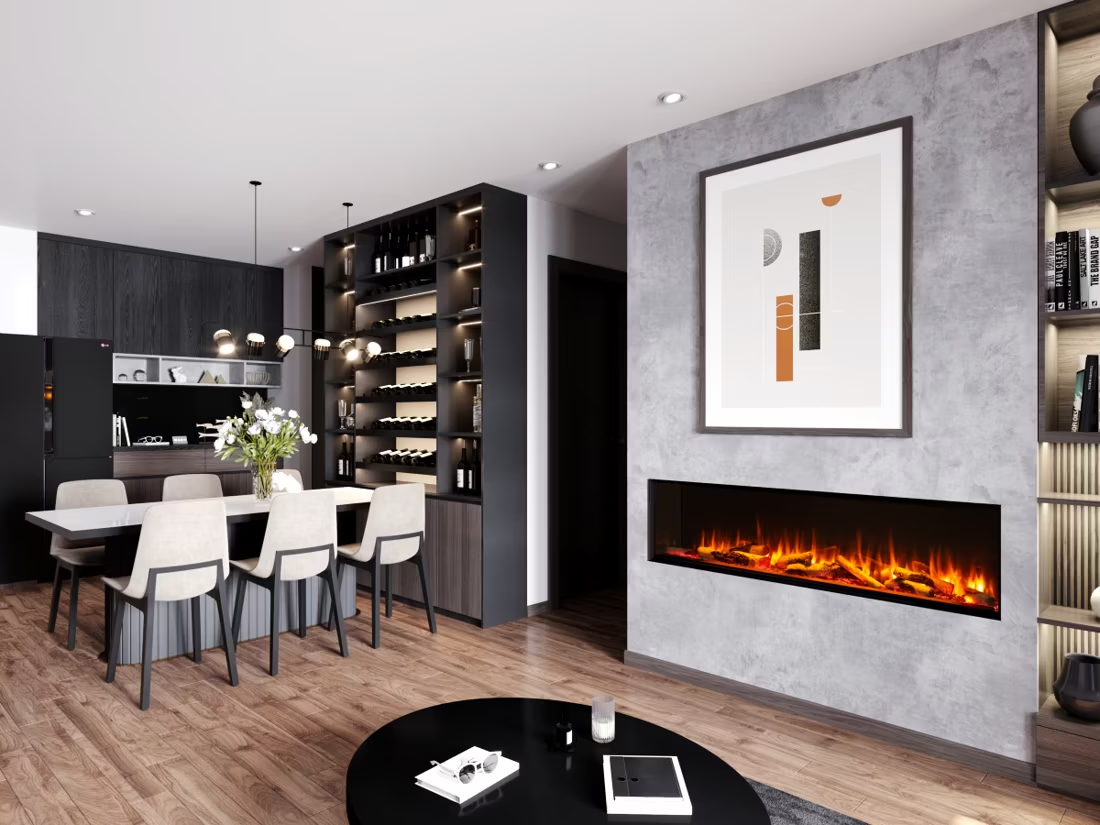
Electric fireplace heat, wherever you need it, in Battlefield.
No chimney, no gas line, no wood to split. Find the right electric fireplace or insert for your home, and connect with a trusted local dealer.
Every Project Starts From One of These Five Situations
Clean, flexible heat without gas lines or wood smoke.
Battlefield sits in Greene County just southwest of Springfield, in a Zone 4A climate where winters are real but not brutal—average winter lows sit around 22°F and the town has a moderate winter heating load, well short of what a place like Madison, WI or Bismarck, ND sees. That milder profile is exactly why electric fireplaces make sense here: most homes don't need a heavy-duty primary heat source, just clean supplemental warmth in a living room, bonus room, or finished basement.
Because Battlefield has no significant air quality restrictions, wood and gas are both viable options for the homes that want them—but electric keeps winning ground for renovations, rentals, and rooms where running a gas line or building a chimney isn't practical. A zero-clearance electric insert or wall-mounted unit installs in an afternoon, runs on a standard household circuit for smaller models, and is billed through your existing account with Ozark Electric Coop rather than requiring a new fuel source altogether.
Three steps. No salesperson until you're ready.
Tell us about your project
Your zip code, your situation, and the fuel you're leaning toward—or let the answers point you to one.
See what's actually available
The brands dealers within 100 miles genuinely carry—real options, never a catalog mirage.
Get your dealer & Project Guide
A trusted local dealer, plus the free Project Guide & Parts List that names every component of the job.
Frequently Asked Questions
How much does it cost to install an electric fireplace in Battlefield?
Plug-in electric fireplace inserts and mantels can run as little as $300 to $800 installed, since many simply plug into an existing outlet with no electrical work required. Built-in wall units or larger inserts that need a dedicated 120V or 240V circuit typically run $800 to $2,000 once you add a licensed electrician's time for the new circuit. Most Battlefield homes fall in the lower-to-middle end of that range because few projects require structural framing—the bigger cost driver is usually whether the wiring already exists near where you want the unit.
Do I need a permit to install an electric fireplace in Battlefield?
A cord-and-plug unit that plugs into an existing standard outlet generally doesn't require a permit. If your installer needs to run a new dedicated circuit or add a breaker for a larger built-in unit, that electrical work typically requires a permit through Greene County, and it should be pulled by a licensed electrician regardless of jurisdiction. Local dealers who install built-in electric fireplaces usually coordinate this as part of the job, so you're not left tracking down the paperwork yourself.
What will it cost to run an electric fireplace with my Ozark Electric Coop rate?
Ozark Electric Cooperative bills residential customers at roughly 14.07 cents per kWh. A typical electric fireplace on its heater setting draws about 1,500 watts, so running it for an hour costs around 21 cents. Used a few hours a night through a Battlefield winter—supplementing rather than replacing your primary heat—most households see $15 to $30 added to a monthly bill, far less than running central heat harder to warm a single room.
Can an electric fireplace actually heat my house, or is it just for looks?
With a moderate winter heating load, Battlefield's winters call for a real primary heat source in most homes—a furnace or heat pump sized for the whole house. Electric fireplaces are built for zone heating: a 1,500-watt unit can comfortably take the chill off a 300–400 square foot room, which makes them a good fit for a living room, a converted garage, or a finished basement that runs cold. They're not a substitute for central heat on a 15-degree night, but they do let you turn the thermostat down and heat only the room you're using.
What's the difference between an electric insert, a wall-mounted unit, and a freestanding electric stove?
An electric insert is built to slide into an existing masonry or factory-built fireplace opening, giving an old wood-burning fireplace a clean, no-maintenance replacement. A wall-mounted unit hangs like a flat-panel TV and works well in newer construction or a remodel where there's no existing firebox. A freestanding electric stove sits on the floor and mimics the look of a wood stove—a popular choice for homes that want that farmhouse aesthetic without cutting or hauling any wood. For most Battlefield homes with an existing fireplace opening, an insert is the simplest upgrade; new builds and additions tend to lean toward wall-mounted units.
Should I get electric or wood heat, given how much oak and hickory grows around here?
Greene County has plenty of oak, hickory, walnut, and maple, and wood heat has real appeal here—no air quality restrictions limit burning, and a lot of homeowners already have a woodlot or a source for cordwood. But wood means chimney maintenance, ash cleanup, and tending a fire. Electric skips all of that: flip a switch, get instant heat and flame effect, and never worry about creosote or a stovepipe. If you want ambiance and simple supplemental warmth without the upkeep, electric is the lower-hassle choice. If you already burn wood or want backup heat during a power outage, wood still has the edge—electric units won't run without power.
Will my electric fireplace work during a power outage?
No—electric fireplaces require power to run the heater, blower, and flame effect, so they'll shut off along with everything else during an Ozark Electric Coop outage. If backup heat during winter storms is a priority for your Battlefield home, pair an electric fireplace for everyday convenience with a wood stove or a battery/generator setup for outages. It's worth discussing with a local dealer if outage resilience matters to you—they can point you toward homes in the area that run both systems.
How long do electric fireplaces last, and what maintenance do they need?
Electric fireplaces are low-maintenance by design—there's no chimney to sweep, no gas line to inspect, and no creosote to worry about. Most quality units last 10 to 15 years with basic care: periodically dusting the heating element and vents, and replacing LED light strips if the flame effect dims over time (an inexpensive fix on most models). The blower fan is usually the first component to eventually wear out, and it's a straightforward swap for a local dealer's service tech rather than a full unit replacement.
Where can I find a local dealer to install an electric fireplace in Battlefield?
A handful of hearth and appliance retailers serve the Springfield-Battlefield area and carry electric fireplace lines suited to Missouri homes, from budget inserts to higher-end built-ins with realistic flame technology. Working with a local dealer rather than a big-box store matters most for built-in installations—they'll confirm whether your existing outlet or panel can support the unit, size it correctly for the room, and handle any electrical permit work with Greene County if a new circuit is needed.
Can I put a TV above my fireplace?
Yes—with an asterisk. Fireplaces are hot and TVs don't like heat. Either put a mantel between them to deflect rising warmth, or choose a fireplace with heat-management technology that creates a cool zone on the wall above—the wall stays around 125 degrees, barely warm, while the room still gets full heat. If you like clean lines and don't want a mantel, heat management is the answer.
Do electric fireplaces actually produce heat?
Yes—most put out around 4,800–5,000 BTUs from a standard outlet, which comfortably warms a bedroom, office, or den as a comfort-zone heater. What they won't do is carry a whole house the way wood, gas, or pellet can. Think of electric as ambiance-first with honest supplemental heat: flames on with no heat in July, flames plus warmth in January.
Does a fireplace add value to my home?
On average, a fireplace adds back to the home about the same amount you spent installing it. Add the monthly savings from heating the rooms you actually use instead of the whole house—often hundreds of dollars a year—and the value case is strong before you even count what a fire does for how your family uses the room.
Can a fireplace actually lower my heating bill?
Yes—by creating a comfort zone. A furnace heats every square foot of the house just to warm the one room you're in; a gas fireplace on low burns roughly a sixth of the gas a typical furnace does. Set the furnace around 55–60 degrees as a baseline, then heat the rooms your family actually uses. Families who heat this way commonly save $20–$60 a month.
Nearby Dealers
Hearth shops serving Battlefield and the surrounding area. Every listing shows whether it is a WhyFire partner, a dealer we have verified as authorized for the brands we recommend, or a local business carrying hearth products. No manufacturer pays for placement. How we verify dealers →
Meek's The Builder's Choice
Country Side Cottage
Aaron's Fireplace Co.
Hmi Fireplace Shop
Nixa Hardware
Smitty's Chimney Service
Abc Block And Brick
Missouri Stove & Chimney
Electric Service in Battlefield
An electric fireplace's heater draws about 1,500 watts—pennies per hour at local rates.
Ozark Electric Coop Inc - (Mo)
Find your electric fireplace in Battlefield.
Tell us a bit about your home and we'll match you with the right electric fireplace or insert, plus a free Project Guide & Parts List and a trusted local dealer to install it.
Find Your Fireplace →