
Add Real Warmth Without Touching a Chimney.
A plug-in or hardwired electric unit gives Willard homes zone heat and real flame-look ambiance—no gas line, no flue, no permit scramble. We'll match you with a local dealer who can size it right.
Every Project Starts From One of These Five Situations
Greene County winters don't demand a furnace-sized commitment.
Willard sits just northwest of Springfield in Greene County, at about 1,193 feet elevation with a moderate winter heating season and average winter lows near 24°F. That's a real but moderate heating season—nothing like Bismarck, ND, where the winter heating load runs more than double and a fireplace has to carry the whole house. In Willard, most homes lean on central heat pumps or furnaces for the bulk of the winter, which makes electric a natural fit for supplemental, room-by-room warmth rather than a whole-home replacement.
Because electric units don't need a chimney, gas line, or combustion venting, they're often the simplest hearth upgrade available to Willard homeowners—including the manufactured and modular homes common throughout rural Greene County, where adding a wood or gas appliance can mean structural or clearance headaches. Ozark Electric Cooperative serves most of the area at a residential rate around 14.07 cents per kWh, which keeps day-to-day operating cost predictable. A local dealer can tell you whether a simple plug-in unit covers your needs or whether a built-in model justifies a dedicated circuit.
Three steps. No salesperson until you're ready.
Tell us about your project
Your zip code, your situation, and the fuel you're leaning toward—or let the answers point you to one.
See what's actually available
The brands dealers within 100 miles genuinely carry—real options, never a catalog mirage.
Get your dealer & Project Guide
A trusted local dealer, plus the free Project Guide & Parts List that names every component of the job.
Frequently Asked Questions
How much does an electric fireplace cost to install in Willard?
A freestanding or wall-mount plug-in electric fireplace typically runs $200 to $900 for the unit itself, with no real "installation" beyond hanging a bracket and plugging into a standard outlet. A built-in electric insert or a linear wall unit that needs a dedicated 120V or 240V circuit usually runs $1,500 to $3,500 once you include an electrician's time for wiring, especially in older Willard homes where the panel may need a new breaker slot. Because there's no venting or gas line involved, electric is consistently the least expensive hearth option in Greene County—a local dealer can tell you in a single visit whether your existing wiring supports the unit you want.
Do I need a permit for an electric fireplace in Willard?
A plug-in unit that runs off an existing outlet needs no permit at all—you're free to place it wherever there's a nearby circuit. If you're adding a new dedicated line or a 240V circuit for a larger built-in unit, that electrical work should go through a licensed electrician, and depending on the scope, Greene County or the City of Willard's building department may require an electrical permit for the wiring itself. Most dealers who install built-in units coordinate this directly, so you're not chasing down inspections on your own.
What size electric fireplace do I need for my room?
Most electric fireplaces are rated to comfortably heat 300 to 400 square feet on their built-in 1,500-watt heater—enough for a bedroom, den, or finished basement room, but not a whole open-concept living area. For larger rooms, a linear wall-mount model with a wider heating element or two zoned units will perform better than one oversized unit. Given Willard's moderate 24°F average winter low, most homeowners here are using electric for supplemental comfort in a specific room rather than trying to heat an entire house, so right-sizing to the room—not the whole floor plan—is usually the smarter call.
Can an electric fireplace be my main heat source?
For most Willard homes, no—electric units top out around 5,000 to 5,200 BTU, which is enough to take the chill off a room but won't replace a central furnace or heat pump on a 15°F night. Where electric does work well as a bigger share of the heating load is in smaller manufactured or modular homes common around Greene County, where one or two well-placed units in main living areas can meaningfully cut furnace runtime. Ask a local dealer to walk through your square footage and insulation before assuming electric alone will carry the house.
What's the difference between an electric insert, a wall-mount unit, and a freestanding electric stove?
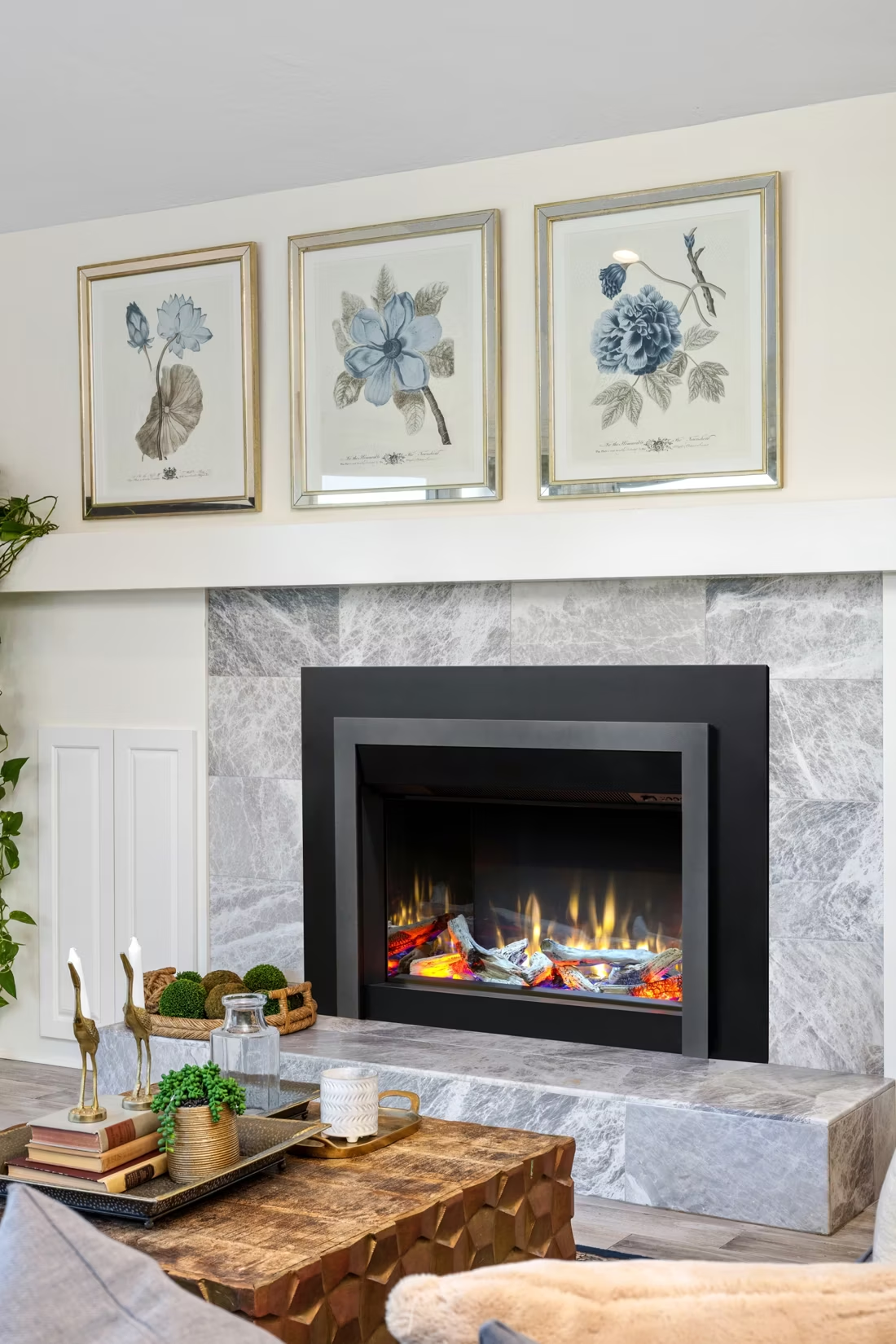
An electric insert is built to slide into an existing masonry or built-in fireplace opening, giving you flame-look ambiance and heat without touching the chimney at all—a common upgrade for older Willard homes with a fireplace nobody uses. A wall-mount (linear) unit hangs flush or recessed into a wall like a TV, which works well in newer construction or remodels where you're not limited by an existing firebox. A freestanding electric stove looks like a traditional wood or pellet stove but simply plugs in, making it the easiest option for renters or homes where no wall modification is wanted at all.
How much does it cost to run an electric fireplace in Willard?
At Ozark Electric Cooperative's residential rate of about 14.07 cents per kWh, a typical 1,500-watt electric fireplace running on high costs roughly 21 cents an hour to operate. Running it for 6 hours an evening through a cold month adds up to around $35 to $40 in that month's bill—far less than heating an entire home with electric resistance heat, and one reason electric fireplaces work well as targeted, evening-use supplemental heat rather than an all-day appliance.
Electric vs. wood—which makes more sense for a Willard home?
Greene County sits in good hardwood country—oak, hickory, walnut, and maple are all commonly available locally—so wood heat has real appeal here, especially as backup heat during an ice storm outage. But wood means a chimney, clearances, and annual sweeps, none of which apply to electric. Electric wins on simplicity and lower upfront cost, works in homes where a chimney isn't feasible (including most manufactured housing in the area), and requires zero fuel handling—the tradeoff is that it won't keep the house warm if the power itself goes out. If backup heat during outages matters to you, ask a local dealer about pairing electric ambiance in your main living space with a wood or propane option elsewhere.
Are electric fireplaces a good fit for manufactured or modular homes in Willard?
Yes—this is one of the strongest use cases for electric in the Willard area, where manufactured and modular housing is common throughout rural Greene County. Electric units have zero clearance requirements, no combustion byproducts, and no roof penetration for venting, which sidesteps the structural and insurance complications that wood or gas installs can raise in factory-built homes. A wall-mount or freestanding unit can typically go in during a single afternoon, provided the existing outlet or circuit can handle the load.
Electric vs. pellet stove—which is the better fit?
Pellet stoves burning regional brands like Lignetics offer real heat output and a live-fire experience, but they need a vent, a hopper you refill regularly, and periodic ash cleanout—plus they still require electricity to run the auger and blower, so they're not truly outage-proof either. Electric skips the pellets, the venting, and the maintenance entirely, at the cost of lower peak heat output and less of an authentic-fire feel (though newer flame-effect technology gets close). For a Willard homeowner who wants low-maintenance supplemental warmth in a specific room, electric is usually the simpler answer; for someone wanting a heavier primary heat source with real BTUs, pellet is worth a look from a local dealer.
Can I put a TV above my fireplace?
Yes—with an asterisk. Fireplaces are hot and TVs don't like heat. Either put a mantel between them to deflect rising warmth, or choose a fireplace with heat-management technology that creates a cool zone on the wall above—the wall stays around 125 degrees, barely warm, while the room still gets full heat. If you like clean lines and don't want a mantel, heat management is the answer.
Does an electric fireplace need a vent or chimney?
No—that's its superpower. An electric fireplace needs a wall and an outlet, period. No vent pipe, no gas line, no clearances to design around, which is why it works in bedrooms, offices, apartments, and walls where venting a gas or wood unit would be impractical or impossible. Installation is typically the simplest and least expensive of any fireplace type.
What is an in-home preview and do I need one?
It's a visit where a hearth professional measures your space, confirms the model you picked actually works in your home, and walks the specs—framing, gas line, venting, finish work—before anything is ordered. Some details you just can't know until you see the house. Never make a down payment without one; it's the single most-skipped step that burns buyers.
Can I install a fireplace myself?
If you're putting a fire in your house on purpose, it's best to work with an expert. Unless you're genuinely experienced in framing, gas line, vent pipe, and the national code on clearances to combustibles, have a professional do it—and ideally the same company that sells you the fireplace, so warranty, service, and liability all live under one roof.
Nearby Dealers
Hearth shops serving Willard and the surrounding area. Every listing shows whether it is a WhyFire partner, a dealer we have verified as authorized for the brands we recommend, or a local business carrying hearth products. No manufacturer pays for placement. How we verify dealers →
Smitty's Chimney Service
Abc Block And Brick
Meek's The Builder's Choice
Aaron's Fireplace Co.
Country Side Cottage
Hmi Fireplace Shop
Nixa Hardware
Electric Service in Willard
An electric fireplace's heater draws about 1,500 watts—pennies per hour at local rates.
Ozark Electric Coop Inc - (Mo)
Find your electric fireplace in Willard.
Tell us about your room and your panel, and we'll match you with a trusted local Willard-area dealer and send over your free Project Guide & Parts List—sized, specced, and ready to install.
Find Your Fireplace →