
Instant Zone Heat, No Chimney Required.
A plug-in or built-in electric fireplace adds real ambiance and supplemental warmth to a Fair Grove home without venting, gas lines, or firewood. Find the right unit and connect with a trusted local dealer.
Every Project Starts From One of These Five Situations
Zone heat that plugs in and works.
Fair Grove sits in the Ozark foothills of Greene County at about 1,200 feet, where winter lows average in the low 20s and the heating season is a moderate stretch of the year—comparable to towns with a milder winter workload than genuinely brutal cold-climate towns like Madison, WI or Bismarck, ND. Most homes here run on a central furnace, propane, or a wood stove burning the region's abundant oak, hickory, walnut, and maple, with electric fireplaces filling a different role: supplemental heat in a bonus room, sunroom, or finished basement, plus the ambiance of a fire without the mess of ash or the upkeep of a flue.
Southwest Electric Cooperative serves Fair Grove and the surrounding rural stretches of Greene County, and its residential rate of about 11.99 cents per kWh runs below the national average—which makes electric heat genuinely cheap for zone heating a single room rather than trying to carry a whole house. Because electric units need no venting, gas line, or masonry work, they're also the simplest hearth product to add to an existing room: a mantel-style unit or built-in insert can go into a wall opening in an afternoon, with none of the permitting complexity that comes with wood or gas.
Three steps. No salesperson until you're ready.
Tell us about your project
Your zip code, your situation, and the fuel you're leaning toward—or let the answers point you to one.
See what's actually available
The brands dealers within 100 miles genuinely carry—real options, never a catalog mirage.
Get your dealer & Project Guide
A trusted local dealer, plus the free Project Guide & Parts List that names every component of the job.
Frequently Asked Questions
How much does it cost to install an electric fireplace in Fair Grove?
Electric is the least expensive hearth option to install because there's no venting, no chimney, and no gas line to run. A plug-in freestanding or wall-mount unit that uses a standard outlet typically runs $200 to $800 installed, including mounting. A built-in electric insert or a linear electric fireplace set into a wall or existing mantel opening—which usually needs a licensed electrician to add a dedicated 20-amp circuit—runs closer to $1,200 to $3,500 depending on the wall framing and finish work. Local dealers can walk you through both paths during a home visit.
Will an electric fireplace actually heat my house in a Fair Grove winter?
Not the whole house, and any honest local dealer will tell you that upfront. Most electric fireplace heaters top out around 1,500 watts (roughly 5,100 BTU), which comfortably heats a single room of 150 to 400 square feet depending on insulation—plenty for a family room or a chilly addition, but not a substitute for your furnace on a 22-degree Fair Grove morning. Think of it as zone heat that lets you turn the thermostat down elsewhere in the house while keeping the room you're actually using warm.
What does it cost to run an electric fireplace on Southwest Electric Cooperative rates?
At Southwest Electric Cooperative's residential rate of about 11.99 cents per kWh, a typical 1,500-watt heater running on high costs roughly 18 cents an hour, or a little over $4 for a full 24-hour day of continuous use—though most homeowners only run the heat setting a few hours in the evening and leave the flame effect (which uses only a few watts) running the rest of the time. That makes electric one of the cheapest fuels to run for occasional supplemental heat, even if it's not the cheapest per-BTU option compared to a wood stove burning free or low-cost firewood.
Do I need a permit to install an electric fireplace in Fair Grove?
A plug-in unit that simply uses an existing outlet typically requires no permit at all. A built-in electric fireplace or insert that needs a new dedicated circuit is electrical work, and in unincorporated Greene County that circuit work should be pulled and inspected by a licensed electrician—most local dealers either employ one or coordinate directly with one as part of the install, so you're not left tracking down the paperwork yourself.
What happens to my electric fireplace during a power outage?
It shuts off completely—electric fireplaces have no battery backup or standalone heat source, so if Southwest Electric Cooperative's lines go down in an ice storm, so does your fireplace. This is the honest tradeoff against wood: Ozark ice storms do periodically knock out power in Greene County for a day or more, and homes that want heat during an outage typically keep a wood stove or fireplace insert as backup, using local oak or hickory, rather than relying on electric alone.
Electric vs. wood—which makes more sense for a Fair Grove home?
Wood is the better choice if you want heat that works when the power's out and you have access to the oak, hickory, walnut, or maple common throughout Greene County's woodlots. Electric is the better choice if you want a clean, low-maintenance secondary heat source with zero ash, no chimney to sweep, and installation that's simple enough to do in an existing family room this weekend. A fair number of homes here end up with both: a wood stove for backup and daily heat during cold snaps, and an electric unit in a bedroom or bonus room for quiet, on-demand ambiance.
What size electric fireplace do I need?
Electric fireplaces are sized by wattage rather than BTU output the way wood or gas units are. A 750–1,000 watt unit suits a small bedroom or office, while a 1,500-watt unit—the maximum most standard household circuits allow without dedicated wiring—covers most living rooms and family rooms in the 300–400 square foot range. If you're trying to heat a larger open-concept space, a local dealer can talk through multiple units or a higher-capacity built-in insert rather than oversizing a single unit past what it can actually deliver.
What's the difference between an electric insert, a mantel package, and a wall-mount unit?
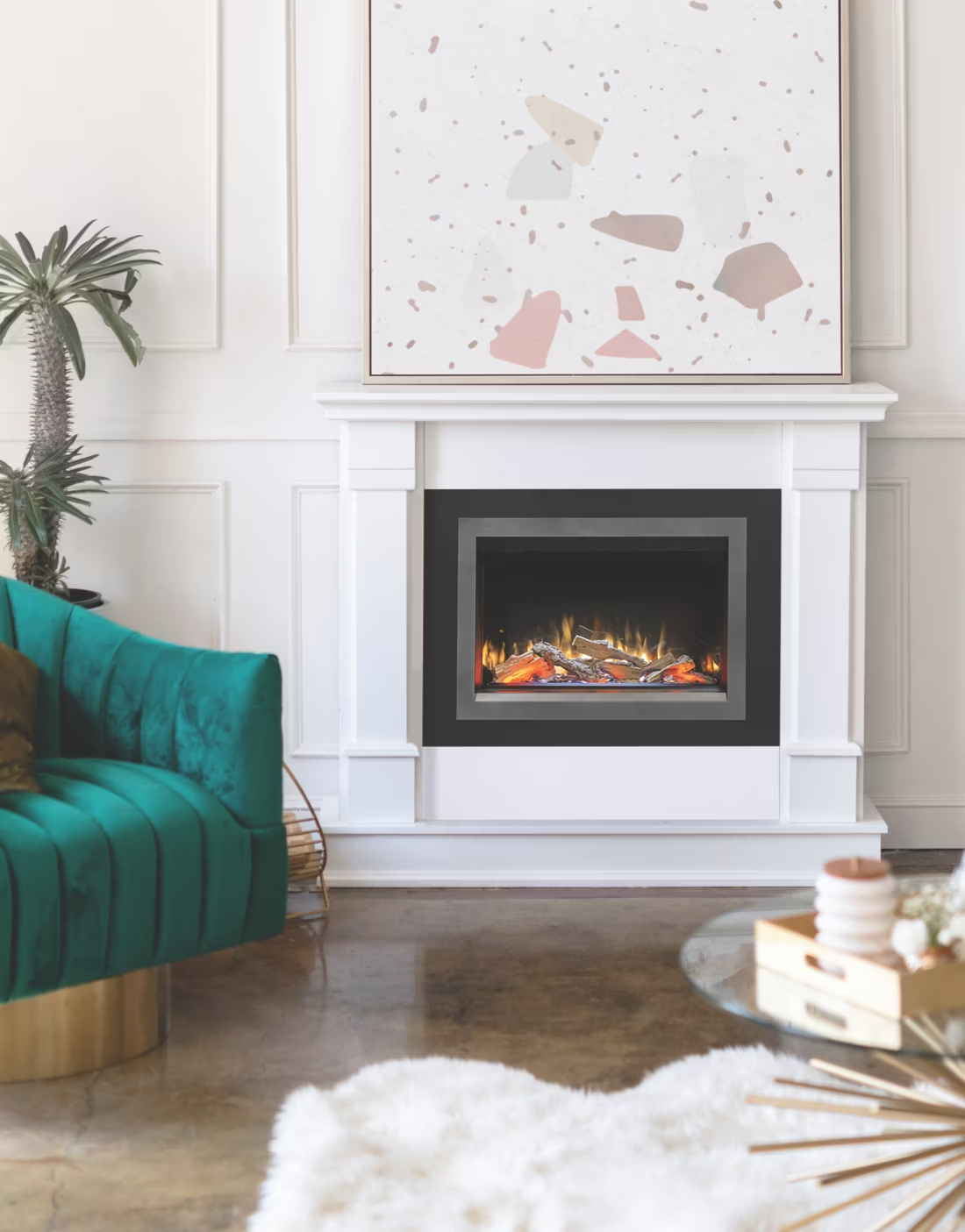
An electric insert drops into an existing fireplace opening or a custom-built mantel surround, giving you the traditional look of a fireplace with a firebox that plugs in. A mantel package pairs that insert with a matching wood or stone-look mantel for homes without an existing fireplace. A wall-mount or linear unit hangs flush on the wall like a piece of art, with a wide horizontal flame—popular in newer or remodeled Fair Grove homes going for a modern look. All three are available through local hearth dealers, who can show you options that fit your actual wall and room dimensions.
Are there any rebates or efficiency incentives for electric fireplaces in Fair Grove?
Standard resistance-heat electric fireplaces don't typically qualify for federal energy tax credits since they're classified as supplemental heat rather than a whole-home heating system. It's still worth a call to Southwest Electric Cooperative directly, since member-owned co-ops periodically run efficiency or appliance rebate programs that change year to year. If you're weighing a heat-pump-based electric insert instead of a standard resistance unit, that's a different efficiency category and may open up different incentives—a local dealer can tell you which units on the market currently qualify.
Can I put a TV above my fireplace?
Yes—with an asterisk. Fireplaces are hot and TVs don't like heat. Either put a mantel between them to deflect rising warmth, or choose a fireplace with heat-management technology that creates a cool zone on the wall above—the wall stays around 125 degrees, barely warm, while the room still gets full heat. If you like clean lines and don't want a mantel, heat management is the answer.
Do electric fireplaces actually produce heat?
Yes—most put out around 4,800–5,000 BTUs from a standard outlet, which comfortably warms a bedroom, office, or den as a comfort-zone heater. What they won't do is carry a whole house the way wood, gas, or pellet can. Think of electric as ambiance-first with honest supplemental heat: flames on with no heat in July, flames plus warmth in January.
What is an in-home preview and do I need one?
It's a visit where a hearth professional measures your space, confirms the model you picked actually works in your home, and walks the specs—framing, gas line, venting, finish work—before anything is ordered. Some details you just can't know until you see the house. Never make a down payment without one; it's the single most-skipped step that burns buyers.
Does a fireplace add value to my home?
On average, a fireplace adds back to the home about the same amount you spent installing it. Add the monthly savings from heating the rooms you actually use instead of the whole house—often hundreds of dollars a year—and the value case is strong before you even count what a fire does for how your family uses the room.
Nearby Dealers
Hearth shops serving Fair Grove and the surrounding area. Every listing shows whether it is a WhyFire partner, a dealer we have verified as authorized for the brands we recommend, or a local business carrying hearth products. No manufacturer pays for placement. How we verify dealers →
Abc Block And Brick
Smitty's Chimney Service
Meek's The Builder's Choice
Country Side Cottage
Hmi Fireplace Shop
Nixa Hardware
Aaron's Fireplace Co.
Electric Service in Fair Grove
An electric fireplace's heater draws about 1,500 watts—pennies per hour at local rates.
Southwest Electric Coop, Inc
Find your electric fireplace in Fair Grove.
Tell us a bit about your home and we'll match you with the right electric fireplace or insert, plus a free Project Guide & Parts List and a trusted local dealer to install it.
Find Your Fireplace →