
The fireplace that fits Harrison County's hurricane-code homes.
No chimney, no gas line, no venting to seal against Gulf humidity—just ambiance and supplemental warmth for the occasional cold front, from Biloxi to Pass Christian. Find the right unit and connect with a trusted local dealer.
Every Project Starts From One of These Five Situations
Built for warmth without the chimney.
Harrison County is Mississippi's largest Gulf Coast county, home to Biloxi, Gulfport, Long Beach, Pass Christian, and D'Iberville, with a population topping 317,000. Its climate zone is 2A—hot and humid—and the heating math backs that up: a mild, short heating season and a winter low averaging 42 degrees. Compare that to a place like Duluth, Minnesota, which has roughly six times the winter heating load, and it's clear why most Harrison County homeowners aren't buying a fireplace to survive January. They're buying one for ambiance, for the occasional cold front off the Gulf, and for the flip-a-switch convenience that fits modern coastal living.
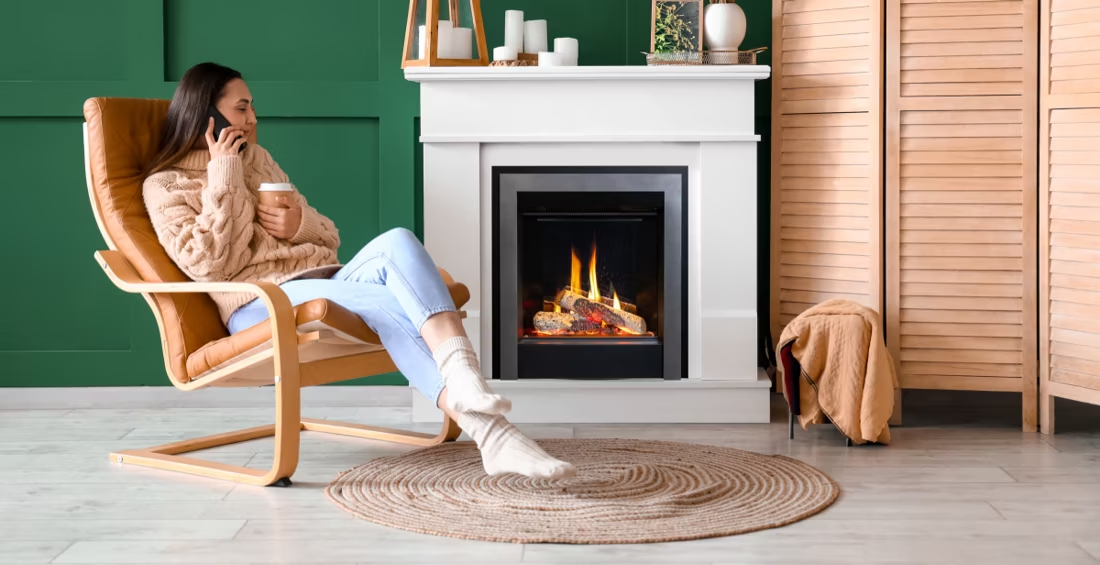
Wood and pellet heat are largely off the table here—not because oak, pine, and pecan aren't around (they are, and plenty of backyard fire pits still burn them), but because a climate with such a mild, short heating season doesn't generate the demand, and humid Gulf air makes stored firewood and pellet fuel a maintenance headache few homeowners want. Electric fireplaces sidestep all of that. They install cleanly in the elevated, pier-and-beam or slab-on-grade homes rebuilt after Katrina to modern flood-elevation code, work in condos along Highway 90 with no exterior venting penetration to worry about, and run off the same Mississippi Power grid every other appliance in the house uses. No masonry, no flue, no gas-fitter—just a dedicated circuit and a finished look.
Three steps. No salesperson until you're ready.
Tell us about your project
Your zip code, your situation, and the fuel you're leaning toward—or let the answers point you to one.
See what's actually available
The brands dealers within 100 miles genuinely carry—real options, never a catalog mirage.
Get your dealer & Project Guide
A trusted local dealer, plus the free Project Guide & Parts List that names every component of the job.
Frequently Asked Questions
How much does an electric fireplace installation cost in Harrison County?
A plug-in electric insert or freestanding unit typically runs $400 to $1,200 installed, since there's no venting or gas line to run—often just a standard outlet or a simple dedicated circuit. A custom built-in wall unit with framing, a mantel surround, and finish carpentry runs higher, generally $2,500 to $4,000 depending on the linear length and whether an electrician needs to add a new circuit. Homes on pilings or elevated slabs in flood-prone zones near Biloxi and Pass Christian sometimes carry a modest premium if wiring has to be routed above base flood elevation per county floodplain rules.
Will my electric fireplace work during a hurricane power outage?
No—and this is worth being direct about. Electric fireplaces run entirely off household power, so when Mississippi Power lines go down during storm season, the unit goes dark along with everything else. If backup heat or ambiance during outages matters to you, a generator-fed circuit is the practical workaround, or you might look at a propane or natural gas unit instead, since gas fireplaces are common elsewhere in Harrison County and can be equipped with battery-backed ignition. For most Harrison County homes, though, the mild climate means an outage lasting a day or two isn't a heating emergency—it's an inconvenience, not a survival issue.
Are wood stoves an option in Harrison County?
They're uncommon, and for good reason. With such a short, mild heating season and winter lows averaging 42 degrees, there's simply not enough cold to justify the upkeep of a wood-burning system. Add in Gulf Coast humidity, which makes stored oak, pine, or pecan firewood prone to mold and pest issues, and most homeowners here skip wood entirely. A small number of rural or wooded-lot properties inland from the coast still keep a wood stove for backup or rustic appeal, but it's the exception, not the norm—electric and gas cover the vast majority of Harrison County installs.
What about pellet stoves—do they make sense here?
Not really, for the same reason wood doesn't. Regional pellet brands like Lignetics, Hamer Pellet Fuel, and Greenway Renewable Energy supply plenty of Southeastern demand, but that demand comes from colder inland climates, not the Gulf Coast. With minimal heating need and high ambient humidity that complicates pellet storage, pellet appliances are rarely installed in Harrison County homes. If you want the low-maintenance, thermostat-controlled feel of a pellet stove without the fuel-storage tradeoffs, an electric insert delivers a similar experience with none of the humidity concerns.
Electric vs. gas fireplace—which is right for my Harrison County home?
Gas gives you a real flame and slightly more heat output, and it's a standard option across the county with propane or natural gas service depending on location. Electric skips the gas line, the venting, and the annual appliance service, and it's often the simpler retrofit for elevated pier-and-beam homes or condos where running a vent path is impractical. In flood-prone areas near Biloxi, Pass Christian, and Long Beach, electric also avoids any gas line penetration below base flood elevation, which can simplify permitting. For pure ambiance with minimal installation complexity, electric usually wins; for the closest thing to a real fire, gas holds an edge.
Do I need a permit to install an electric fireplace in Harrison County?
If the install is a simple plug-in unit on an existing outlet, generally no permit is required. If you're adding a dedicated electrical circuit—common for built-in wall units—a licensed electrician typically needs to pull an electrical permit through the local building department, whether that's the City of Gulfport, City of Biloxi, D'Iberville, or unincorporated Harrison County. Most local dealers coordinate with a licensed electrician as part of the install, so you're not left tracking down permits yourself.
What size electric fireplace or insert do I need?
Because heating output isn't the primary driver here, sizing is mostly about the room and the look you want. Smaller inserts (around 30 to 36 inches) work well retrofitted into an existing masonry fireplace opening in older homes around Ocean Springs or Gulfport built before modern flood-elevation codes. Linear wall-mounted units scale up from there—50 to 74 inches is common for a great-room focal wall in newer construction along the coast. A local dealer can walk your space and recommend a size based on the wall, the sightlines, and whether you want any supplemental heat output for the occasional 40-degree night.
What are the best electric fireplace brands for a humid coastal climate?
Look for units with corrosion-resistant hardware and sealed electronics, since salt air and humidity are constants along the Harrison County coastline—especially for homes within a mile or two of the beach in Biloxi, Gulfport, or Pass Christian. Dimplex and Napoleon both offer widely available electric insert and linear-wall lines with components rated for humid environments. Your local dealer can point you toward models with a track record in Gulf Coast installs rather than units better suited to drier climates.
Why is electric so much more common than wood or pellet in Harrison County?
It comes down to climate math. With such a short, mild heating season and a winter low averaging 42 degrees, Harrison County simply doesn't generate the cold-weather demand that makes wood or pellet heat practical the way it is in a place like Bozeman, Montana, or Burlington, Vermont. Electric fireplaces deliver the visual and ambiance benefits without requiring firewood storage, chimney maintenance, or pellet delivery—and they install cleanly into the elevated, code-built homes common across the coast since Katrina. For nearly all Harrison County homeowners, that combination makes electric the practical default.
Can I put a TV above my fireplace?
Yes—with an asterisk. Fireplaces are hot and TVs don't like heat. Either put a mantel between them to deflect rising warmth, or choose a fireplace with heat-management technology that creates a cool zone on the wall above—the wall stays around 125 degrees, barely warm, while the room still gets full heat. If you like clean lines and don't want a mantel, heat management is the answer.
Does an electric fireplace need a vent or chimney?
No—that's its superpower. An electric fireplace needs a wall and an outlet, period. No vent pipe, no gas line, no clearances to design around, which is why it works in bedrooms, offices, apartments, and walls where venting a gas or wood unit would be impractical or impossible. Installation is typically the simplest and least expensive of any fireplace type.
How much should I budget for a fireplace?
For an average home—covering the fireplace, the vent pipe, and basic installation—a budget between $3,900 and $5,500 gives you a lot of options across wood, gas, and pellet. By the time you add finish work, gas line, and electrical, the average complete installation lands between $5,000 and $12,000 all-in. In a remodel or new build, a good rule is to put about 2.5% of the total project cost toward the fireplace.
Does a fireplace add value to my home?
On average, a fireplace adds back to the home about the same amount you spent installing it. Add the monthly savings from heating the rooms you actually use instead of the whole house—often hundreds of dollars a year—and the value case is strong before you even count what a fire does for how your family uses the room.
Stove and Fireplace Dealers in Harrison County
Listings include WhyFire partner dealers, dealers we have verified as authorized for the brands we recommend, and established local businesses that carry hearth products. Every listing shows which one it is. The ones marked Preferred run on WhyFire's software, so they can show you real pricing and book your appointment right here. No manufacturer pays for placement. How we verify dealers →
Top Hat Fireplace
Compton And Son Appliance
Magnolia Gas, Inc.
Find your electric fireplace in Harrison County.
Tell us a bit about your home—elevated, slab, condo, or classic coastal cottage—and we'll match you with a trusted local dealer and send over a free Project Guide & Parts List for your electric fireplace project.
Find Your Fireplace →