
Find the right fireplace for your Harrison County home.
Fireplace resources for every city along the Mississippi Gulf Coast in Harrison County—from Gulfport and Biloxi to Long Beach, Pass Christian, and D'Iberville. Find the right unit and connect with a trusted local hearth retailer.
Every Project Starts From One of These Five Situations
Mild Gulf Coast winters shape how Harrison County heats.
Harrison County sits in climate zone 2A on the Mississippi Gulf Coast, where the winter low averages just 42°F and the county sees a short, mild winter heating season—a fraction of what a place like Duluth, Minnesota racks up in a single cold month. That mild profile means wood stoves and pellet stoves are essentially absent here; the oak, pine, and pecan that grow throughout the county show up far more often in a smoker or a fire pit than in a heating appliance. When Harrison County homeowners install a fireplace, it's almost always gas or electric—a warm-up feature for the occasional 30-degree night and a design centerpiece the rest of the year.
What you'll find on this hub: hearth retailers, service technicians, and fuel suppliers serving every community across the county—from the urban core of Gulfport and Biloxi out to Long Beach, Pass Christian, D'Iberville, and the more rural stretches around Saucier and Lyman. Pick your fuel below to drill into specifics—local dealers, installation costs, recommended units, and the resources that match your project. Whether you're finishing a coastal new-build or adding ambiance to a raised Gulf Coast home, this is the starting point.
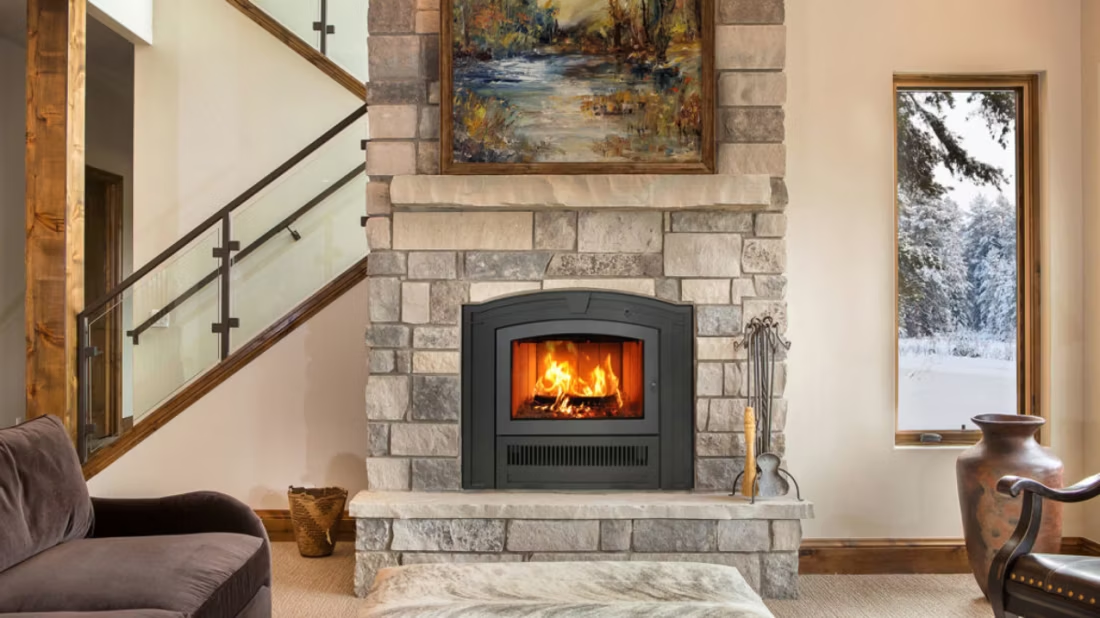
Four fuels. One honest answer for Harrison County.
Three steps. No salesperson until you're ready.
Tell us about your project
Your zip code, your situation, and the fuel you're leaning toward—or let the answers point you to one.
See what's actually available
The brands dealers within 100 miles genuinely carry—real options, never a catalog mirage.
Get your dealer & Project Guide
A trusted local dealer, plus the free Project Guide & Parts List that names every component of the job.
Frequently Asked Questions
Which fuel works best in Harrison County?
For nearly every Harrison County home, it comes down to gas or electric. With a winter low averaging 42°F and only a short, mild winter heating season, this isn't a wood-heat climate—the oak, pine, and pecan common to the region tend to end up in a smoker rather than a firebox. Gas fireplaces (natural gas via CenterPoint Energy where lines reach, propane elsewhere) give instant flame and ambiance without any real heating demand behind them. Electric fireplaces are just as common, especially in condos and raised coastal homes where running new gas or venting isn't practical. Wood-burning units and pellet stoves show up occasionally—usually a decorative insert or a unit installed for hurricane-season backup—but they're the exception, not the norm, in Gulfport, Biloxi, and the surrounding county.
Do I need a permit to install a fireplace in Harrison County?
Generally yes, for gas installations. Gas fireplaces, inserts, and stoves need a gas line permit and a licensed gas-fitter for the connection, plus a building permit for the firebox and venting itself. Built-in electric fireplaces that involve new wiring or a dedicated circuit typically need an electrical permit; simple plug-in units usually don't. Because Harrison County includes several incorporated cities—Gulfport, Biloxi, Long Beach, Pass Christian, and D'Iberville—each handles its own permitting, while unincorporated areas go through the county. Coastal construction here also has to account for wind-load and elevation requirements tied to the county's hurricane exposure, so it's worth using an installer familiar with local wind-zone codes rather than a big-box crew unfamiliar with the coast.
Is wood heat used at all in Harrison County?
Rarely, and mostly for reasons other than heating. Given the mild winters here, wood stoves aren't a practical primary heat source the way they are inland or up north—you won't find the catalytic stoves and firewood-permit culture common in colder states. Some homeowners, particularly in inland areas like Saucier and Lyman, keep a wood-burning fireplace or insert for ambiance, or as a low-tech backup during hurricane-season power outages when electric and even some gas systems can be affected. Local oak and pecan are popular firewood choices when people do burn, but pellet stoves in particular are essentially not part of the local hearth market—the regional pellet brands sold here (Lignetics, Hamer Pellet Fuel, Greenway Renewable Energy) are bought mainly for outdoor grills and smokers.
Can one local hearth retailer handle both gas and electric?
Yes—most Harrison County hearth retailers carry both gas and electric lines, since those are the two fuels that actually make sense in this climate. That's different from a colder-climate county where dealers juggle wood, pellet, gas, and electric side by side; here, retailers can focus their showroom space and installer training on gas venting and electrical work instead. If a dealer also lists wood or pellet units, expect a much smaller selection—often a single decorative model—compared to their gas and electric offerings.
How does service work across the county, from Gulfport to the inland communities?
Most technicians are based in the Gulfport-Biloxi corridor and travel out to Long Beach, Pass Christian, D'Iberville, Saucier, and Lyman for service calls, often with a modest travel fee the farther inland you are. Because gas and electric units dominate here, service calls tend to be inspections, pilot/IPI troubleshooting, or blower and wiring repairs rather than the seasonal chimney sweeps common in colder counties. It's worth scheduling gas fireplace inspections before hurricane season, when extended power interruptions can make a working gas fireplace genuinely useful for light and warmth.
What's the typical cost range for fireplace installation across fuel types in Harrison County?
Gas fireplace, insert, or stove: roughly $4,000–$10,000 depending on whether new gas line work and venting are required; conversions in homes with existing gas service run toward the lower end. Electric fireplace: $200–$3,000 for the unit itself, plus $400–$1,200 in labor for anything beyond a simple plug-in install, which covers most wall-mount and built-in electric installs in this market. Wood or pellet installations are uncommon enough in Harrison County that pricing varies widely and is best confirmed directly with a local dealer if you're pursuing one of those less-typical options.
Can I install a fireplace myself?
If you're putting a fire in your house on purpose, it's best to work with an expert. Unless you're genuinely experienced in framing, gas line, vent pipe, and the national code on clearances to combustibles, have a professional do it—and ideally the same company that sells you the fireplace, so warranty, service, and liability all live under one roof.
Can a fireplace actually lower my heating bill?
Yes—by creating a comfort zone. A furnace heats every square foot of the house just to warm the one room you're in; a gas fireplace on low burns roughly a sixth of the gas a typical furnace does. Set the furnace around 55–60 degrees as a baseline, then heat the rooms your family actually uses. Families who heat this way commonly save $20–$60 a month.
What is an in-home preview and do I need one?
It's a visit where a hearth professional measures your space, confirms the model you picked actually works in your home, and walks the specs—framing, gas line, venting, finish work—before anything is ordered. Some details you just can't know until you see the house. Never make a down payment without one; it's the single most-skipped step that burns buyers.
Wood, gas, pellet, or electric—how do I choose?
Match the fuel to your life, not the other way around. Wood: lowest fuel cost and total power-outage independence, but you're hauling and stacking. Gas: press a button, set a thermostat, no maintenance to speak of. Pellet: wood economics with automatic feeding, in exchange for weekly cleaning and a need for electricity. Electric: plugs in anywhere with honest supplemental heat. Nobody regrets the fuel that fits how they actually live.
Stove and Fireplace Dealers in Harrison County
Listings include WhyFire partner dealers, dealers we have verified as authorized for the brands we recommend, and established local businesses that carry hearth products. Every listing shows which one it is. The ones marked Preferred run on WhyFire's software, so they can show you real pricing and book your appointment right here. No manufacturer pays for placement. How we verify dealers →
Top Hat Fireplace
Compton And Son Appliance
Magnolia Gas, Inc.
Get matched with a trusted Harrison County dealer.
Tell us about your gas or electric fireplace project and we'll match you with a trusted local dealer serving Harrison County, plus send you a free Project Guide & Parts List—the exact parts, including the vent kit, and the local pro we recommend for your home.
Find Your Fireplace →