
The heat Gulfport actually needs: instant warmth, no chimney required.
With winter lows averaging 42°F on the Mississippi Gulf Coast, Gulfport homes rarely need a furnace-grade heat source in the living room. An electric fireplace gives you the look and the occasional-cold-night warmth without venting, gas lines, or firewood.
Every Project Starts From One of These Five Situations
Zone heat for a climate that rarely demands whole-house heating.
Gulfport sits at sea level on the Mississippi Sound in climate zone 2A, and the numbers explain a lot about how people here actually heat their homes. With a winter heating load that's just a small fraction of what colder states see—compare that to Duluth, MN, which faces a winter heating load more than six times as large—and an average winter low of 42°F, most Harrison County homes need supplemental warmth on maybe a few dozen nights a year, not a primary heating system. Wood and pellet stoves are essentially absent here; while oak, pine, and pecan grow all over the coast, storing cordwood in this humidity invites termites and mold, and the handful of cutting or hauling logistics that make wood heat practical in colder states just don't apply on the Gulf Coast.
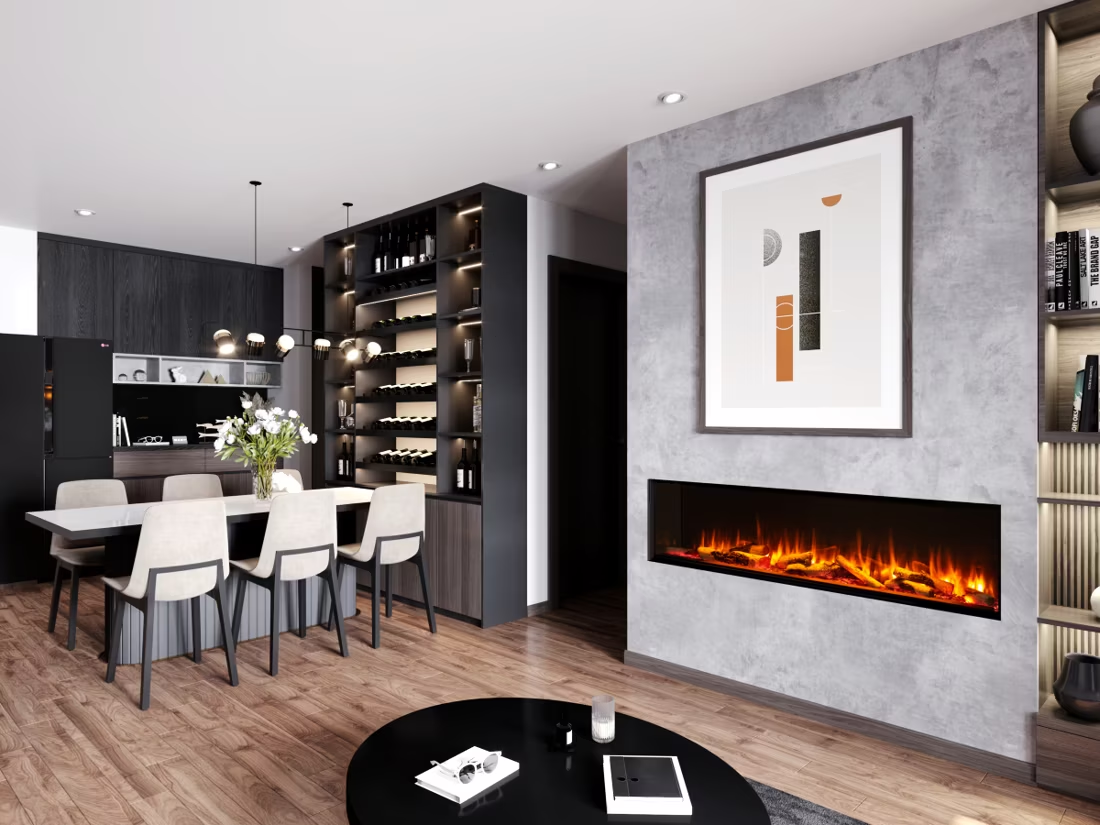
Electric fireplaces fill that gap well. There's no gas line, no chimney, and no combustion byproducts to vent—which matters in a region full of condos, rentals, and post-Katrina rebuilds where insurers and HOAs are often wary of open-flame appliances. Power comes from Mississippi Power Co., Coast Electric Power Assn., or Singing River Electric Cooperative depending on your zip code, at residential rates running roughly 13.5 to 14.5 cents per kWh. The one honest caveat: Gulfport sits in an active hurricane corridor, and electric units go dark exactly when a June-through-November storm knocks out the grid—so if backup heat during an outage matters to you, that's worth planning around separately.
Three steps. No salesperson until you're ready.
Tell us about your project
Your zip code, your situation, and the fuel you're leaning toward—or let the answers point you to one.
See what's actually available
The brands dealers within 100 miles genuinely carry—real options, never a catalog mirage.
Get your dealer & Project Guide
A trusted local dealer, plus the free Project Guide & Parts List that names every component of the job.
Frequently Asked Questions
How much does an electric fireplace installation cost in Gulfport?
Plug-in electric inserts and log sets typically run $400 to $1,200 installed, since most simply slide into an existing mantel opening or media wall and connect to a standard outlet. Built-in electric fireplaces or wall-mount units with a dedicated circuit and finished surround run $1,500 to $4,000, depending on size and whether an electrician needs to run new wiring. Because there's no venting or gas line involved, electric installs in Gulfport are consistently the least expensive hearth project a local dealer handles, and most are done in a single day.
Does an electric fireplace need special wiring?
Smaller inserts and log sets (under about 1,500 watts) usually run fine on a standard 120V, 15-amp household outlet—no electrician needed. Larger built-in units, especially wide linear models, often draw enough current that a dedicated 20-amp circuit is recommended, which runs $150 to $400 for a licensed electrician to add. If you're mounting a unit inside an existing masonry fireplace opening in an older Gulfport home, your installer will also check whether that outlet is on a shared circuit with other high-draw appliances before signing off.
Electric vs. gas—which makes more sense for a Gulfport home?
Gas fireplaces are common along the Mississippi coast and deliver real heat output plus a live flame, but they require a gas line (natural gas or propane, depending on your street) and venting work that adds cost and a building permit. Electric skips both—no fuel line, no venting, and the flame effect is largely cosmetic with modest supplemental heat. Given Gulfport's mild 42°F average winter low, most homeowners here are choosing based on ambiance and budget rather than serious heating need, which is exactly the scenario where electric tends to win on cost and simplicity.
Should I get a built-in electric fireplace, an insert, or a wall-mount unit?
An insert drops into an existing fireplace opening—a good fit for older Gulfport homes near downtown or Bayou Bernard with a masonry firebox that's no longer used for wood. A built-in is framed into a wall during a remodel or new construction, common in the newer housing going up along the coast post-Katrina. A wall-mount unit hangs like a flat-screen TV with no framing at all, which is popular in condos and rental units where landlords don't want permanent construction. All three run on standard household current; the choice mostly comes down to whether you're renovating or working with what's already there.
Do I need a permit to install an electric fireplace in Gulfport?
Plug-in units generally don't require a permit since no new wiring or gas work is involved. If your installer adds a dedicated circuit for a larger built-in unit, that electrical work does need a permit through the City of Gulfport Building Department (or the Harrison County Building Department if you're outside city limits). A licensed electrician handling the circuit will typically pull that permit as part of the job, so it's rarely something homeowners have to manage themselves.
How much does it cost to run an electric fireplace in Gulfport?
Most electric fireplaces draw around 1,500 watts on the heat setting. At Mississippi Power's residential rate of about 14.47 cents per kWh, that works out to roughly 22 cents an hour; at Coast Electric or Singing River Electric's rate of about 13.46 cents per kWh, it's closer to 20 cents an hour. Run on flame-only mode with the heater off, draw drops to under 100 watts—a few cents an hour—which is how most Gulfport households actually use them outside of the occasional cold snap.
Will my electric fireplace still work during a hurricane power outage?
No—electric fireplaces need grid power (or a generator) to run, which is worth knowing given Gulfport's exposure to Gulf storms from June through November. If you want heat that survives an outage, that means either a whole-home or portable generator sized to carry the unit, or a separate backup plan like a propane heater rated for indoor use. Most homeowners here treat the electric fireplace as a daily-comfort and ambiance feature rather than storm-season backup heat, and plan outages separately.
What size electric fireplace do I actually need in a climate this mild?
With such a light winter heating load, Gulfport isn't asking a fireplace to carry the heating load the way a home in Fargo or Bismarck would. A standard 1,400-1,500 watt insert or built-in is enough to noticeably warm a single living room or bedroom on the handful of nights each winter when temperatures dip into the 30s. Bigger, multi-room heating output isn't usually necessary here—sizing conversations with a local dealer tend to focus more on the visual scale of the unit for your wall or mantel than on raw BTU output.
Are wood or pellet stoves an option in Gulfport at all?
They're genuinely rare here, and for good reason. The Gulf Coast's humidity makes stored cordwood prone to mold and pests, mild winters mean there's little heating payoff, and most homeowners' insurance carriers in a hurricane-exposed county add scrutiny (and sometimes surcharges) for solid-fuel appliances. Oak, pine, and pecan all grow locally, but you'll find them used for smoking meat or landscaping far more often than for stove fuel. A small number of Gulfport homeowners still install a wood stove for cabin-style ambiance or a vacation property further inland, but for a primary Gulfport residence, gas or electric is what local dealers actually stock and install.
Can I put a TV above my fireplace?
Yes—with an asterisk. Fireplaces are hot and TVs don't like heat. Either put a mantel between them to deflect rising warmth, or choose a fireplace with heat-management technology that creates a cool zone on the wall above—the wall stays around 125 degrees, barely warm, while the room still gets full heat. If you like clean lines and don't want a mantel, heat management is the answer.
Do electric fireplaces actually produce heat?
Yes—most put out around 4,800–5,000 BTUs from a standard outlet, which comfortably warms a bedroom, office, or den as a comfort-zone heater. What they won't do is carry a whole house the way wood, gas, or pellet can. Think of electric as ambiance-first with honest supplemental heat: flames on with no heat in July, flames plus warmth in January.
Can a fireplace actually lower my heating bill?
Yes—by creating a comfort zone. A furnace heats every square foot of the house just to warm the one room you're in; a gas fireplace on low burns roughly a sixth of the gas a typical furnace does. Set the furnace around 55–60 degrees as a baseline, then heat the rooms your family actually uses. Families who heat this way commonly save $20–$60 a month.
Can I install a fireplace myself?
If you're putting a fire in your house on purpose, it's best to work with an expert. Unless you're genuinely experienced in framing, gas line, vent pipe, and the national code on clearances to combustibles, have a professional do it—and ideally the same company that sells you the fireplace, so warranty, service, and liability all live under one roof.
Nearby Dealers
Hearth shops serving Gulfport and the surrounding area. Every listing shows whether it is a WhyFire partner, a dealer we have verified as authorized for the brands we recommend, or a local business carrying hearth products. No manufacturer pays for placement. How we verify dealers →
Top Hat Fireplace
Compton And Son Appliance
Magnolia Gas, Inc.
Electric Service in Gulfport
An electric fireplace's heater draws about 1,500 watts—pennies per hour at local rates.
Mississippi Power Co
Coast Electric Power Assn
Singing River Elec Cooperative
Find your electric fireplace in Gulfport.
Tell us about your home and we'll match you with a trusted local Gulfport dealer and send over a free Project Guide & Parts List—the exact unit, mounting, and electrical needs for your space, no guesswork required.
Find Your Fireplace →