
Get cozy heat in Long Beach without changing your home's exterior.
With winters this mild on the Mississippi Gulf Coast, electric is often the simplest way to add warmth and ambiance. Get matched with a local dealer who can size the right unit for your home.
Every Project Starts From One of These Five Situations
Mild Gulf Coast winters don't need a wood-burning workhorse.
Long Beach sits at just 20 feet of elevation on the Mississippi Gulf Coast, in climate zone 2A, with an average winter low of 44°F and only a short, mild heating season each year. Compare that to a place like Duluth, MN, which endures a heating season many times longer and colder, and it's clear why heating hardware here looks different. Most Long Beach homes need warmth for a handful of cool evenings between December and February, not months of sustained cold—which is exactly the situation electric fireplaces are built for.
Wood and pellet appliances are rarely installed here—not because of air quality restrictions (Harrison County has none of the non-attainment issues you'd see in Western wood-burning regions) but simply because the heating load doesn't justify a chimney, a wood supply, or hopper maintenance. Electric units, by contrast, plug into standard household current, need no venting, and can go into a den, primary bedroom, or sunroom in an afternoon. Local power comes from Mississippi Power Co., Coast Electric Power Association, or Singing River Electric Cooperative depending on where in Long Beach you're located, with residential rates running around $0.1346 to $0.1447 per kWh—inexpensive enough that running a 1,500-watt electric fireplace a few hours a night costs about 20 to 22 cents an hour.
Three steps. No salesperson until you're ready.
Tell us about your project
Your zip code, your situation, and the fuel you're leaning toward—or let the answers point you to one.
See what's actually available
The brands dealers within 100 miles genuinely carry—real options, never a catalog mirage.
Get your dealer & Project Guide
A trusted local dealer, plus the free Project Guide & Parts List that names every component of the job.
Frequently Asked Questions
How much does an electric fireplace installation cost in Long Beach?
A plug-in electric insert or mantel unit typically runs $300 to $900 for the unit itself, with no professional installation required beyond plugging it into an existing outlet. A built-in wall unit or a linear electric fireplace set into custom cabinetry is a different project—expect $1,500 to $3,500 once you factor in a dedicated 20-amp circuit run by a licensed electrician, framing, and finish work. Homes near the beach in older Long Beach neighborhoods sometimes need panel upgrades if the existing electrical service is maxed out, which can add to the cost.
Will an electric fireplace still work during a hurricane power outage?
No—electric fireplaces require grid power to run, so during a tropical storm or hurricane outage, the unit goes dark along with everything else in the house. Mississippi Power, Coast Electric Power Association, and Singing River Electric Cooperative all have strong storm-restoration crews given how often the Gulf Coast gets hit, but restoration can still take days after a major storm. If backup heat matters to you specifically for storm season, a lot of Long Beach homeowners pair an electric fireplace for everyday ambiance with a portable generator for outages, rather than relying on a wood or gas backup that most local homes simply don't have infrastructure for.
Do I need a permit to install an electric fireplace in Long Beach?
A plug-in insert that uses an existing outlet doesn't require a permit—it's treated like any other appliance. A hardwired built-in unit on a new dedicated circuit generally does require an electrical permit, since it involves new wiring back to the panel. In Long Beach that means pulling a permit through the City of Long Beach or, if you're outside city limits in unincorporated Harrison County, the county building department. Any licensed electrician doing the circuit work should handle this as part of the job.
What's the difference between an electric insert, a mantel package, and a built-in wall unit?
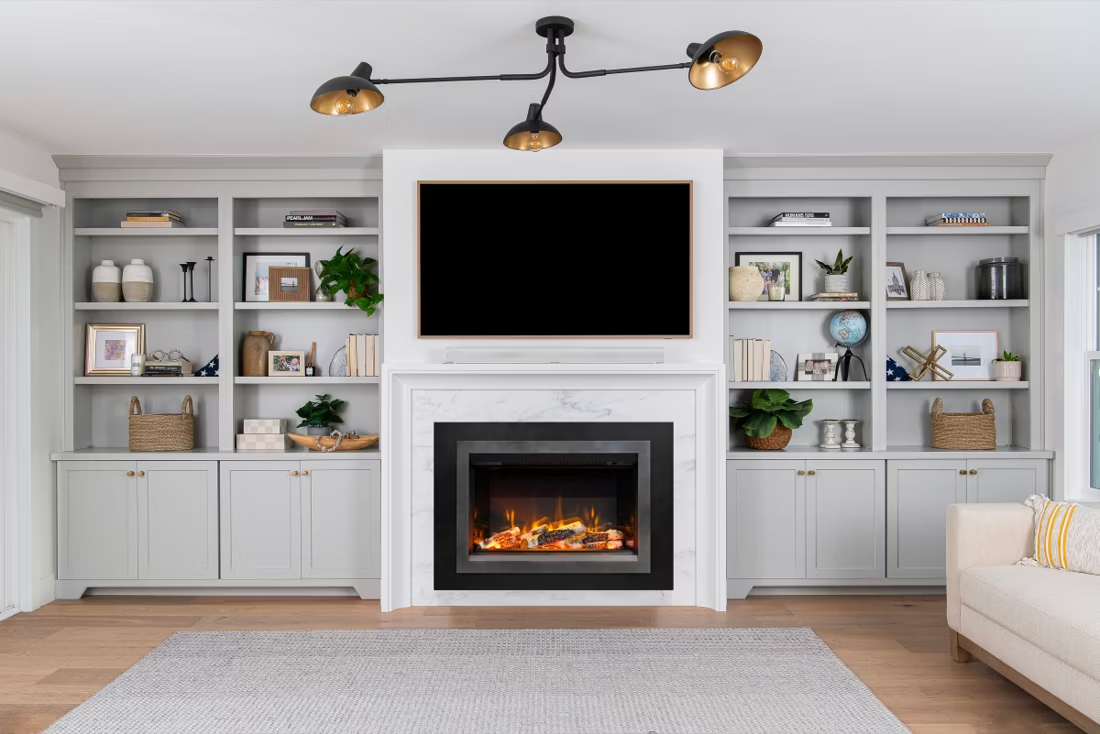
An electric insert is a self-contained unit sized to drop into an existing fireplace opening—a common choice if you have an old masonry fireplace you want without the wood or chimney upkeep. A mantel package pairs a freestanding electric firebox with a surrounding cabinet, giving you a complete fireplace look with zero construction. A built-in wall unit, usually a linear model, is recessed into a wall or custom millwork for a more modern, flush appearance. For most Long Beach homes without an existing fireplace, mantel packages are the easiest starting point since they need no construction and no permit.
Electric vs. gas—which makes more sense for a Long Beach home?
Gas fireplaces are common here too and deliver more real heat output, which matters if you want a fireplace that can genuinely warm a room on the coldest nights of the year. But gas installation involves running a gas line, venting for most models, and permitting—a bigger project than plugging in an electric unit. Given that Long Beach only sees a short, mild heating season and winter lows average 44°F, many homeowners here choose electric for ambiance and light supplemental warmth, then rely on their central HVAC system for whatever real heating the house needs. If you want something that looks and feels closer to a genuine fire and doesn't mind the extra install work, gas is the upgrade path.
Can an electric fireplace actually heat a room in Long Beach?
Most electric fireplaces put out around 4,600–5,000 BTUs (roughly 1,500 watts), which is enough to noticeably warm a single room—a bedroom, den, or home office—especially given how mild Long Beach winters run. They're not designed to replace central heat for the whole house, but for the handful of nights each winter when it dips into the 30s, an electric fireplace in the main living space is often all the supplemental heat a Gulf Coast home needs.
What will an electric fireplace cost to run in Long Beach?
At Mississippi Power's residential rate of about $0.1447 per kWh, or Coast Electric and Singing River Electric's roughly $0.1346 per kWh, a typical 1,500-watt electric fireplace costs about 20 to 22 cents per hour to run on the heat setting. Running it for three hours a night through a cool December week adds up to roughly $4 to $5 a week—inexpensive compared to running central heat harder, and cheap enough that most owners run it flame-only (no heat) for ambiance on mild evenings at a fraction of that cost.
Why don't more Long Beach homes have wood-burning fireplaces, even with all the local oak and pine?
Oak, pine, and pecan are all common trees around Harrison County, so firewood availability isn't the limiting factor—heating demand is. With average winter lows around 44°F and only a short, mild heating season each year, a wood stove sized for real heat output would run far more capacity than most Long Beach homes ever need, and the humidity here makes storing seasoned firewood a bigger hassle than it's worth for occasional use. A handful of older homes and camps still have wood-burning fireplaces for atmosphere, but new installs are rare—electric and gas cover the same ambiance and warmth without the wood supply and chimney maintenance.
Is an electric fireplace a good investment before selling a Long Beach home?
Electric fireplaces are a relatively low-cost way to add a focal point to a living room or primary bedroom, and buyers on the Gulf Coast often respond well to them since they read as a design upgrade rather than a maintenance obligation—no chimney to inspect, no gas line to disclose. A mantel package or built-in linear unit in the $1,000-$3,000 range tends to be the sweet spot for resale appeal without overbuilding for a climate that doesn't need serious heating capacity.
Does an electric fireplace need a vent or chimney?
No—that's its superpower. An electric fireplace needs a wall and an outlet, period. No vent pipe, no gas line, no clearances to design around, which is why it works in bedrooms, offices, apartments, and walls where venting a gas or wood unit would be impractical or impossible. Installation is typically the simplest and least expensive of any fireplace type.
Can I put a TV above my fireplace?
Yes—with an asterisk. Fireplaces are hot and TVs don't like heat. Either put a mantel between them to deflect rising warmth, or choose a fireplace with heat-management technology that creates a cool zone on the wall above—the wall stays around 125 degrees, barely warm, while the room still gets full heat. If you like clean lines and don't want a mantel, heat management is the answer.
Does a fireplace add value to my home?
On average, a fireplace adds back to the home about the same amount you spent installing it. Add the monthly savings from heating the rooms you actually use instead of the whole house—often hundreds of dollars a year—and the value case is strong before you even count what a fire does for how your family uses the room.
Can I install a fireplace myself?
If you're putting a fire in your house on purpose, it's best to work with an expert. Unless you're genuinely experienced in framing, gas line, vent pipe, and the national code on clearances to combustibles, have a professional do it—and ideally the same company that sells you the fireplace, so warranty, service, and liability all live under one roof.
Nearby Dealers
Hearth shops serving Long Beach and the surrounding area. Every listing shows whether it is a WhyFire partner, a dealer we have verified as authorized for the brands we recommend, or a local business carrying hearth products. No manufacturer pays for placement. How we verify dealers →
Compton And Son Appliance
Top Hat Fireplace
Magnolia Gas, Inc.
Electric Service in Long Beach
An electric fireplace's heater draws about 1,500 watts—pennies per hour at local rates.
Mississippi Power Co
Coast Electric Power Assn
Singing River Elec Cooperative
Find your electric fireplace in Long Beach.
Tell us a bit about your home and we'll put together a free Project Guide & Parts List for your electric fireplace project—matched with a trusted local Long Beach dealer who can size the unit, handle any electrical work, and get it installed right.
Find Your Fireplace →