
Real Fire Ambiance, Zero Gulf Coast Complications.
With winter lows that rarely dip below the mid-40s, Pass Christian doesn't need a furnace-grade hearth. Find the right electric fireplace or insert, and connect with a trusted local dealer.
Every Project Starts From One of These Five Situations
Mild winters call for a different kind of hearth.
Pass Christian sits right on the Mississippi Sound at just 6 feet of elevation, in climate zone 2A, where the average winter low is 44 degrees and the region has a light, short heating season—a fraction of what a place like Duluth, Minnesota racks up before Thanksgiving. Cutting and hauling firewood, feeding a hopper, or maintaining a chimney doesn't make much sense here; wood and pellet stoves are essentially absent from local homes, and for good reason. What Pass Christian homeowners actually want is the look and feel of a fire on the occasional cool, damp evening, without adding another appliance to maintain in a coastal, hurricane-prone climate.
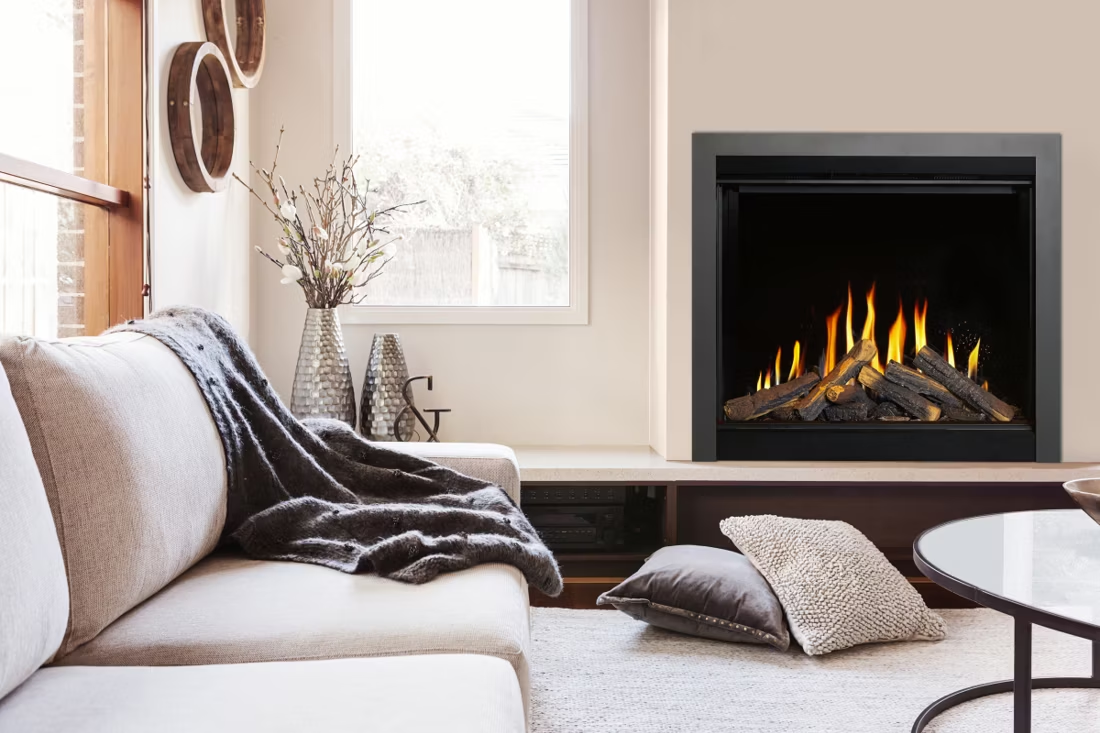
Electric fireplaces fit that need well. Many Pass Christian homes were rebuilt or elevated on pilings after Hurricane Katrina, and electric units drop into new-construction framing or existing mantels without venting, gas lines, or masonry work—a real advantage when you're already coordinating flood-zone construction requirements. Power comes from Mississippi Power Company, Coast Electric Power Association, or Singing River Electric Cooperative depending on where you sit in Harrison County, with residential rates running roughly 13.5 to 14.5 cents per kWh. At that rate, a typical electric fireplace costs just a few cents an hour to run on ambiance-only mode, or somewhat more with the heater engaged on a rare cold snap.
Three steps. No salesperson until you're ready.
Tell us about your project
Your zip code, your situation, and the fuel you're leaning toward—or let the answers point you to one.
See what's actually available
The brands dealers within 100 miles genuinely carry—real options, never a catalog mirage.
Get your dealer & Project Guide
A trusted local dealer, plus the free Project Guide & Parts List that names every component of the job.
Frequently Asked Questions
How much does an electric fireplace installation cost in Pass Christian?
Costs vary a lot depending on the unit. A plug-in freestanding or wall-mount electric fireplace can be installed for under $500 in most Pass Christian homes since there's no wiring, venting, or gas work involved—you're basically hanging it and plugging it in. A built-in electric fireplace or insert that requires a dedicated 120V or 240V circuit runs higher, typically $800 to $2,500, once you factor in an electrician to run the circuit and any surround or mantel carpentry. Because there's no chimney, no gas line, and no combustion byproducts to vent, electric installs in Pass Christian are consistently the least expensive and least invasive hearth option available.
Will an electric fireplace actually heat my home?
In most Pass Christian homes, an electric fireplace is best thought of as supplemental heat rather than a primary heat source—and that's a good match for local weather. With an average winter low around 44 degrees and only a light, short heating season, most homes here are heated fine by a standard central heat pump, with the electric fireplace adding warmth to a single room on the handful of nights that dip into the 30s. Most units put out 4,500 to 5,000 BTUs on the heat setting, enough to noticeably warm a living room or bedroom without needing to run the whole HVAC system.
Why don't more Pass Christian homes have wood-burning fireplaces?
Wood heat just doesn't have a functional role on this stretch of the Mississippi Sound. Between the mild winters, the humidity, and a hurricane-driven rebuilding cycle that favors elevated, low-maintenance construction, wood and pellet stoves are rare in Pass Christian—you'll occasionally see one in an older home or a camp further inland, but they're not something local dealers stock or install regularly. Oak, pine, and pecan are the common species around Harrison County if someone does want a wood-burning setup, but for nearly all homeowners here, gas or electric makes far more practical sense.
Do I need a permit for an electric fireplace in Pass Christian?
Usually not for a plug-in unit—it's treated like any other appliance you plug into an existing outlet. If you're installing a built-in electric fireplace that requires a new dedicated circuit, however, that electrical work typically needs a permit through the City of Pass Christian or Harrison County, depending on your address, and should be pulled by a licensed electrician. Most local dealers who sell built-in units will either handle the electrical work themselves or coordinate directly with a licensed electrician, so you're not left tracking down the permit process on your own.
Which utility serves my home, and what will an electric fireplace cost to run?
Pass Christian is served by a mix of providers—Mississippi Power Company inside parts of the city, and Coast Electric Power Association or Singing River Electric Cooperative in other pockets of Harrison County, so check your bill to confirm which one applies to your address. Residential rates in the area run roughly 13.5 to 14.5 cents per kWh. A typical electric fireplace draws about 100-150 watts on ambiance-only mode (a few cents a day) and around 1,500 watts with the heater running, which works out to roughly 20 cents an hour—inexpensive compared to running a space heater or a whole-house heat pump for the same room.
What's the best type of electric fireplace for a coastal Mississippi home?
Look for units rated for the humidity and salt-air exposure common along the Mississippi Sound—sealed electronic components and corrosion-resistant hardware matter more here than in a drier inland climate. For homes elevated on pilings, a built-in electric insert or a linear wall-mount model set into the living level works well and avoids any moisture exposure from a crawlspace below. Freestanding electric stoves and mantel-package units are popular too, especially in rebuilt or newer Pass Christian homes where owners want the look of a hearth in a room that never had one before Katrina-era reconstruction.
Electric vs. gas fireplace—which makes more sense in Pass Christian?
Both are common choices here, and the decision usually comes down to what you already have. If your home has natural gas or propane service, a direct-vent gas fireplace delivers a more authentic flame and real heat output, which some homeowners prefer for the look. Electric fireplaces cost less to install, since there's no gas line or venting to run, and they're simpler to retrofit into a rebuilt or elevated home. Given how mild winters are here, plenty of Pass Christian homeowners choose electric purely for the ambiance and lower upfront cost, reserving gas for homes where a more traditional fireplace look is the priority.
What happens to my electric fireplace during a hurricane or power outage?
An electric fireplace won't run without power, which is worth factoring in if you're on the Mississippi Sound and thinking about backup heat for storm season. If you have a home generator or battery backup system, most electric fireplaces will run fine on it since their power draw is modest. For homeowners who want heat that works independent of the grid, a propane or natural gas unit with a standing pilot is the more resilient option—but for day-to-day use outside of storm season, electric remains the simpler, lower-maintenance choice for the vast majority of Pass Christian homes.
Where should I install an electric fireplace in my home?
Living rooms and primary bedrooms are the most common spots in Pass Christian homes, especially in open-concept living areas common in rebuilt Gulf Coast houses. A linear wall-mount unit works well above a media center or on an accent wall, while a built-in insert can be framed into a false hearth wall for a more traditional look. Because there's no venting requirement, placement is far more flexible than a wood or gas installation—the main constraint is simply access to a suitable electrical circuit, which a local dealer can evaluate during an in-home visit.
Can I put a TV above my fireplace?
Yes—with an asterisk. Fireplaces are hot and TVs don't like heat. Either put a mantel between them to deflect rising warmth, or choose a fireplace with heat-management technology that creates a cool zone on the wall above—the wall stays around 125 degrees, barely warm, while the room still gets full heat. If you like clean lines and don't want a mantel, heat management is the answer.
Does an electric fireplace need a vent or chimney?
No—that's its superpower. An electric fireplace needs a wall and an outlet, period. No vent pipe, no gas line, no clearances to design around, which is why it works in bedrooms, offices, apartments, and walls where venting a gas or wood unit would be impractical or impossible. Installation is typically the simplest and least expensive of any fireplace type.
Does a fireplace add value to my home?
On average, a fireplace adds back to the home about the same amount you spent installing it. Add the monthly savings from heating the rooms you actually use instead of the whole house—often hundreds of dollars a year—and the value case is strong before you even count what a fire does for how your family uses the room.
Can a fireplace actually lower my heating bill?
Yes—by creating a comfort zone. A furnace heats every square foot of the house just to warm the one room you're in; a gas fireplace on low burns roughly a sixth of the gas a typical furnace does. Set the furnace around 55–60 degrees as a baseline, then heat the rooms your family actually uses. Families who heat this way commonly save $20–$60 a month.
Nearby Dealers
Hearth shops serving Pass Christian and the surrounding area. Every listing shows whether it is a WhyFire partner, a dealer we have verified as authorized for the brands we recommend, or a local business carrying hearth products. No manufacturer pays for placement. How we verify dealers →
Magnolia Gas, Inc.
Compton And Son Appliance
Top Hat Fireplace
Electric Service in Pass Christian
An electric fireplace's heater draws about 1,500 watts—pennies per hour at local rates.
Mississippi Power Co
Coast Electric Power Assn
Singing River Elec Cooperative
Find your electric fireplace in Pass Christian.
Tell us a bit about your home and we'll put together your free Project Guide & Parts List—the right electric fireplace or insert for your space, plus a trusted local dealer to install it.
Find Your Fireplace →